Latest Posts
The Burial
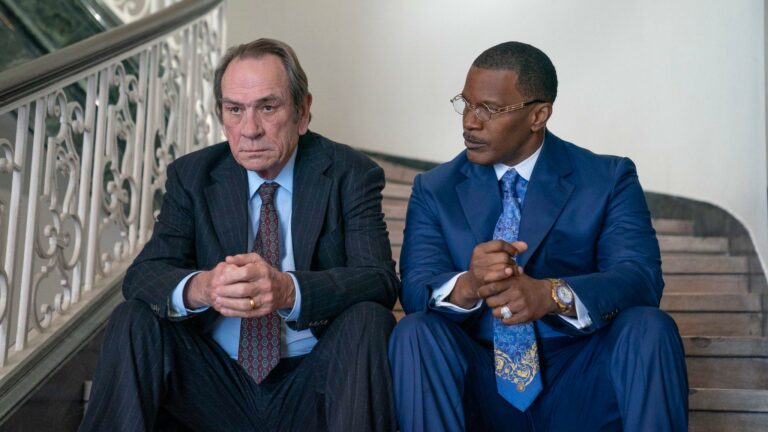
A movie called The Burial that buries its main story – it sounds like some kind of meta-joke. But it isn’t. Whether the strategy works is the real question though. The story was first told in the New Yorker and relayed what happened to a real-life Mississippi guy called O’Keefe whose struggling funeral-home business was offered a buyout in the mid-1990s by the Loewen company, a megacorp specialising in burials and, more importantly (it turns out), burial insurance. O’Keefe and Loewen agreed a deal in principle but then the trail went cold. Eventually, convinced that Loewen were sitting on their hands until he went bust, so it could buy him out for cents … Read more

It’s a Wonderful Knife
A squeezing of yet more blood from a very well squeezed stone, It’s a Wonderful Knife takes the 1980s/90s slasher movie and gives it a multiverse tweak by way of that 1946 Christmas classic starring James Stewart. The slasher movie and the Christmas movie often have similar starting points – peace and goodwill to all men – before disruption rears its head. Director Tyler MacIntyre and writer Michael Kennedy situate us right in a familiar, cosy world of snow, warm winter clothing and a white-picket small town preparing for Christmas then deliver a twist we can see coming, followed by another one we won’t see coming if the reference in the title to It’s … Read more
Orders to Kill
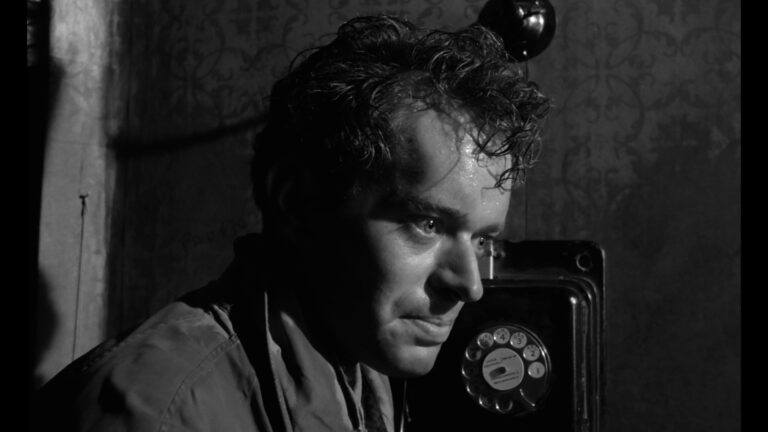
A spy movie written by people who’d been actual on-the-ground spies, Orders to Kill is a gripping thriller with an unusual focus on psychology rather than action. It’s set during wartime, in occupied France, where a member of the Resistance is suspected of selling agents down the river to the Nazis. Back in Boston, a war hero’s mother, played by silent movie legend Lilian Gish in scenes that could all be removed, is waiting for her son to return for some R&R. But her son is still in England, where he has been seconded at the last minute to go to France and assassinate the double agent. Paul Massie plays young, naive Gene … Read more
See How They Run
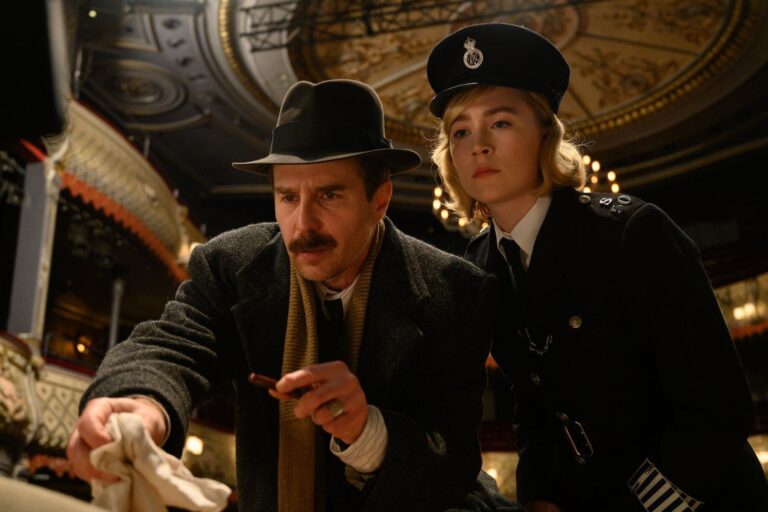
A kind of meta-The Mousetrap, See How They Run plonks itself down on the sofa alongside the other representatives of the whodunit revival – the likes of Knives Out and Kenneth Branagh’s adaptations of Agatha Christie. In essence it’s Agatha Christie’s venerable long-running play subjected to mock trial by a thousand in-jokes, some knowing, others oblique. If a slightly more cerebral Sunday afternoon movie is what you’re looking for, this could be for you. The film comes at The Mousetrap sideways because the Agatha Christie estate will not sanction any film version of the play until its London West End run is over (it’s been running since 1952 and shows no sign of … Read more
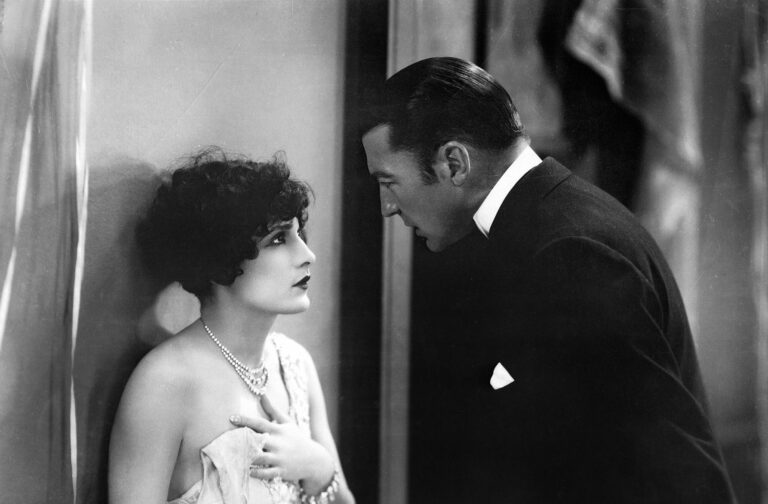
Underworld
1927’s Underworld is often described as the first gangster movie, or the first film noir. It’s neither really, but it’s easy to see why the tags stick. It is undeniably the movie that kicked off the gangster craze in the late 1920s and early 1930s and there’s enough moody lighting in it to tick any number of noir boxes. But really it’s a tale of doomed romance, the story of a gangster’s moll caught between not two but three men – her original guy, who she wants to do right by, a psychopathic rival, and the guy she falls for. For a silent movie it has a lot of psychological nuance, though the … Read more
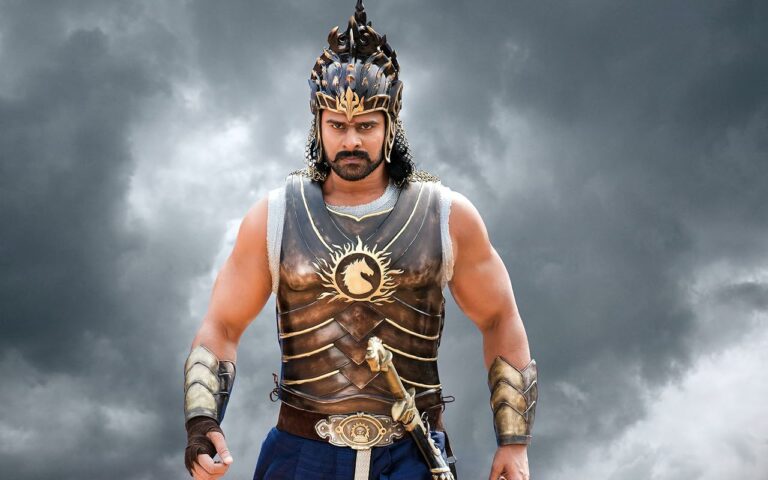
Baahubuli: The Beginning
If you’ve ever wondered where RRR came from, or how come Tollywood became bigger than Bollywood, Baahubali: The Beginning is the answer to both questions. RRR was the crossover all-action spectacular that forced the rest of the world to take notice of Tollywood in 2022, and finally pushed it to the number one position in terms of Indian movie-making. In 2022 Tollywood (Telugu-language, centred in Andhra Pradesh and Telangana) produced 219 feature films against just 42 from Bollywood (Hindi-language, out of Mumbai, formerly Bombay) – the numbers do not lie. Nor does the box office. Baahubali: The Beginning had the best box offfice of any Indian film ever when it debuted in 2015, … Read more
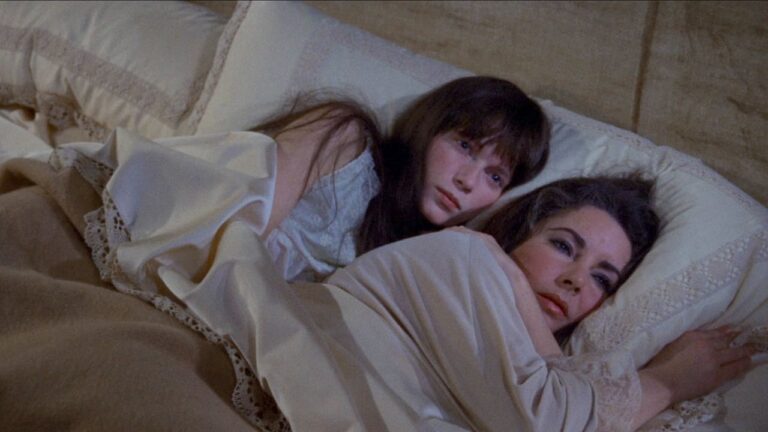
Secret Ceremony
At first sight bizarre, and at second sight even weirder, 1968’s Secret Ceremony is the sort of arthouse thriller that Elizabeth Taylor apparently never made. For Mia Farrow, her co-star, it looks like a warm-up for the following year’s Rosemary’s Baby. Robert Mitchum, yes Robert Mitchum, makes up the third leg of this very wonky stool. Forget Mitchum for the moment. Who are these women, it asks and eventually answers, wrongfooting us most of the way with its story of needy co-dependence in which Taylor plays a woman called Leonora and Farrow plays Cenci (pronounced Chenchee). The women, both dressed in black, meet on the top deck of a London double-decker bus. Cenci … Read more

Une Jeune Fille Qui Va Bien aka A Radiant Girl
For her debut feature as a director, French actor Sandrine Kiberlain has decided not to take the easy route and instead go for something a bit bolder. Une Jeune Fille Qui Va Bien (A Radiant Girl) is a familiar story told in an unfamiliar way. Kiberlain returns to the grim history of the Jews of Paris under the Nazi occupation but filters it all – well, mostly all – through the eyes of a young drama student whose entire focus is on an upcoming audition to gain entry to the conservatory. As the film opens Irène (Rebecca Marder) is rehearsing Marivaux’s L’Épreuve with a fellow drama student. She faints. It might be part … Read more
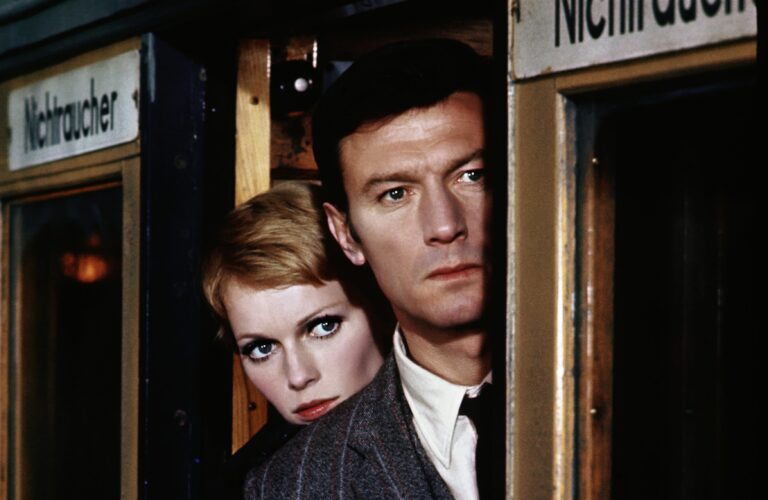
A Dandy in Aspic
The film that killed the great director Anthony Mann, A Dandy in Aspic didn’t get killer reviews when it debuted in 1968. “Completely devoid of suspense” and “bland,” said the New York Times. Leonard Maltin’s Movie Guide declared it “wooden”. Mann died of a heart attack towards the end of shooting and the movie’s star, Laurence Harvey, took over directing, which isn’t the reason the film bombed. Harvey actually takes some pains to ape the claustrophobic, slick style of Mann. There just isn’t a whole lot going on in Derek Marlowe’s original story (which he adapted for the screen). But what looked like a failure back then looks more like a calculation all … Read more

The Trouble with Being Born
The Melbourne International Film Festival wouldn’t screen The Trouble with Being Born when it debuted in 2020. Likely to be “used as a source of arousal for men interested in child abuse material,” said the two forensic psychologists who informed its decision. Director Sandra Wollner’s German-language film ran into trouble at the Berlin Film Festival too, though it also won a special jury prize, just one of many from film festivals. Not that awards and bans are usually much to go on, but in this case the various responses do say something. This is a tough film but a good one. Tough not because of the suggestions of paedophilia but because of its … Read more
T-Men
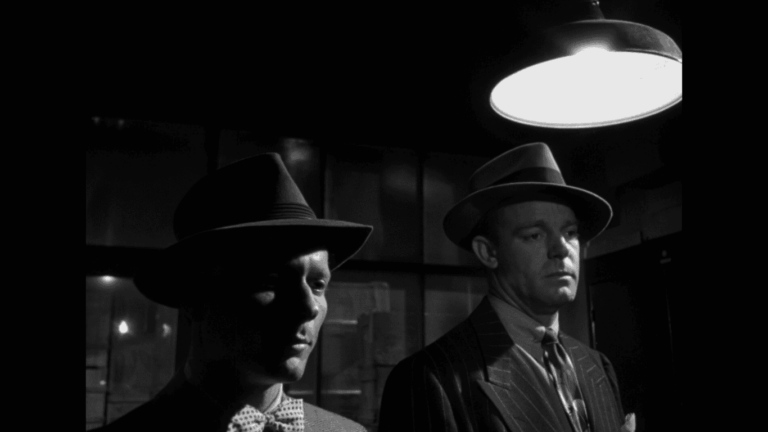
The T in the T-Men stands for Treasury. As if to bolt cinema doors to stop people escaping, this 1947 crime drama opens with an urgent voiceover informing us that T-Men are actually really exciting and not boring at all. Think of them more like secret agents, it insists in footage that’s all cloak and dagger and maximum stakes. The voiceover goes on to tell us that the T-Men serve a crucial role in society and are a vital tool of the US government, protecting all citizens from the depradations of mobsters, smugglers, counterfeiters and the like. To reinforce the point, an earnest, to-screen homily follows, spoken by Elmer Lincoln Irey, real-life chief … Read more

Amsterdam
That looks like Taylor Swift, I thought to myself, watching the opening moments of David O Russell’s promising looking Amsterdam, his first film since 2015’s Joy. It actually is Taylor Swift, just one of a galaxy of stars in a cast list so luminous that the likes of Anya Taylor-Joy, Andrea Riseborough and Zoe Saldana could almost be safely removed without harming the texture of the movie. No, maybe not Taylor-Joy, one of the important components, it turns out, when Amsterdam finally gets round to revealing its nature – an angry political drama, and a good thriller, hidden inside a meringue of deflection, pastiche, jokes, songs, historical factoids, good performances and all the … Read more