Latest Posts
To Leslie
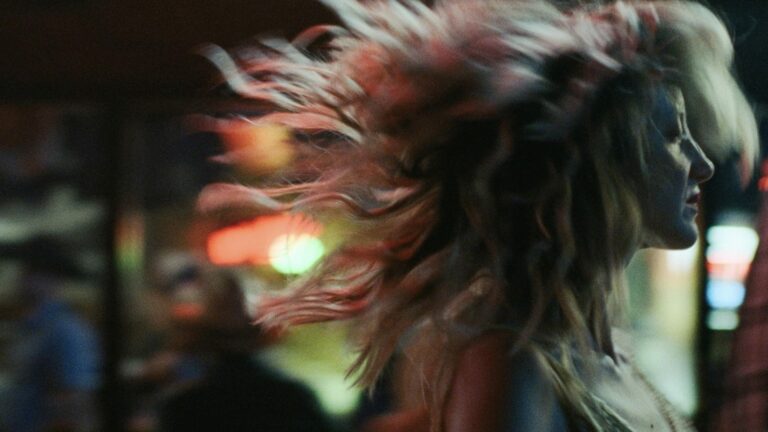
There’s a real market for films showing the lower orders wallowing in a misery of their own making. To Leslie looks like the familiar offer – feckless blue-collar gal wins big on the lottery, then pisses it all away in a hedonistic splurge. The message of films like this, usually covert, is: leave money to those who already have it. Michael Morris’s film avoids a lot of the pitfalls of the genre by concentrating not on the fall but on the bounce along the bottom. He introduces Leslie (Andrea Riseborough) in archive local TV news footage, ecstatically receiving a gigantic lottery cheque and squealing in redneck excitement before he cuts to the present … Read more
The Last of Sheila
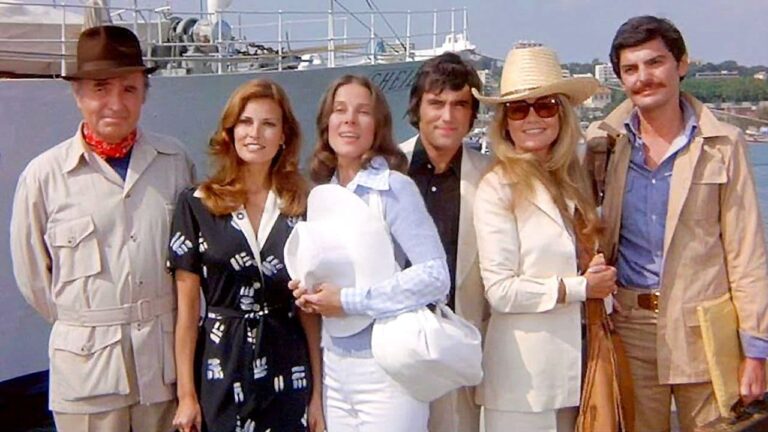
As namechecked by Rian Johnson while out on the promotion trail, The Last of Sheila looks like a good chunk of the inspiration for his Glass Onion: a Knives Out Mystery. Adding to its attraction are the names of the bizarre writing team behind this whodunit from 1973: Anthony Perkins and Stephen Sondheim. It was the only screenplay either of them would ever write and sprang from the murder-mystery evenings they used to put on for a bit of fun in New York. The director Herbert Ross, then probably most famous for directing Woody Allen in Play It Again, Sam, was at one of them and suggested Hopkins and Sondheim work one of … Read more
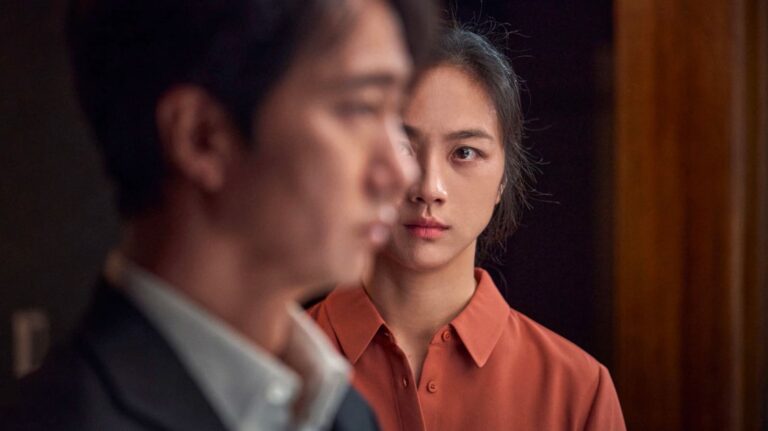
Decision to Leave
A cop falls disastrously for the woman he is certain killed her own husband in Park Chan-wook’s first film since 2016’s The Handmaiden. Decision to Leave is an erotic noir mixing elements of the “useless cops” comedy of Bong Joon-ho’s Memories of Murder with the romantic obsession of Wong Kar-wai’s Chungking Express and adding byzantine, gothic plotting that’s all Park’s own. It wouldn’t work as well as it does without the presence of Tang Wei, playing a femme fatale of a noirish stripe – slinky, possibly dangerous, magnetically attractive – and the grieving widow of a much older husband who’s died in a bizarre rock climbing accident. Is Seo-rae grieving enough though? Or even … Read more
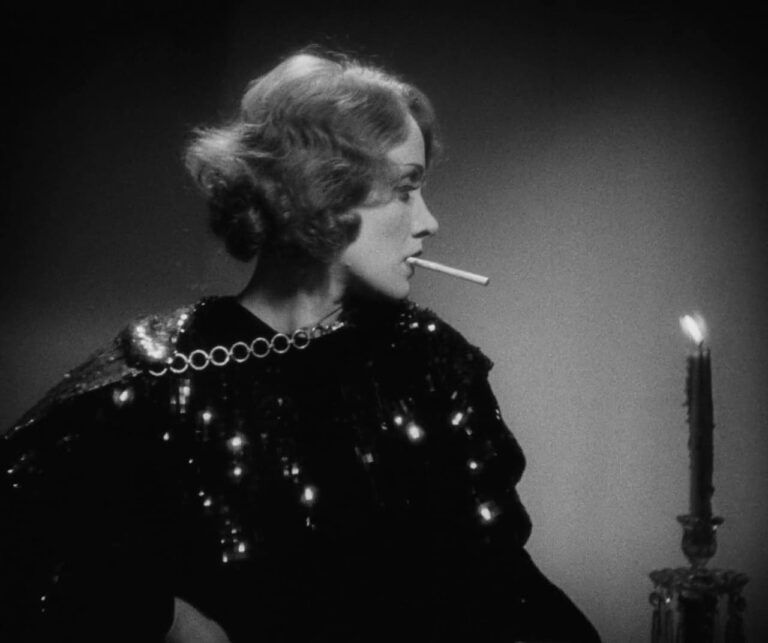
Dishonored
Fritz Lang more or less invented the spy thriller with Spies (Spione in German) in 1928, but it didn’t take long before everyone wanted to be a secret agent. Here’s Marlene Dietrich’s tilt, in only her second US movie, playing a streetwalker recruited by the head of the Austrian Secret Service himself, set a little test, which she passes with full marks for pluck and patriotism, and is then put instantly to work rooting out a mole (as no one called them in those days) in the service. Dishonored’s plot is Le Carré-esque, or it would be if the doughty Marie hadn’t soon cracked the case and exposed the mole, using only her … Read more
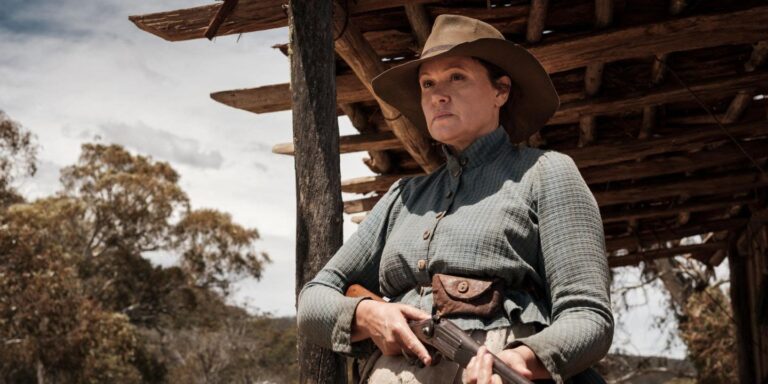
The Drover’s Wife
Leah Russell stars, writes, directs, produces and plunders her own family history for The Drover’s Wife (aka The Drover’s Wife: The Legend of Molly Johnson), a fine-looking revisionist western set in the Australian Outback. Russell plays Molly, it almost goes without saying to say, a woman left to fend for herself and her kids out in the back of beyond while her husband is away droving sheep up in the high country. Handy with a gun but with a tendency to shoot when the red mists descend, Molly may be suffering from a form of PTSD, as no one back then ever called it. It’s writer/director Russell’s first fictional feature (she’s done some … Read more
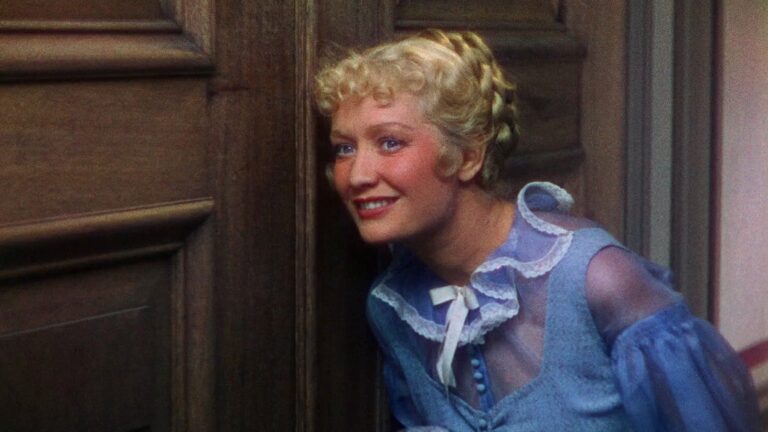
Becky Sharp
It’s remarkable that in film and TV adaptations of William Makepeace Thackeray’s Vanity Fair, it’s always called just that. Thackeray lifted the title for his satire from John Bunyan’s Pilgrim’s Progress, where a fair at a town called Vanity was an allegory for all the delights of the realm of the physical. It’s hardly a punchy title, or one with any modern currency and yet it carries on being used. At least six movies and eight TV shows, not to mention various magazines, have used or are using its name. Apart from this 1935 adaptation, no one seems to have though to use the name of its principal character, Becky Sharp, instead. Not … Read more
The Quiet Girl
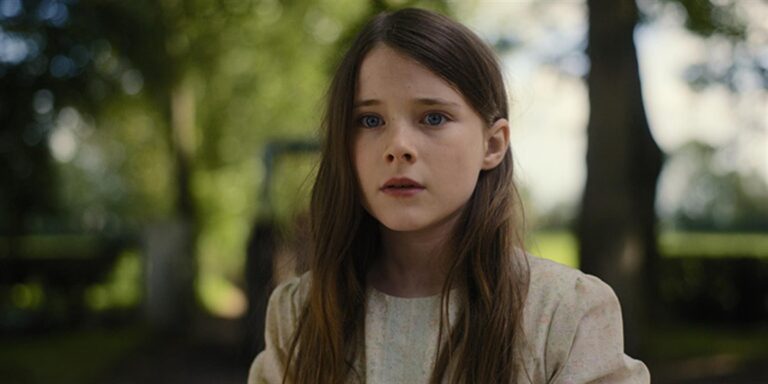
Oh dear. There were tears before bedtime watching The Quiet Girl (An Cailín Ciúin), an Irish-language film set in the 1980s and all about a girl whose parents send her off to live with a distant cousin on a remote farm. Mother (Kate Nic Chonaonaigh) is overburdened with kids. Dad (Michael Patric) is a feckless womanising boozer, and young Cáit (Catherine Clinch), not fitting in too well at school, has become a handful. And so, without being consulted, Cáit is shipped off for the school summer holidays in what might be a dry run for something more permanent. It looks like the set-up for one of those misery memoirs à la Angela’s Ashes, … Read more
Design for Living
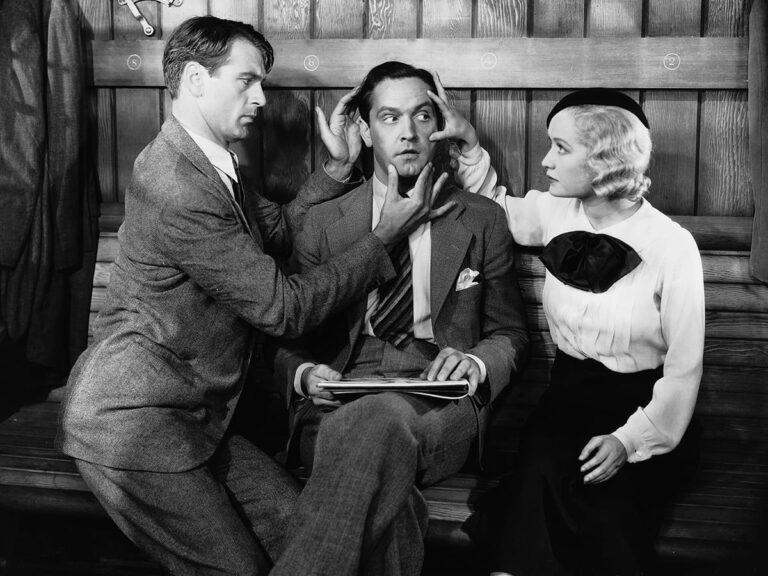
One of those pre-Code 1930s comedies that comes wrapped in an aura, Design for Living can’t live up to the sell. It’s not funny, though there is the odd smirk, nor perceptive, unless a comedy about the fickleness of women is what you’re after The aura comes virtue of the boys in the backroom. Noel Coward wrote the original play, then Ben Hecht came in and threw most of that away while working on his screen adaptation, in the process turning Coward’s urbane posh gents into a couple of impetuous workaday types – the Time Out London review called it a “tea cups to beer glasses” transformation, and that’s a neatly pithy way … Read more
Earwig
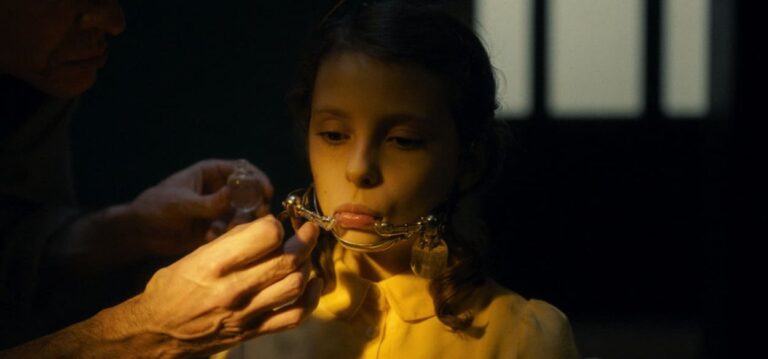
A girl is having her saliva harvested in the opening scene of Earwig. There’s a contraption fitted to her head which consists of a metal frame, some ducting and a pair of little glass vials. An attentive man is is on hand to help collect the secretion, which is then transferred to a mould and frozen. Hey presto, a set of dentures made of frozen spit, which are then carefully fitted into the mouth of the girl, who has no teeth of her own. Not a word has been spoken and in fact nothing will be said until, at 25 minutes in, after several repeats of the procedure (teeth made of ice…er… melt) in … Read more
Pygmalion
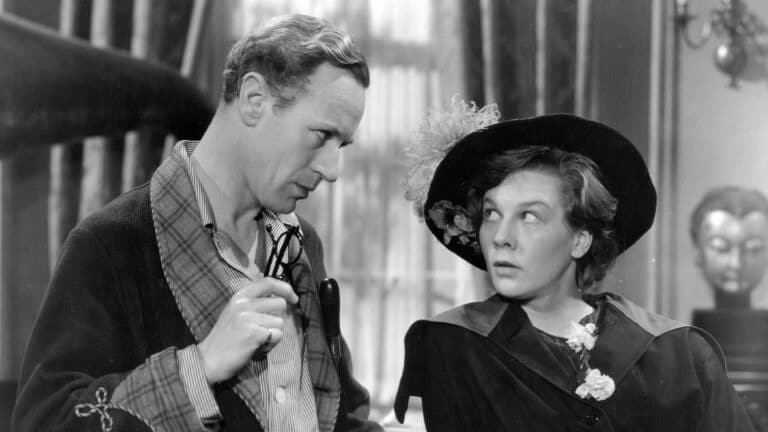
Pygmalion was the name of a mythological sculptor who made a statue so beautiful that he begged the gods to bring it to life. Which they did. He called it Galatea. The myth has been worked and reworked over the millennia and still has purchase – Trading Places is a version of the basic idea, so is Damien Chazelle’s breakthrough film Whiplash. In all the best updates there’s a conversation going on in the subtext about appropriate behaviour. When does tough love become abuse? When should the sculptor accept that “his” creation now has a life of its own? It’s all here in this film version from 1938, an adaptation of George Bernard … Read more

The Justice of Bunny King
One woman’s triumph against adversity – now there’s a phrase to chill the blood. Here’s what it says right under the title on the IMDb page for The Justice of Bunny King. “A triumph over adversity tale of women fighting their way back from the bottom of the barrel.” I don’t know who wrote that but what director Gaysorn Thavat’s debut feature serves up is a horse of a very different colour. The films of Ken Loach provide the most obvious reference point, particularly Cathy Come Home, one of a string of TV “plays” Loach made for the BBC in the mid 1960s. It told the story of one woman trying to triumph … Read more
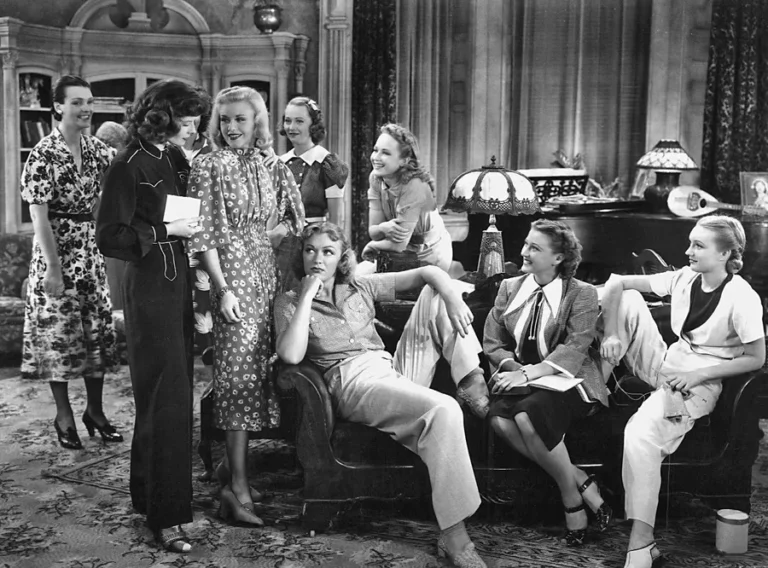
Stage Door
Katharine Hepburn was at the height of the “box office poison” phase of her career when she made Stage Door in 1937. She’d won an Oscar only four years before but four flops in quick succession had turned RKO against her – she had to fight the studio to get star billing. Ironically, amusingly, cannily, the story of Stage Door plays to the public perception of Hepburn as a snooty, entitled daddy’s girl who expected the world to do her bidding by casting her as the snooty, entitled rich man’s daughter breezing into the Footlights Club, a boarding house for actresses, and being taken aback when she doesn’t get the reception she feels … Read more