Latest Posts
Pressure
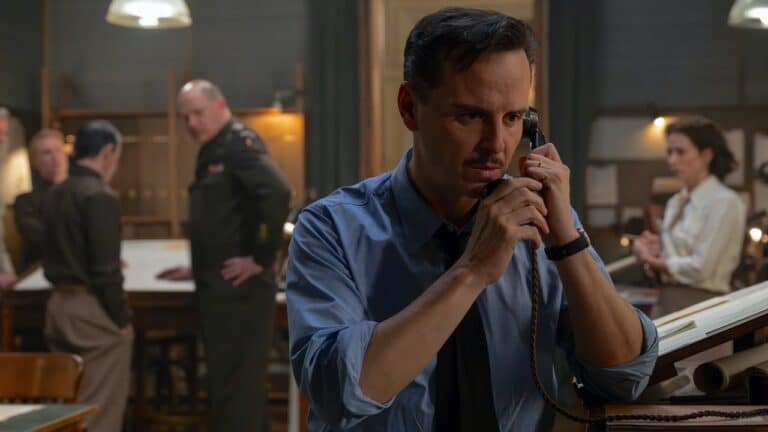
Nerds win the war in Pressure, which entertainingly tells the story about the meteorological johnnies who made the D-Day landings possible. How, when you’re launching the biggest seaborne invading force in human history, do you make sure the weather isn’t going to destroy your armada on the high seas? Whether the gap between England and France actually counts as the high seas is questionable. It’s only a 20-mile gap but it is difficult to navigate at the best of times. All that Atlantic Ocean on one side and North Sea on the other trying to squeeze through a bottleneck, with storms liable to barrel in from off the Atlantic at any time. That’s … Read more
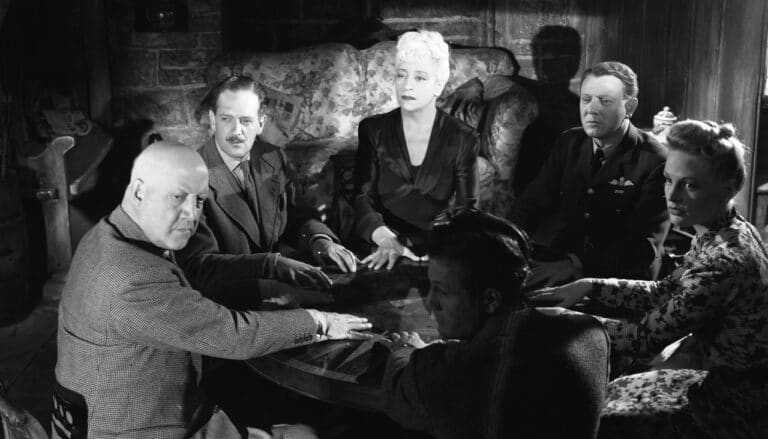
The Halfway House
Ealing Studios’ The Halfway House is a halfway sort of film. Made in 1944, it’s not quite propaganda but is clearly on that road. Not quite a ghost story either, or not the usual sort of ghost story. Brigadoon is somewhere in the back of the plotting. A mysterious pub out in delightful sun-dappled Welsh countryside, bombed out of existence a year before, somehow rematerialises, ready to welcome unwitting visitors. The people who turn up are all in need of spiritual succour. David Davies (Esmond Knight), a conductor with a terminal disease. Captain Fortescue (Guy Middleton), a professional crook insisting on his rank. Richard French (Richard Bird), a squadron leader in the throes … Read more
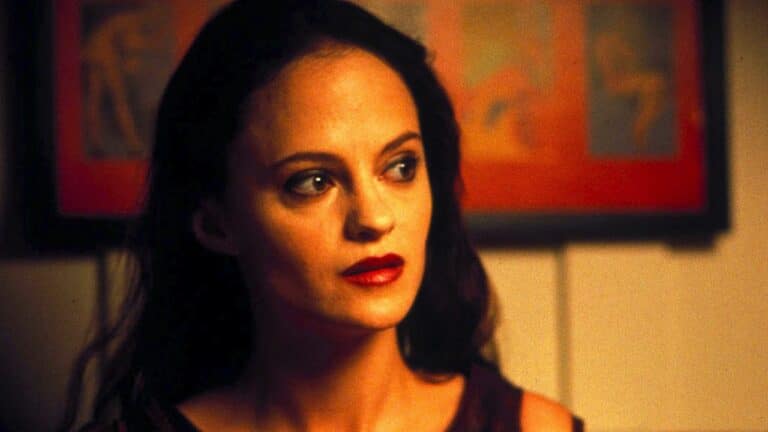
May
May is a disturbing film full of weirdos but almost none of them is the real deal, apart from the central character of May herself. In a world where people play-act at being strange to make themselves seem interesting, May is properly odd. Lucky McKee’s solo debut came out in 2002, to a little acclaim, but has become a cult over the years, loved by people who admire its aslant world view, its focus on its lead character and its position on pseuds who make false claims on weirdness. May was born with a lazy eye and has been brought up cosseted by her mother. She grew up – or rather didn’t grow … Read more
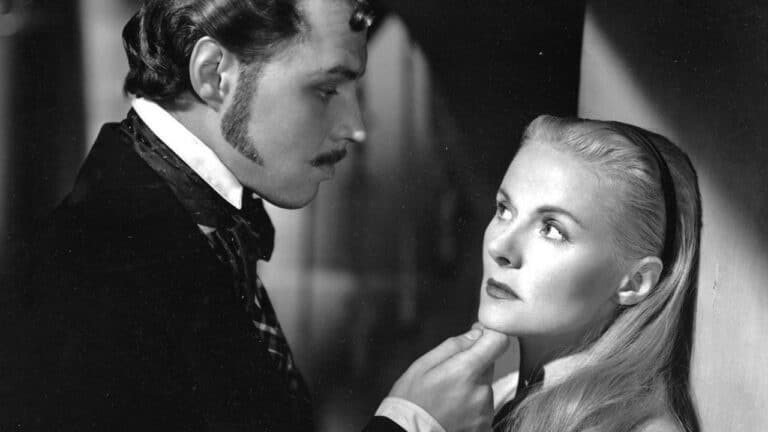
Madeleine
David Lean made Madeleine for his latest new wife – Ann Todd was number three of six. She’d played notorious murderer Madeleine Smith on stage and wanted her performance captured for posterity. The result was a good film, she thought; the great director thought it his worst. Having just watched it, I reckon Todd gets it about right and Lean is being harsh. One thing is obviously completely wrong about Todd though. At 43, she’s just way too old to be playing a young woman. It’s the sort of thing you might get away with on stage but not on camera. And yet, having said that, Todd does OK, busking through on acting prowess. … Read more
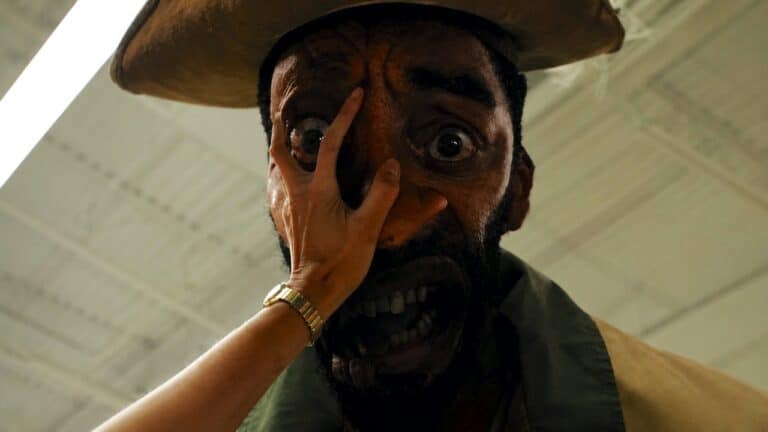
Backrooms
It’s notable that both Kane Parsons, who directed Backrooms, and Curry Barker, of Obsession fame, started their film-making careers on YouTube making scary shorts. They’ve both come up with what are often described as the best horror movies of the year. In the case of Obsession that’s clearly true: there’s much screaming, ick and yuk. But what about Backrooms, and its psychologically chilly commentary on the bleakness of everyday existence in the urban environment? Parsons says he was majorly influenced by the video game Portal, and his intro – a first person “player” running around a puzzle-platform scenario – makes that obvious. We’re inside a vast empty succession of empty rooms with a … Read more
The Lady Eve
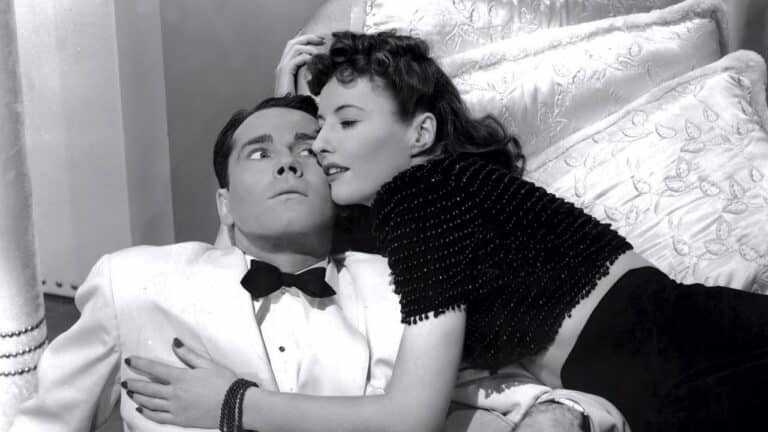
The Lady Eve is a brilliant piece of writing by Preston Sturges, and playing by Henry Fonda and Barbara Stanwyck. Screwball comedy you could call it, or a comedy of remarriage, maybe, except nobody remarries. But that is the guiding idea – two people who have been together and possibly will be again, if fate can be encouraged to remove the many obstacles in their path. Fonda plays a wealthy brewing heir who meets a young woman and her father on board a ship sailing back from the Amazon, where he’s just spent a year indulging his passion for snakes. Jean (Stanwyck) and the “Colonel” (Charles Coburn) are a pair of con artists … Read more

Couture
Gentle gothic. If there is such a thing then Couture might be it. A slice down through the fashion industry, it’s also, maybe, Alice Winocour’s riposte to Robert Altman’s Pret à Porter – serious, ground-level drama not airy, star-filled satire. That said, no less than Angelina Jolie is in it. She plays a commercials director whose big break has just come – an invitation to shoot a short opening film for a French fashion house’s latest collection. As she’s arriving in Paris, Maxine is also fielding phone calls from a doctor back home – I have your results, they don’t look good, he says. Please go and see an oncologist buddy of mine … Read more

100 Years of… Secrets of the Soul
Is it Secrets of a Soul or Secrets of the Soul? Both variations of the title seem to be in play. It was Geheimnisse einer Seele in the original German, which suggests it’s the indefinite article – do with that what you will. Either way this is a strange film from the silent era. Expressly designed to take key concepts of psychoanalysis and give them cinematic life, it was directed by GW Pabst, who really wanted Sigmund Freud to contribute. Freud was less keen – his work was more than mere entertainment – so declined, but Pabst did persuade a couple of Freud’s collaborators to take part at the writing stage, including Karl Abraham, … Read more

Obsession
Bunny-boiler females are nothing new. But if there is a pantheon, Inde Navarrette must surely be in it on the strength of her performance in Obsession, sitting alongside Glenn Close (for Fatal Attraction), Kathy Bates (Misery) and, perhaps closest of all in spirit, Isabelle Adjani, for her unhinged performance in Possession. Navarrette plays Nikki, a hot girl certain she has decidedly and forever consigned old chum Bear (Michael Johnston) to the friend zone, that’s if she really thinks about him at all. What she doesn’t know is that Bear has somehow come across a hocus-pocus piece of gimcrackery that will grant him one wish – a One Wish Willow. “I wish Nikki would love … Read more
Survive Style 5+
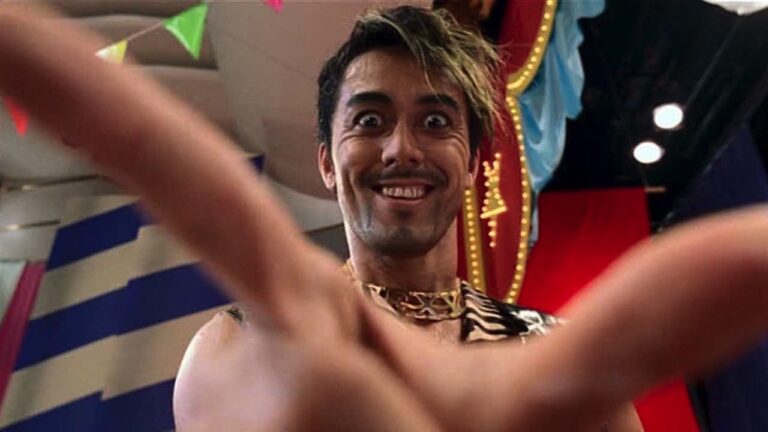
Five loosely interlinked dollops of gonzo storytelling is the offer in Survive Style 5+. They are all, to an extent, stories of surviving, and there are five of them, so that more or less explains the title. The + could be a reference to the second half of the movie, when things take a turn tonally. It might not. It’s that kind of film. After opening credits that are a frantic display of prime colours and might be described as titles genius Saul Bass seeing God on a mescaline binge, director Gen Sekiguchi gets down to business with his five stories, told in the order 1, 2, 4, 5, 3. Number one is … Read more

Miss You, Love You
How angry would you be if your life partner suddenly died and your son sent an employee along to help with the funeral, rather than turning up himself? That is the opening position of Miss You, Love You, an unusual two-hander running largely on bile. One of life’s great joys is watching Allison Janney playing righteously angry women and there’s plenty of that going on here. Furious Diane Patterson (Janney) on one side and meekly apologetic Jamie Simms (Andrew Rannells) on the other. The grieving wife and the office assistant, she needing help at this time… just not him. And Jamie there because he’s being paid to be, he’d probably rather be anywhere … Read more
The Lost Moment
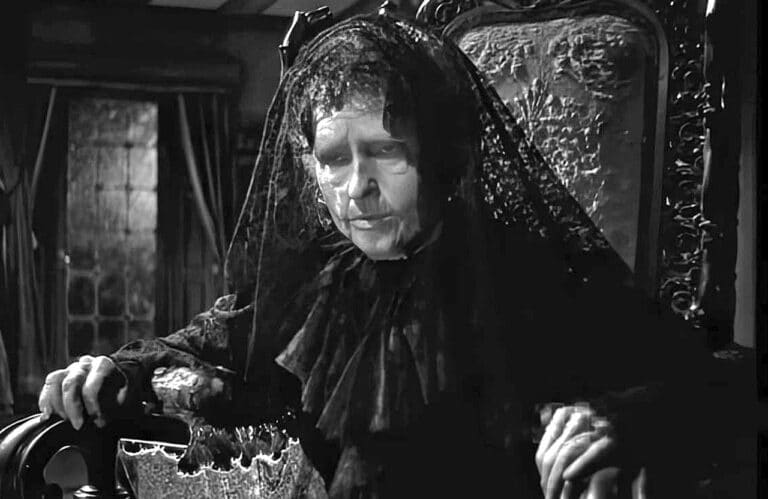
A flop redeemed by time, The Lost Moment was too gothic, too excessive for 1947 but here in the 2020s it fits quite snugly in alongside the likes of The Vourdalak, Uninvited, The Girl with the Needle, The Maid or either of the recent takes on Nosferatu. An adaptation of Henry James’s The Aspern Papers, it tells the story of a publisher posing as a writer inveigling himself into the Venice palazzo of ancient Juliana Bordereau, the onetime love of famous poet Jeffrey Ashton (as the Byron/Shelley composite Jeffrey Aspern is called here), hoping to lay his hands on the love letters Ashton left behind. It’ll be the publishing event of the century, … Read more