Long Live Freedom

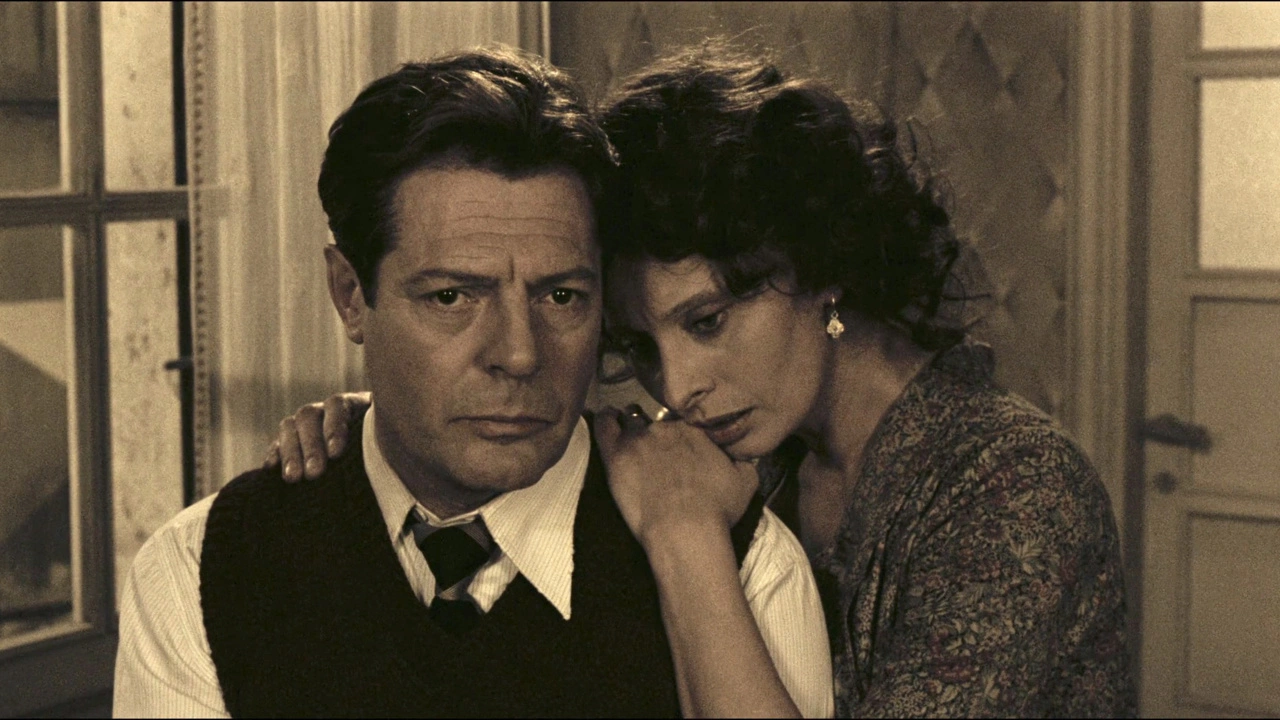
Giovannie (left) and Enrico

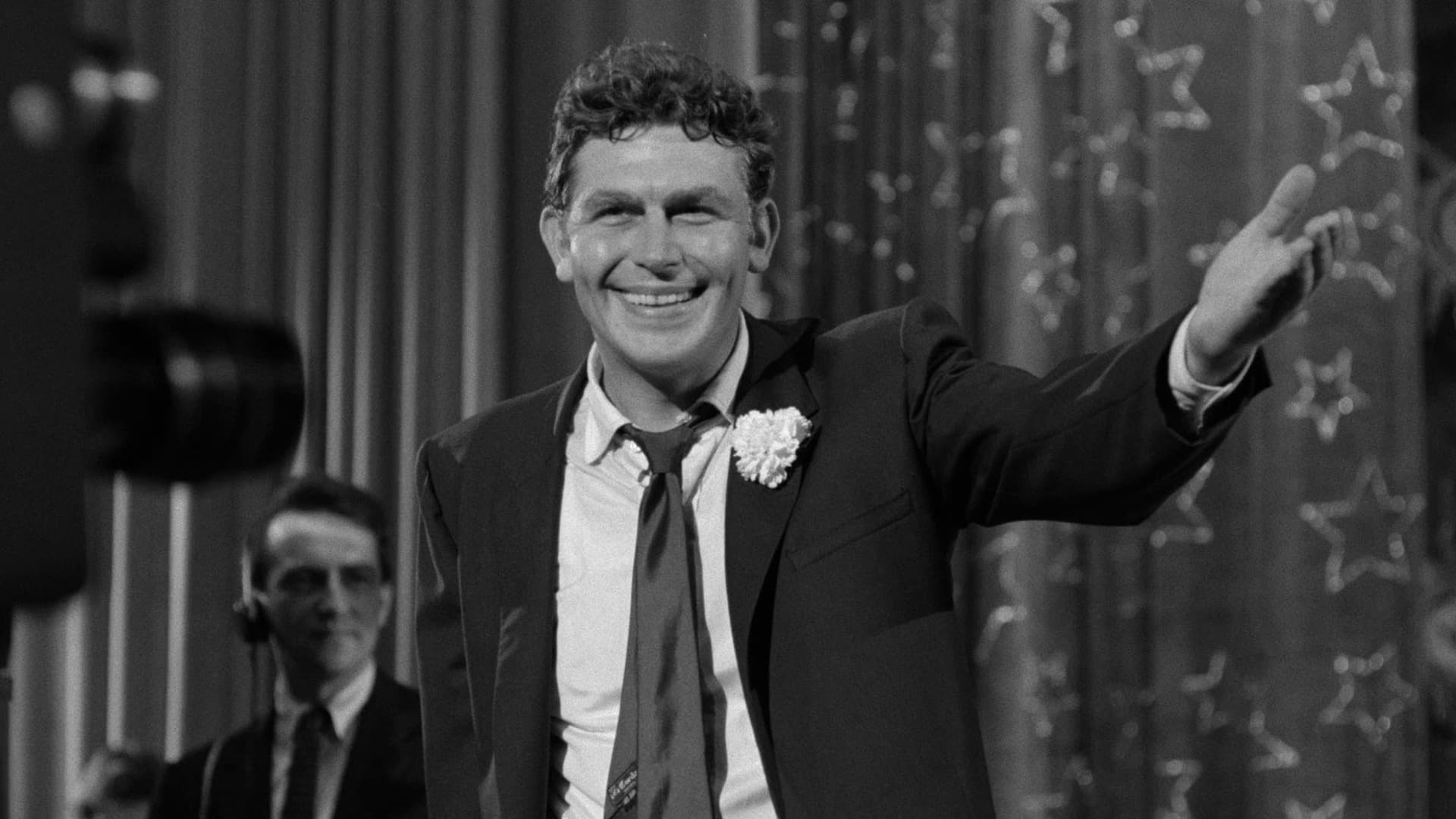
There aren’t many films about passion in politics, the oeuvre of Leni Riefenstahl to one side. But that’s what you get in writer/director Roberto Andò’s Viva la libertà (Long Live Freedom), the tale of a political party re-energised by an injection of vigour at the top. For vigour read madness. The great Toni Servillo plays two roles. In one he’s the lacklustre leader of an Italian political party who, having been badly heckled at a meeting, does a bunk one night and winds up hiding out in Paris at the home of an old flame. While Enrico hunkers down – eventually finding a gig working incognito on a film set – the party … Read more

Barbarian

Georgina Campbell in Barbarian

A young woman in Detroit for a job interview turns up at the Airbnb she booked online only to find that there’s a man already in there. A double booking. It’s dark, it’s late and it’s raining and there’s a convention in town, so finding another place to stay is going to be a stretch. After several minutes of her wringing her hands and him shifting his weight nervously from one leg to another, he does the gallant thing – no, he doesn’t vacate and leave it to her, but he does offer her the bed. He’ll sleep on the sofa, he says. The bedroom door has a lock on it and he’s … Read more

Behind Closed Doors

London, including the "gherkin"

Michael Oswald’s latest lid-lifting documentary, Behind Closed Doors, tells the story of ruling elites siphoning wealth off from developing countries and using it to buy high-end property in London. It is a story of familiar elements – the super rich and the London “laundromat” where dirty money is washed clean, plus an acquiescent British government and its supine crime agencies. Thanks to assiduous digging, Oswald and collaborator/writer/producer Murtaza Mehdi reveal precisely how the laundromat works and point the finger at the guilty. Not all of them – that would be a life’s work. Instead, a select few cases stand for the whole. It is, in any case, pretty much the same story every … Read more

Topper

Cary Grant, Roland Young, Constance Bennett

Dying is a lot of fun in the Topper films, a trio of light-hearted comedies kicking off in 1937 with Topper, which starred Constance Bennett, Cary Grant and Roland Young, then continued in 1938 with Topper Takes a Trip and bowed out in 1941 with Topper Returns. From the star names you might expect Cary Grant to be playing Topper but in fact it’s Roland Young, a specialist at fuddy-duddy roles, as the banker whose painfully ordered domestic existence is skittled by the arrival in his life of two ghosts – played by Grant and Bennett. They play the Kerbys, a fun-loving, hard-partying, vair vair rich couple clearly inspired by The Thin Man’s … Read more

Moonage Daydream

David Bowie montage

One for the fans, Brett Morgen’s brilliant phantasmagoric jukebox Moonage Daydream is everything the David Bowie nut could want for Christmas – a painstakingly researched, collated and montaged-together impressionistic celebration, with footage that’s never seen the light of day before, leaning heavily on his most creatively productive years in the 1970s. I stress “for the fans”, not the obsessives, who will carp that there’s no Tin Machine, or that albums like Outside or Earthling don’t figure. It’s not for the newbies either. There are no onscreen explicators, so if you don’t know, then Moonage Daydream isn’t going to tell you that this particular clip is from the Ziggy tour, or that another one … Read more

Court

Defence lawyer Vinay Vora with public prosecutor Nutan

Chaitanya Tamhane’s feature debut, Court, tells the story of a 65-year-old “people’s poet” who is up in court on charges of having incited the suicide of a sewer worker. Narayan Kamble is a grey-haired firebrand who sings angry songs about the state of the world and his beloved India, and how the love of money is destroying spiritual values. Apparently, he has sung a song strongly advocating that sewer workers should kill themselves. It must have been a catchy tune and/or forceful lyrically because two days later a man did just that. Was the death suicide? Was the song ever even sung? – that’s what the court case is meant to ascertain. While Tamhane … Read more

Elvis

Elvis on stage in the early years

It was Elvis’s misfortune to die in 1977, just as punk rock was coursing through mainstream culture. Old and worn out at 42, sick and fat, the King became an instant shorthand for everything that this new wave of music wanted to drive to extinction. He died on the toilet, the story went, with an impacted colon. What a metaphor – the man was literally full of shit. None of that features in Baz Luhrmann’s Elvis, a gaudy and joyous celebration of the man from cradle to grave, stopping off mostly at the best bits and leaving the dark stuff way off to the sides. This would be terribly problematic, if Elvis were the … Read more

Across 110th Street

Yaphet Kotto and Anthony Quinn

The Arriflex 35BL camera is the most important ingredient in Across 110th Street. It drives the look, the location, the acting style, the intimate mood, in fact almost every aspect of this strange hybrid of blaxploitation and noirish crime thriller. Silent, lightweight and released in time for the Munich Olympics, the new 35BL (the BL stands for blimped) was much easier to use than standard movie cameras. It could get into tight spaces and meant almost all of this film, also from 1972, could be shot out on the streets and inside the clubs and bars of New York – if you’ve seen the TV series The Deuce, Across 110th Street looks very much … Read more

Nobody’s Hero

Médéric

A middle aged Frenchman in running lycra approaches a prostitute. I really fancy you, he says, or words to that effect, but on principle I don’t believe in prostitution. I wonder if you’d consider a job off the clock. Oh no, sir, she replies, faintly amused by the directness of the man’s approach, I’m married and my husband is really not OK with me seeing other men when I’m not working. And so starts Viens, Je t’emmène (Nobody’s Hero), the latest farce of everyday sexual goings-on from Alain Guiraudie, whose Stranger by the Lake (2013) remains one of the most memorable films I’ve seen in the last ten years, if only because of … Read more

Marnie

Tippi Hedren as Marnie

1964’s Marnie is Alfred Hitchcock on the comeback trail. True, the previous year’s The Birds had been a big hit, with barely any critics openly saying what a lot of them must have thought – that it’s not top-flight (ouch) Hitchcock. It had made a stack of cash for the director and Paramount. But Hitchcock knew it wasn’t quite up there with the best. And so he set out to make a better film by deliberately borrowing from the best – himself. From Psycho another blonde called Marion (as Marnie is first introduced), the mother issues and lots of fraught sexuality. From the high 1950s era of North by Northwest/Vertigo/Rear Window the lush … Read more