Latest Posts
Medusa: Queen of the Serpents
An admission. Medusa: Queen of the Serpents isn’t the film I was after. I was aiming towards plain old Medusa, Anita Rocha da Silveira’s follow-up to Mate-Me Por Favor (Kill Me Please). Both films came out about the same time and when you type Medusa into Amazon, the covers of both films come up. Both feature a woman’s face and a greenish background. They’re pretty similar. Hence… Failure explained. Preamble over, let’s dive into a film that also dives pretty hard, and with great enthusiasm, into its low-budget ethos. It’s all set on a grim caravan site somewhere in low-rent UK, where a trio of working girls – Carly (Megan Purvis), Simone (Sarah … Read more
The Executioner
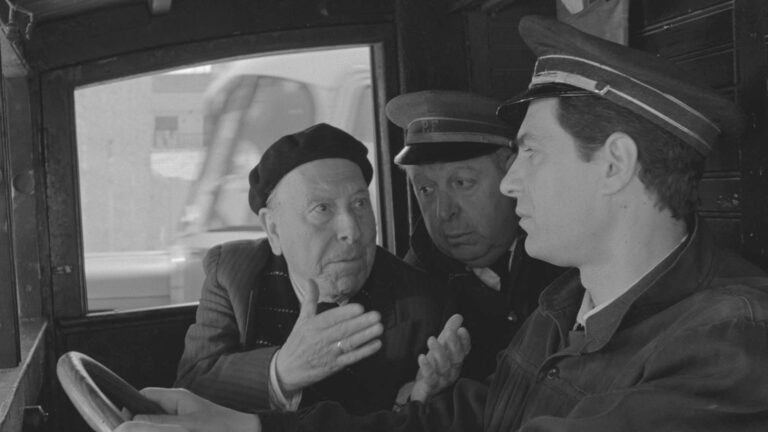
It’s only towards the end of The Executioner (El Verdugo) that it becomes really obvious what writer/director Luis García Berlanga is up to. Released in 1963 during the Franco era in Spain, when to criticise the regime was to court disaster, it looks to all intents and purposes like a light comedy, maybe like Italian ones starring Marcello Mastroianni, or British ones featuring Leslie Phillips, or the ones Billy Wilder was still reliably turning out in the USA. It focuses on José Luis (Nino Manfredi) a young undertaker in Spain who’d rather be an engineer in Germany, who we meet at a prison where he’s about to take delivery of a body recently … Read more
Let It Be Morning
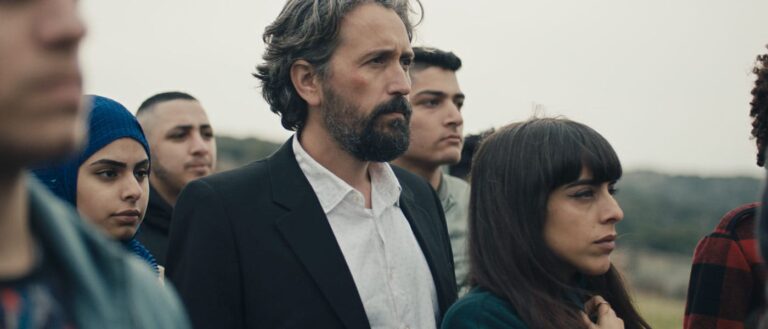
Sam and Mira are a Palestinian couple back in the village where he grew up. They’re at the wedding of his brother, a big, rowdy affair, with the extended family out in force, music, dancing, kids running around, it’s a lot of fun. It’s being held in his father’s half-built house and as Sami wanders off around it to grab some air and a moment to himself, he discovers exactly who is doing the building, one of the “daffawis”, as Palestinian refugees are disparagingly known by Sami’s far less woke brother in law. This refugee is a ragged looking guy and he’s camping out in a shell of a room with his young … Read more

Meshes of the Afternoon
Scan the most recent (2022) of Sight and Sound magazine’s polls of the greatest films of all time (critics are polled every ten years) and you’ll see films you know intimately (Singin’ in the Rain or Vertigo, maybe), films you might have seen once or twice (The Searchers, Playtime) and films by directors you’ve heard of but maybe aren’t over-familiar with (Ozu, Murnau, Varda, Renoir, Denis). And then, in the number 16 slot there’s Meshes of the Afternoon. Chances are you’ve not heard of it, or of its makers, Maya Deren and Alexandr Hackenschmied. But there it is. It stands out for other reasons too. It was made in 1943 and is silent … Read more

Seriously Red
“Find out who you are and then do it on purpose.” Seriously Red starts out with this pithy aphorism from Dolly Parton then dives into the story of Raylene “Red” Delaney, an Australian property valuer who really really wants to be the Tennessee country star herself. Red is a lovely woman but a terrible valuer, and director Gracie Otto and writer Krew Boylan’s film wastes no time in getting her fired from her job for being too empathetic, not quite pencil-skirted enough, and then putting Red on the road to glamour and glory as she goes all in on being a Dolly impersonator. But can you be true to yourself by being someone … Read more
The Piano Teacher
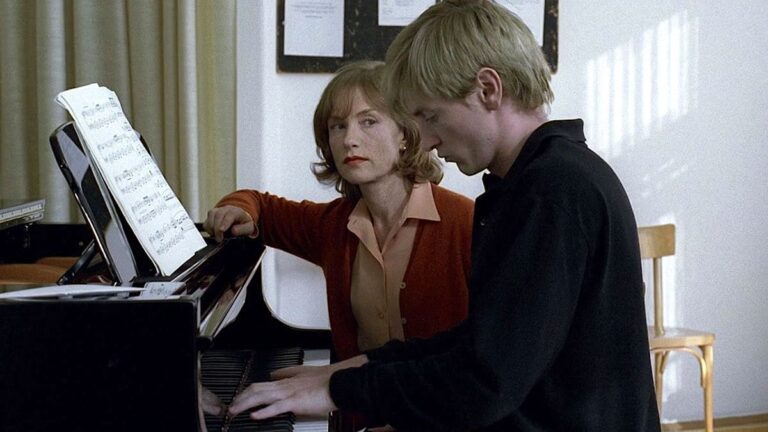
Michael Haneke’s The Piano Teacher came out in 2001, just about halfway through his remarkable 20-year run of films starting with 1992’s Benny’s Video, ending with 2012’s Amour and taking in Funny Games, Time of the Wolf, Hidden and The White Ribbon. All of them have a pitiless, lidless-eyed quality to them, and The Piano Teacher won all the major awards at Cannes when it was shown there. That will never happen again – the rules were changed so as to spread the love a bit wider in subsequent years. It’s an unusual film for Haneke because he didn’t write it and didn’t intend to direct it. He took on Elfriede Jelinek’s novel … Read more

Somebody I Used to Know
Like some sort of cosmic ordering service, romances and romantic comedies work to put together people who deserve to be together. But what happens if the people concerned don’t deserve to be together? That’s what Alison Brie and Dave Franco’s Somebody I Used to Know sets out to discover. Married couple Brie and Franco co-wrote it, Franco directs and Brie stars, as the Hollywood burnout who heads back to the small town where she grew up after her TV show, Dessert Island (a baking meets dating reality thing), gets canned. There she bumps into the ex she bailed out on suddenly ten years before to go and make it big in Hollywood. The … Read more

Lifeforce
The cheap and cheerful Cannon Group were ready for the big time in the mid 1980s. Having made a decent amount of money out of various barrelscrapers – Death Wish sequels, Chuck Norris actioners and assorted Ninja movies – they decided to move upmarket. Lifeforce was the result, a big-budget (for them) sci-fi movie and the first of a three-picture deal between director Tobe Hooper (still hot from Poltergeist) and the “Go-Go boys”, as Cannon owners, cousins Menahem Golan and Yoram Globus, were known. The film was a total flop on its release and got hacked about a bit in an attempt to make it more sellable. That didn’t work either. However, over … Read more
Alcarràs
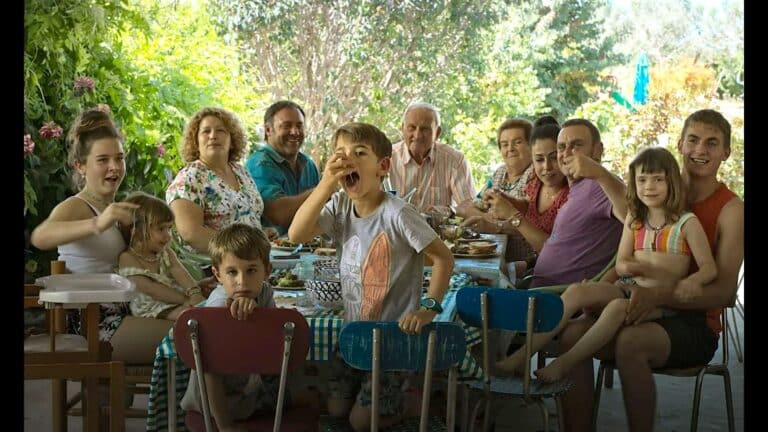
Like Carla Simón’s previous film, 2017’s Summer 1993, Alcarràs is an intimate family drama shot in an unobtrusive semi-documentary style with performances so good you wonder how come actors like these get overlooked at awards time. There’s a feature idea – too good for an award (quietly files away idea only to forget it). Not the film itself, which has won a rake of gongs for direction and screenplay. But if I were handing out the trophies, almost any one of the actors (non-professionals all!) in Alcarràs involved would be a prime candidate for an honour, with Josep Abad at the top of the list. He plays Rogelio, the aged grandfather and patriarch … Read more
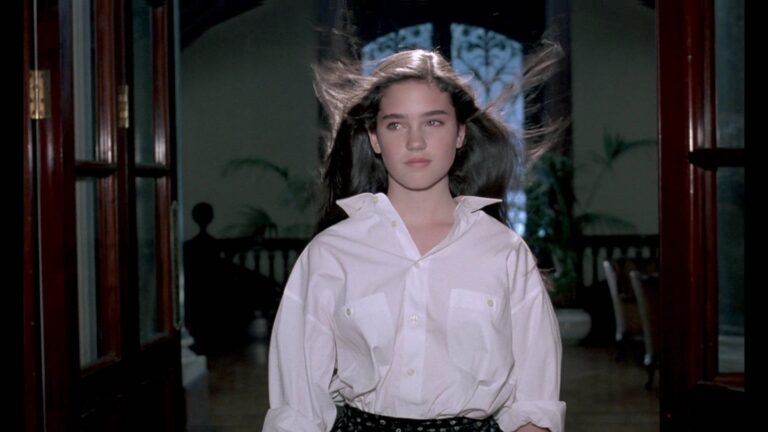
Phenomena
The lesbian boarding school classic Mädchen in Uniform generally seems to be in the mix in Dario Argento films, and so it is with 1985’s Phenomena, another instance of a naive teenager at a girls school being monstered by staff, pupils and other forces. In this case it’s Jennifer (Jennifer Connelly), a new arrival at a school in Switzerland, getting a frosty reception from the stiff-faced headmistress (Dalila Di Lazzaro), a woman with a gravedigger’s haircut and by the other girls in the school. Everyone seems to be against her, in fact, apart from her nice roomie, Sofia (Federica Mastroianni, niece of Marcello). Out in the big wide world there’s a killer on … Read more
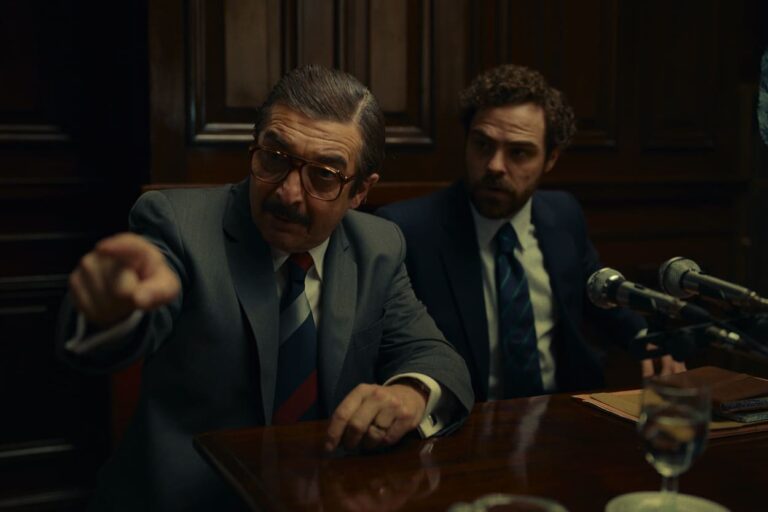
Argentina, 1985
In classic Hollywood triumph-over-adversity style, Argentina, 1985 deals with weighty events in a superbly accessible way as it tells the story of the lawyer who put the dictatorial Argentinian Junta on trial and saw that they got their judicial just deserts. It was a big film in Argentina, understandably, but also got nominated for an Oscar in the best international feature category – against tough competition (Eo, The Quiet Girl, Close and, most of all, All Quiet on the Western Front) – and that has to be on the strength of its writing, which is lucid and brisk, and the direction, which makes regular use of Hollywood shorthand to keep things moving. If … Read more
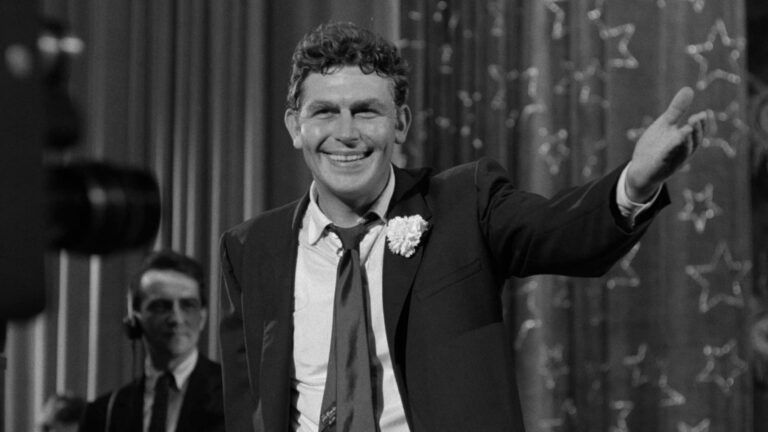
A Face in the Crowd
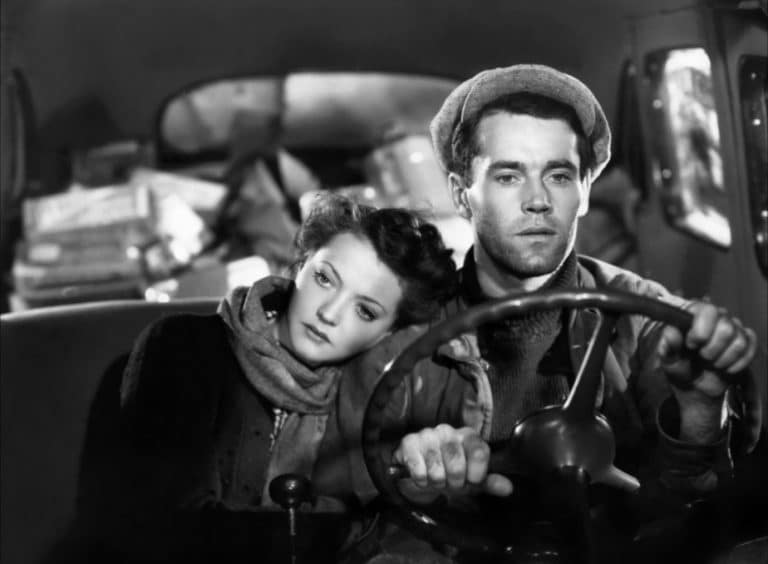
Loved by Truffaut, borrowed by Spike Lee, strangely overlooked today, A Face in the Crowd is a prescient film from 1957 that uses the word “influencer”, is worried about demagogues in public life, the corrupting effect of the media and the weird lives of celebrities. It’s directed by Elia Kazan, a man with an eye for for a political meme – he did Gentleman’s Agreement (anti-semitism) and On the Waterfront (union corruption) – and was made five years after he’d testified to the House Unamerican Activities Committee and “named names”. The febrile McCarthyite atmosphere of the times is partly what Kazan and regular writer Budd Schulberg are tilting at in the story of … Read more