Latest Posts

Enzo
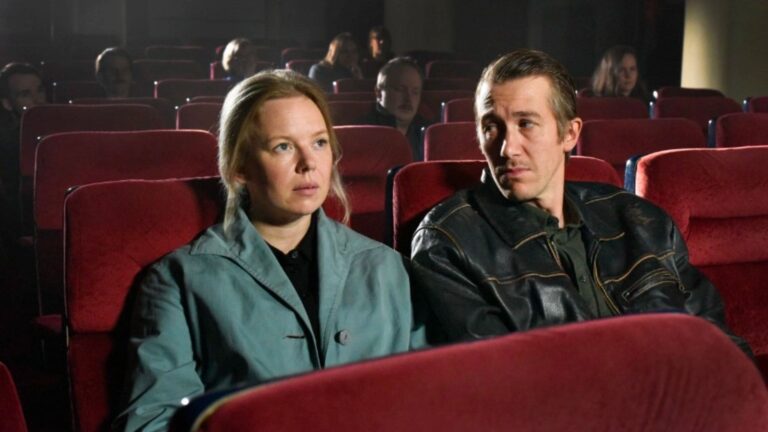
If it’s gay versus queer then gay wins out in Enzo, a coming-of-age/coming-out drama of the old school, where the homosexuality is the subject under discussion, the problem to be solved, rather than window-dressing to something else. Enzo is a 16-year-old French lad who has rejected the life that was in his stars. Currently working as a labourer, he was meant to be following a similar trajectory to his brother – university, some sort of career – but has instead dropped out and is hefting sacks about on a building site where his soft hands are picking up blisters. As we meet him, Enzo is being given a hard time by his boss, the … Read more
The Wrecking Crew
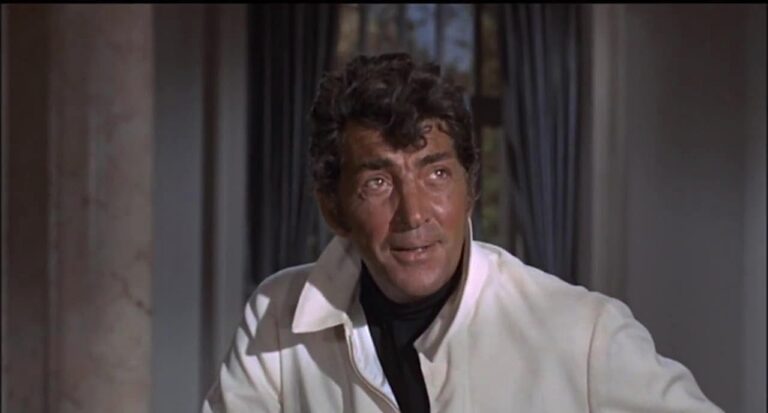
1968’s The Wrecking Crew was the last of the Matt Helm movies. A series of chintzy James Bond knock-offs – Faux Faux Seven? Junk Bond? – starring Dean Martin as a spy laidback to the point of requiring resuscitation, it had pretty much exhausted the seam by this fourth outing. Box office wasn’t great either so when Martin’s co-star, Sharon Tate, got murdered it made for a handy smokescreen. In public utterances Martin said that her death had taken the fun out of the films and that’s why he was giving up. In reality… who really knows? As for plot: a bullion heist so huge that it needs to be kept quiet otherwise … Read more

Nuremberg
Would you have guessed, when Russell Crowe was appearing in Australian TV soaps like Young Doctors and Neighbours that one day he’d be playing the lead in Nuremberg? And that he’d have gone from being a slim, handsome chap with tousled hair to someone who could effortlessly play Hermann Göring, sour-faced, fat and oozing self-regard. The self-regard maybe – actors, huh – and transformations are what actors are all about, after all. Wibbling to one side, Crowe’s performance as Göring, Hitler’s Supreme Commander of the Air Force and an unrepentant Nazi right to the last moment, is the making of James Vanderbilt’s film. Set at the Nuremberg War trials in the aftermath of the … Read more
St Benny the Dip
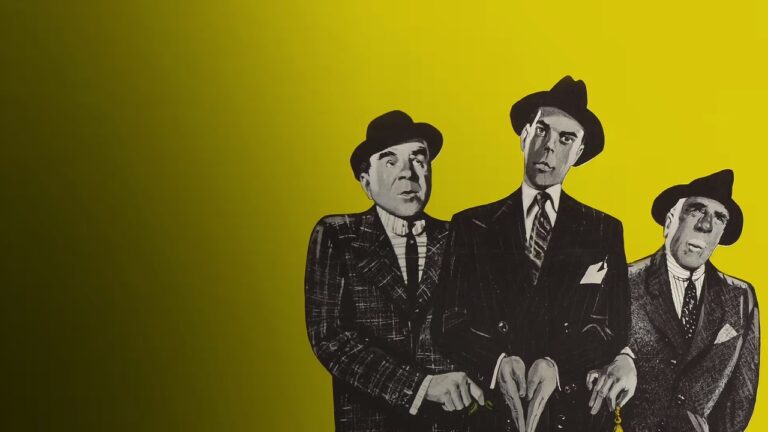
I didn’t know, going into St Benny the Dip, that a “dip” is a pickpocket. In these circles the dip is the one who goes in for the goods, the “stall” having provided a distraction, while the “mule” is the one to whom the hot item is swiftly transferred, in case the dip is caught in the act. That established, into the film, which doesn’t seem to be about pickpockets at all, though it is about street criminals. When we meet Benny (Dick Haymes) the smooth, Matthew (Roland Young) the plausible and Monk (Lionel Stander) the operator, they are midway through a gambling sting, trying to bilk a high roller, when the police … Read more

Millennium Actress
There are two big Japanese animes from 2001. Millennium Actress is the other one, the one that isn’t Spirited Away. A Citizen Kane-style drama, it’s a sweet and poignant film about a documentarian and his cameraman tracking down a legendary actress who stepped away from the limelight decades before. With the studio where she spent her glory years now being demolished and the end of an era physically apparent, they decide this is the hook they need for a film about a studio and its most famous star. But will Chiyoko Fujiwara even still be alive? Given this lead-in – and the Kane-like air of mystery which writer/director Satoshi Kon builds around his … Read more
The Cranes Are Flying
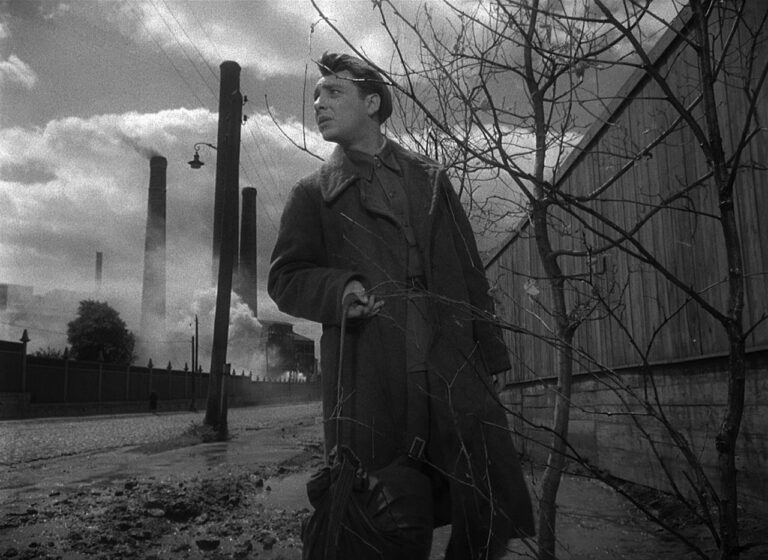
The Cranes Are Flying is remarkable in so many ways. The only film from the USSR to win the Palme d’Or at Cannes, it is also a reminder that an epic doesn’t need epic length to tell its story. A simple story at that. Two people very much in love. Slightly diffident Boris (Aleksey Batalov) and feisty, beautiful Veronica (Tatyana Samoylova). He’s slightly punching above his weight, and knows it, and it’s this that probably tips Boris’s hand when he is weighing up whether to volunteer to go to the front, as the Nazis advance on Moscow. This in spite of the fact that composer Mark (Aleksandr Shvorin), Boris’s handsome cousin, has designs … Read more

The Christophers
The story goes that Steven Soderbergh and Ed Solomon wrote The Christophers for Ian McKellen and Michaela Coel without having any idea if they’d do it or not. According to the IMDb trivia on this film, Soderbergh and Solomon didn’t even know McKellen and Coel, which is plausible in Coel’s case – she’s only been around a relatively short time – but surely not in McKellen’s. It’s the sort of film that Soderbergh knocks out between big projects. For every Ocean’s 13 a Kimi, for every Magic Mike a Presence – that is to say: tiny cast and crew, controlled location, films that could almost be stage plays. Here, McKellen is a fruity … Read more
Random Harvest
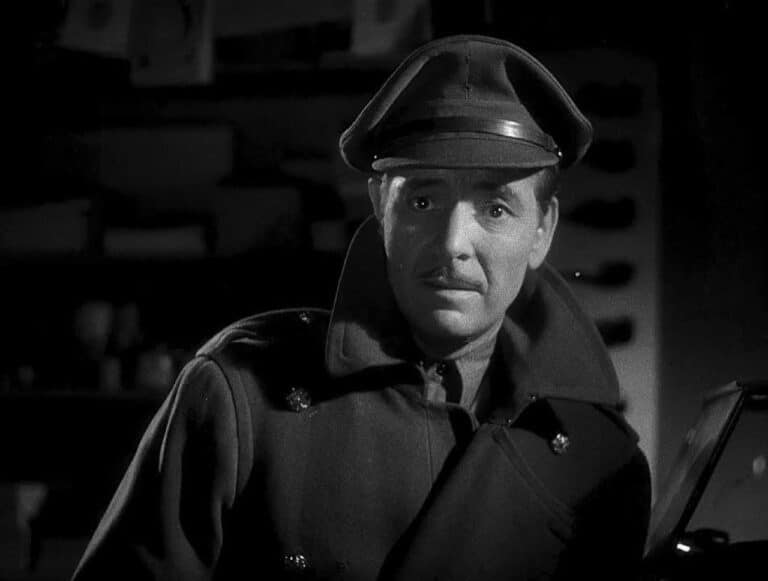
Random Harvest takes the amnesiac plot used and abused by mid-20th-century moviemakers and pushes it into and beyond the realm of the absurd. Audiences at the time loved it, the film was multi-Oscar nominated and even though it ascends into madness fairly early on, it’s a fabulous madness, confected by MGM with all the lush plushness the studio could engineer. Ronald Colman is too old by a stretch but let’s put that to one side as we watch him playing a soldier who is back from the First World War and languishing in an asylum with PTSD and amnesia. In short order he accidentally gets free, meets a showgirl and strikes up a … Read more
Project Hail Mary
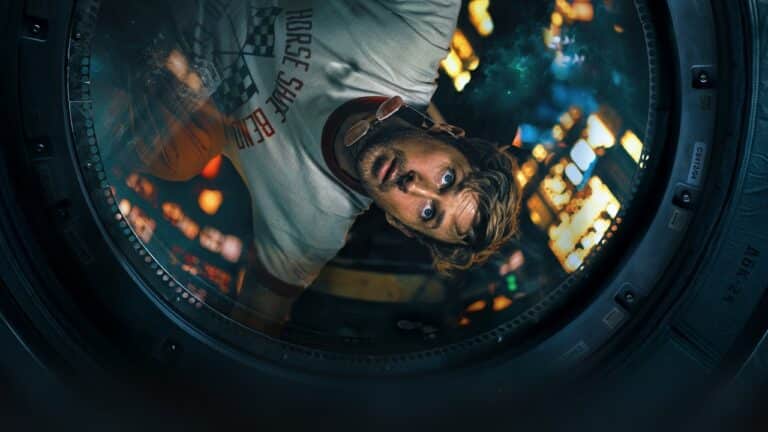
Dry and wry and suited to the talents of all involved, Project Hail Mary’s gets a serious attack of the cutes midway through. That apart, it’s a rip-roaring space adventure of the old school whose good bits are so good that its tweeness can be overlooked. I think. It’s an adaptation of an Andy Weir book, the guy who did The Martian, and is again deeply procedural. This time, instead of Matt Damon growing potatoes in human shit after being accidentally left behind on Mars, we have Ryan Gosling waking up on board a space ship light years away from Earth. His job is not to save his own skin but to work … Read more

Operation Diplomat
A neat example of the brisk storytelling of writer Frances Durbridge – a British crime eminence in 1953 – Operation Diplomat is also a prime example of the skilful directing of John Guillermin, who tells that story at speed. He’d later go on to direct successes like The Towering Inferno and 1978’s Death on the Nile, where an ability to keep the story moving while giving each of a vast array of stars their moment in the spotlight would turn out to be vital. Here, Guillermin is in the British B-movie phase of his career. And though he doesn’t have to corral herds of actors and swing his cameras around exotic locations and impressive … Read more

Late Shift
There’s a crusading aspect to Late Shift, made explicit in an on-screen endnote about the shortage of nurses worldwide. Focus on a particular to create the universal is the idea, Petra Volpe’s film following a single nurse for a single night as she deals with patients in an understaffed Swiss hospital. The writer/director is lucky to have Leonie Benesch as her star. She’s particularly skilled at playing woman out of their depth, both in the public sector (as in 2023’s The Teachers’ Lounge) but more generally too – see 2024’s September 5, or the early episodes of German TV show Babylon Berlin, which lost a lot of heft when she left. Here, it’s … Read more
Incubus
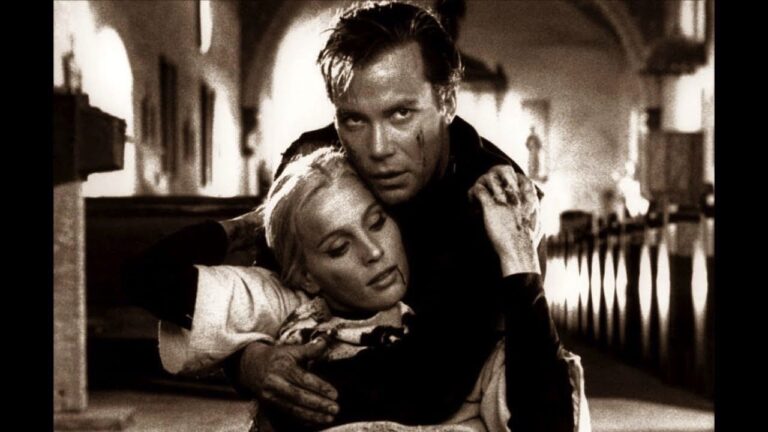
OK, so, films in Esperanto starring William Shatner… Anybody? The answer is Incubus, a true oddity from 1966 made just before Shatner started work on Star Trek. It’s one of only two films made in the world’s most widely spoken “constructed auxiliary language” (made up, in other words) in the 1960s. The other being 1964’s Angoroj. Wikipedia says there are two more from the noughties – 2006’s Gerda malaperis! and 2007’s La Patro, which is only 40 minutes long and about which not much is known. Incubus is undoubtedly the most famous of all of them, partly because of Shatner, partly because it’s directed by Lesley Stevens, the producer of The Outer Limits, who … Read more