Popular Reviews

Beanpole
Beanpole (Dylda) is an obsessively observed, massively ambitious Russian film set in the aftermath of the siege of Leningrad which tells its story of lives brutalised by war from the point of view of two young women. It won Kantemir Balagov the best director gong at Cannes in the Un Certain Regard category. That’s the one for young directors doing ambitious or unusual work, which puts Beanpole in the company of films such as Dogtooth, The Death of Mr Lazarescu, White God and Rams – classics all. Balagov, a onetime student of Alexander Sokurov, had already picked up the FIPRESCI prize at Cannes two years earlier, when he was only 26, with his … Read more
America as Seen by a Frenchman
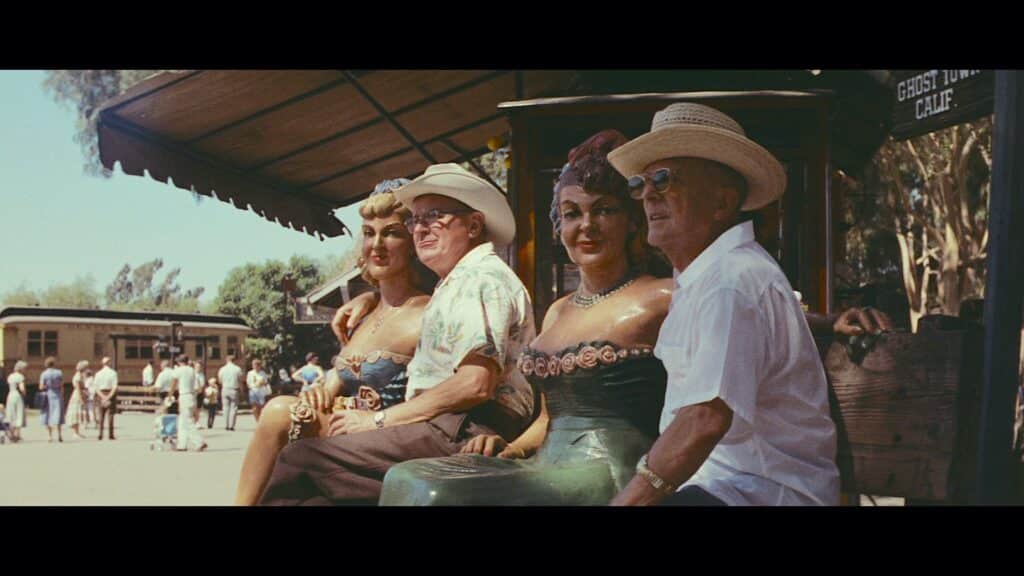
In the late 1950s the French documentarian François Reichenbach took his camera to the USA for 18 months. America as Seen by a Frenchman (aka L’Amerique Insolite) is the result, a snapshot of a country caught at a moment in time, where the tension between homogenising mass consumption and the individual pursuit of happiness runs through almost every frame. Reichenbach starts out in California and then winds his way across the country, finally ending up in New York. The opening shot is eye-catching – two American sailors staring out from a ship as it pulls into San Francisco Bay and under the Golden Gate Bridge – and Reichenbach continues to deliver seductive imagery at … Read more
Kokuho
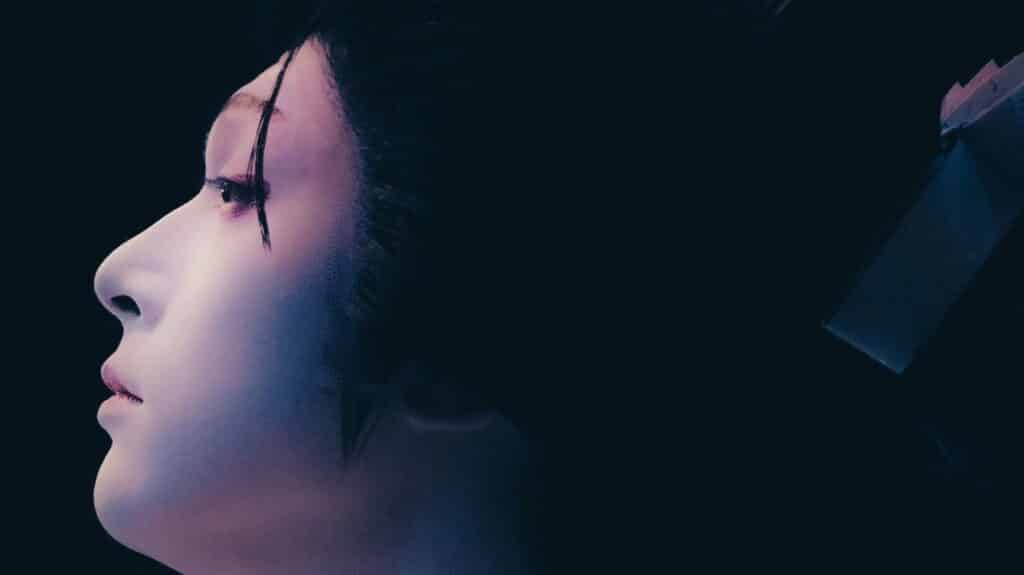
The highest-grossing home-grown live-action movie in Japan’s history, Kokuho is a decade-straddling epic about the sacrifices required to make great art, served up as a Jacob and Esau tale of two boys – one who has all the gifts, the other not so many. The twist being that the talented kid is the son of a dead yakuza, and so cannot move easily, if at all, in the rarefied world of the kabuki theatre – his chosen field. As Lee Sang-il’s sumptuous film opens, young, orphaned Kikuo’s talent has just been spotted by one of kabuki’s masters, Hanjiro (Ken Watanabe). Soon, the disadvantaged child (Soya Kurokawa as a pretty boy, Ryô Yoshizawa as a … Read more
The Whisperers
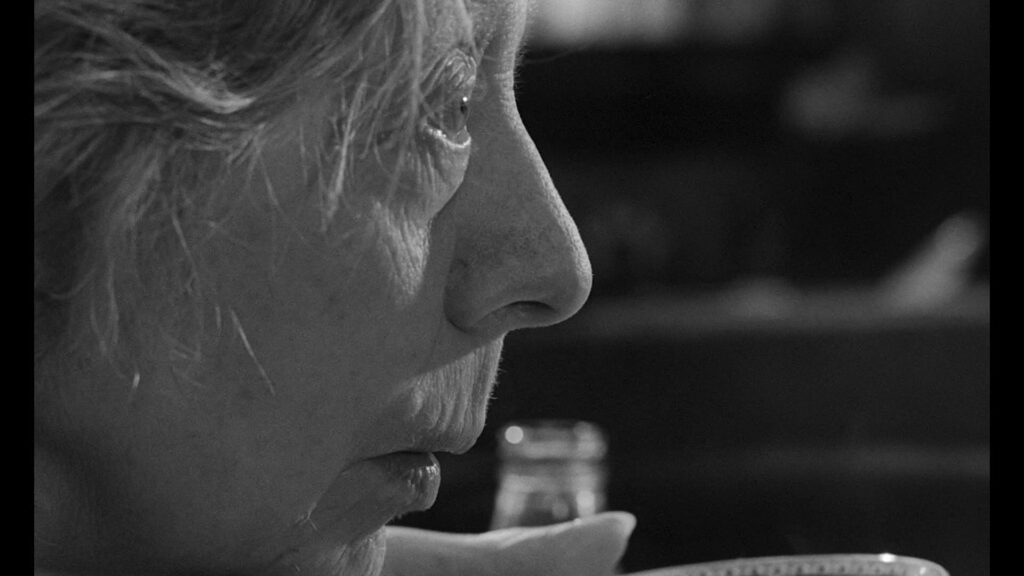
As good a portrait of what it means to be old and lonely as any you’ll see, 1967’s The Whisperers is an atypical British movie for the Swinging mid-Sixties, almost a return to the kitchen-sinkers of the early part of the decade. Bryan Forbes, who wrote and directed and was a smart man, understands the risks of making this film at this time and so doubles down on the “grim up north” stereotype, starting his film with visuals strongly reminiscent of the TV show Coronation Street – back-to-back houses, empty streets, dogs in the alleys rather than people, chimney-tops and brick walls – before bringing his focus in on one elderly lady. He … Read more

Of Time and the City
A movie for every day of the year – a good one 6 July John Lennon meets Paul McCartney, 1957 On this day in 1957, a 15-year-old Paul McCartney went to a gig held after a church fete at St Peter’s Parish Church, Woolton, Liverpool. The fete had been a traditional affair, with tombola, a cake stall, games of hoop-la and a rose queen. There had also been entertainment, in the shape of a young local skiffle band called the Quarry Men – so called because most of the members were schoolboys at Quarry Bank Grammar School. The band was led by a 16-year-old John Lennon and as they set up again for … Read more
Becoming Led Zeppelin
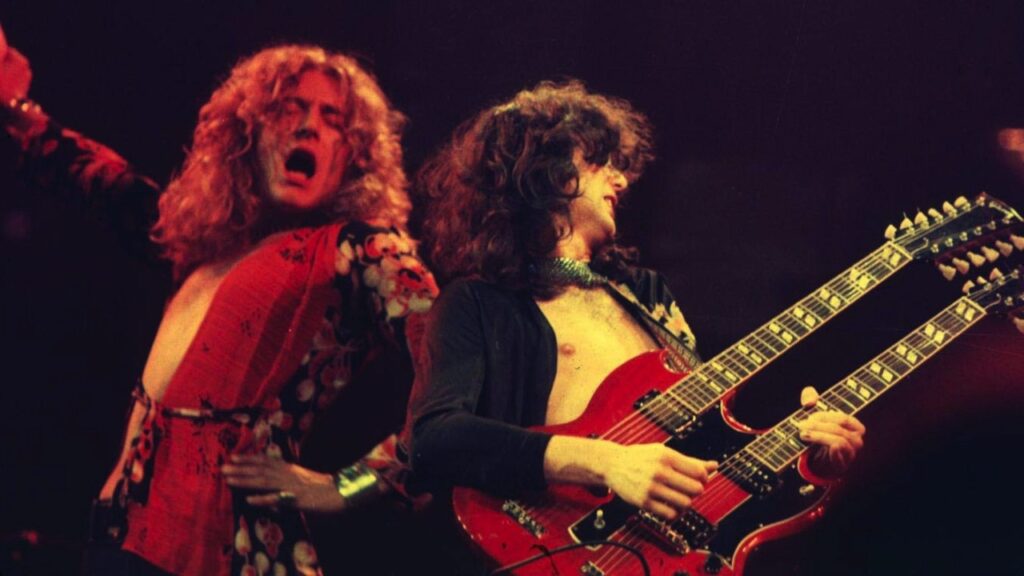
When Bernard MacMahon and Allison McGourty were setting out to make Becoming Led Zeppelin they didn’t realise that surviving band members Jimmy Page, Robert Plant and John Paul Jones had all seen their TV series American Epic, about roots music in the US, and were big fans. So it came as more than a surprise to them when Page, Plant and Jones readily agreed to take part in a documentary about the crucial early days of one of the most famous rock bands of all time. They’d expected the sort of blank refusal this notoriously publicity shy band generally dished out to would-be suitors. The result is in many ways a traditional documentary, … Read more
The Fall of the House of Usher
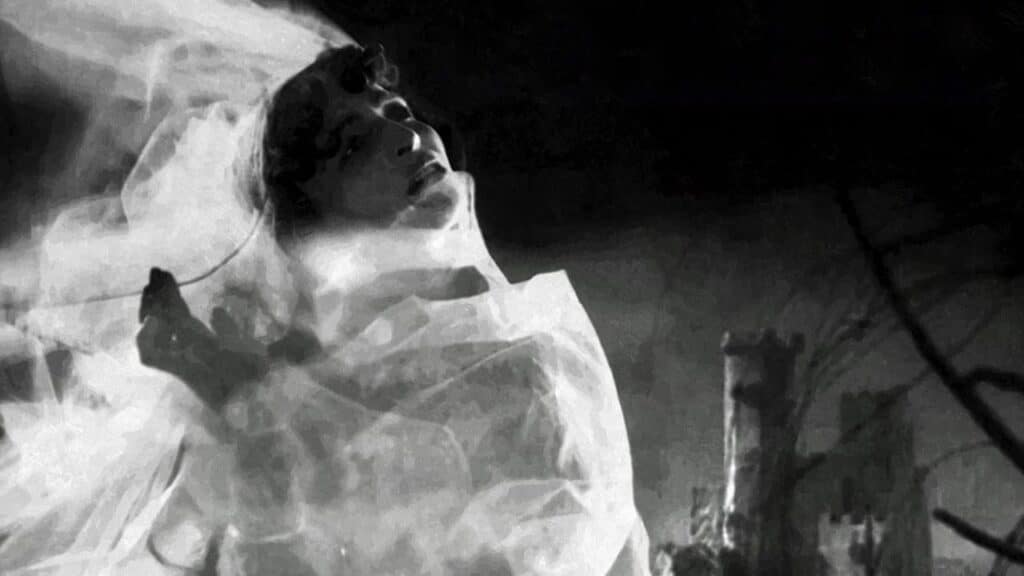
Jean Epstein’s The Fall of the House of Usher is surely the best version of the Edgar Allan Poe story ever. Loved by director Kurosawa, revered by critic Roger Ebert, it perversely only seems to exist in streaming and hard-copy versions that don’t do it justice. This is one of the best gothic chillers ever made – why doesn’t it look better than this? Possibly because it’s a silent movie, and they tend to get the silent treatment? Luis Buñuel worked on it too, so there’s another reason it should be more respectfully treated, though he did walk off halfway through, appalled at Epstein’s cavalier treatment of Poe’s story. But it remains true … Read more
Gazer
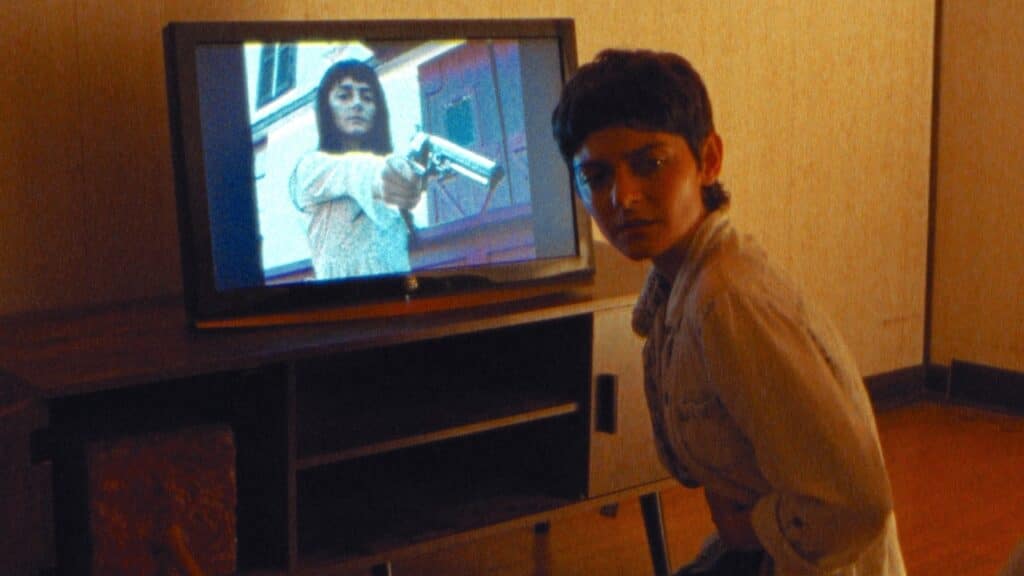
Straight out of the box – other viewing options are available – Gazer is a remarkable movie. How remarkable becomes clear once you know a bit of its backstory. But for starters let’s say what it’s about and who’s in it etc. It’s a neo-noir, more old-school noir than most, and stars Ariella Mastroianni as a young woman with a neurological condition called dyschronometria, which is an inability to measure time or relate to it. Frankie (Mastroianni) is adrift in the world without reference points. She struggles to keep her show on the road. As we meet her she’s being fired from (another) McJob, for being distracted by something going on in an upstairs … Read more
The Avengers: Series 4, Episode 14 – Silent Dust
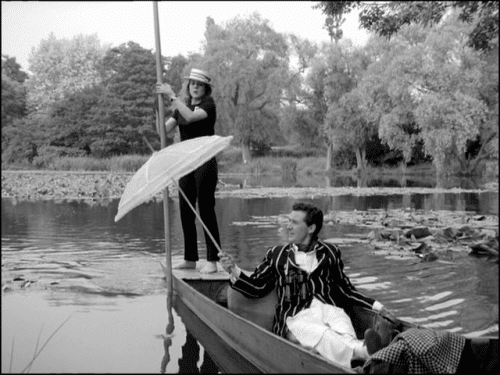
Silent Dust first aired on New Year’s Eve 1965 and from a 21st-century vantage point has all the makings of a very prescient episode of The Avengers. In what starts out as an obvious parody of a nature documentary, we first observe birds nesting in the trees, then watch as the birds start dropping off the branches. The second eco-themed outing for Steed and Peel (see A Surfeit of H2O) owes a debt to Rachel Carson’s massively consequential 1962 book Silent Spring. Carson was the first to bring to public attention the doubts that many scientists had been harbouring about the effects of widely available insecticides such as DDT, and detailed the effects on … Read more
Mill of the Stone Women
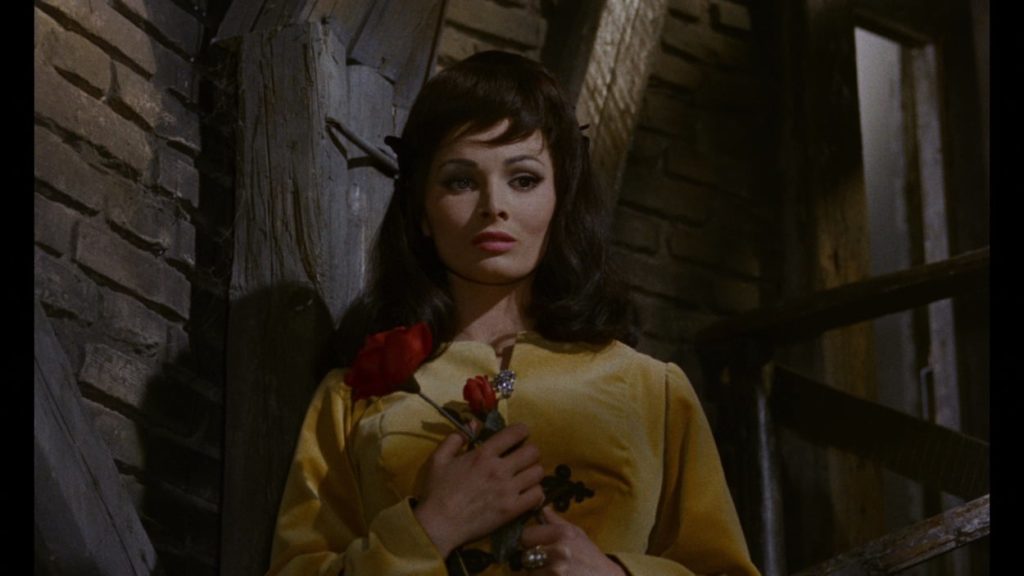
1960’s Mill of the Stone Women was the first Italian horror film to be shot in colour – Technicolor, no less – and is a landmark film which opened the door to the lurid looks and titillating scenarios of the giallo genre. Also known as Drops of Blood (or Il mulino delle donne di pietra, in the original Italian), but not in the slightest bit frightening no matter what you call it, it’s soaked in atmosphere only enhanced by the dislocating effect of the foreign language dubbing. It’s dubbed no matter which language you watch it in – originally it came in German, French, Italian and two different English dubs (one more US, the … Read more
Essex Boys
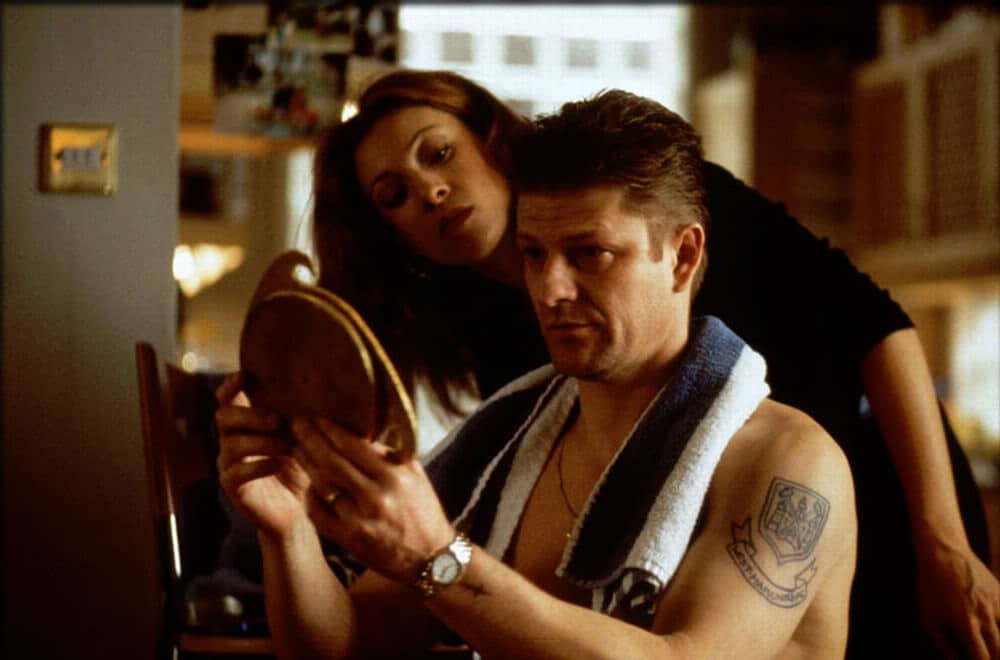
Though not a perfect film by any means, this story about violent pill-dealing mafia wannabes has bags of flavour. It’s based on the Rettendon Range Rover murders, which saw two drug barons and their driver murdered in a car in the back of beyond, in December 1995. Four films have been made (as I write) about the events of that night but this is the first and it’s probably the best (though Bonded by Blood is tasty too). Quite why this one event has spawned so many fictional retellings is a mystery, though my personal theory is that a fair bit of smallscale film-making in the UK is more about laundering money than … Read more
When Strangers Marry
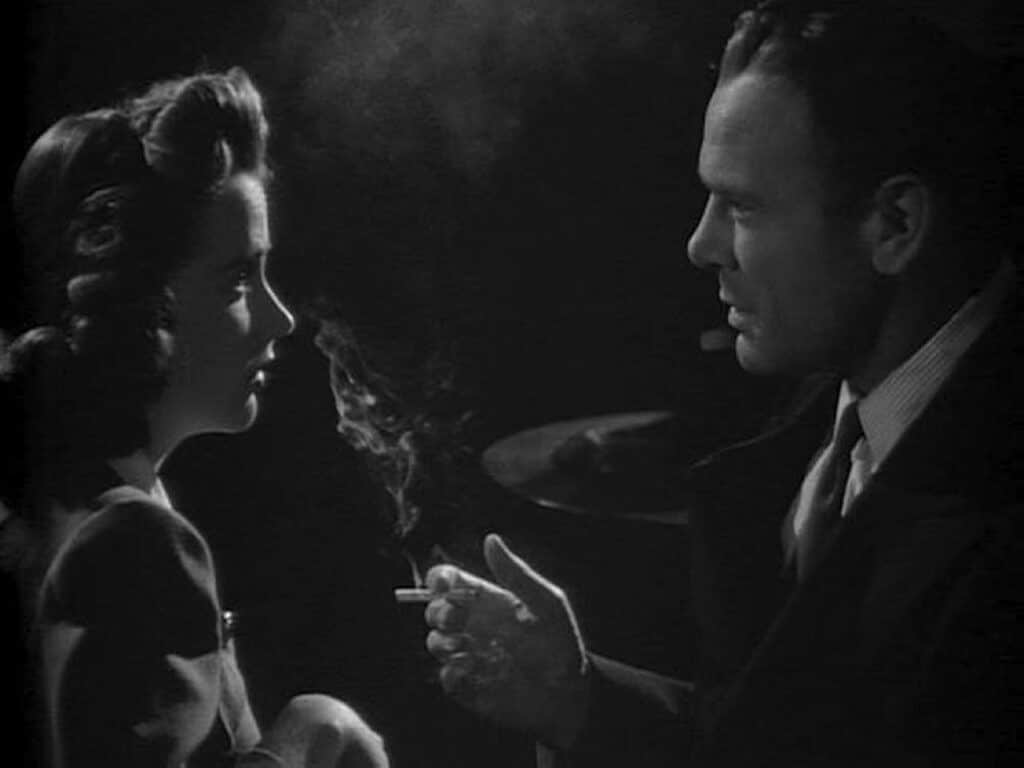
A peculiar, interesting and not entirely coherent crime thriller about a woman who marries a man she barely knows and then starts wondering if he’s a killer. When Strangers Marry makes more sense as a title than Betrayed, which is the flag it flew under when it was re-released in 1949, five years after its debut. The re-release also allowed a bit of rejigging of the pecking order. Third-billed Robert Mitchum – who’d become a star in the interim – is top-billed second time round. To be fair to everyone, Mitchum is in it more than Dean Jagger, who plays the mysterious salesman Kim Hunter’s wide-eyed Millie Baxter has married more or less … Read more