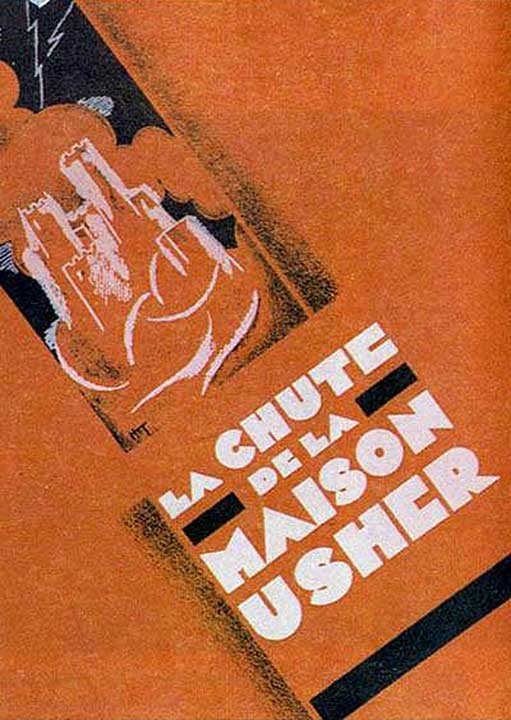
Jean Epstein’s The Fall of the House of Usher is surely the best version of the Edgar Allan Poe story ever. Loved by director Kurosawa, revered by critic Roger Ebert, it perversely only seems to exist in streaming and hard-copy versions that don’t do it justice. This is one of the best gothic chillers ever made – why doesn’t it look better than this?
Possibly because it’s a silent movie, and they tend to get the silent treatment? Luis Buñuel worked on it too, so there’s another reason it should be more respectfully treated, though he did walk off halfway through, appalled at Epstein’s cavalier treatment of Poe’s story.
But it remains true enough to Poe’s story of a relationship of pathological co-dependency. The Ushers, Roderick (Jean Debucourt) and Madeline (Marguerite Gance, wife of director Abel), are “the last of their race”, a husband and wife (Poe said also brother and sister, Epstein is silent), who rattle around in a gigantic gothic mansion where she is wasting away from some mortal illness (in-breeding wouldn’t be too much of a stretch) and he is attempting to rescue her from an early grave by obsessively painting a portrait of her.
In ways that are not explained, Roderick’s fanatical daubing is causing the portrait to take on a lifelike aspect. Maybe the picture will be the saving of Madeline. Maybe that’s what’s killing her…
Through a mirror darkly, Epstein is giving us the myth of Pygmalion (work of art comes alive) or possibly of Orpheus and Eurydice (hero rescues his beloved from the afterlife), though he’s also clearly borrowed heavily from Bram Stoker’s Dracula, especially the way he introduces his narrator, Allan, as a stranger arriving at an inn and shocking the locals by informing them where he is heading – the house of Usher.
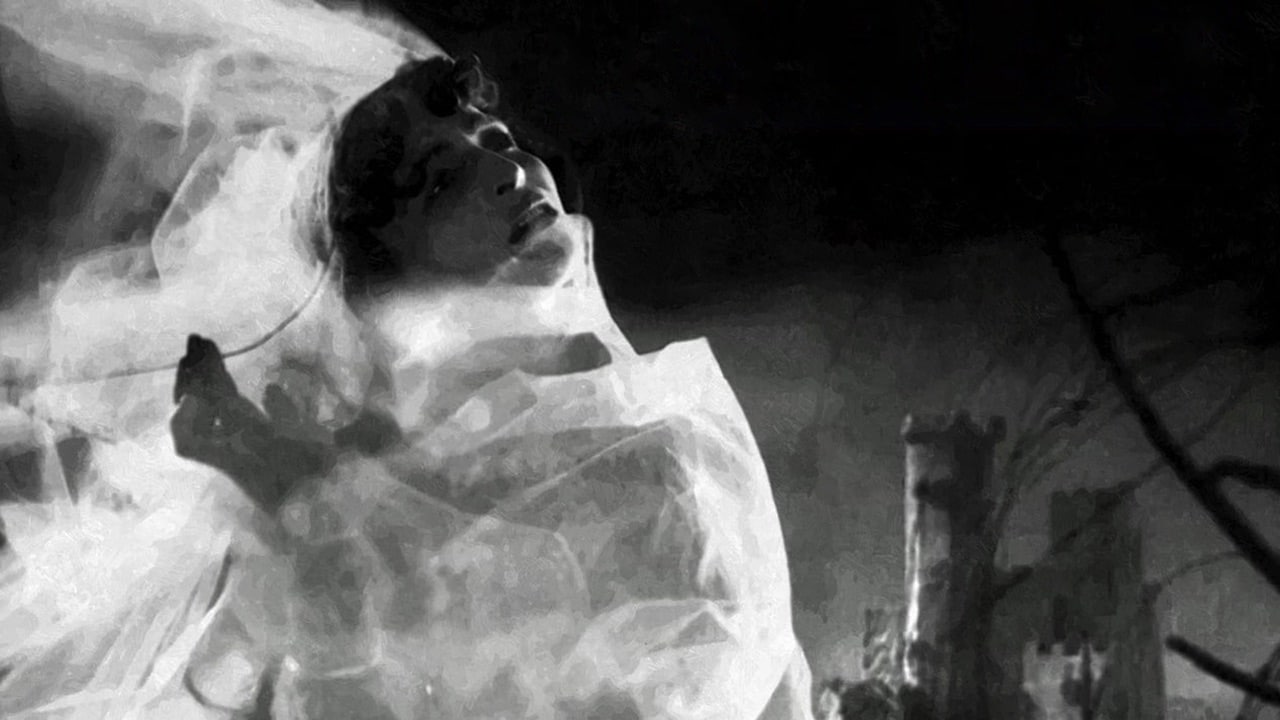
Once Allan (Charles Lamy) gets there, this old friend of Roderick through whose eyes we see it all is subjected to full-bore gothic. Epstein lays on the style with all the panache he could muster (which is a lot). Gigantic halls shot from ground level to make them feel even more vast. Candles guttering. Chiffon blowing in the breeze. Shadows. Wind (you could write a thesis on Epstein’s use of the wind machine).

Some directors are visually original, others are technically brilliant. Most are are neither but Epstein, unusually, is both. His use of visual effects is striking and also innovative. His command of his camera is second to none – the over-the-shoulder shots as Roderick stalks the castle are Steadicam decades before it was invented. The scene where a grief-demented Roderick darts around the room and the camera goes with him is astonishingly fluid.
Epstein also mixes it up. Chopping between close-ups and long shots, switching up the pace of the editing, dark and light, outside and inside, fantastical and realistic, misty and clear, slo-mo and normal speed, fixed shots and cameras on the move.
What’s more, the visual invention and technical whizzery don’t seem like conceits. They add to the mood, drag us into the film rather than making us regard it from outside.
Like a later film-maker, Epstein is obeying Billy Wilder’s famous three golden rules of filmmaking: “thou shalt not bore, thou shalt not bore, and thou shalt not bore!” And like Jean Cocteau, who also came later, his movie is so visually remarkable that you could screengrab almost any moment of it and stick it on the wall .
And yet, no restoration has yet been forthcoming. It’s true of much of Epstein’s work but seems most obviously a crime in the case of The Fall of the House of Usher, an obvious masterpiece. Or maybe I’ve been searching in the wrong places. Someone set me right if so…
The Fall of the House of Usher (1928) – Watch it/buy it at Amazon
I am an Amazon affiliate
© Steve Morrissey 2025