Popular Reviews
Smash & Grab: The Story of the Pink Panthers
A movie for every day of the year – a good one 29 October Star of India stolen, 1964 On this day in 1964, the famous Star of India gemstone was stolen from the American Museum of Natural History in New York. Though not the biggest gem in the world, this blue-green 563.35 carat (112.67g) golfball-sized sapphire is one of the most famous, thanks in large part to its distinctive markings – a star on either side of the stone. The robbery was simplicity itself. During the day the thieves unlocked a bathroom window and used it to climb back into the museum later at night – the burglar alarm system wasn’t working … Read more

That Most Important Thing: Love aka L’important c’est d’aimer
Mad, anguished romantic drama on an exaggerated scale from Andrzej Żuławski, warming up with That Most Important Thing: Love (a clumsy translation of L’important c’est d’aimer) for his maddest romance of them all, Possession, which would follow six years later, in 1981. In the meantime audiences were more than happy with a tortured tale of twisted troilism – the actress, her husband and the hot photographer who comes between the two of them. Unusually, for a film from the 1970s, it takes the side of fidelity, more or less, of higher ideals over a quick bunk-up. In a bohemian, but not particularly boho-chic Paris, actress Nadine Chevalier (Romy Schneider) is all too aware … Read more
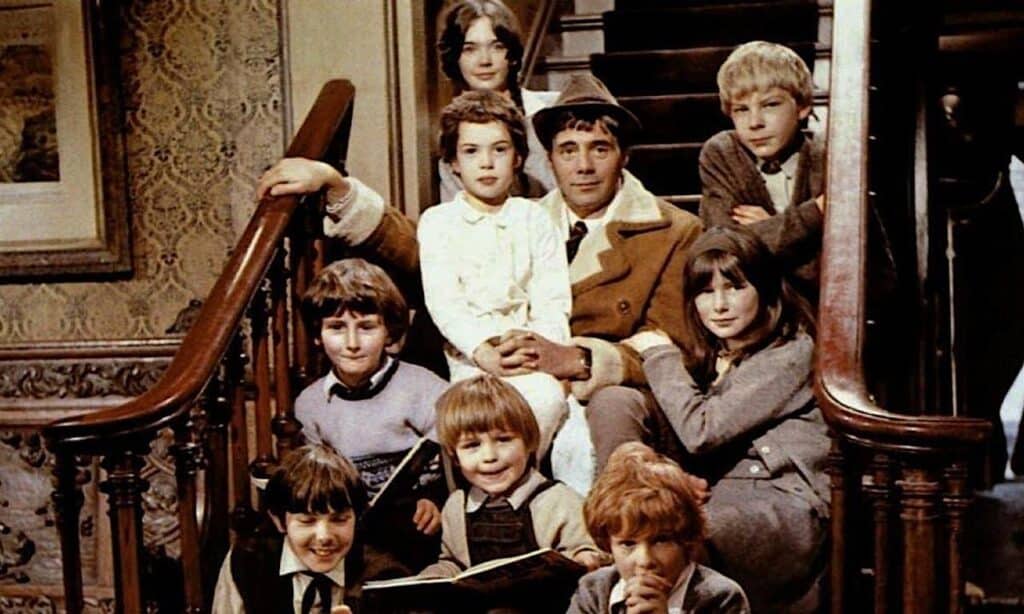
Our Mother’s House
Our Mother’s House didn’t get the acclaim of Jack Clayton’s previous film about spooky kids, The Innocents, when it debuted. Partly because The Innocents is one of the all-time greats. But also because Our Mother’s House appeared in 1967, and with its message of children going to the bad because of a lack of parental supervision it was out of step with the letting-it-all-hang-out ethos of the age. Lovers of Victoriana, feast your eyes on the interiors of the huge house where seven children and their rabidly religious but mortally ill mother live, with only a daily help in the shape of Mrs Quayle (Yootha Joyce) to keep the show on the road. … Read more
Harbin
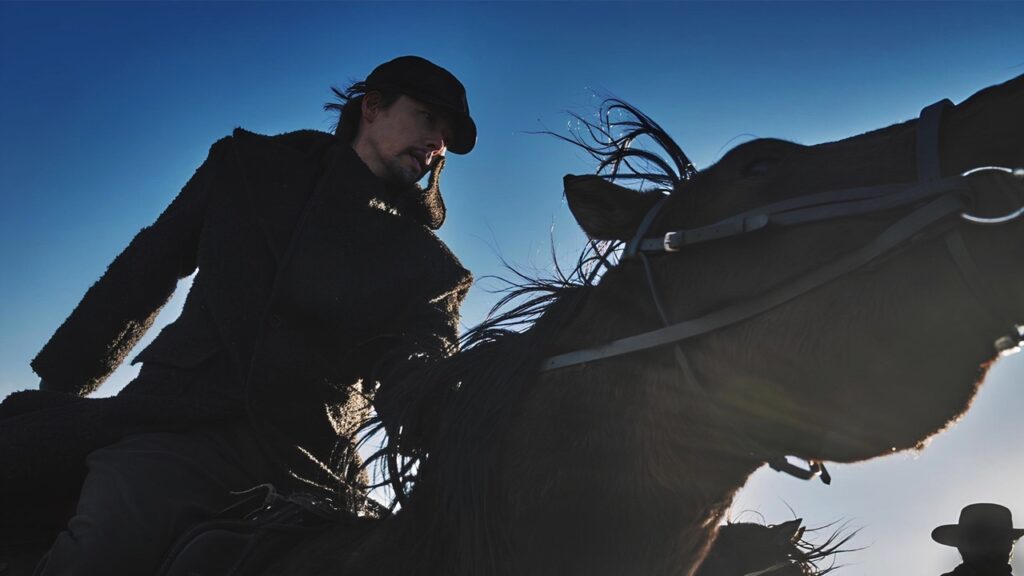
The national myths of one country don’t necessarily click with a foreign audience. Harbin, about Korean freedom fighters battling to throw off the Japanese yoke, makes the point abundantly. If you’re Korean it’ll almost certainly mean more to you than it did to me, a Brit, who without the added zing of patriotic feeling and background knowledge had to rely solely on old-fashioned stuff like drama, characters and world-building to get his scant cinematic jollies. Director Woo Min-ho puts up a brief written explanation of the situation at the beginning of the film. The 1905 Treaty of Eulsa effectively turned Korea into a colony of Japan, it says, but also had the effect … Read more
Le Vampire de Düsseldorf aka The Vampire of Dusseldorf
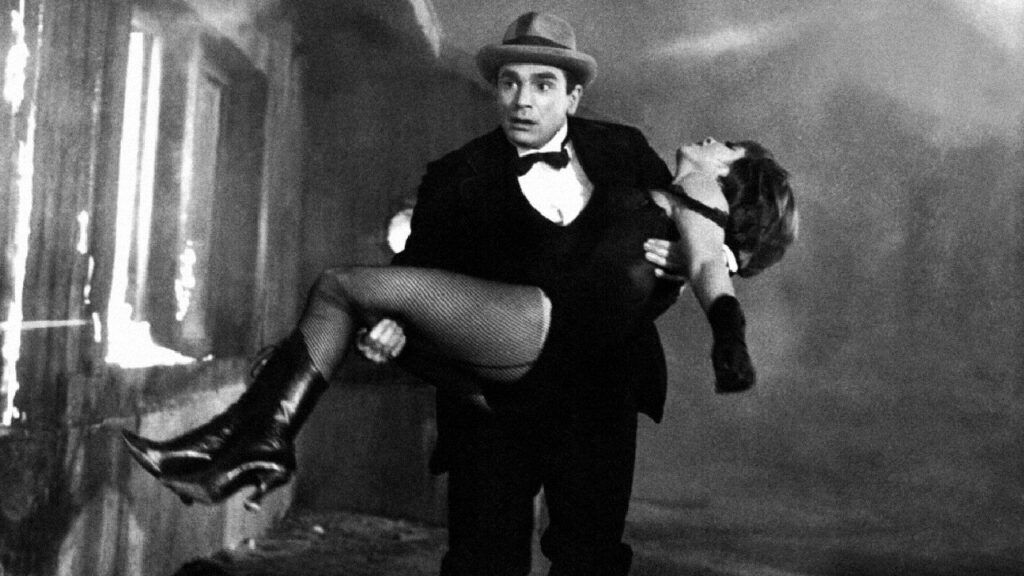
A weirdly lugubrious serial-killer movie, 1965’s Le Vampire de Düsseldorf tells the story of Peter Kürten, a real-life killer who operated in the Düsseldorf area in the late 1920s before being caught, tried and executed in 1931. Look him up in Wikipedia, if have the stomach for it, and you’ll realise that director/writer/star Robert Hossein has left most of the gruesomeness out of the picture. Kürten tended to kill his female victims with a pair of scissors. Hossein leaves that in. The rest of it, the sexual kick Kürten got from watching women in their death throes, he only suggests. Better that way. Hossein finesses Kürten’s timeline a touch, to make him align … Read more
Coach Carter
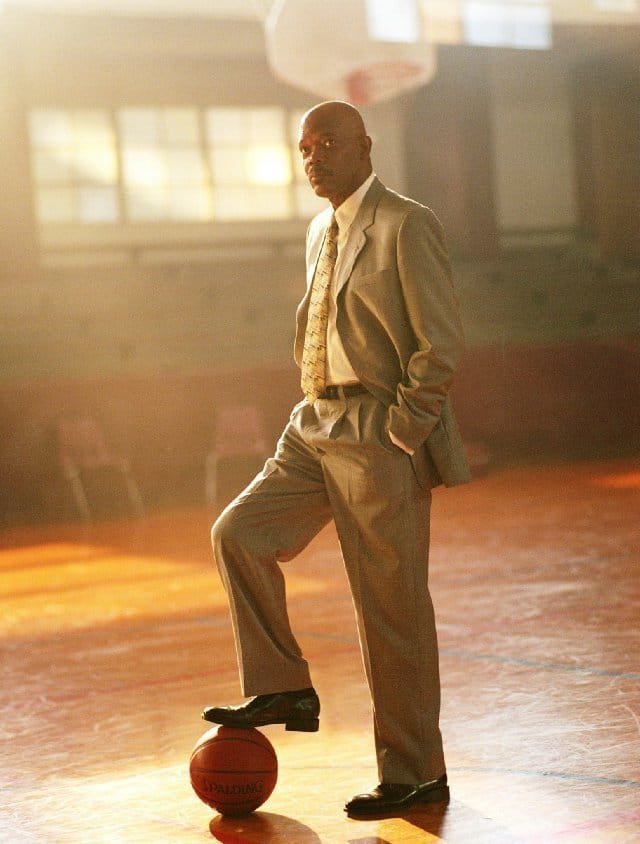
“Inspirational coach” movies come in many shapes and sizes. This one comes in the shape of Samuel L. Jackson, the tough talking, clean-living paragon of virtue who comes into a troubled school and turns around the basketball team in the teeth of indifference from pupils, teachers and … sorry, am I boring you? There’s a little more to Coach Carter than the usual sports movie fare. To whit: it is based on the true story of the coach who insisted his players properly knuckle down. He made them sign contracts. Controversially, he also insisted they got good grades in their other classes otherwise they were off the team. And outrageously, he closed the … Read more
The Body Vanished
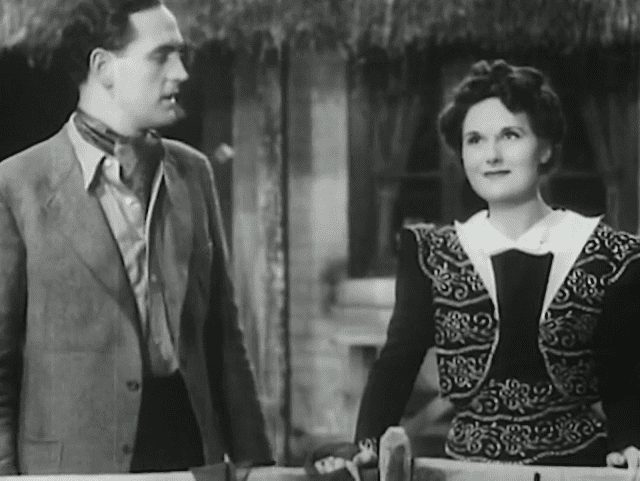
The Body Vanished is so old school you half expect it to be Vanishéd, Regency drama style. In fact it’s a 1939 British whodunit, a “quota quickie” intended as a programme filler and running only 46 minutes. It covers plenty of ground in that time and that is its main claim to your time – it tells a decent story at pace. Two men arrive in the small British backwater of Middle Wickering. They’re up from London and don’t the locals know it – the two newcomers have soon bought the entire clientele at the pub they’re staying at a drink. “Most kind, sir… don’t mind if I do etc etc”. They are … Read more
Wasteland
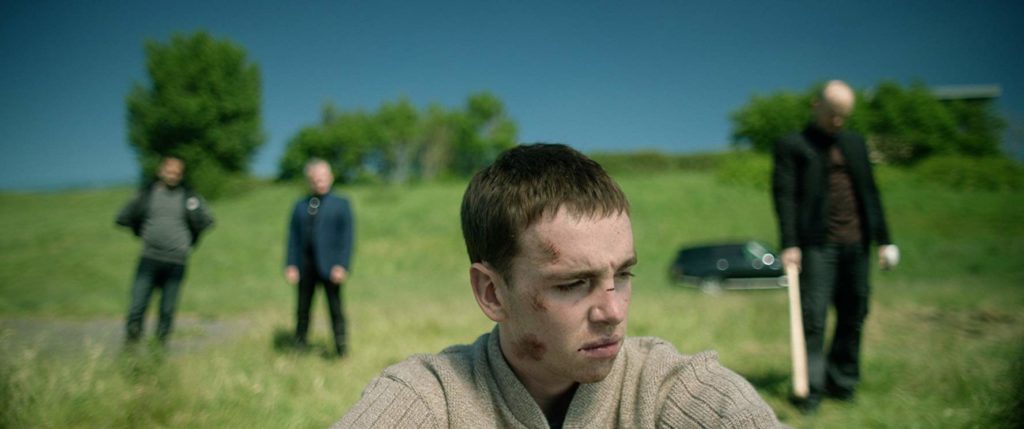
In Wasteland (it also goes by the name Undercliffe) a young man wakes up with amnesia, having been badly beaten up on some old waste ground in Bradford, gets taken in a by a kind Muslim family and then, as bits of his memory start to reappear, starts to put together a picture of his old life. What he finds he doesn’t like. Though Stevie (Laurie Kynaston) is kind to Meeba (Mariam Haque) and her brood, and forms a bond of sorts with Khalid (Akhbar Kurtha), whose taxi ferries him all over town in the hope that Stevie will spot somewhere familiar, wherever it takes him Stevie keeps bumping into people who find … Read more
The Turin Horse
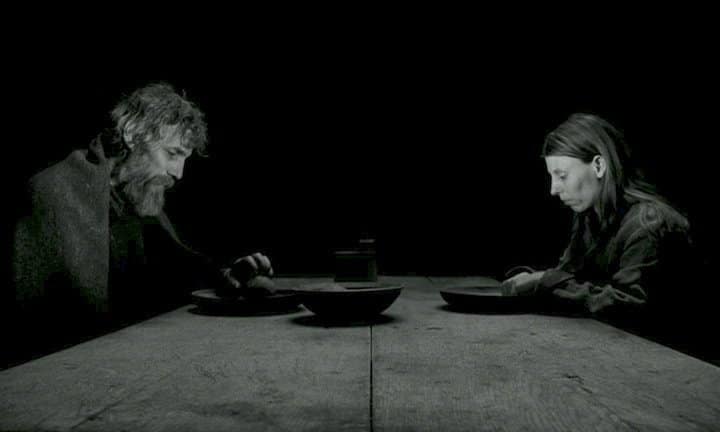
A movie for every day of the year – a good one 15 October Friedrich Nietzsche born, 1844 On this day in 1844, the philosopher Friedrich Nietzsche was born in Röcken, near Leipzig, Germany. A philologist initially, Nietzsche was a university professor at the age of 24, in Basel, where he counted Richard Wagner as one of his friends. Within ten years, because of a variety of illnesses, both mental and physical (one of which was possibly syphilis) Nietzsche resigned from Basel and took up life as an independent philosopher, choosing to spend his winters in warm southern European towns, such as Genoa, Nice and Turin. It was during this time that he … Read more

Julie Keeps Quiet
Silence is a power, and in Julie Keeps Quiet (Julie zwijgt) a story about abuse – never entirely defined – also gains force because of a determination not to sensationalise. Leonardo Van Dijl’s impressive film builds on his 2015 short, Umpire, to tell the story of a young female tennis player – Julie – who refuses to play along when her trainer, Jeremy, is suddenly suspended after the death of fellow player Aline. What Jeremy did to Aline, if anything, is teased away at but really the film is more interested in Julie and her silence, which she wields in much the same way as a young anorexic woman refuses food – it … Read more
Shame
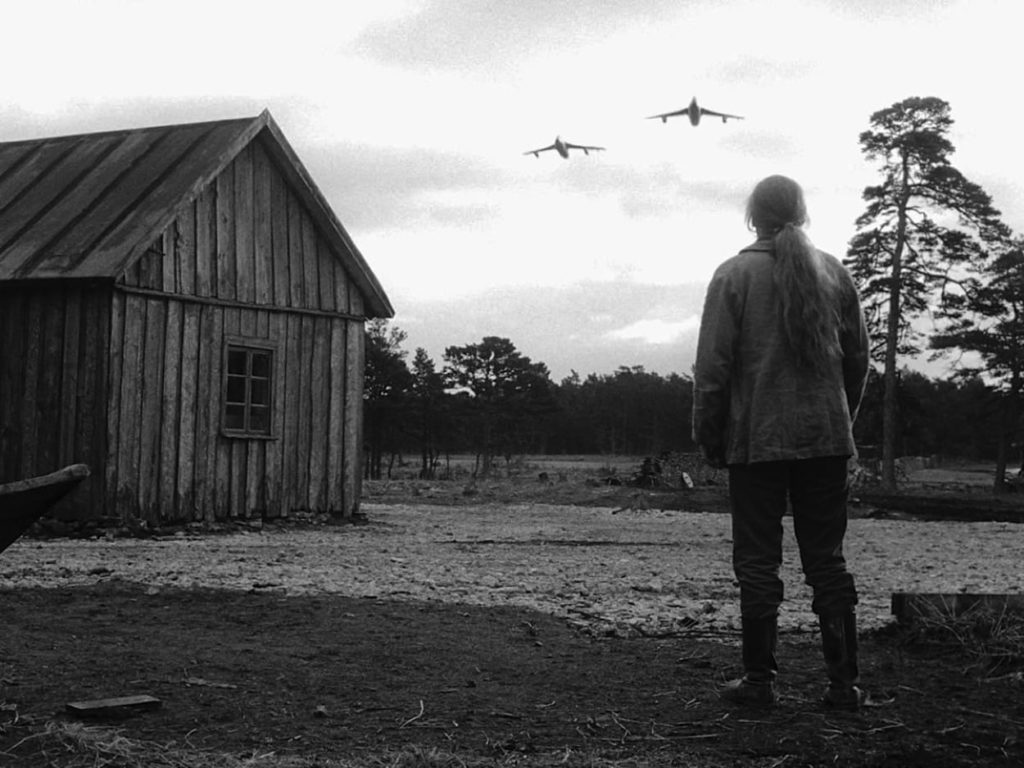
Shame is Ingmar Bergman’s war movie. Except, being an Ingmar Bergman movie, it’s really about relationships, a marriage in trouble (probably Bergman’s own – number four was heading for the exit), and something else on top. Kriget (The War) was Bergman’s original title for it, but Skammen (literally, The Shame) is what Bergman settled on. So, not a generalised Shame but a specific instance of it. What that shame might be precisely is what Bergman will eventually reveal, but he starts out by painting a portrait of two former orchestral musicians (wife number four, Käbi Laretei, was a concert pianist) who have given it all up to live the good life, growing and selling … Read more

The Justice of Bunny King
One woman’s triumph against adversity – now there’s a phrase to chill the blood. Here’s what it says right under the title on the IMDb page for The Justice of Bunny King. “A triumph over adversity tale of women fighting their way back from the bottom of the barrel.” I don’t know who wrote that but what director Gaysorn Thavat’s debut feature serves up is a horse of a very different colour. The films of Ken Loach provide the most obvious reference point, particularly Cathy Come Home, one of a string of TV “plays” Loach made for the BBC in the mid 1960s. It told the story of one woman trying to triumph … Read more