100 Years of… The Big Parade
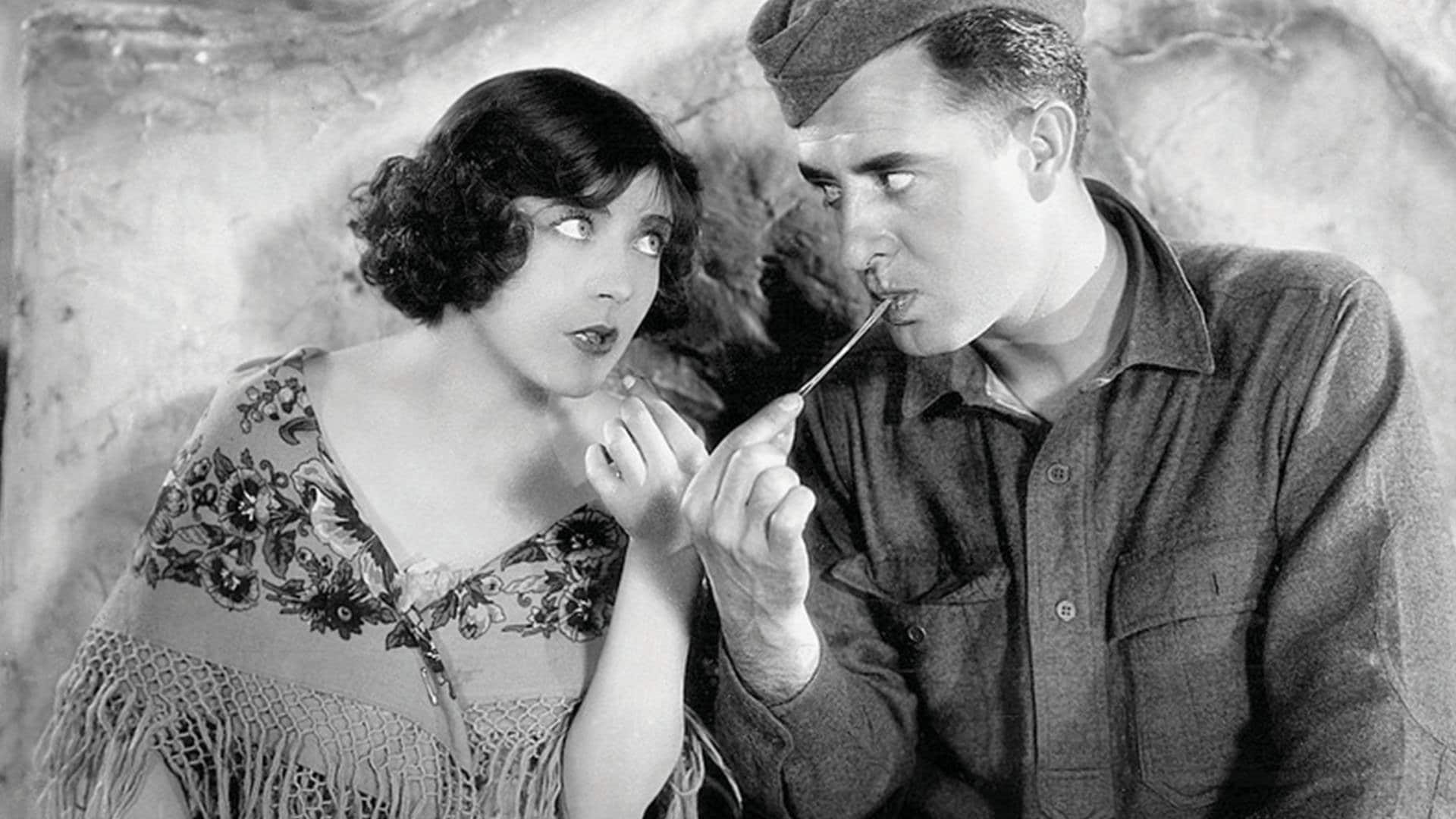
Melisande and James share some chewing gum

King Vidor’s first name really was King. It suited him. The master of the big Hollywood movie, here he is in 1925 with The Big Parade, laying down the template for all the war movies of the future. The Big Parade is the highest-grossing silent film of all time so it would be nice if we still had the original version. But it’s been lost. Instead there’s the 1930 re-issue – same movie but with sound effects and a score added. It’s the basis of the restoration done in the 1980s, which replaced the original score with one by Carl Davis. How good the film looks. It’s fabulously sharp, in fact, apart from the … Read more

100 Years of… La fille de l’eau aka The Whirlpool of Fate

Close up of Catherine Hessling

Nothing wrong with a nepo baby if they’re actually any good. La fille de l’eau (aka The Whirlpool of Fate, sometimes known as The Girl of the Water) is Jean Renoir’s first feature film, shot when he was 31, using Paul Cezanne’s property as a location and financial assistance from the estate of his own dad, the painter Pierre-Auguste (flogging one of dad’s paintings often came in handy in the early days). What he gives us is a lyrical and beautiful film harking back to the Impressionist/Post Impressionist style of Renoir Sr, Cezanne et al and forward to Renoir Jr’s own deliciously pretty films of the 1930s. What you don’t get is much … Read more

100 Years of… Lady Windermere’s Fan

Irene Rich as Mrs Erlynne

Mary Pickford once described the director Ernst Lubitsch as a “director of doors”. In Lady Windermere’s Fan, an adaptation of Oscar Wilde’s play, you can see what she means. She meant it dismissively, though the door, and what’s behind it – or not – is key to Lubitsch’s work generally, and specifically here. This is a story all about secrets – as Wilde’s so often were – a tale of mistaken identity with ironic distance between what the people on the screen imagine themselves to be and how the audience sees them. To thumbnail-sketch a delicately intertwined plot, it centres on Lady Windermere, who is in love with her husband but being pressed … Read more

100 Years of… The Salvation Hunters

Georgia Hale as The Girl

Made in 1925, The Salvation Hunters was Josef von Sternberg’s directorial debut. It was a total flop, and only picked up a bit interest after it was endorsed publicly by Charlie Chaplin (who encouraged his business partners Mary Pickford and Douglas Fairbanks to go along with him). But in spite of newspaper advertisements tendering Chaplin’s personal seal of approval (“It’s a great picture and different”) it still refused to fly with audiences, who probably found its tone too didactic, its approach too abstract and its long scenes featuring people staring moodily into the middle distance too dull. They are right about all those things. But Chaplin’s point still stands. There is something important … Read more

100 Years of… The Gold Rush

The Lone Prospector fights a dog for a bone

Charlie Chaplin’s most famous film, the one he wanted to be remembered by, is The Gold Rush. It was not only sensational then but it’s amazing how well it holds up now. Fashionable though it is to be slightly down on Chaplin these days, The Gold Rush is the one doubters should see – inventive, dramatic and funny, it’s well made enough to convince all but the most prejudiced. I’d urge the Criterion version on you if you’re going to shell out for a physical copy. It contains the 1925 silent original and also the 1942 re-release, which Chaplin re-edited, rescored and overdubbed with a narration (an approximation of newsreel bombast done by … Read more

100 Years of… The Plastic Age

Hugh and Cynthia in a car

There was barely any plastic around in 1925 when The Plastic Age debuted. “Plastic” in this context has its original sense of something easily moulded – “rendering the material more plastic”, my dictionary offers as an example. That “material” in this case is a young man and his “Age” is the reason he’s so biddable, labile, impressionable, easily influenced – see your thesaurus for more synonyms. Donald Keith plays the dude, Hugh, a young man off to college where, his parents hope, he’ll keep the family end up and fulfil himself as a sportsman of track and field (no one at this college seems to do any studying). But instead of knuckling down … Read more

100 Years of… The Eagle

Rudolph Valentino in hussar uniform

Rudolph Valentino made The Eagle in 1925 and while it wasn’t a smash along the lines of Blood and Sand or The Sheik, it did better than his previous four films – it was a comeback of sorts, and came not long before Valentino was whisked to the place from which no comeback is possible, after contracting peritonitis and dying. Death is on the cards in The Eagle too, an adaptation of a Pushkin story about a young hussar who is spotted by the libidinous Czarina Catherine II and offered a place in her bed. But young, handsome and proud Vladimir Doubrovsky (the name is spelt a number of ways on screen) doesn’t … Read more

100 Years of… Go West

Buster Keaton with a train in the background

Because Go West came out in in the middle of Buster Keaton’s hot run, it’s often bracketed with the rest of them – The Three Ages, Our Hospitality, Sherlock Jr, The Navigator and The General. But Go West isn’t conceptually brilliant, like Sherlock Jr is. Nor is the 1925 feature a compendium of brilliant sight gags, like The General. Instead, Keaton settles for making relentless fun of his character, billed only as Friendless, in a story following a hungry and penniless man initially to New York City. New York turns out to be a bad idea – Friendless is literally crushed underfoot by the teeming crowds – and so he decides to heed the advice … Read more

100 Years of… Dr. Mabuse the Gambler

Dr Mabuse in one of his many disguises

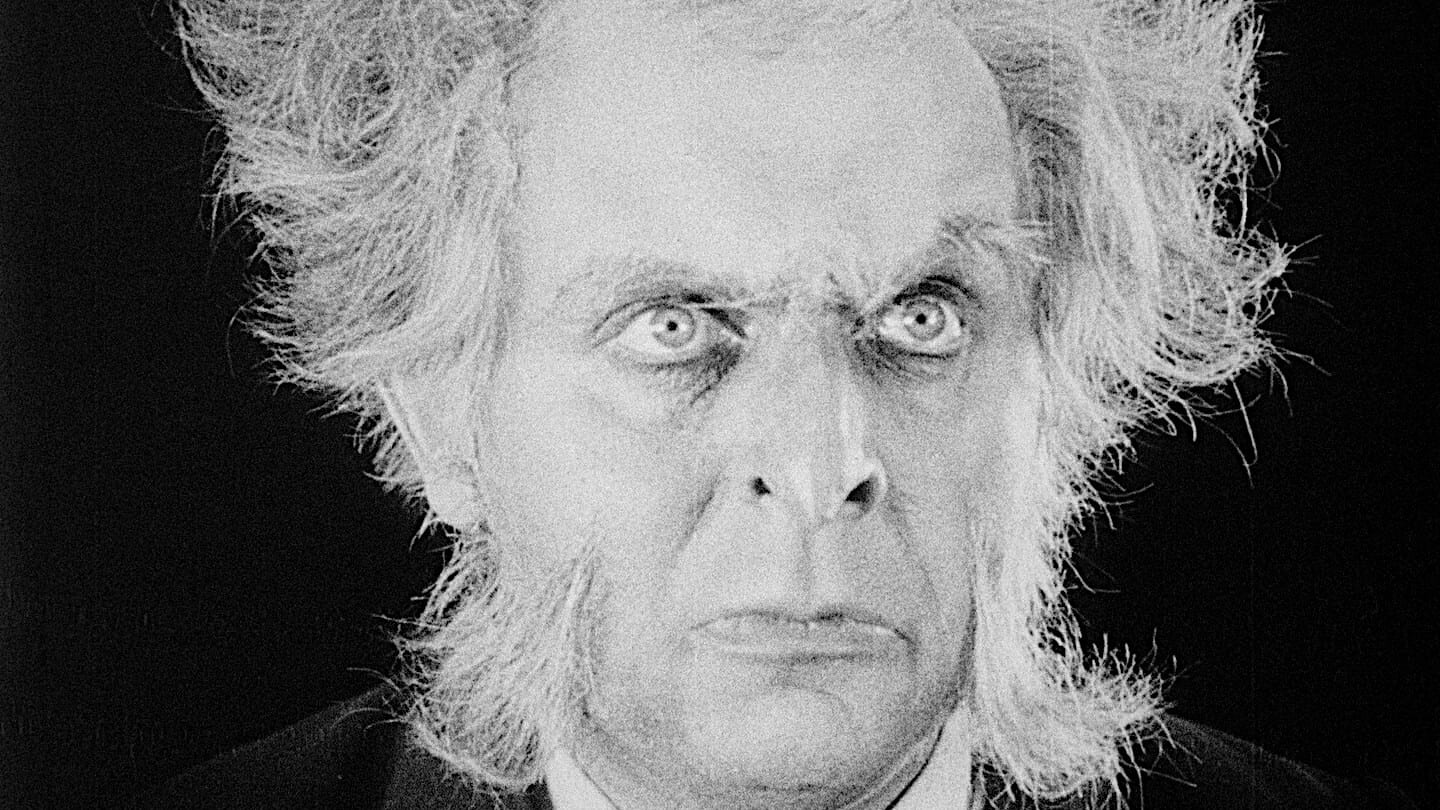
An important film rather than a good one, at four and a half hours Dr. Mabuse the Gambler (Dr. Mabuse, der Spieler) is simply too unwieldy to qualify as a quality movie and yet it regularly ranks up there with the best of them, bolstered by the reputation of its director, Fritz Lang, who, whisper it, could turn out some real rubbish when his mind wasn’t on his work. Dr. Mabuse the Gambler is not rubbish though. And in spite of the reservations about its length, this silent behemoth from 1922 is a remarkable document in many ways, though a heavy one, in which Lang lays down the template for all the bad … Read more

100 Years of… Master of the House

Mads comforts Ida

More than just a miserable face, arthouse darling Carl Theodor Dreyer could also churn out the hits. Master of the House is one such, a counter to the suggestion that he was just an austere Dane interested only in the beauty of human suffering – see The Passion of Joan of Arc or, much later, Ordet, for plenty of that. Madly successful at the box office, Master of the House is, as near as you got from Dreyer, a Hollywood entertainment, telling a story with a clear beginning, middle and end, emotional arcs, good guys and bad guys, fairly realistic performances and a moral at the end that you can actually see coming from … Read more