I Walk Alone

Burt Lancaster as Frankie

Big acting is the offer in I Walk Alone, the first of many teamings for Burt Lancaster and Kirk Douglas, and the first directorial effort by Byron Haskin, up till this point an effects guy. Haskin delivers nuanced, psychologically attuned drama while Lancaster and Douglas go at it like fighting dogs. The whole thing is great to watch and it’s easy to see why Scorsese is such a big fan (it marks a transition from one type of film-making to another, he says). The critics of the day were less enthusiastic. “Low grade of melodrama,” said the New York Times. “Dreary,” said the Chicago Tribune. Variety liked it, though. So let’s side with … Read more

Sweet Smell of Success

Sidney and JJ

Sweet Smell of Success flopped at the box office on its debut in 1957, much as its producer, Burt Lancaster, feared it might. A dirty-underbelly-of-showbiz tale, like Sunset Blvd. and In a Lonely Place, it’s been redeemed by posterity, which often marks it as one of the finest noirs ever made, even though it doesn’t tick all the genre boxes. One reason for the failure was the casting of its star. Not top-billed Lancaster, who put his name at the head of the credits not just out of ego, but also to deflect attention from the real star. Tony Curtis was best known at this point for playing a series of pretty boys … Read more

Criss Cross

Anna and Steve

If film noir is about men in the thrall of women being tossed about by cruel fate, Criss Cross is prime noir. Made in 1949, in black and white, and starring Burt Lancaster in his first, noirish iteration, it’s directed by Robert Siodmak, a dab hand at punchy, pitiless drama. The story is told in a strange semi-flashback style. Half of it in the present, where Steve (Lancaster) is a driver of an armoured car working as an inside man for a weaselly criminal about to pull a big heist. The other half back in the past, where we discover why the suburban, mother-loving Steve ended up on the wrong side of the … Read more

Brute Force

Captain Munsey and Joe Collins

Time has diluted the impact of Brute Force, but this prison drama from 1947 remains a good film, largely because it doesn’t live up to the title. There is brutishness, but not too much. For much of its length, in fact, it’s a study of character, of how men who are all packed together in an overcrowded prison get along together, or don’t. Richard Brooks wrote the screenplay and Jules Dassin directs. This was the first of Dassin’s run of great movies – The Naked City, Thieves’ Highway, Night and the City and Rififi would follow. Burt Lancaster is the star, in his first film since his breakout in The Killers, and slots … Read more

Kiss the Blood Off My Hands

Burt Lancaster and Joan Fontaine

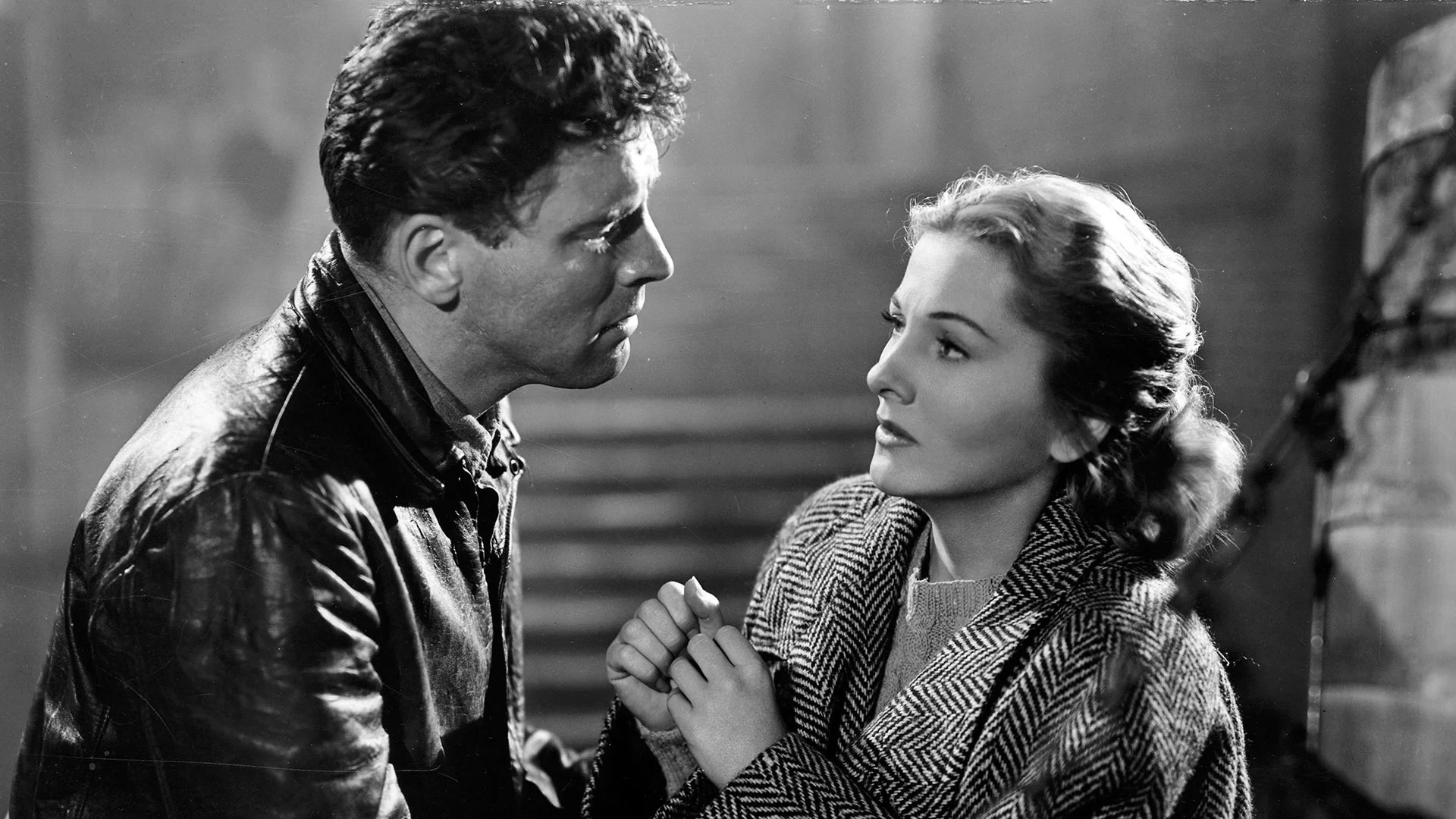
The title of the movie Kiss the Blood Off My Hands makes a promise that can’t be fulfilled. An attention grabber, there was talk of changing it even before the film debuted. And so it became Blood on My Hands (which is how the IMDb has it). In some parts of the USA it went out as the even more timid The Unafraid. Dramatic though the original title is, it’s all wrong for a story about an accidental killer and his gal and is more suited to a lurid 1960s shocker or a 1980s video nasty than a 1948 melodrama. It’s the first in a long string of fascinating movies made by Burt … Read more

Sorry, Wrong Number

A fearful Leona on the phone

Sorry, Wrong Number, made in 1948, is a superbly melodramatic drama taking the brittle, “dangerous dame” image of its star, Barbara Stanwyck, for a protracted ride. Four years earlier Stanwyck had starred in Double Indemnity as the manipulative minx persuading poor schmuck Ed McMurray to kill her husband, and here she is in Sorry, Wrong Number as a victim, a bed-ridden rich woman who, on a crossed line while telephoning, overhears two men discussing a murder they’re going to commit later that night. The servants have been given the night off, her husband is away, but Leona Stevenson (Stanwyck) isn’t initially that worried. But as the night progresses and as she makes and … Read more

The Leopard

Burt Lancaster as the Prince

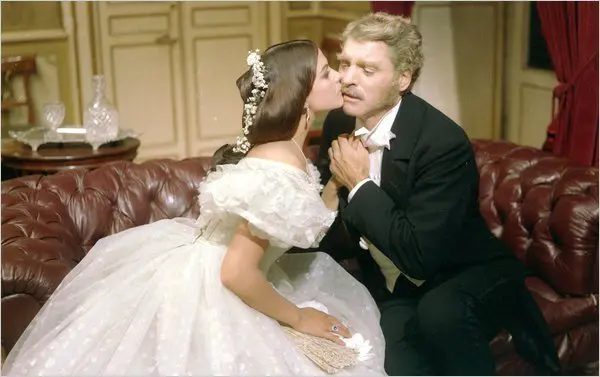
The movie-as-oil-painting prize goes to The Leopard, Luchino Visconti’s majestic, magnificent, magical magnum opus from 1963, a contender in all the serious forums for best looking film ever made but also a triumph as an examination of a society, a politics and a psychology in flux. It’s an adaptation of Giuseppe di Lampedusa’s only novel – a best-seller to this day – and follows it closely. There is no real plot, in other words, more a series of tableaux from the life of a mid-19th-century Sicilian prince as he and his family are buffeted by change, brought about first of all by Garibaldi’s revolutionary Red Shirts, busy unifying Italy (re-unifying, if we’re counting … Read more

The Leopard

kehr articlelarge

Visconti’s masterpiece is one of the best examples of the period epic ever made, a film that makes Merchant/Ivory look like kids messing about with the dressing-up box. It tells of the arrival of democracy in Italy and the decline of the fine old aristocratic way of life, as seen through the eyes of the enigmatic head of an ancient Sicilian family. The shock of this Italian-language movie is the person playing that central role, a mutton-chopped Burt Lancaster, the actor who started life as a circus acrobat. Why was a man more associated with horses and the high wire, a man so often smeared in diesel, playing an aristocrat and standing on … Read more