Popular Reviews
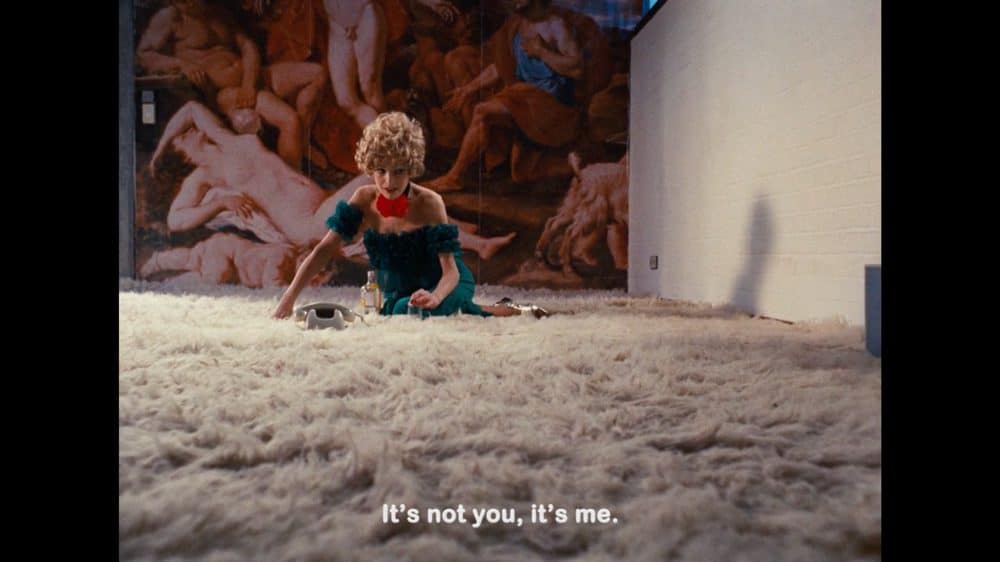
The Bitter Tears of Petra von Kant
Though he had 40+ films to his name when he died in 1982 aged 37, Rainer Werner Fassbinder’s roots lay in the theatre and it often showed. They’re clearly visible in The Bitter Tears of Petra von Kant, a film playing out on one set where a handful of actors perform in a theatrical “back of the room” style. The action, what little of it there is, takes place in and around the bed of Petra von Kant (Margit Carstensen), a massively entitled fashion designer attended by an entirely silent aide, Marlene (Irm Hermann). As Marlene brings coffee, cake, champagne, opens doors to let people in and out, types letters and between times … Read more
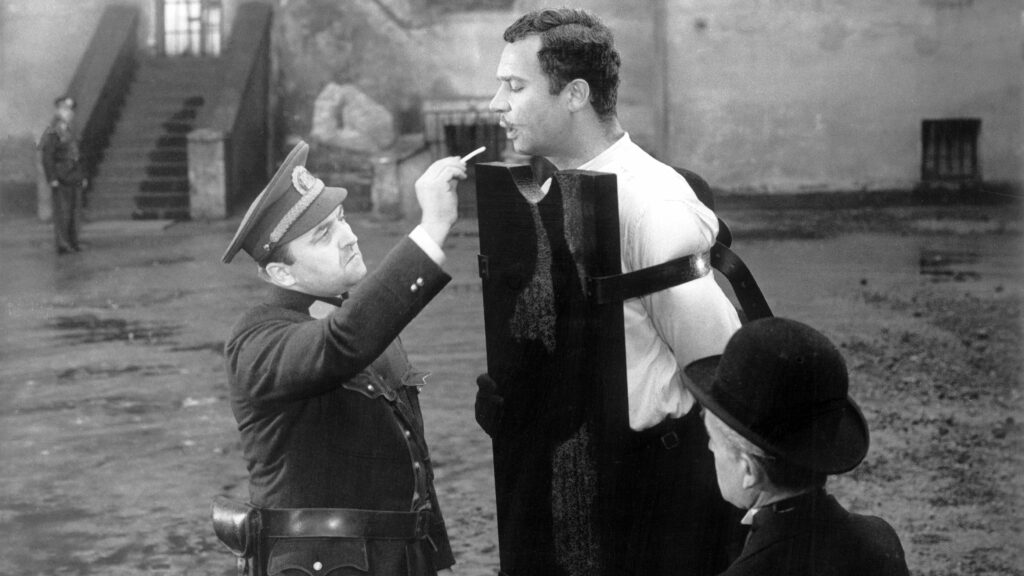
Happy End
If you’ve never heard of Oldrich Lipský before, here’s your chance to get to know him. Second Run, purveyors of overlooked European movies, are re-releasing Happy End, Lipský’s 1967 comedy. Compared to the titles of other Lipský films – The Mysterious Castle in the Carpathians, I Killed Einstein, Gentlemen and Adele Has Not Had Her Supper Yet – Happy End sounds almost commonplace. Do not be taken in. Lipský lived from 1924 to 1986 in Czechoslovakia (now Czechia or the Czech Republic) and made comedies suffused with Dada, surrealism and magical realism, the sort of weird stuff that’s often the refuge of the scoundrel. But like fellow Czech (though ten years younger) Jan Švankmajer, … Read more
Enemy at the Gates
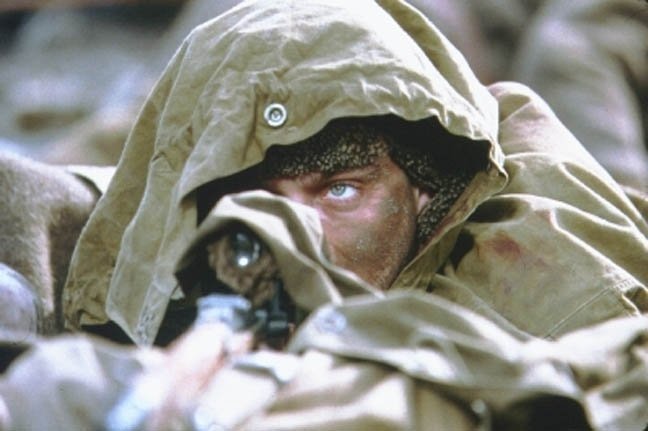
Here’s a mixed bag of European war movie that is trying to be Saving Private Ryan in its impressive opening scenes, but looks as if it realises it doesn’t have the budget and so scales back the action to concentrate on two lone snipers. One German, one Russian. It’s set during the battle of Stalingrad, in which more than two million people died – yes, two million – and so the decision makes some logistical sense, even if it shortchanges the Russians and their epic level of sacrifice. The fact that it does that is what got the goat of a lot of historians masquerading as film critics, who suggested that the film … Read more
30 June 2014-06-30
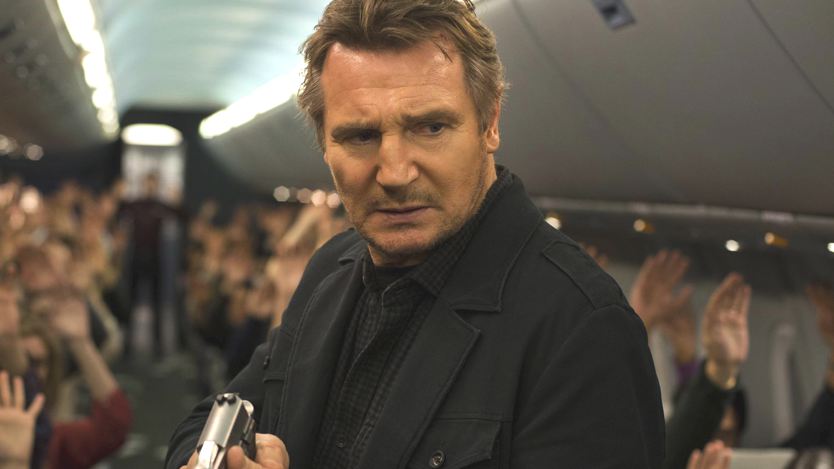
Out in the UK This Week Non-Stop (StudioCanal, cert 15, Blu-ray/DVD/digital) Though there are pretenders, Liam Neeson is the king of the geri-action stars, a modern Charles Bronson whose attitude to violence is, to paraphrase the mild-mannered Dr Banner, “You wouldn’t like me when I’m angry.” This time Neeson starts out angry and hungover, then becomes increasingly vexed at 35,000ft, playing an air marshal no one will listen to, in spite of the fact that there’s a crazy man on board who wants to blow up the plane unless a large amount of money… etc … etc. Other big names include Julianne Moore, Downton Abbey‘s Michelle Dockery, Scoot McNairy and 12 Years a … Read more

Keyhole
“That penis is getting dusty” – a line of dialogue in wonky auteur Guy Maddin’s latest film, another arthouse exploration of arthouse themes delivered in high contrast monochrome, from a camera on a bungee and via an editor with attention deficit disorder. There are a couple of famous names too, just to lure in the unwary, or more likely to open the wallets of the various art foundations that funded this mad collision of references. Isabella Rossellini, longtime Maddin collaborator and utterer of the great line in his film The Saddest Music in the World – “If you’re sad and you like beer, I’m your lady” – she’s here. So too, as you … Read more
Desperate
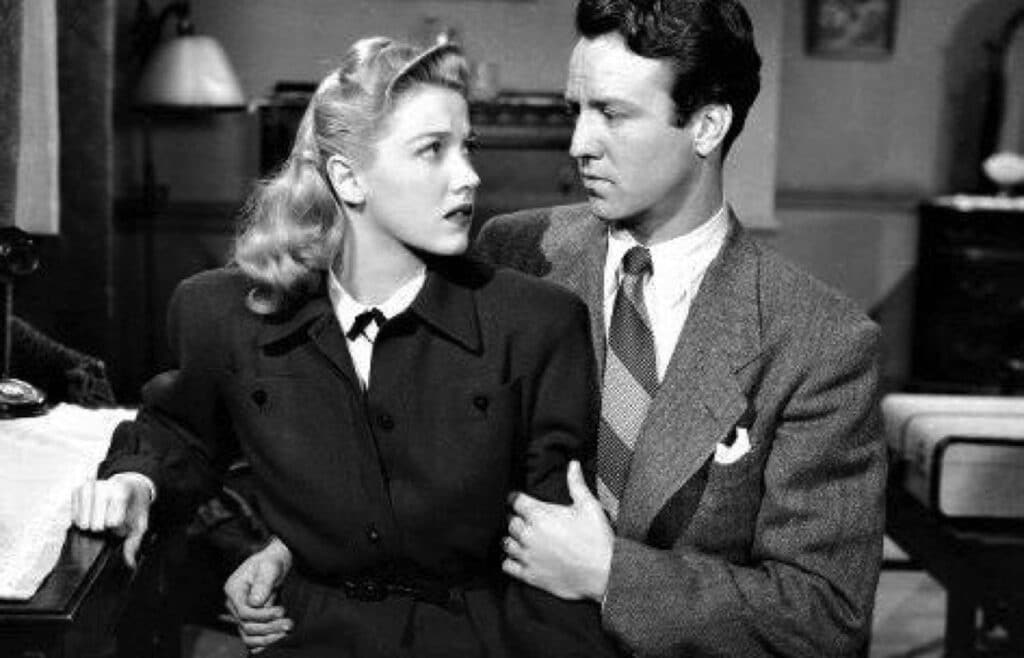
Anthony Mann called Desperate his first proper movie, the one where he got to do what he wanted to do. Mann, now so famous for his westerns, had previously proved himself a master of film noir, as Desperate proves. This was the first of seven he’d crank out in 1947 and 1948. It’s a good work rate, but then these were made hot and fast. If it was me I’d have put director George Diskant’s name on the movie as its star. His cinematography is majestic. He was known for deep focus and his mastery of contrast – plenty of both here. But things being how they are it’s Steve Brodie’s name at … Read more
To Be or Not to Be
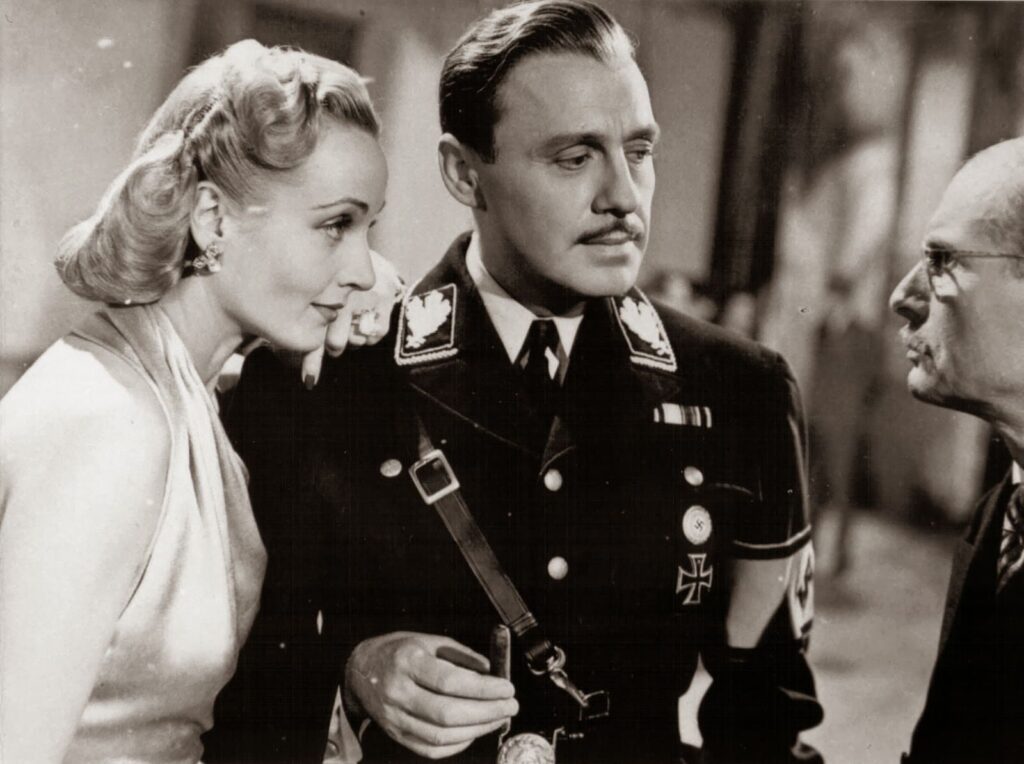
Farcical Nazis. Nearly 30 years before Mel Brooks had a go in The Producers, here’s To Be or Not to Be, in which Ernst Lubitsch lays down the template. The comparisons are not endless, but in one respect 1942’s To Be or Not to Be does mimic The Producers – it’s set in the world of the theatre, itself a good target for comedy, which is where most of the laughs come from for the first chunk of the film. We’re in Poland, just before the outbreak of the Second World War, where a theatrical troupe is putting on nightly shows of Hamlet while rehearsing their next show, an anti-Nazi piece called Gestapo. … Read more
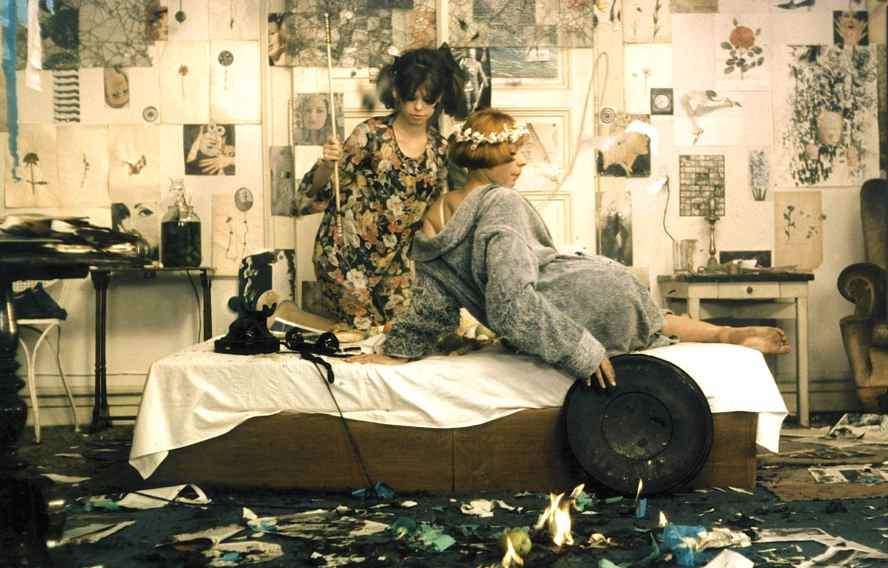
Daisies
A movie for every day of the year – a good one 30 July The first defenestration of Prague, 1419 Along with the Diet of Worms, the Defenestration of Prague is one of those events that make history students giggle. And as with exsanguination, which dresses up the base act of bleeding to death in a fancy Latinate term, defenestration is nothing more than throwing someone out of the window. It should be the defenestration at Prague, then, logically? Semantics to one side, the most famous defenestration of/at Prague took place in 1618, but the first time it happened was on this day in 1419, when an angry crowd led by a Hussite … Read more

The Curious Return of Douglas Sirk
What is it about a film-maker who died around 25 years ago in obscurity that fascinates a new generation of directors? The director Douglas Sirk died in 1987 aged 90. Born in Hamburg as Detlef Sierck, he became well known for his string of lush melodramas made in Hollywood in the 1950s. Magnificent Obsession (1954), All That Heaven Allows (1955), Written on the Wind (1956), The Tarnished Angels (1957), A Time to Love and a Time to Die (1958) and Imitation of Life (1959) are considered his key works. The French “auteurists” were the first to start the re-assessment of Sirk in the late 1950s – the distinctive look of his films marking them out as … Read more

Wasteman
Wasteman is a particularly ingenious prison drama, though in many respects it ticks the usual boxes: hyper-masculinity, bullying, drugs, a top dog bossing the show with the tacit assent of the authorities, a rookie prisoner falling foul of said top dog. And this being the 21st century, drones and phones very important. Since the high concept seems preordained, the emphasis on detail is massively important. And casting is crucial – think of Jack O’Connell, remarkable in Starred Up. Or the equally important Tahar Rahim in A Prophet. And Shawshank, of course. Here there are really only five roles that matter. David Jonsson as Taylor, a meek prisoner on the last leg of a … Read more
The Trouble with Harry
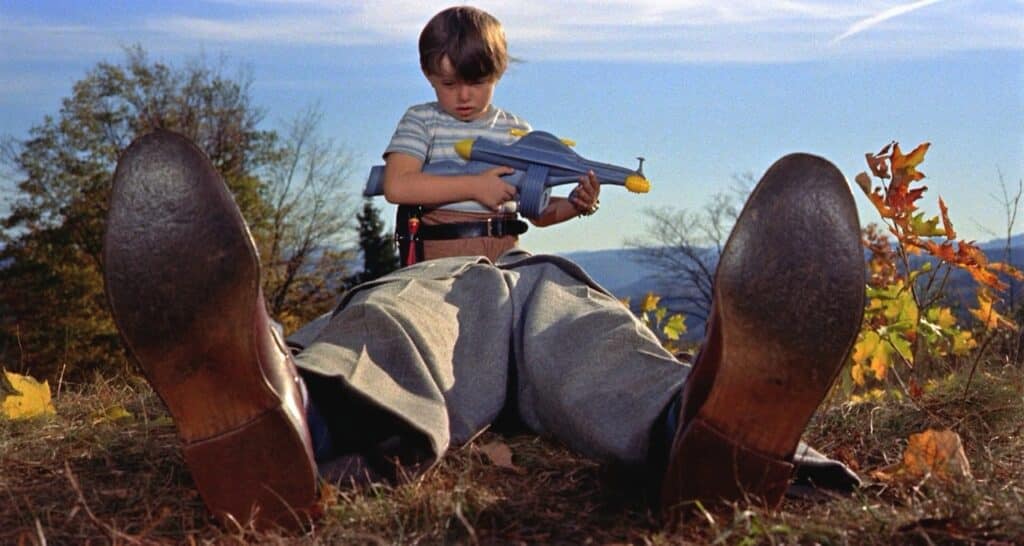
A wag rather than a humourist, Alfred Hitchcock generally ran into trouble when he tried to make a funny film. Case in point: The Trouble with Harry, an arch confection notable for two things: it was the first time Hitchcock worked with composer Bernard Herrmann; and was also Shirley MacLaine’s screen debut. There are two conceits at work in this movie. Number one is the body that won’t stay buried. Number two is the nonchalance of the citizens of a white-picket American town who stumble across it, one way or another. That starts with Arnie, a boy roaming the countryside near his home who hears a commotion and a shot and then discovers … Read more
Charley Varrick
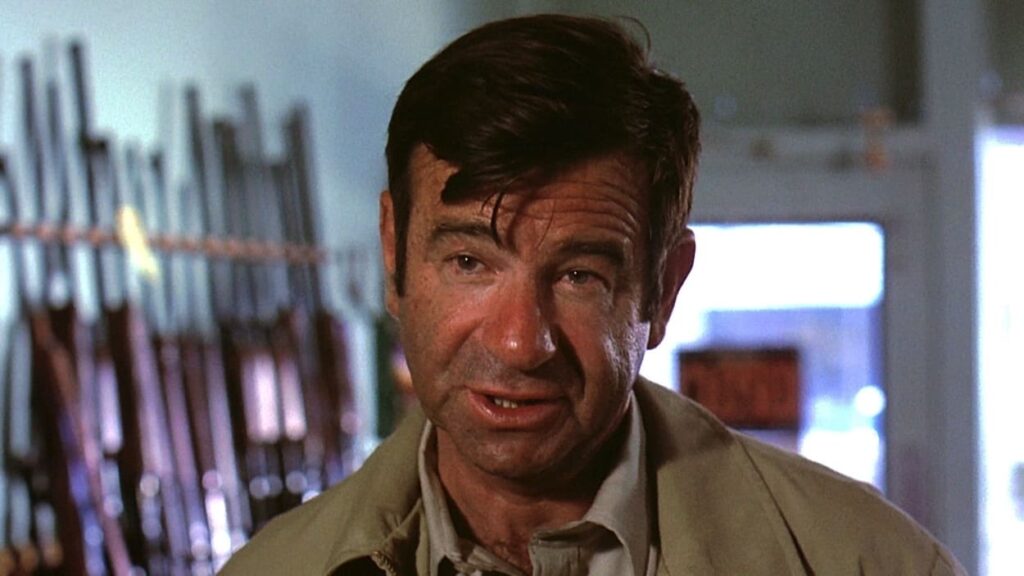
Charley Varrick, a neo-noir from 1973, is much better than its mixed reputation would suggest. Lean and fast, dark and enigmatic, it stars Walter Matthau as a crop sprayer who heists a smalltown bank in the hope of making a fair amount of easy money. Nothing too massive, just a cushion. But when he and his sidekick come to count their haul, it turns out that it’s mostly 50s and 100s, not dollar bills, fives and tens as expected. They have inadvertently heisted a lot more money than they anticipated. This, for Charley, is a problem. It means the police will be particularly keen to get the money back. So will the bank. … Read more