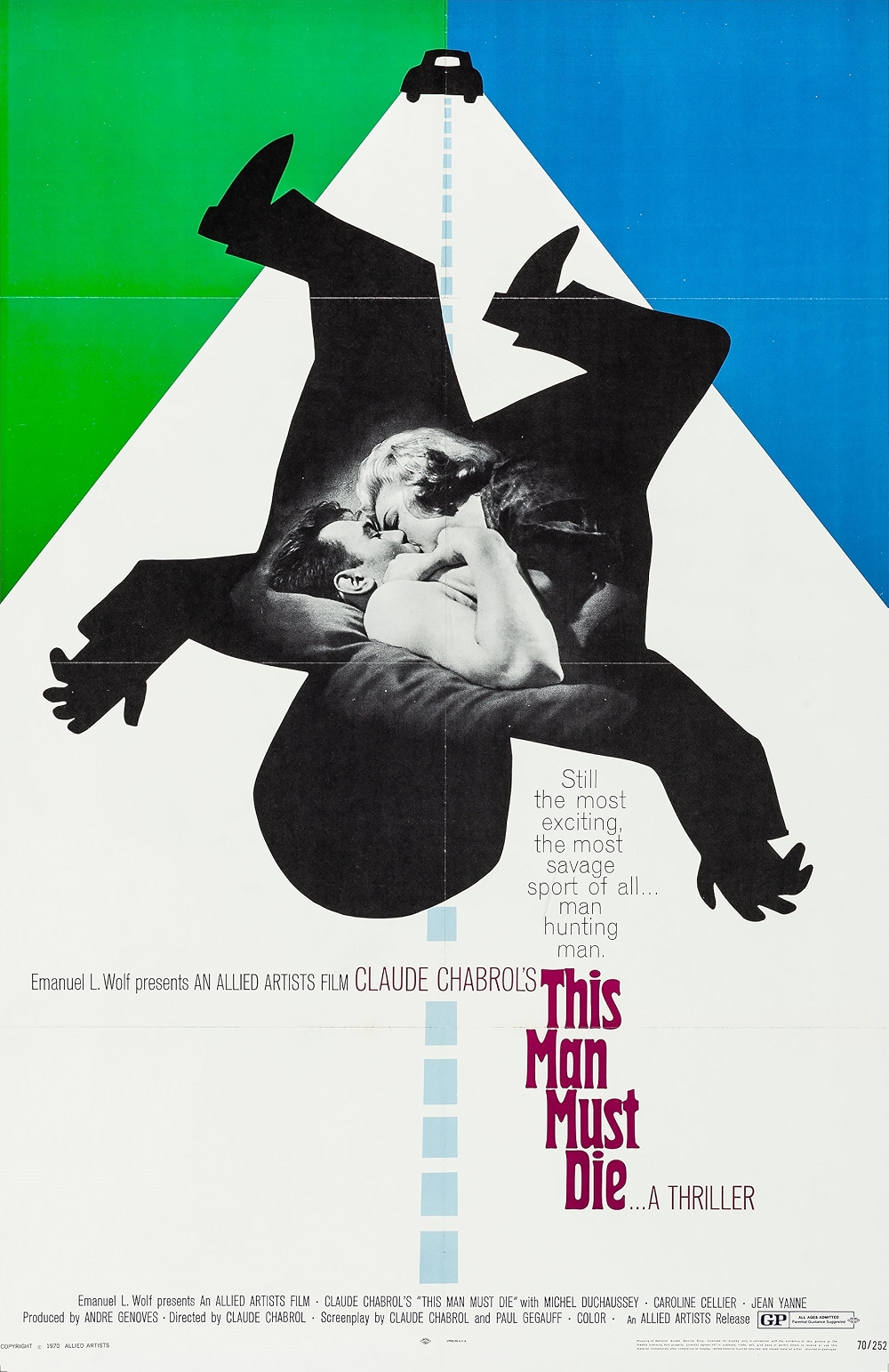
Writing poetry doesn’t pay very well and so in the 1930s Cecil Day Lewis, father of Daniel, started writing detective fiction on the side. The Beast Must Die was his fourth crime novel. Translated literally into the French, it gave Claude Chabrol the title of his unusual 1969 thriller, Que la Bête Meure, which in English usually goes by This Man Must Die, and even sometimes Killer!
As titles go all three are good penny-dreadful shockers but the film is anything but, even though it starts with the death of a child mown down by a car going recklessly fast and continues with the father’s quest to find and kill the driver.
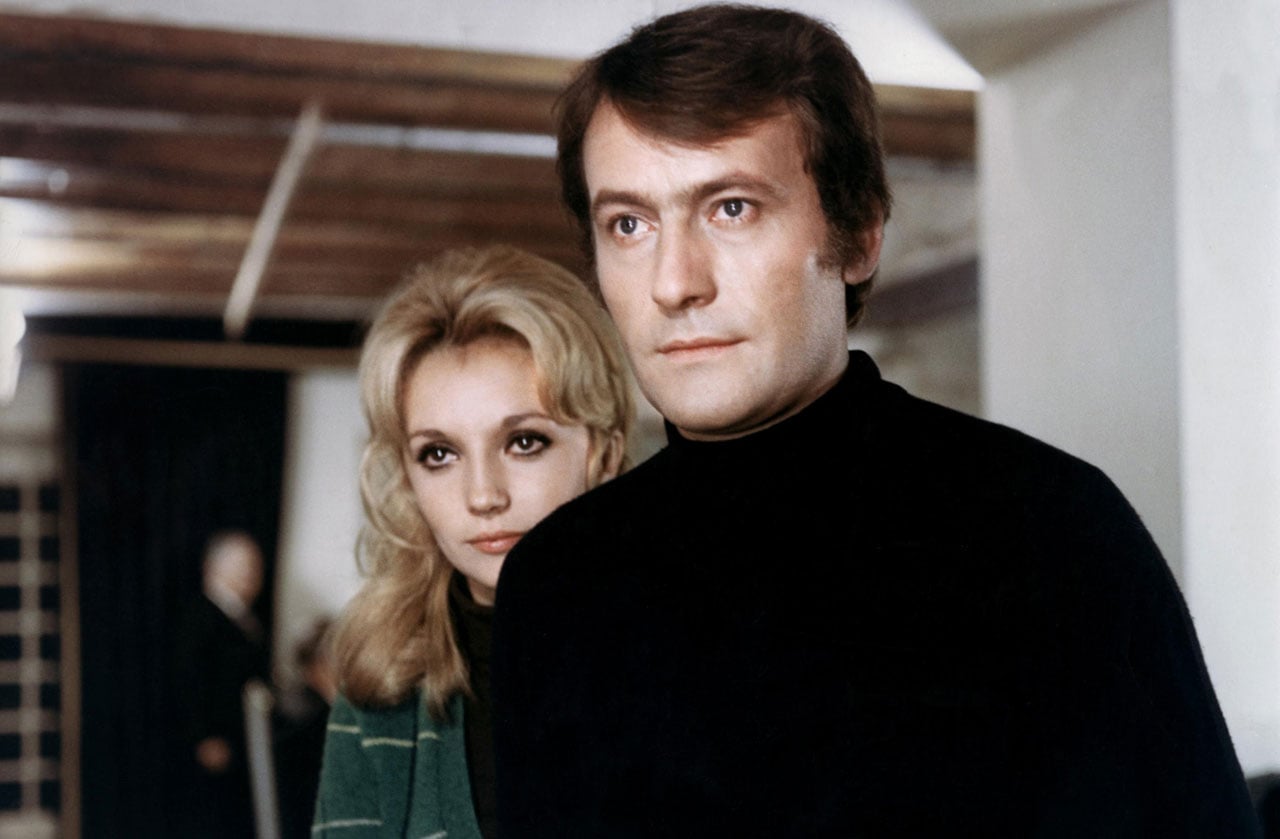
Michel Duchaussoy plays the father consumed by grief setting out to exact revenge on whoever committed the hit-and-run, first of all by doing the sort of old-school door-knocking work the police seem reluctant to do. This yields absolutely no results but does position Charles nicely for an intervention by luck – he gets stuck on a very muddy road and a passing farmer helps him out. While giving him a tow the farmer reveals that he’d recently done the same thing for another car stuck on the same muddy lane. And that car happened to belong to the killer, of course.
From here, posing as a writer, Charles gets to know the actress who was in the car, then secures an invitation to her family home in Brittany, where he finally claps eyes on the driver/killer. Paul (Jean Yanne), her brother-in-law, is a lout, a boor, an abusive husband and father, a man the world won’t miss at all once Charles has consigned him to infinity. If Charles had been having qualms at all, something is making it easy for him to follow through on his pledge.
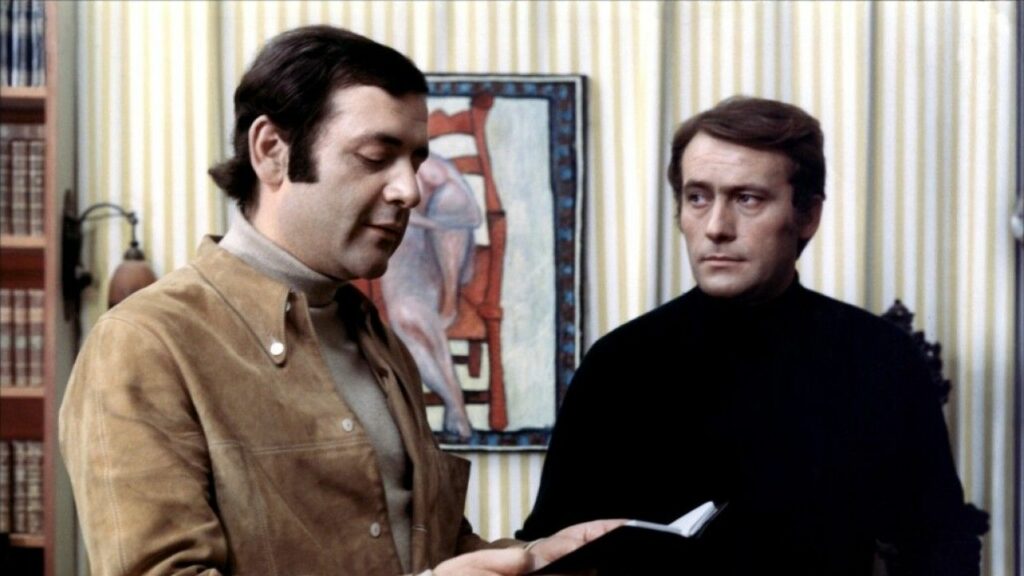
Luck, fate, chance, providence, the almighty, call it what you will but that’s what Chabrol seems to be teasing us with in this unlikely story in which that muddy lane is entirely pivotal and everything else happens almost as an afterthought. Take Charles’s wooing of actress Hélène (Celine Cellier), which he’s so half-hearted about that she eventually starts to complain – never mind all these fancy dinners and cinema visits, she peeves, where’s the hot action, sort of thing. He half-heartedly gives her what she wants.
Chabrol’s films are often compared to Hitchcock’s. Both men took an amused view of things, had an ironic detachment. But whereas Hitchcock usually included the audience in on his jokes – which were at the expense of his characters – Chabrol’s doing something far more dispassionate here. It’s a god’s eye view of petty humanity. Try like Charles might, it’s a nudge from upstairs that helps him along. There will be further nudges, not all of them in the right direction. Someone is having a laugh.
A cool story set in an overcast Brittany and told nearly emotionlessly. Apart from one notable exception, Chabrol’s camera delivers information rather than emotion. He positions it in every scene, and in every moment in every scene, to glean the maximum in cold, hard facts. It observes, but does it judge? It sees but does it evaluate?
This is Chabrol’s joke on the audience. Not much of a joke, unless you like this sort of thing, but you can’t accuse him of not following through. Everyone has been been briefed. Duchaussoy is pared back, Cellier is toned down. Even the grey weather is playing along. Only Jean Yanne seems to be off the leash, but he’s heading for the chop – or that’s the idea. Will he get there? Will Chabrol remove from the film the only really human element in it, a murdering bastard? Odd. Very odd. Probably worth watching again.
Que la Bête Meure aka This Man Must Die – Watch it/buy it at Amazon
I am an Amazon affiliate
© Steve Morrissey 2024