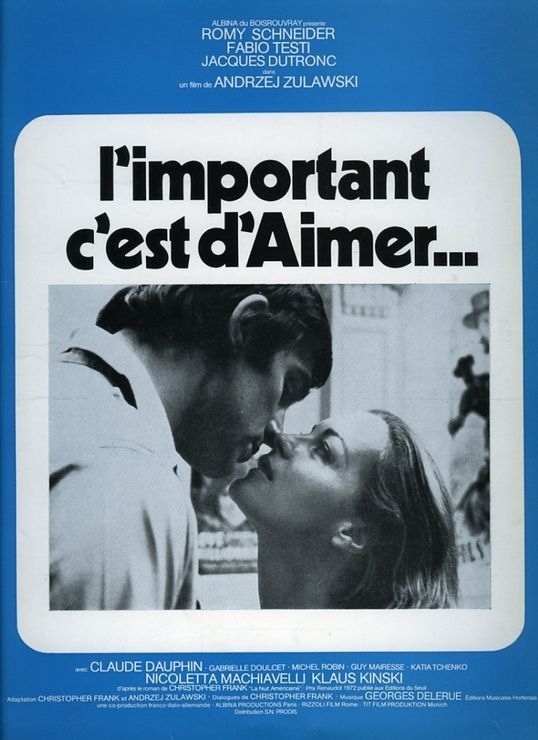
Mad, anguished romantic drama on an exaggerated scale from Andrzej Żuławski, warming up with That Most Important Thing: Love (a clumsy translation of L’important c’est d’aimer) for his maddest romance of them all, Possession, which would follow six years later, in 1981.
In the meantime audiences were more than happy with a tortured tale of twisted troilism – the actress, her husband and the hot photographer who comes between the two of them. Unusually, for a film from the 1970s, it takes the side of fidelity, more or less, of higher ideals over a quick bunk-up.
In a bohemian, but not particularly boho-chic Paris, actress Nadine Chevalier (Romy Schneider) is all too aware that at 30 years old she’s already peaked. As things stand she’s going to remain most famous for her role in Nymphocula, high point of a career of soft porn/genre crossover.
Enter, exactly like something from the sort of films she usually stars in, a tall dark stranger. Photographer Servais Mont (Fabio Testi) sneaks onto the film set to pap some snaps but is soon chased off again, with a smack in the mouth for his trouble. He turns up again the next day, this time at Nadine’s apartment, offering to take some proper photographs this time, ones that will get Nadine onto magazine covers. Or so he says. Whether he believes this or not, the story is enough to gain him access and some minutes with Nadine.
Because, as has already become obvious, the photographer is smitten. And soon so is Nadine. Having lost his head, Servais sets out to save Nadine’s career, borrowing a big chunk of money from a dodgy financier to buy Nadine into legit theatre: a production of Richard III starring German firebrand Karl-Heinz Zimmer (Klaus Kinski) as Shakespeare’s hunchback king. Servais doesn’t tell her he’s the reason she’s in a prestigious production, nor does he use it as a way of gaining access to her body. He’s hoping his obvious alpha to the beta maleness of Nadine’s husband will be enough to do that (and if you’re not familiar with Fabio Testi, he is nominative determinism gone mad).
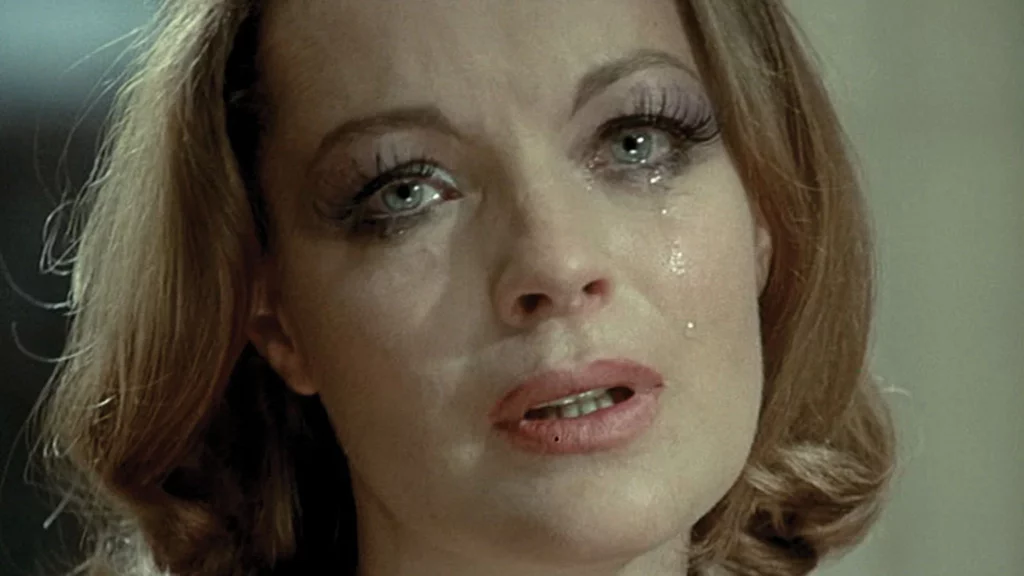
Farce done without a glimmer of a smile, a pulsating melodrama peopled by caricatures, this was the favourite film of Schneider, who is now largely forgotten but once was the queen of a certain style of Euro-arthouse. It’s also a favourite of Pedro Almodóvar, and you can see why. Żuławski superheats his dramatic situations with mad stereotypes just like Almodóvar would later on – Schneider is the fragile actress on the verge of a nervous breakdown, Testi the reckless saviour, Kinski the bonkers, self-obsessed, swinging-every-way ham, while off to one side, no less the caricature but one played cool rather than hot, is Jacques Dutronc as Nadine’s semi-useless, surely ripe-for-cuckolding husband, Jacques.
Gargoyle supporting characters populate this near-pantomime – an ancient lesbian with a strap-on, a cross-dressing make-up-daubed director, Servais’s coke-snorting addled-roué father, his desperate ex-girlfriend, his alcoholic eccentric confidant. And so on.
It’s a tough old game this acting, seems to be the vague idea, though Żuławski is also interested in the endangered notion of fidelity in an age of permissive sex. Meanwhile, his performers have fun chewing the scenery. If you’ve ever wanted to see Klaus Kinski doing Richard III’s “now is the winter of our discontent” speech, limping about madly in what looks like an imitation of Karl Lagerfeld (who was already famous at this point), this is your movie.
Lovers of symmetry will be drawing parallels between the sort of films that Nadine usually stars in – we catch a glimpse of a dying, doomed lover early on – and the way her life starts to go once Servais enters it. And lovers of smart camerawork will admire Żuławski’s incredibly fluid and economical way of shooting. It matches the bohemian mood and helps cool down a movie always on the edge of losing it completely. Georges Delerue’s great soundtrack, meanwhile, switches between the romantic and mournful and the romantic and urgent, Rachmaninoff and Tchaikovsky both hovering in there somewhere.
While Schneider cries and snot-acts, Testi broods and Dutronc flutters, doom is the prevailing spirit. Everything fails in this movie. Relationships fall apart, enterprises founder, people die or go insane. And it’s love that does all this. The title is surely ironic.
That Most Important Thing: Love aka L’important c’est d’aimer – Watch it/buy it at Amazon
I am an Amazon affiliate
© Steve Morrissey 2024