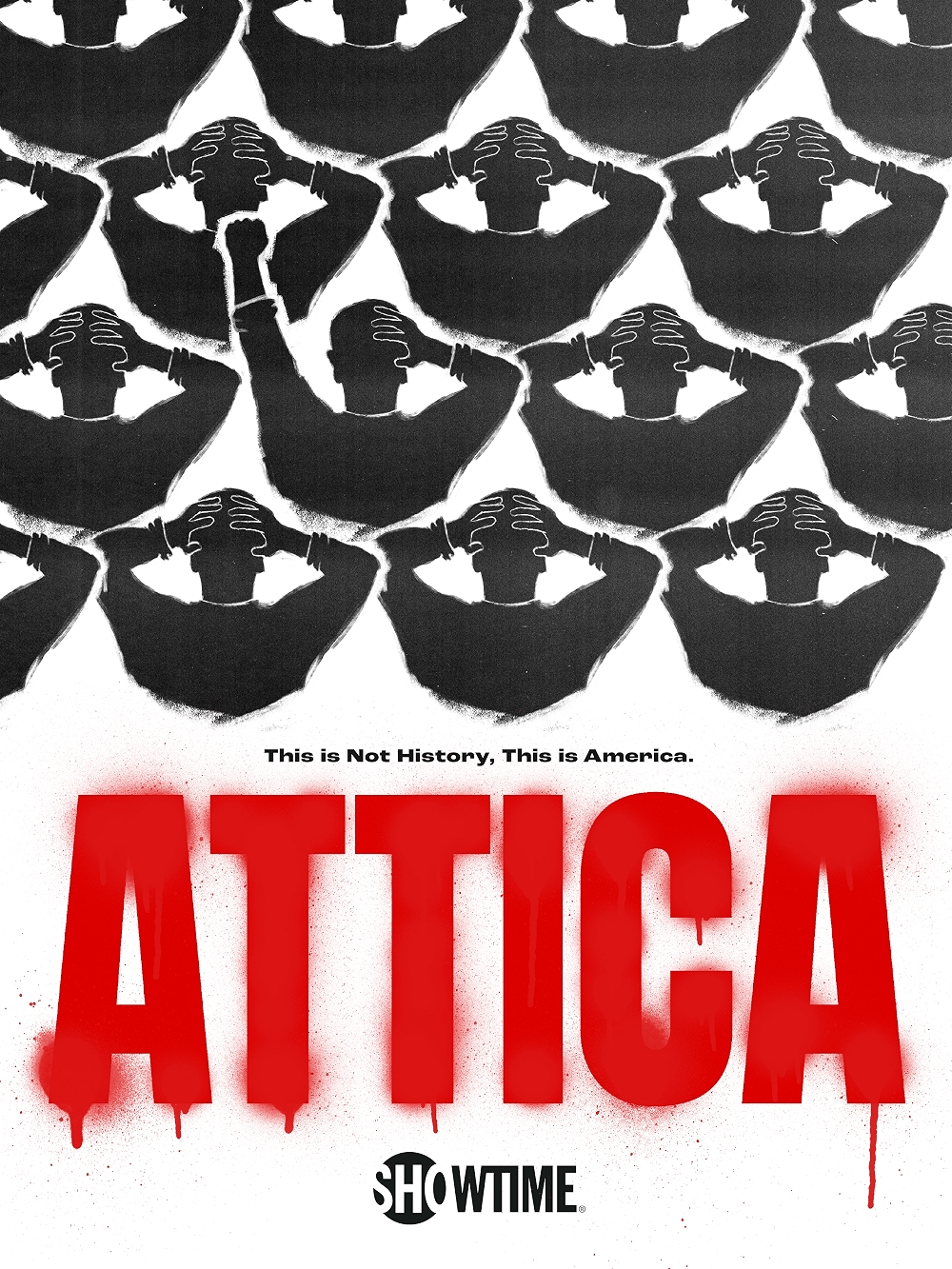
On 9 September 1971 the inmates at the Attica Correctional Facility in New York State rose up, overpowered the guards and embarked on the largest prison rebellion in US history. Five days later, the authorities took back control in a brutal display of force, resulting in 29 dead inmates and ten dead hostages.
Director Stanley Nelson is a veteran black producer/director whose CV contains titles such as The Black Panthers: Vanguard of the Revolution and Boss: The Black Experience. So you might expect Attica, his documentary about those events, to be quite partisan, more campaign than chronicle. But chronicle is evidently the way Nelson has decided to go. His documentary turns out to be a remarkably even-handed survey of what happened immediately before, during and after those five days.
He goes about his task forensically. The rebellion – riot isn’t the right word at all, though it was bandied around a lot at the time – was sparked by a minor event, and at the root of the inmates’ complaints were a series of seemingly trivial requests. They wanted toothpaste and toilet paper, a change of bed sheets more than once a month, the freedom to worship. To be “treated like human beings,” as former inmate Arthur Harrison puts it.
And having taken hostages, “your only leverage”, as another former inmate, Daniel Sheppard, explains, they set about trying to negotiate for an improvement in basic conditions while organising the digging of latrines (the toilets had stopped working), setting up a medical facility in the yard where they were encamped, erecting makeshift tents and ensuring the hostages remained unharmed.
None of their demands were ever met. Driven largely by the law and order agenda of New York governor Nelson Rockefeller, who fancied himself as a future president, and emboldened by US President Richard Nixon’s whispering from the wings, the uneasy standoff continued while the list of the inmates’ 30 demands was debated inside Attica by Russell Oswald, a caricature Commissioner of Corrections. Outside, meanwhile, at Rockefeller’s instigation the National Guard and the State Troopers were assembling.
The prisoners realised early on that the media would act as both witness and shield and so they invited them in. It’s thanks to that decision that there is so much high quality footage of the event. Nelson and his co-director Traci Curry marshal it well, mixing the archive material with modern-day interviews with participants on all sides. There’s the largely black cohort of former inmates, who are an erudite bunch. As are the white representatives of Attica, a “company town”, according to Dee Quinn Miller, daughter of one of the guards, and archive footage of this very white picket “village” (as Miller calls it) highlights the gulf between black and white America. Between the two are the likes of John Johnson, a black TV reporter favoured by the inmates, and Herman Schwartz, a lawyer who went in as one of a group of observers who found themselves increasingly acting as mediators.

With the Black Panthers still active – Panther Bobby Seale turns up and just as rapidly leaves (“It was quite a letdown,” says former inmate Tyrone Larkins) – the political atmosphere in the country was febrile.
Nelson slows down the pace as on day five the tragedy eventually unfolds. Grainy State Trooper footage catches a helicopter arriving and disabling gas being deployed before the shooting begins. “Death was written on the air,” says former inmate Arthur Harrison. “It was far beyond anything I had expected,” says former National Guardsman Tad Crawford.
Cut to colour stills of the outcome, dead bodies make for grim viewing, followed by media footage of the aftermath – naked inmate being forced to crawl through shit as penance. On top of the inmates that died in the shooting there were the ones who were subsequently taken away in the melee by the guards and tortured and killed. The cops outside, meanwhile, are shouting “white power” and making ironic black power fist salutes.
Rockefeller had restored order. As to law and order, that’s surely a different matter.
The film premiered at the Toronto International Film Festival on the 50th anniversary of the beginning of the Attica uprising and went on to be nominated for an Oscar (in an impossible contest it lost out to Summer of Soul). It is a powerful story about routine violence in the USA and a well told one. The rebellion did lead to some improvement in the way prisoners were treated, but look at the cost, on all sides. As former observer Clarence Jones puts it, “It didn’t have to be this way.”
Attica – Watch it/buy it at Amazon
I am an Amazon affiliate
© Steve Morrissey 2024