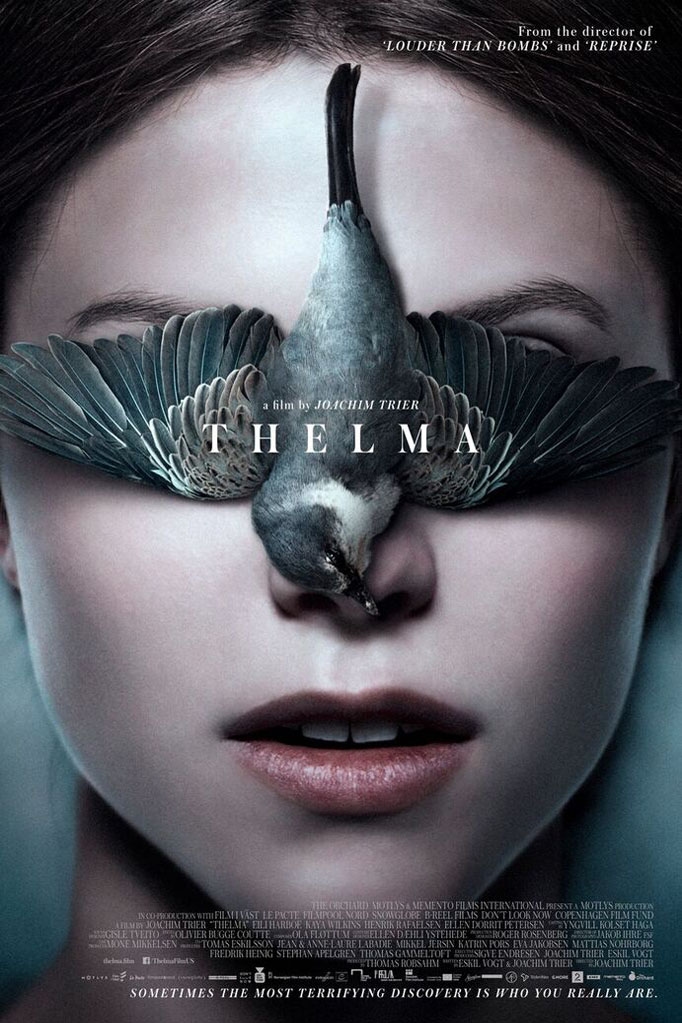
Thelma, a collaboration between director Joachim Trier and writer (and sometime director) Eskil Vogt, is another reminder of what a dynamic duo these two are, separately and together. And that they make powerful and suggestive, moody and magnificent dramas that are also sly as hell. Slo-mo gotcha movies of a very high order.
Thelma starts with a tender scene of a father out with his six-year-old daughter in the snowy wintry wastes of Norway. By the end of this sequence the father is taking aim at his daughter’s head with his rifle, unbeknown to her. Why?
Trier and Vogt tell us almost two hours later, right at the end. In between they follow the grown-up little girl, Thelma (now played by Eili Harboe), to university. Thelma may have left home but her parents seem reluctant to let go – they know her study schedule, they are keeping an eye on her Facebook page and mention it when new friends are added to it. But in spite of the stultifying surveillance, withdrawn Thelma manages to start doing the things young people at university do. She starts breaking the bond, having a little drink (she’s never done that before), trying drugs (ditto) and eventually falling in love with someone, a young woman, Anja (Kaya Wilkins).
So far, so normal, though not for Thelma. She’s been brought up very, very strictly, by parents who appear to be devout Christians.
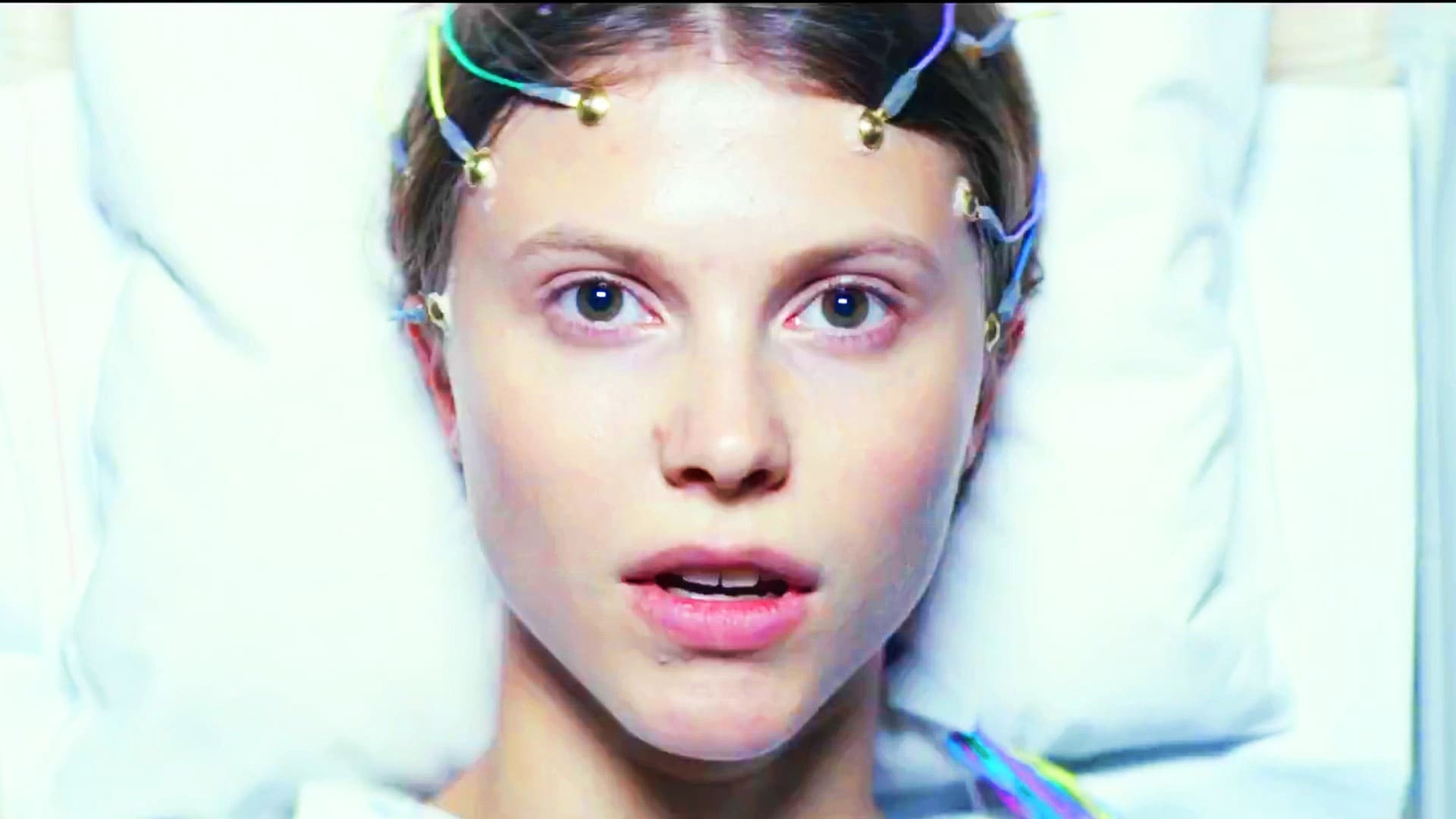
But something else is happening. Thelma starts to experience what look like epileptic fits. And while she’s having the first one, spectacularly in the university library, other disturbances in the natural order of things are going on around her. The library lights are flickering. Birds are are massing outside the plate glass windows. Some fly right into them.

Thelma comes of age, breaks free, tastes forbidden sex, falls in love and turns her back on religion, standard subjects for a film, but Trier and Vogt set it all to a supernatural psychogenic beat that places Thelma in the same bracket as De Palma’s Carrie, or Justine, the unusual young woman in Julie Ducournau’s Raw, though the religious element invites some comparison with the 2006 German film Requiem, Sandra Hüller’s breakout.
All three of those films build towards a showdown reveal, abruptly or gradually, and that’s what Thelma does too, on the way renosing relationships that seemed set in stone from the outset – Thelma’s too intrusive parents, for instance.
It’s a supernatural horror story for those who like them muted. There’s barely a special effect, and when they do come they really hit home. Instead Trier and Vogt set out to creep us out with a sustained mood of fugitive unease. All is not right in Thelma’s world, and while Trier suggests as much with weird but plausibly normal camera moves – very slow zooms, for instance – Ola Fløttum’s subliminally tense score, way back in the mix, whispers in our ear that there’s more going on with Thelma than everyday student experiences with marijuana or sex are telling us.
Eili Harboe’s performance is superbly ambiguous. Her wide eyes and clear skin are used as counterpoints to something a lot less wholesome beneath. In her feature debut, Wilkins doesn’t have much to do as Anja except look highly desirable – asked and answered – but she does it well and is convincingly smitten in her scenes with Harboe, whose film it undoubtedly is.
This is a film from 2017, but worth going back to if you missed it. Since then Trier has gone on to make The Worst Person in the World, another tale of a bright, attractive young woman with a dark side, while Vogt has made The Innocents, which took the idea of supernatural powers in young people and explored it a bit more. So, if you’re in the market for a buy-one-get-one-free deal…
Thelma – Watch it/buy it at Amazon
I am an Amazon affiliate
© Steve Morrissey 2024