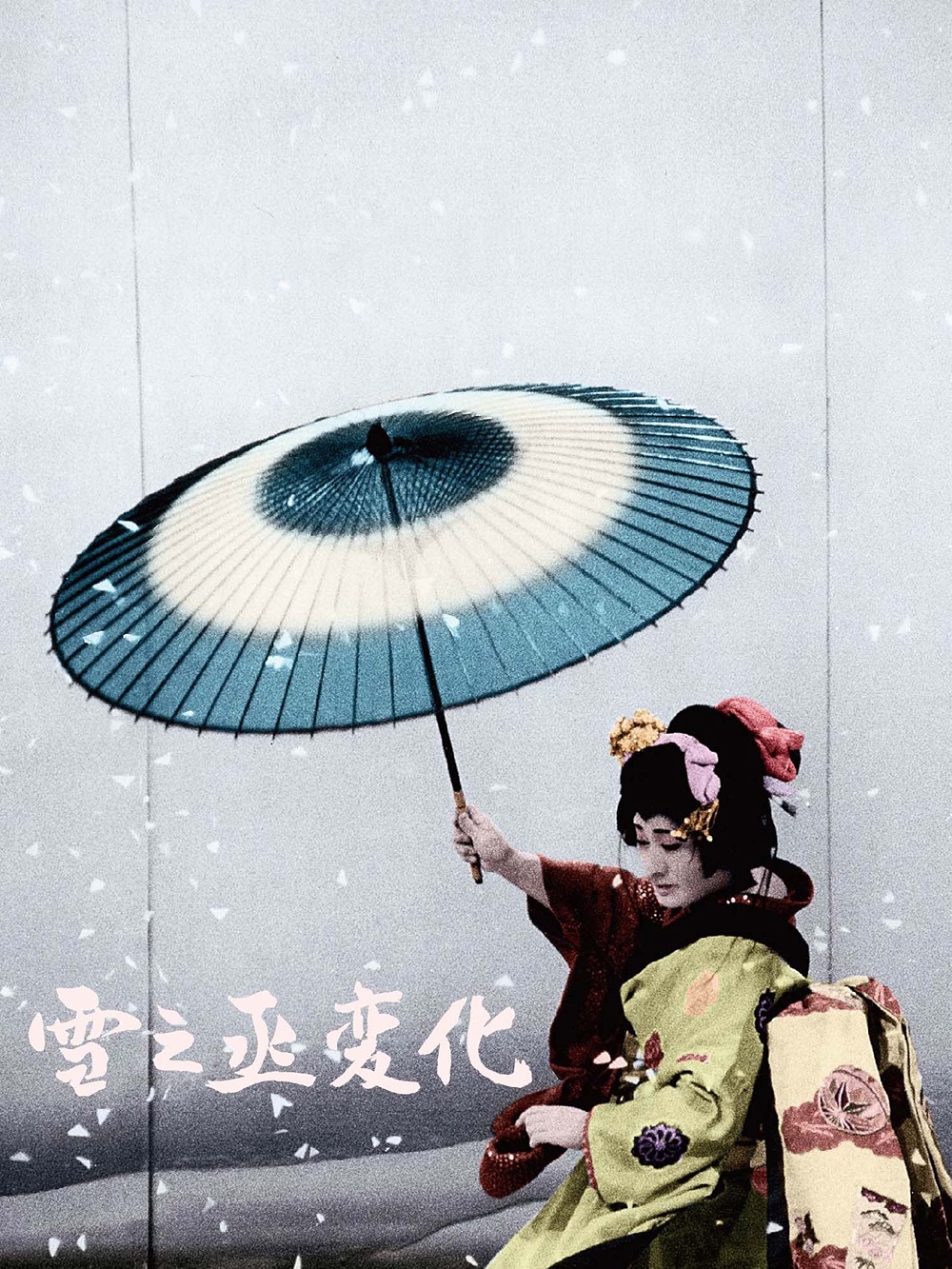
“Stagey” is not usually a compliment when it comes to screen works. But it is in the case of 1963’s An Actor’s Revenge, a Japanese film combining the the dynamism of cinema with the intensity of the theatre experience.
Before the action kicks off, a little on-screen note tells us that this was the 300th film performance of its star, Kazuo Hasegawa. Remarkably Hasegawa played exactly the same role when this film was first made in 1935.
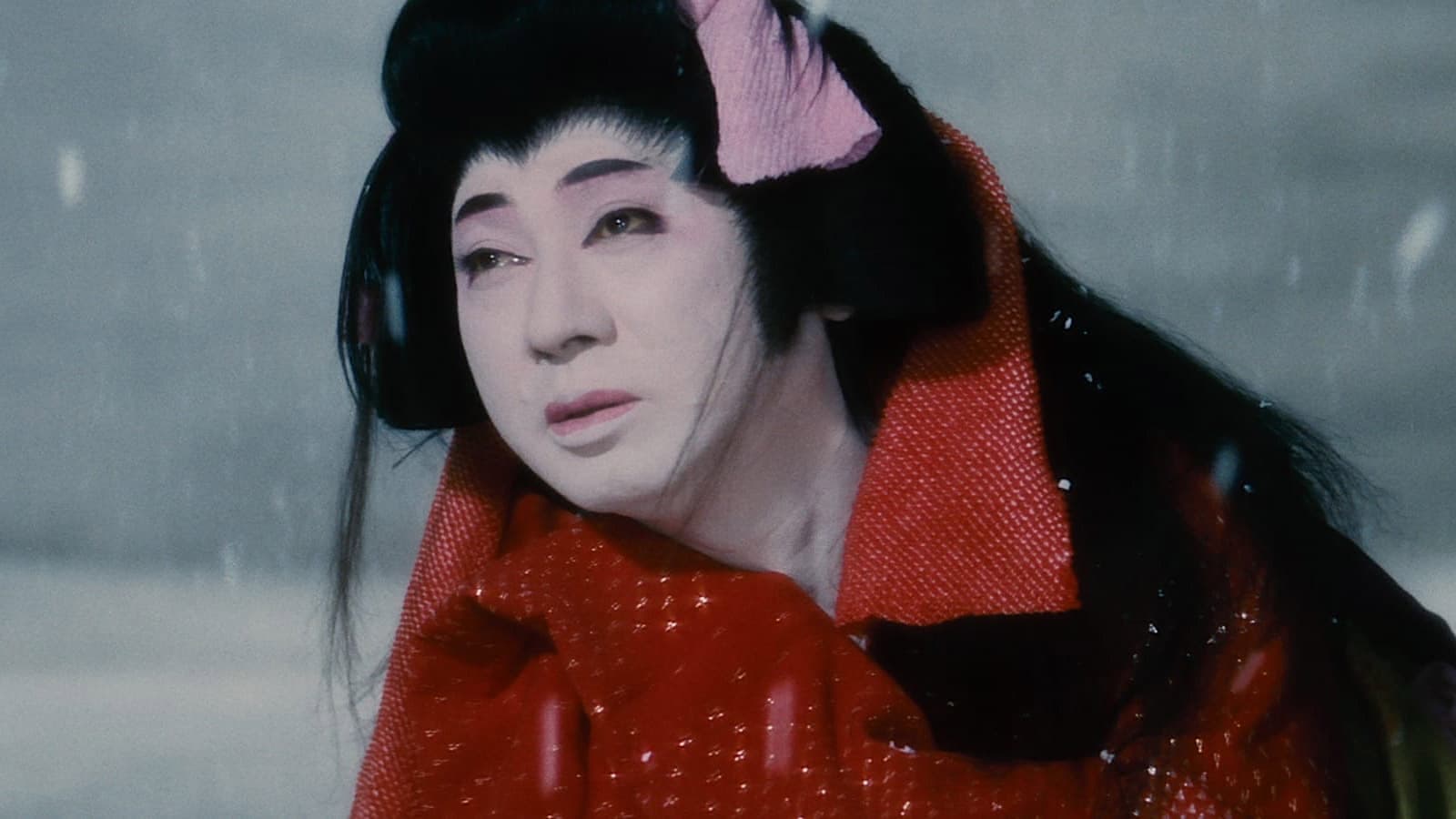
Housekeeping out of the way, enter the plot, which immerses us straight away in the film’s opening shot. Hasegawa plays an onnagato – a male kabuki actor who specialises in female roles – who is mid-performance one evening when he suddenly realises that the three people responsible for the death of his parents are in the audience. Beneath his breath he vows revenge.
And that’s it, the wronged man – who was luckily taken in as a kid by a kabuki troupe and has made a go of his life with them – and the three targets, each venal in a different way. Sansai Dobe (Ganjirō Nakamura) wants power, Kawaguchiya (Saburō Date) craves Dobe’s beautiful daughter and Hiromiya (Eijirō Yanagi) covets wealth.
Remaining disguised as a woman throughout, “Yukinojo” (original male name Yukitarō barely used) insinuates himself into the lives of his potential victims, hoping to use their foibles as his point of entry. What he doesn’t bargain on is becoming hopelessly enamoured of Dobe’s daughter, Namiji (Ayako Wakao), who has the sort of looks that causes traffic pile-ups, not that there’s much traffic in this movie to pile up.
In fact much of it plays out on a darkened sound stage – all very theatrical and foreshadowing Lars Von Trier’s Dogville and Manderlay – especially the scenes set at night. This allows director Kon Ichikawa to demonstrate his skill as a stylist – formal compositions, careful use of colour, people placed in scenes like chess pieces. There’s barely a shred of realism in it, except for the odd moment when someone realises that Yukinojo is not a woman but a man. Dude does not look like a lady, as Aerosmith almost once said.
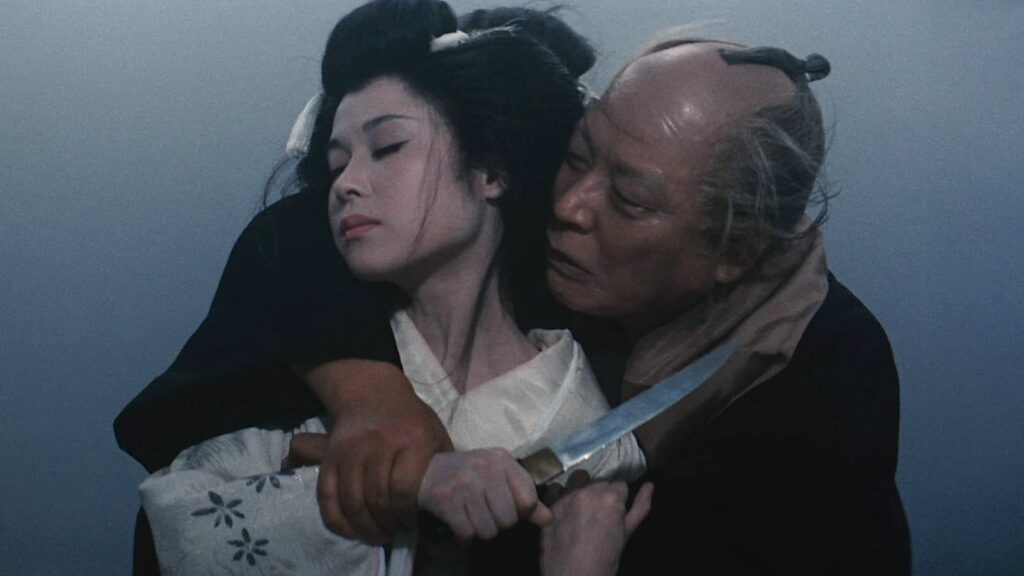
This makes some of the scenes inadvertently funny, since in general everyone who meets Yukinojo falls in love with him – men, women, it doesn’t matter. Something to do with his actor’s skills?
Namiji falls for Yukinojo knowing he is an onnagato actor, though in these scenes Yukinojo is meant to be passing as a woman. Confusing. Later, not knowing that it is Yukinojo, thief Ohatsu (Fujiko Yamamoto) falls for this man dressed as a woman – at precisely the point she realises he’s a man, though she protests that this isn’t her sort of sexual thing at all. Again, confusing.
It’s all a touch transgressive. Put the confusion down to the works hyper-stylisation and its borrowings from kabuki, though Ichikawa lays a jazz soundtrack over the whole thing, just to stop things from becoming too familiar (to Japanese audiences, at any rate).
Hasegawa plays a second role, as a male thief skittering around the edges of the action and adding commentary here and there, a Greek chorus with a sideline in light relief and a chance to show that Hasegawa can convincingly play masculine (as Yukinojo he/she never comes out of character).
It is all utterly distinctive, very stylish and strongly theatrical – lights dim at the end of a scene, or pick someone out in a spotlight – yet thanks to Ichikawa’s agile cameras and nimble editing it remains defiantly a film. Another paradox: considering it’s about revenge and death, Ichikawa tells his story in a bright and breezy way. That Henry Mancini Pink Panther-style score really helps.
By the end justice has been served but vengeance has a nasty aftertaste. There is a moral to this story, one which Hasegawa’s downcast face has been hinting at throughout. Be careful what you wish for, especially if it’s death and destruction to those you hate. It might come back to bite you.
An Actor’s Revenge – Watch it/buy it at Amazon
I am an Amazon affiliate
© Steve Morrissey 2025