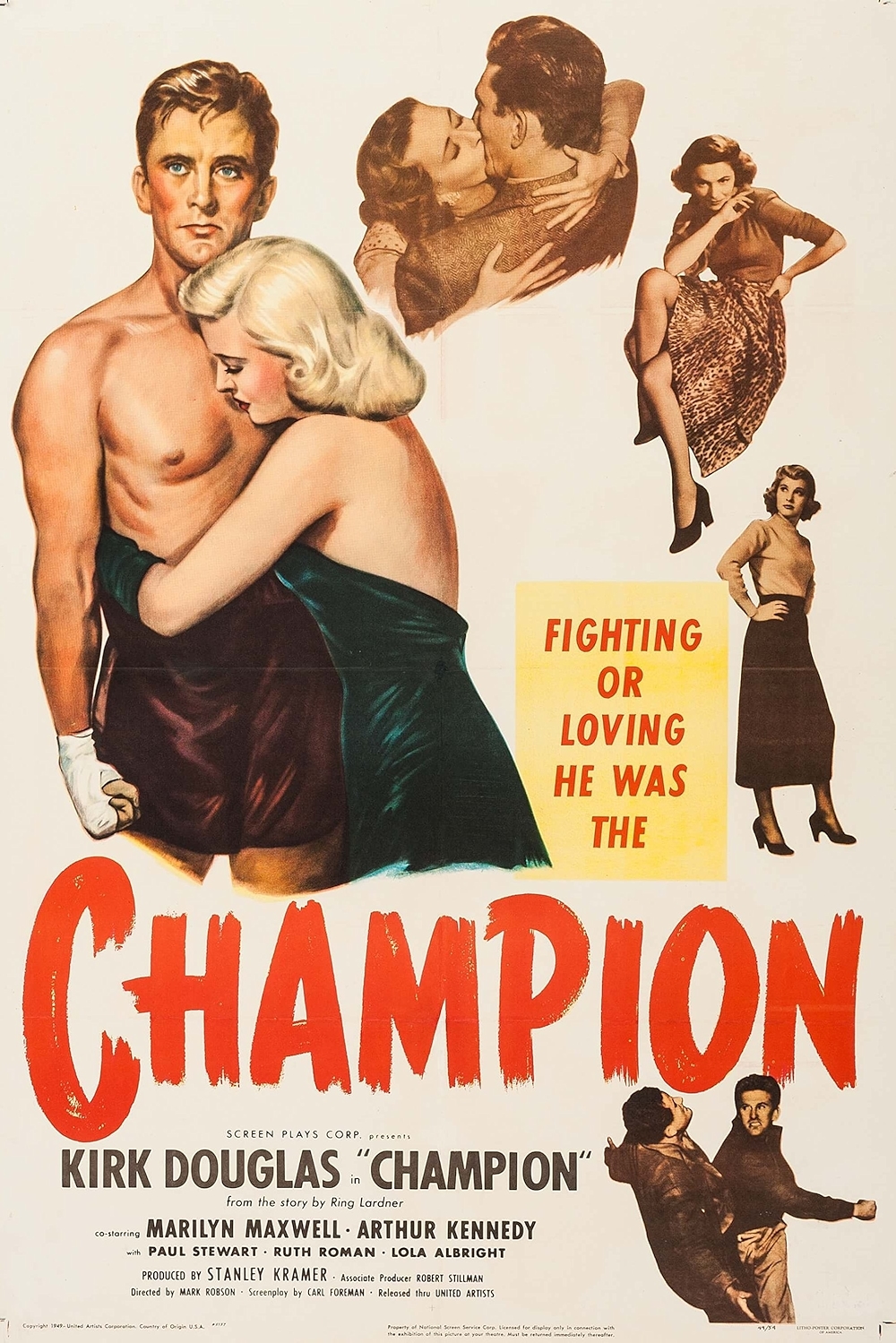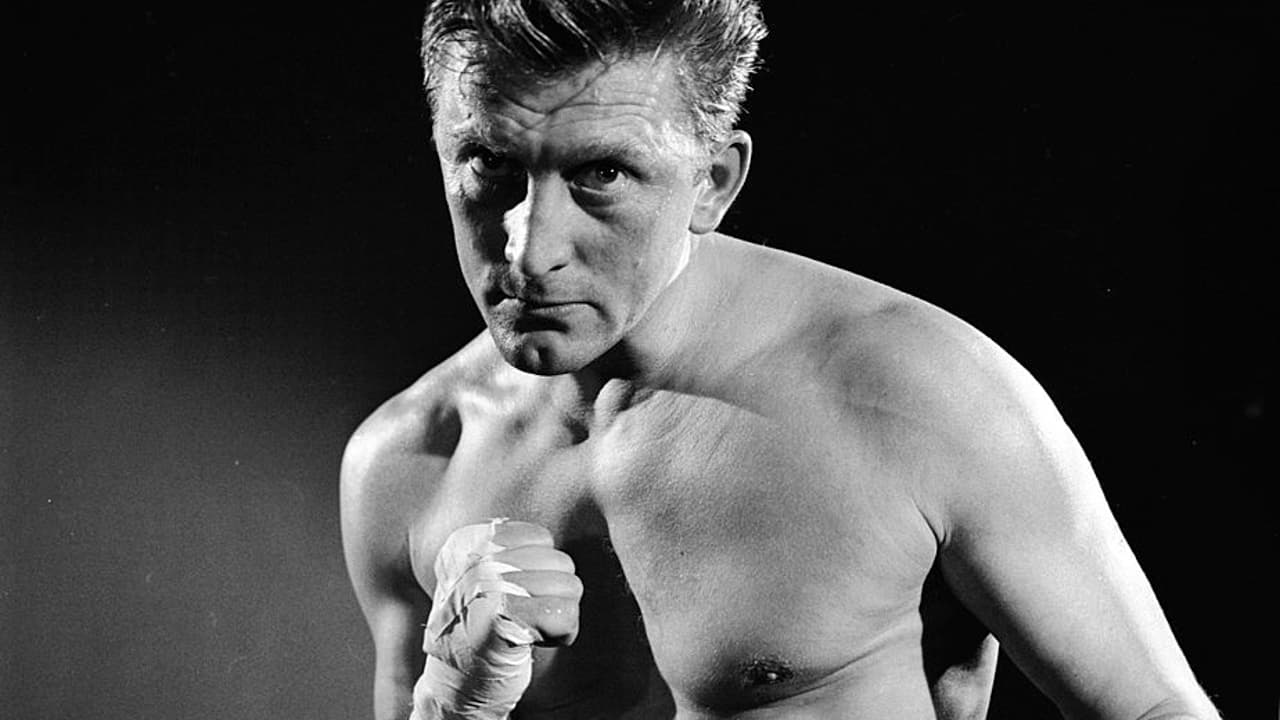
So here I am coincidentally writing about Champion on the day the death of the remarkable George Foreman is announced. A gent and a plugger, who came back after 20 years away to win the world boxing title for the second time, Foreman was everything the focus of Champion is not.
The film made a star of Kirk Douglas, and was his eighth film in three years. In many ways the typical boxing drama – scrappy kid, rags to riches, it all goes to his head, a fight to be thrown, the against-the-odds finale etc – it’s also a portrait of a psychopath, or at least a sociopath, who has no use for anyone on the way up, discarding everyone who gets in his way.
This includes his brother Connie (Arthur Kennedy) with the lame leg. Sweet young Emma (Ruth Roman), who he beds, weds and forgets. His first manager, Haley (Paul Stewart), a decent sort who takes Midge (Douglas) to the top. Eventually, trading OK human beings for the sort of pond life that floats about where the money is, Midge will eventually also attempt to throw over gold-digging blonde Grace (Marilyn Maxwell), his new, slippery manager Harris (Luis Van Rooten) and Palmer (Lola Albright), his new manager’s wife, another blonde and a higher-class proposition than Grace. Women in this movie tend to be transacted chattels – you’d be hard pressed to get a positive feminist reading out of Champion.
Midge runs hot and cold with nothing in between and by the end of the movie he is just the same as he began, a petulant, dysfunctional human running on primal urges that have not been socialised.
It is a perfect fit for Douglas, who gives it the gimlet eye and strangulated voice that impersonators seized on and would imitate for decades to come. He’s a more subtle actor than that stereotype, with a broader range, but he does excel at driven individuals with no conscience (as Billy Wilder realised when casting Douglas in Ace in the Hole two years later). Douglas also isn’t overly concerned that playing a heel is going to ruin his leading-man status, unlike many a Hollywood star.
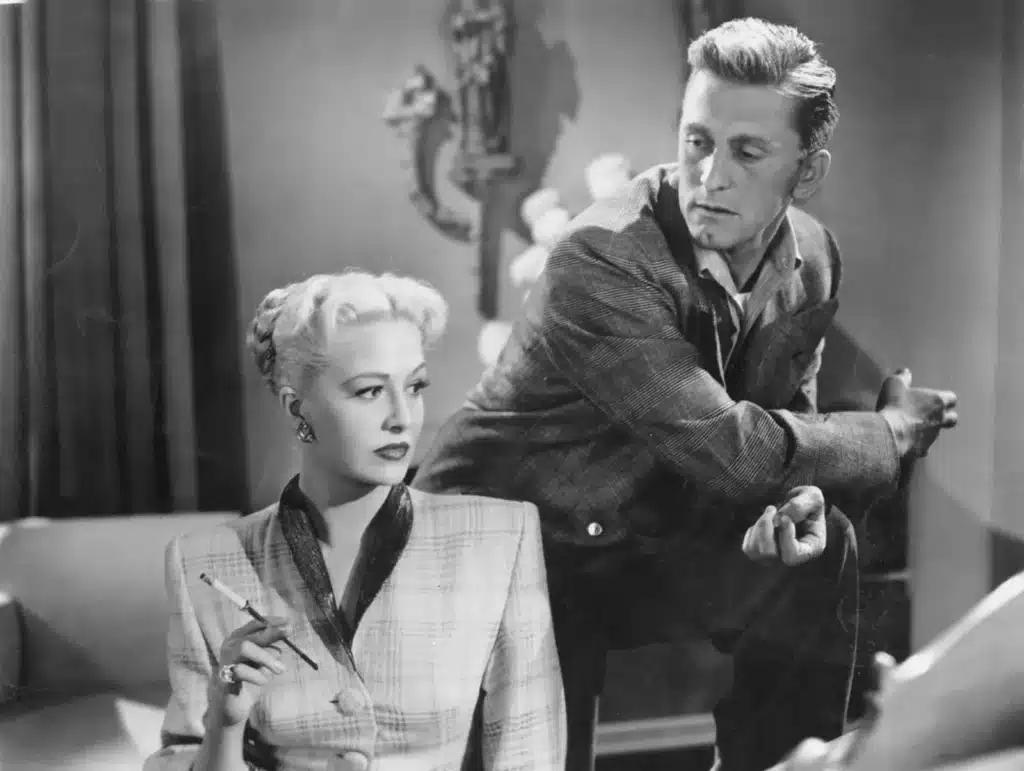
As said, the story offers no real surprises in terms of the boxing drama. In fact the producers of The Set Up, the Robert Ryan boxing drama from the same year, sued over the similarities. But then boxing dramas do tend to cover the same ground.
The director here is Mark Robson, an interesting and under-celebrated talent who, in a long career, did horror, western, noir, soap, war and even a disaster movie (Earthquake). He’s the sort of director who sells the story rather than selling himself and so gets overlooked when pantheons are being constructed, but look at how tightly and economically he directs. He understands that the boxing drama is a known quantity and keeps the drama bowling along and his focus on Midge. Apart from the occasional highly dramatic close-up at a pivotal dramatic moment, Robson is not out to draw attention to himself, and considering that he has the great Franz Planer as DP – pools of noirish shadow all over the place – that’s actually quite an achievement.
Though Douglas is in good physical shape, Robson also isn’t that interested in giving us the blood, sweat and tears of boxing. The fights are in the main done as montages. This is the portrait of a man out for himself and the people around him who are either his victims, or victims of their own decision to let him get away with it, take your pick.
Douglas is superb and deserves the stardom the film gave him. Arthur Kennedy throws himself into Douglas’s shadow as Midge’s “gimpy” brother and Ruth Roman has several moments of magnetic intensity (occasionally spilling over into the torrid) and is outstanding as the wife any normal guy would never leave behind.
As for that “Champion” tag – is that what Midge is? Like Mark Wahlberg’s character in The Fighter nearly 60 years later, questioning the easy labels is precisely what the film is about.
Champion – Watch it/buy it at Amazon
I am an Amazon affiliate
© Steve Morrissey 2025