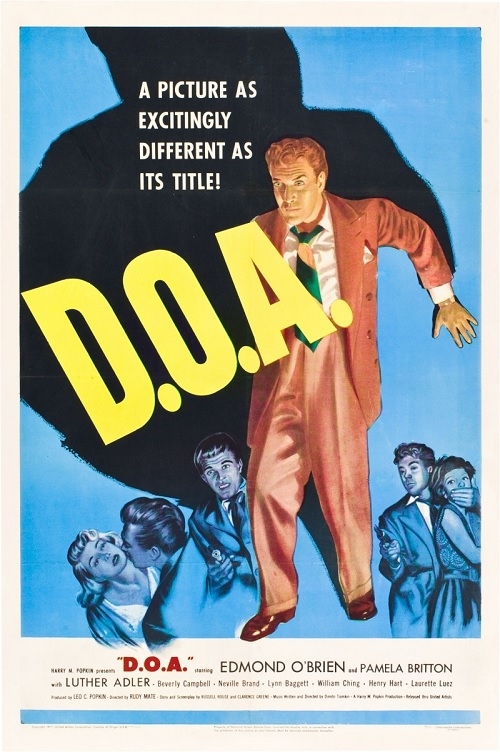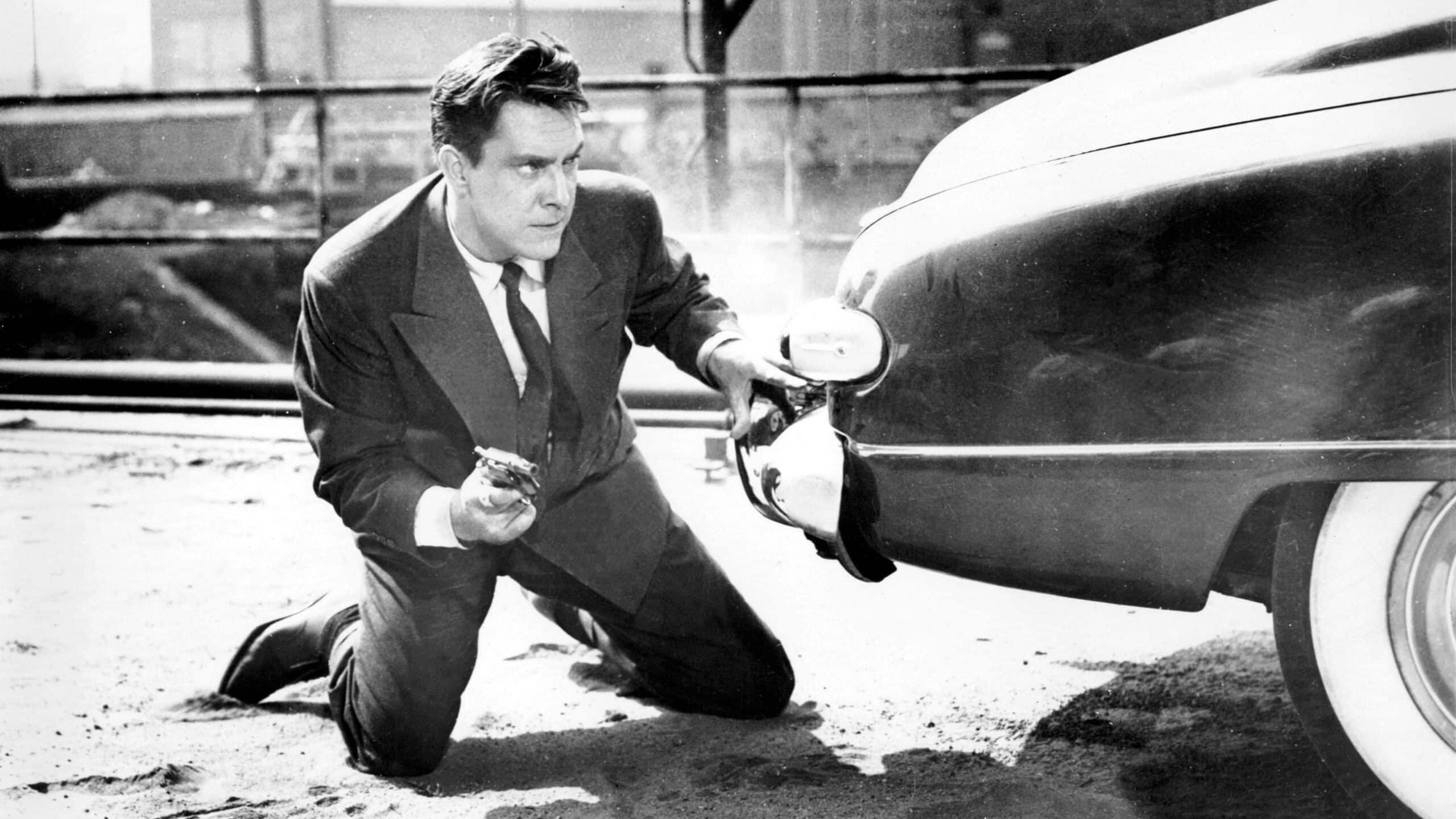
The opening scene of D.O.A. is so punchy and dramatic that it has to be up there on any best-ever list. A man walks into a police station, finds the homicide department and announces that there’s been a murder. “Who was murdered,” asks the homicide captain. “I was,” Frank Bigelow replies. The film ends on a humdinger, too, which in the circumstances is almost unnecessarily generous. In between, in flashback, we get the back story to that odd opening remark, one that doesn’t seem to have surprised the cops at all.
Fate often deals bad cards to the leading characters in film noir. It’s particularly undeserved here, a tale of a small guy from a small town who notarises a bill of sale which, it just so happens, proves that a bigger fish in a bigger town was involved in something he should not have been. From this point Frank’s fate is sealed. And once his drink has been spiked by a slow-acting “luminous poison” in a San Francisco bar, it’s game over.
D.O.A. gets its main storytelling building blocks out of the way at lightning speed, with Frank discovering that he’s doomed early on and turning detective to try and find out who and why and why him. Along the way he has an epiphany about his own life, and his relationship with Paula (Pamela Britton), the solid but needy cutie-pie who wants Frank to marry her, which is very much not on Frank’s to-do list, until he realises it’s now suddenly a bucket list.
Frank is played by Edmond O’Brien, and his doughy features and everyday manner suit the character of Frank down to the ground – though they sit oddly against Frank’s seeming babe-magnet effect on all the women in this film. That’s about the only improbability there is to swallow.
As for the rest of it, it’s perfect. The dialogue spat out at speed, the complex plot twisting this way and that, with Frank as both protagonist and Maguffin. The score by Dimitri Tiomkin, which is powerful and dramatic. The cast of brilliant character actors who play the hard-bitten souls dotted through the film as Frank weaves his way towards a fate that seems almost biblical.
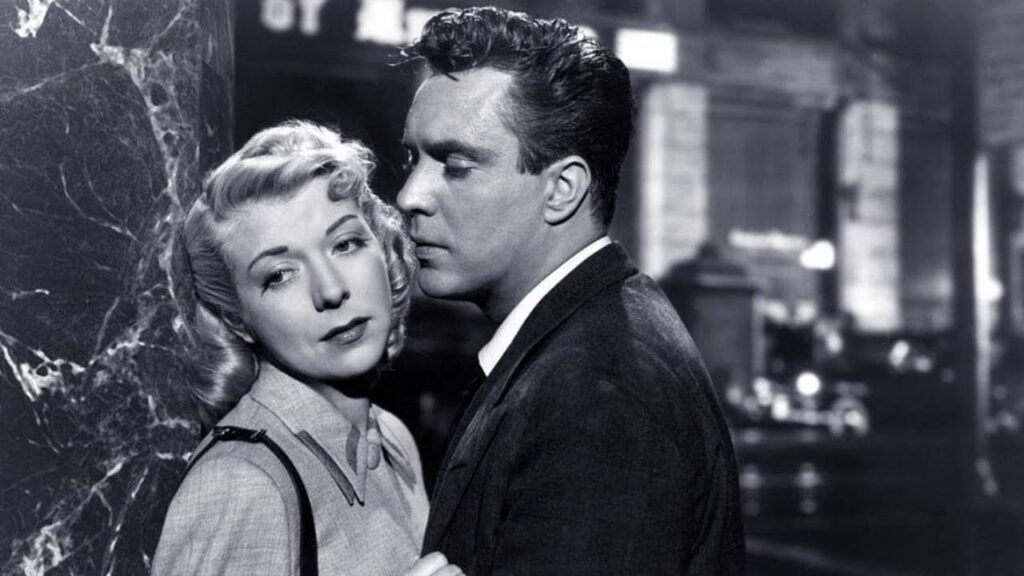
The director is Rudolph Maté, who was a cinematographer before he turned to directing only two years before. It looks good, in other words, more than good, because it’s Ernest Laszlo, one of the great directors of photography, in charge of the lighting. Maté’s directing is exemplary, a textbook example of forward-leaning and economical visual storytelling and Laszlo gives him images that are punchy and sharp.
A lot of it is shot on real locations – in San Francisco at first but then in Los Angeles, noir central, where Frank heads for answers as the toxin does its thing. And, particularly early on, Maté gives us a lot of the flavour of urban life – a hard-driving jazz band in the bar where Frank drinks his fatal beverage, and the hard-partying crowd of jazz freaks whose hip-to-the-jive-daddio lingo is flavourful and also (now) quaint.
In 83 minutes it’s all over, and as the action shifts back to the police station where Frank is finishing his story, the poison, taking its cue from the extreme economy of the whole thing, also brings down the curtain on Frank. “How shall I make out the report on him, Captain,” asks one of the deputies, pointing to the man dead in the chair. “Better make it ‘dead on arrival,’ ” replies the Captain. Roll end credits on what is pretty much a perfect film.
The film has been remade several times – once as Color Me Dead, twice (1988, 2022) as D.O.A. and once as Dead on Arrival, but reworkings of the plot can be found all over the place. The comedic Jason Statham actioner Crank, for instance, owes a lot to D.O.A.
A word about hard copies. The copyright lapsed on this film, so anyone could do whatever they wanted with it. There are a lot of very inferior versions out there and woolly visuals do not suit this film at all. I’ve linked to a good one.
The End – Watch it/buy it at Amazon
I am an Amazon affiliate
© Steve Morrissey 2025