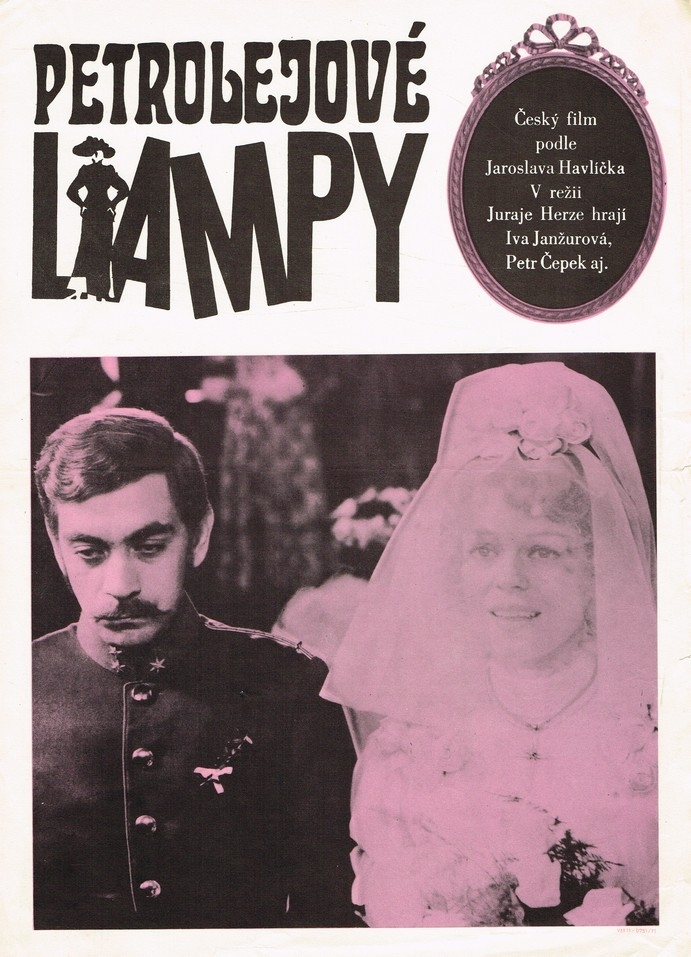
Czech master film-maker Juraj Herz’s 1971 follow-up to The Cremator is a complete change of gears, pace, look, intent, the whole kit and caboodle, as if Herz wanted to say to the Communist authorities – look, I can do it straight too.
Oil Lamps (Petrolejové lampy) is in colour, for a start, whereas The Cremator was a more serious black and white, and there’s nothing fancy in the lens choices, no unsettling edits, no barbed message hiding in the undergrowth.
The story it tells is pretty straightforward too, about a woman desperate to be married who plumps for entirely the wrong man and then repents at leisure. It’s clearly informed by John Schlesinger’s glorious Far from the Madding Crowd. The looks are similar, the way characters stand out against nature, the almost Thomas Hardy-esque finger-wag of being careful what you wish for. Though Madame Bovary is undoubtedly part of the mix too.
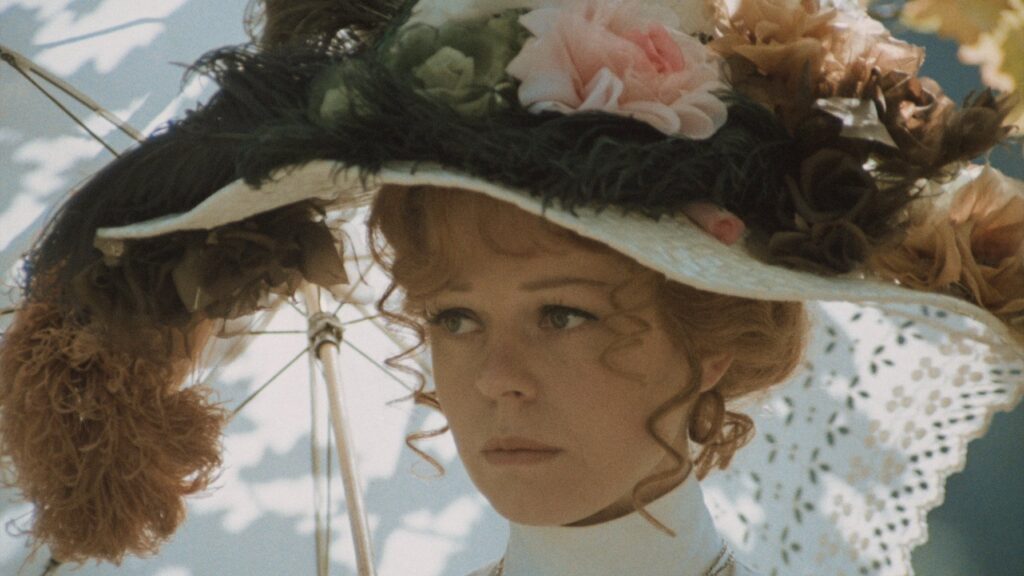
Herz, following Jaroslav Havlíček’s 1935 novel, spends a lot of time introducing us to fun-loving Štěpa (Iva Janžurova), a vivacious beauty nearing 30 who, in spite of her many attributes, cannot find a husband. The local menfolk find Štěpa just a touch too libidinous, formidable, perhaps man-like – “You drink like a bricklayer”, one guy tells her.
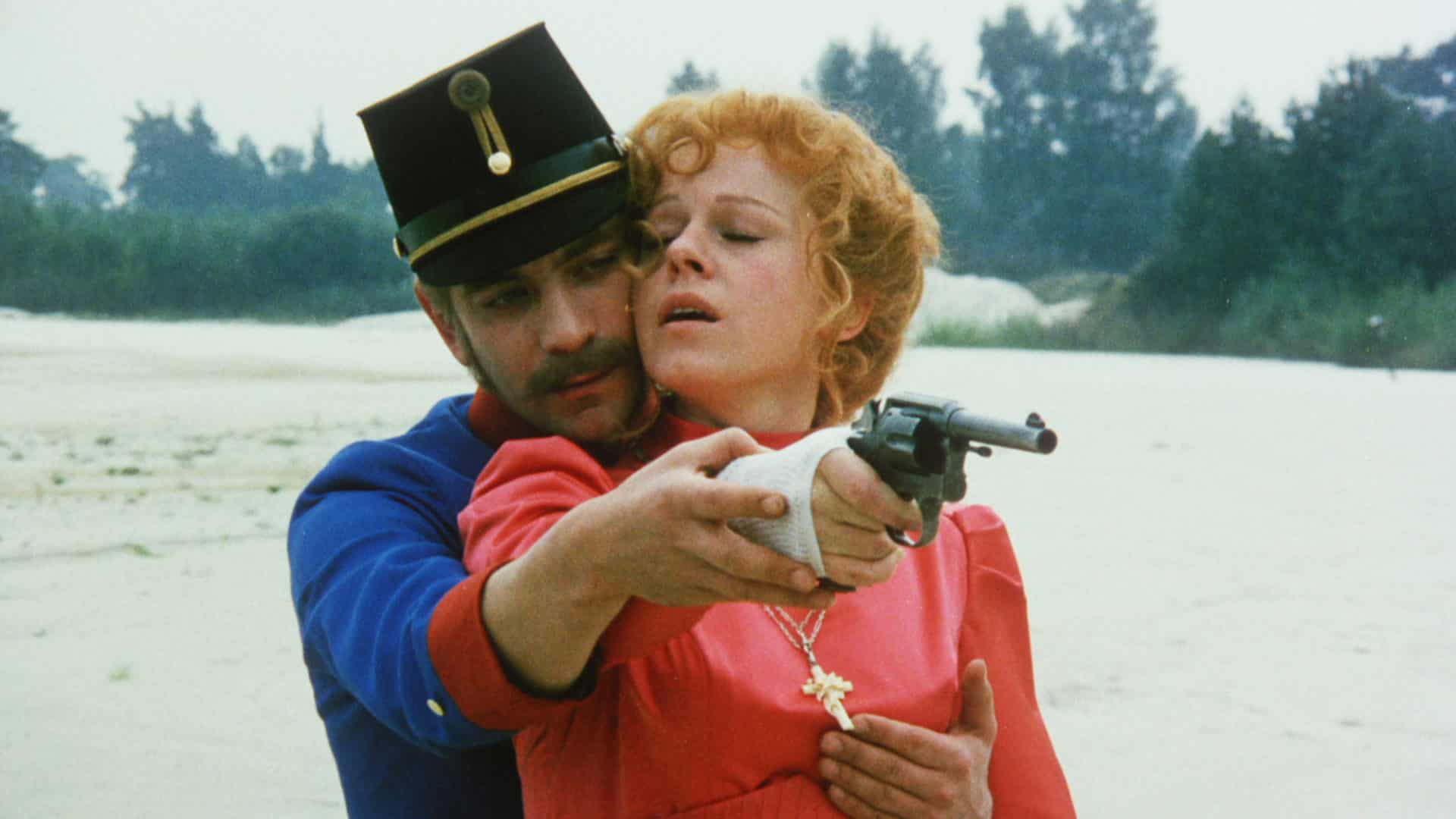
Compromise is something Štěpa won’t do, which is the gigantic irony of this film. Because in the end compromise is forced on her. Having exhausted all the potential suitors, she fixes on her cousin (Petr Cepek), a dashing soldier back from the front who has already rebuffed her once. But one reason he takes her on her second attempt is because his family is broke and needs Štěpa’s money.
Štěpa discovers the other reason only after they are married. Pavel’s exuberant lifestyle of wine, women and song while away fighting for the Austrian army has left him with syphilis. The disease has left him impotent. The marriage cannot be consummated. On their wedding night, Herz frames the marital bed with Pavel on the left, a big oil lamp in the centre and Štěpa on the right, the lamp a metaphor for Pavel’s disease and Štěpa’s fate.
From here oil lamps are suddenly everywhere, as is pitiless decline. Pavel’s one small act of heroism is refusing even to attempt to sleep with his wife, knowing that he’ll infect her. He even spam-fistedly tries to find someone to get her pregnant, before he becomes too crazed with the disease to know what he’s doing.
En route to the grave, a key scene – the pair of them promenade through the town, Štěpa attempting to hold her head high while Pavel dodders along with the gait everyone in town knows is the mark of syphilis.
Shame looms large as a concept, as does power asymmetry. Štěpa had one card to play and she has played it badly.
There is another couple who act as a shadowplay version of Pavel and Štěpa. Pavel’s older brother, Jan, should be the lucky one since he will inherit the family farm, though it’s now saddled with debt, another life ruined by Pavel’s over-indulgence. And the family servant, Manka, who Pavel has raped, infected and doomed to a tragic end.
If this all sounds a bit grim, feast your eyes on the looks of this film, which are shockingly, mockingly beautiful. The colours are gorgeous, Dodo Šimončič’s cinematography and the technicals are faultless. It’s rare that you seek out the name of the focus puller – because done well the job is invisible – but there is some astonishingly good focus-pulling going on in this film, particularly early on where Štěpa’s life is a whirl of parties, dancing, and bodies spinning towards and away from the camera, the essential part of the image pin-sharp the entire time.
This is the sort of extravagant costume drama that isn’t usually associated with the Eastern Bloc, and there is heightened costume-drama acting to match, with both Janžurova and Cepek locked on target as the unhappy couple dancing towards the precipice together, her initially naive but learning fast, him the complete package of male desirability who loses it all piece by piece.
The film was given a 4K restoration in 2023 by the Czech National Archive, using the original camera negative as source material. It forms the basis of the Second Run Blu-ray linked to below. I doubt you’ll see a better looking film this year.
Oil Lamps aka Petrolejové lampy – Watch it/buy it at Amazon
I am an Amazon affiliate
© Steve Morrissey 2025