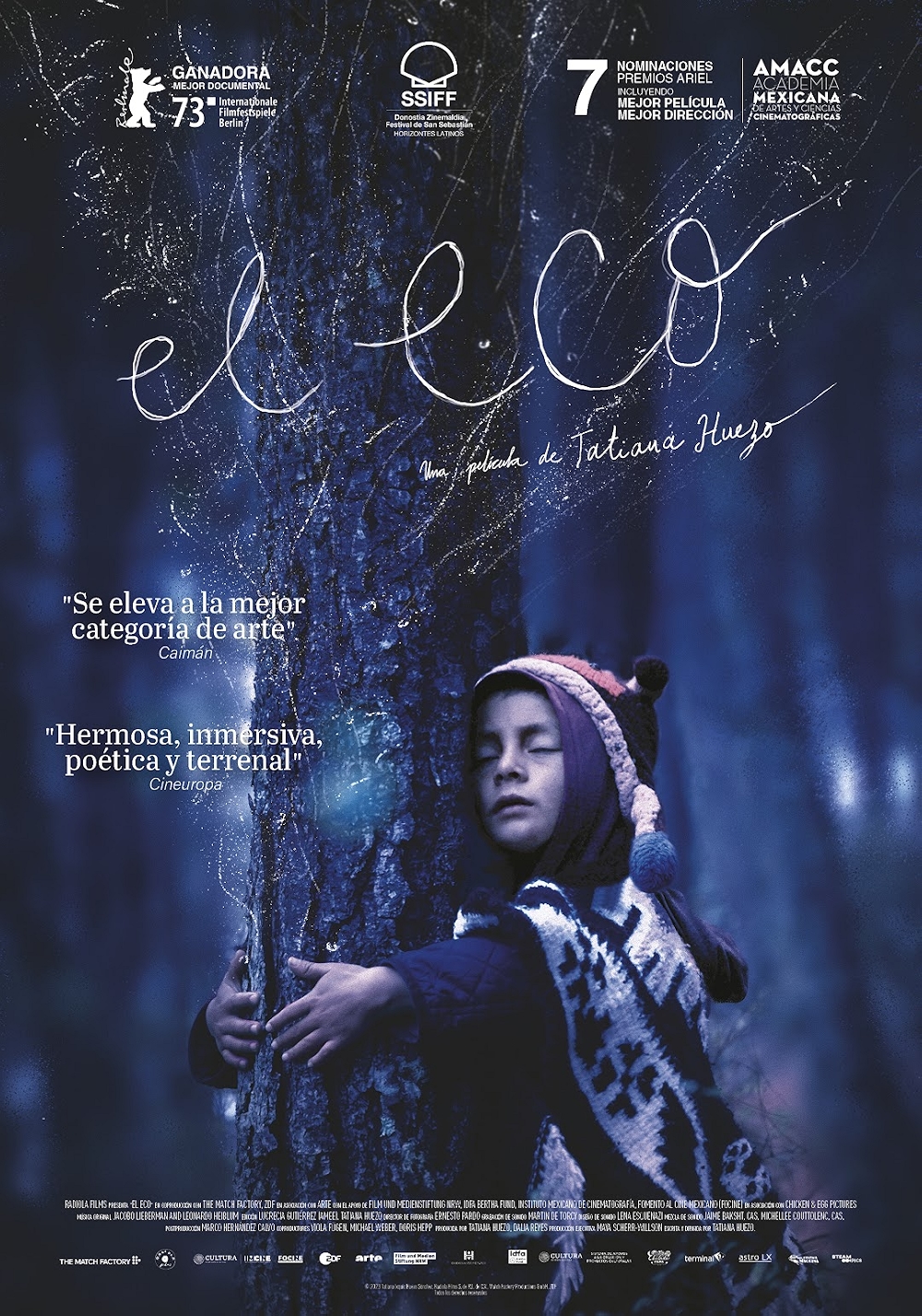
Hardscrabble lives are what film-maker Tatiana Huezo specialises in and that’s what she gives us in The Echo (El Eco), a documentary following three families in a Mexican village, particularly the girls just coming of age and contemplating a future of mixed possibilities.
A couple of years ago Huezo gave us the excellent Prayers for the Stolen, also set in Mexico, also interested in young women, a documentary-influenced fiction feature with a double shot of drug-cartel thriller to drag us along.
Now back with her first love for the last in her so-called “trilogy of pain”, Huezo gives us The Echo‘s key scene early on. Montserrat Hernandez is helping her mother bathe her elderly grandmother. Grandma is naked in a tub and her daughter and granddaughter are pouring water over her. “I’ve got soap in my eyes,” says the grandmother. “Careful,” says the mother, “don’t let her get cold… From now on this is your duty.”
This, in a schematic, is how it’s going to be for Montserrat from now on – doing things the old way, helping Grandma as she nears the end of her life. But Montse has her own hopes and dreams. Maybe she’ll break the cycle and head for the city.
On the other side of the village another young girl plays with her dolls. She’s the teacher and they are her students. She clearly also has expectations for the future.
Later, a father admonishes his son when the little boy gets up to take his dinner plate to the sink. “Men don’t wash dishes,” he scolds. “That’s what women are for.” His daughter looks on with a face that’s hard to read.
As with Prayers for the Stolen, Huezo drops us into this situation and lets us work it out for ourselves. There is no voiceover, no useful guide to village life. Instead, we are guided by her selection of scenes, led around the three families where “being useful” is the most important thing you can be. Grandma, barely able to see and hear, smacking her lips and tongue around teeth that are mostly gone, at one point complains that she is “no use”. She is soon dead.
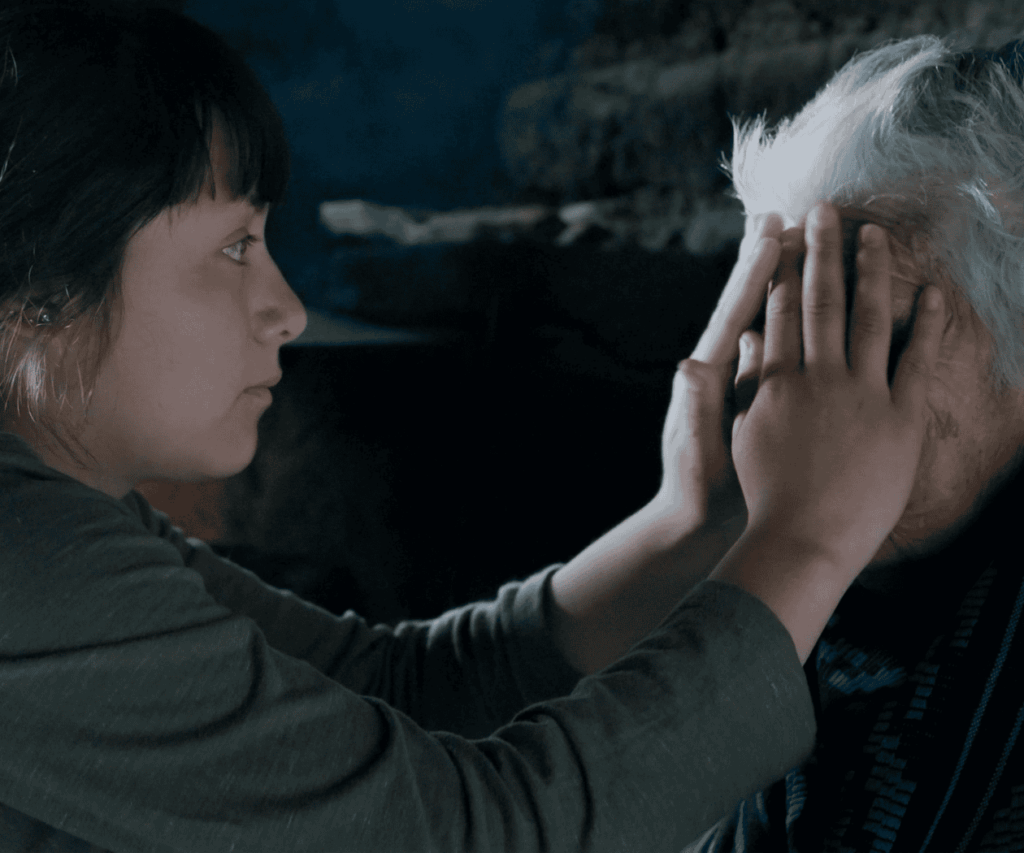
What access Huezo has managed to get to these families. She shot for over a year and clearly earned their trust. We’re right up in the meat of their lives, life and death stuff, traditions at the point where they are being handed down to the next generation, with all the power relations that go along with that. The men are largely absent, in the towns and cities earning money, leaving the mothers and children to herd the sheep, round up the ducks, rescue stray animals from waterholes, make do and mend. The children go to school for as long as their families can spare them, and there their heads are filled with facts, ideas and glimpses of life elsewhere.
A lamb is pulled from out of its mother’s uterus. A goat has its legs tied, its throat cut and is skinned. Corn ripens and is cut. Autumn approaches and kindling is gathered in the woods. Everything has its time. Huezo gives us the warp and weft of traditional life over the year, and the sacrifice it takes – by the girls – to keep that going. There are strong parallels with the Italian film The Tree of Wooden Clogs, though that was set in the 19th century and was a fiction film doing its damnedest to look like a documentary.
Quite how much of a “documentary” we in fact have here is the question. Huezo is listed as the “writer” and obviously borrows a touch from fiction here and there. Some scenes seem to have been restaged. Thanks to DP Ernesto Pardo’s keen eye she can drop in beauty shots to give the film some light and shade, with cutaways to spectacular sunsets and the epic vistas of the Mexican highlands. There is a twinkling soundtrack and careful sound design, though both go to considerable lengths not to draw attention to themselves. Influenced by her own Prayers for the Stolen, maybe, Huezo gives us documentary that looks like staged drama, or vice versa.
The effect is powerful, realism given a nudge, with a quietly persistent feminism that’s on the downlow but definitely there. Here are girls like Montserrat, or Luz María or Sarahí, Huezo says, being raised to slot right into the existing machinery when the old parts wear out.
Montserrat’s mother tells her at one point that she was married by the age of 14. Huezo’s camera keeps returning to that mother’s face, wistful, philosophical, wondering, maybe, what might otherwise have been.
The Echo (El Eco) – Watch it/buy it at Amazon
I am an Amazon affiliate
© Steve Morrissey 2025