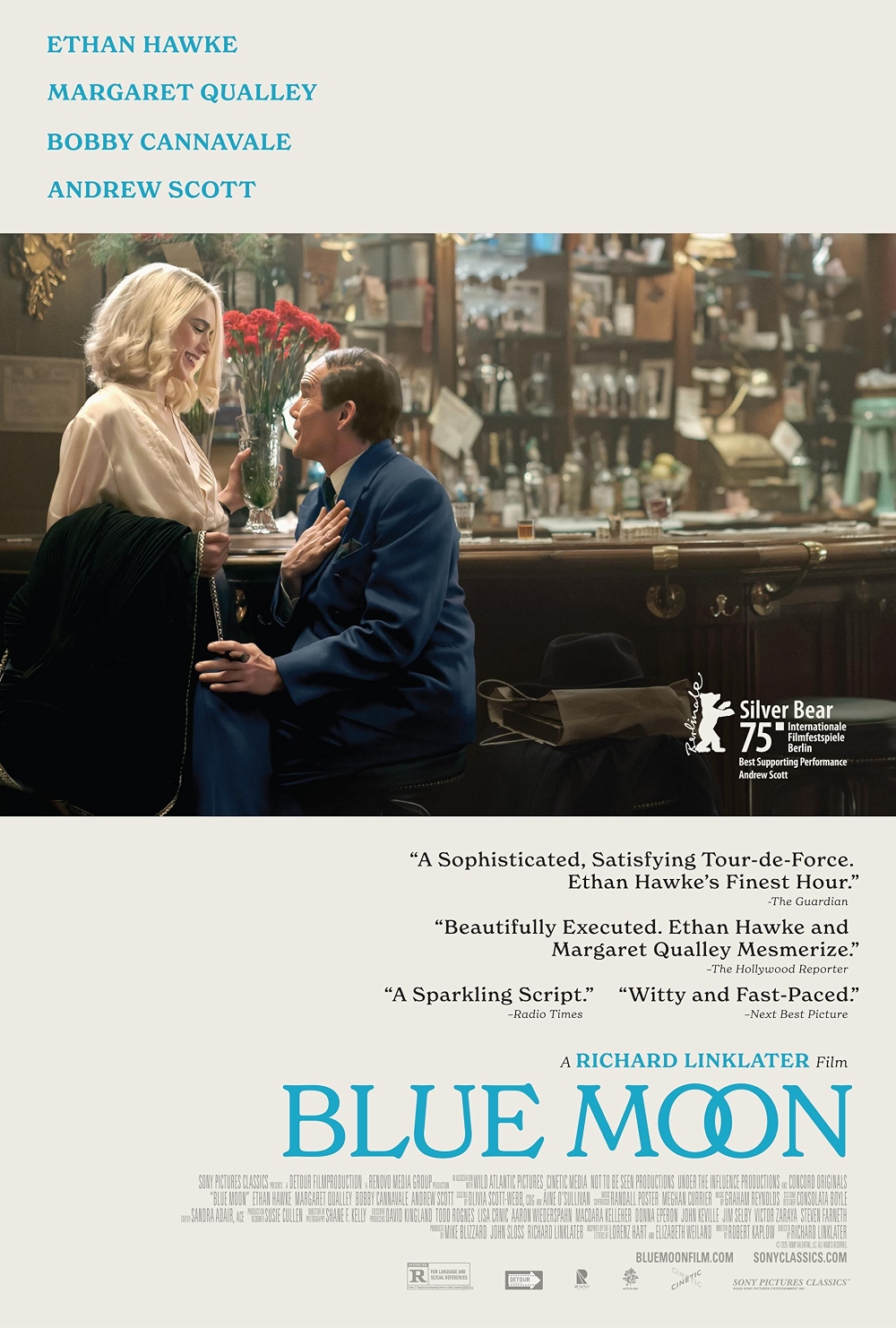
The crappier sort of biopic tries to get the whole life into a couple of hours’ running time. The better ones seize on a moment or a few moments in the life of Famous Person X and make it/them emblematic. That’s what Blue Moon does, in spades.
This is the story of the life and, in a way, the death of Lorenz Hart, the lyricist known for his sad, sad songs – My Funny Valentine is one of his. So is Glad to Be Unhappy. Blue Moon too. Difficult to work with, Hart had had a fruitful relationship with Richard Rodgers until Rodgers broke it off and went off to work with another lyricist, Oscar Hammerstein II.
That’s all the backstory you need to know. Richard Linklater’s mournful movie about a very sad man more or less at the end of a sad life takes place in 1943 on the opening night of Oklahoma!, the new show Rodgers and Hammerstein have written together. Hart (Ethan Hawke) has watched a bit of it, wincing at the, to his mind, appalling lyrical choices of his successor, and has then repaired to Sardi’s, the Broadway institution where the show’s opening night party will later happen.
Until everyone turns up, Hart holds court to a largely empty room – the barkeep (Bobby Cannavale) and the pianist (Jonah Lees), mostly. In the corner, Hart eventually realises, is the writer EB White (Patrick Kennedy). Arriving a bit later is Hart’s young, pretty protégée, and, he hopes, a romantic interest to be, Elizabeth Weiland (Margaret Qualley), on whose letters the film is largely based. Hart, small, balding with a terrible combover, “omnisexual” – in his words, though screamingly gay would seem to be a closer approximation – is surely kidding himself that the relationship with Elizabeth is going to go anywhere. But then, we start to surmise, kidding himself is what Hart’s life has largely been about. With the pen, a genius. Without it, a car crash.
It’s a remarkable, transformational performance by Ethan Hawke as Lorenz Hart, a firecracker turn painting Hart as a wildly funny but vulgar, bitter, quick-witted, resentful, emotionally incontinent, self-sabotaging, waspish and mercurial queen who’s spent too much time on bar stools. Hart is also very short (much standing in trenches and tricks of perspective are enough to convince that Hawke is too).
Eventually Richard Rodgers (Andrew Scott) and Oscar Hammerstein (Simon Delaney) and adoring retinue turn up – the show is a hit – and the camera momentarily shifts away from Hart to the film’s other characters. But not for long. For Hart this is the night when all the chickens come home to roost and he starts realise that he’s properly all washed up. If Rodgers offers him anything else in the future, it’ll be crumbs from the table.
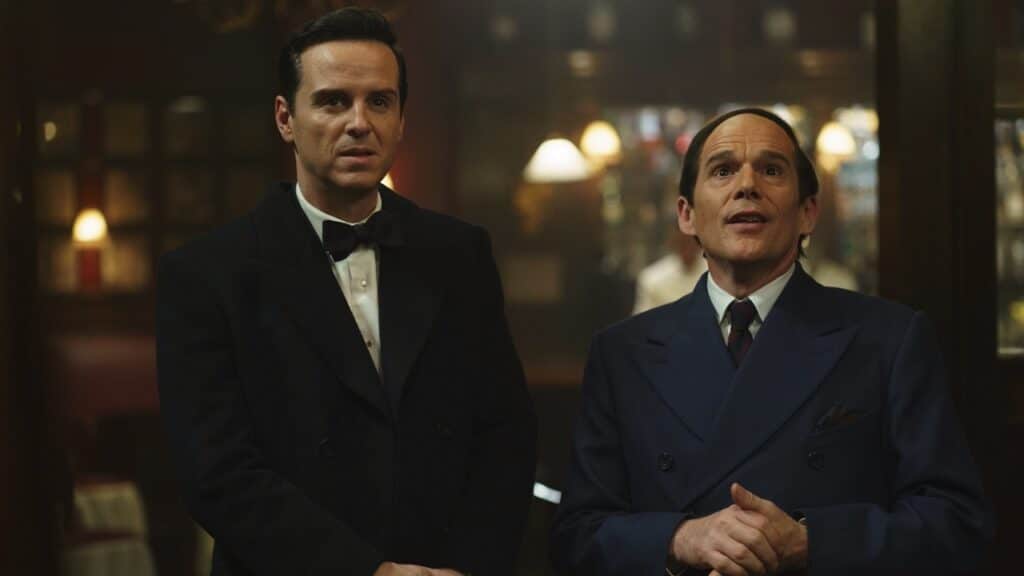
It’s stagey and then some, which isn’t inappropriate considering it’s all about Broadway people, but director Richard Linklater keeps things lively with fast edits and changes of camera angle, while Robert Kaplow’s screenplay keeps feeding new characters into the mix, to keep things dynamic.
Kaplow and Linklater have previous, having worked together on Me and Orson Welles, a similar the-genius-and-the-protégé drama starring Christian McKay as an excellent Welles and Zac Efron as the kid. It got largely overlooked, partly because Efron was still too close to High School Musical at the time. But it’s a neat and nutty movie, also stagey, but characterful and fascinating, as is Blue Moon.
The big performance by Hawke to one side, this is a bijou film in many respects, low key in spite of the verbal fireworks, sad in spite of being set at a party – it mourns not just a life on the skids but the impending end of an entire generation now shuffling off into eternity, who were there when the Great American Songbook was being written and know by heart all the words to the song Blue Moon.
Blue Moon – Watch it/buy it at Amazon
I am an Amazon affiliate
© Steve Morrissey 2025