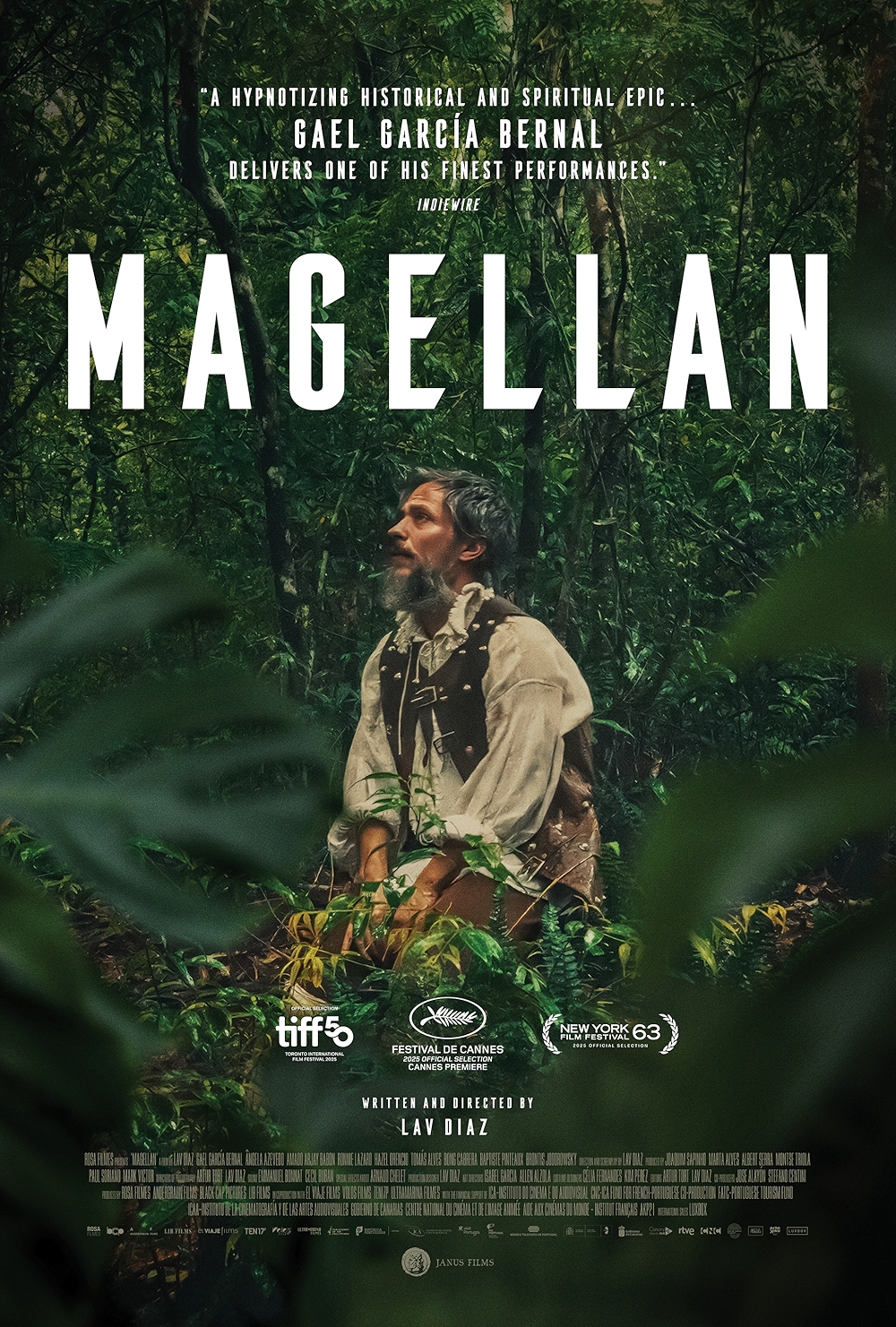
Magellan is quite a conventional movie by the standards Lav Diaz sets himself. An ocean-going biopic about the Portuguese explorer Ferdinand Magellan, it’s in English rather than Diaz’s usual Tagalog, features a well known actor in the shape of Gael García Bernal, is in colour (this is Diaz’s first colour film for 12 years) and it’s short. Short by Diaz’s standards at any rate, clocking in at two hours 40 minutes, which is breezy compared to other Diaz movies – 2013’s Norte, the End of History was four hours 10 minutes (and worth every minute), as was 2024’s Phantosmia. 2004’s Evolution of a Filipino Family comes in at ten hours 25 minutes. Diaz is promising a companion movie to Magellan, with a nine-hour-plus running time, in case you’re worried that he’s losing his love of Slow Cinema.
Some aspects of Diaz’s usual working practices remain. Magellan is in a boxy 4:3 format, a nudge off the Academy ratio. And it displays Diaz’s usual disregard for dramatic compression. If one of the defining features of “arthouse” is its disdain of cutting to the chase, Diaz has full ownership of that. His knack, his genius, though, is leaving the boring bits in and it all somehow making complete artistic sense.
He wants us to know that time passes, that life can be dull and that people can be broken by the drip, drip, drip of not much happening. In Magellan that most often happens on board ship as the sailor and his crew sit becalmed, waiting for a wind to take them towards the East Indies, which he believes (though no one else is totally convinced) he is heading for.
This is a lush movie, lush like Terrence Malick’s movies are, but also raw, like Werner Herzog’s Aguirre: Wrath of God, with some of the more “life on board” procedural stuff of Master and Commander: The Far Side of the World. Nature is beautiful but deadly, and Magellan and his crew are brave adventurers who also rapaciously force the people they encounter to embrace Christianity or die. Life on ship is orderly because it’s kept that way with displays of shocking violence to anyone who transgresses.

What sort of a man is Magellan? He’s of his time, convinced that Catholicism is worth exterminating entire villages to impose. He’s not a coloniser but a civiliser. He loves his wife. The bad things he does are done out of a sense of duty. Does this make him complex or just normal? Diaz suggests the latter, as does Bernal, whose portrayal of the man has probably gone unrewarded on the festival circuit because Bernal puts himself so totally at the service of the film.
Slow cinema isn’t everyone’s bag and if you like your ocean-going dramas to be a bit more Hollywood, there is also something for you here. In among the static images and a camera that doesn’t move unless it absolutely has to, there are moments familiar from films going back at least as far as Errol Flynn – the powerful juu-juu of Magellan healing an Indian’s child and winning over the village. The scenes on board ship where the crew are dying of thirst and lack of food.
There’s its relentless beauty, with interiors shot like Dutch Old Masters by cinematographers Diaz and Artur Tort. There’s the gorgeous production design capturing life in the 16th century. And there’s the brief scenes freighted with sexual longing between Magellan and a friend’s 15-year-old daughter (Ângela Azevedo), who will become his wife. Most of all, and most Herzog-like, are the bits where it all goes wrong and bloody retribution is rained down on Magellan and crew.
If you like it, Magellan’s wife Beatriz will be at the centre Diaz’s follow-up, a nine-hour epic that’s in the works as I type. Brace yourself.
Magellan – Watch it/buy it at Amazon
I am an Amazon affiliate
© Steve Morrissey 2026