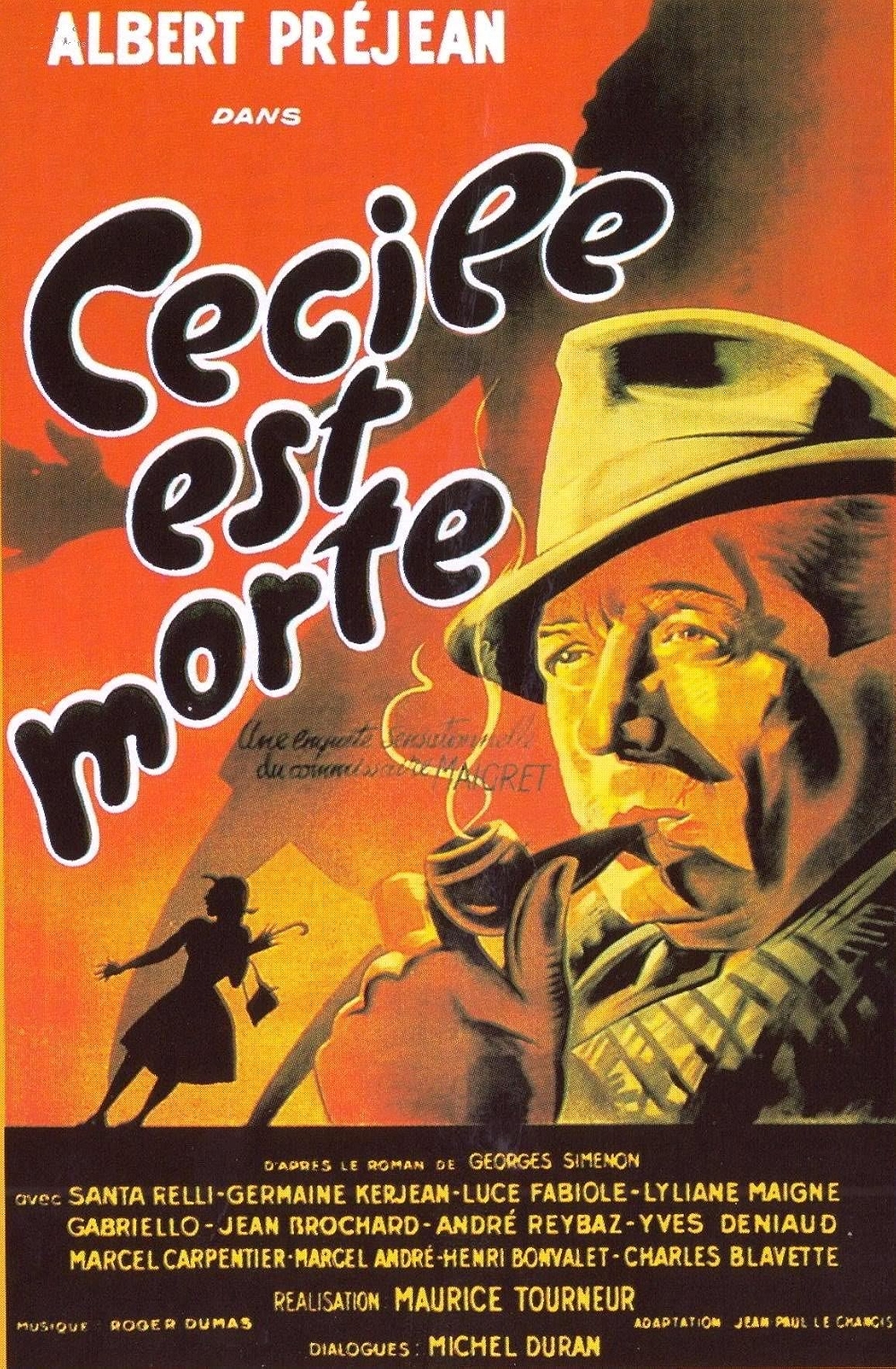
Anyone for Maigret? Cécile est morte aka Cecile Is Dead reveals what the French detective was up to in Nazi-occupied France in a film made in 1944 and directed by Maurice Tourneur, father of the now more famous Jacques.
The detective first appeared in print in 1930 and on screen in Jean Renoir’s atmospheric Night at the Crossroads in 1932. There’s a trace of Renoir’s poetic realism in Tourneur’s altogether more bluff take on the great detective. Though he is to all intents and purposes the iconic cop as we know him: gruff, pipe-smoking, unsentimental, cool and famous for going against the grain. He’s a big one for “le hunch” (as no one ever calls it).
In terms of plot, this is a good one, about pretty young Cécile (Santa Relli), who has regularly been turning up at the police station babbling about mysterious comings and goings at the lodging house where she lives. Will the police investigate? They will not. The joke among the boys is that Cécile is secretly in love with Maigret (Albert Préjean) and that’s why she keeps coming in. Maigret does not find this funny.
And then a headless female corpse is found in an upstairs room of the lodging house where Cécile lives. Before long Maigret has taken a room there, posing as an undertaker but secretly working on the murder case. Incidentally proving Cécile’s concerns to be grounded in reality, in true detective style he discounts obvious prime suspects and instead winkles out the real villain. Case closed.
The case itself is fascinating but it’s Tourneur’s storytelling that’s the reason to watch. Layering on lots of precise domestic detail, he gives us an insight into life in a cramped Paris lodging house in the 1940s. The film is packed not just with detail but idiosyncratic characters, like Cécile’s aunt (played by Germaine Kerjean), an imperious grande dame. If she’s at all reminiscent of Miss Havisham, that’s maybe not a surprise. David Lean admired the work of Tourneur, and the influence of the French director is all over Lean black-and-white classics like Brief Encounter, Oliver Twist and Great Expectations.
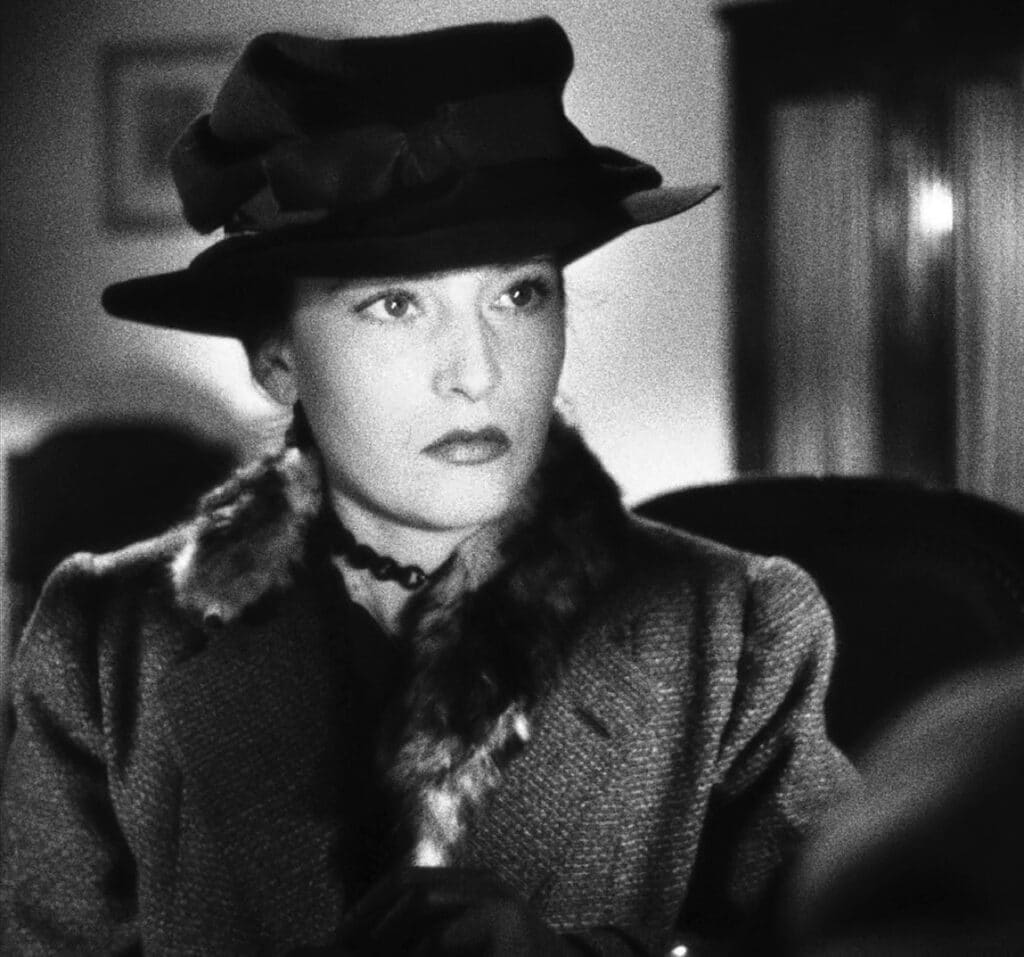
Watch it for the lovely lighting alone and you’ll be rewarded. The director of photography is Pierre Montazel, who did Touchez pas au Grisbi and Antoine et Antoinette for Jacques Becker. But on top of fascinating faces and noirishly lit places, there is Tourneur’s sense of pace and his way of mixing in humour (usually served by André Gabriello as Maigret’s right hand) as a way of de-escalating the drama (so it can later be re-escalated).
Throughout, what would later be seen as the fine David Lynchian distinction between the formal and superficial, where rules are obeyed even if they’re wrong, and a more honest but potentially less savoury substrate, the unconscious you might call it. This is best exemplified by Nouchi, the sexually provocative daughter of a family who also have rooms in the house. Played by 16-year-old Maigné, who knows what she’s about, Nouchi, keeps popping up, disrupting the flow by trying to get herself under any available man.
The pipe. Freudian? Not particularly. Freud never said sometimes a pipe is just a pipe. It was “cigar” and there’s no evidence to suggest he even said that. Far from a sexual prop the pipe is the indicator of Maigret’s seriousness, the marker of his difference from everyone else.
Préjean lets the story tell itself without overly getting in its way. His Maigret is as much as he needs to be – minimal. He played the cop three times and this was his second outing, in the only one of the trio directed by Tourneur. It was restored in 2019, by Gaumont. Its wipe dissolves and softly defocused poetic-realist looks fantastic in the Eureka Masters of Cinema version, which is available in the UK. If that’s not available, any version using the Gaumont restoration will do nicely. Kino Lorber do a box set with Picpus, another Maigret film starring Préjean.
Cécile Is Dead (double set with Picpus) – Watch it/buy it at Amazon
I am an Amazon affiliate
© Steve Morrissey 2026