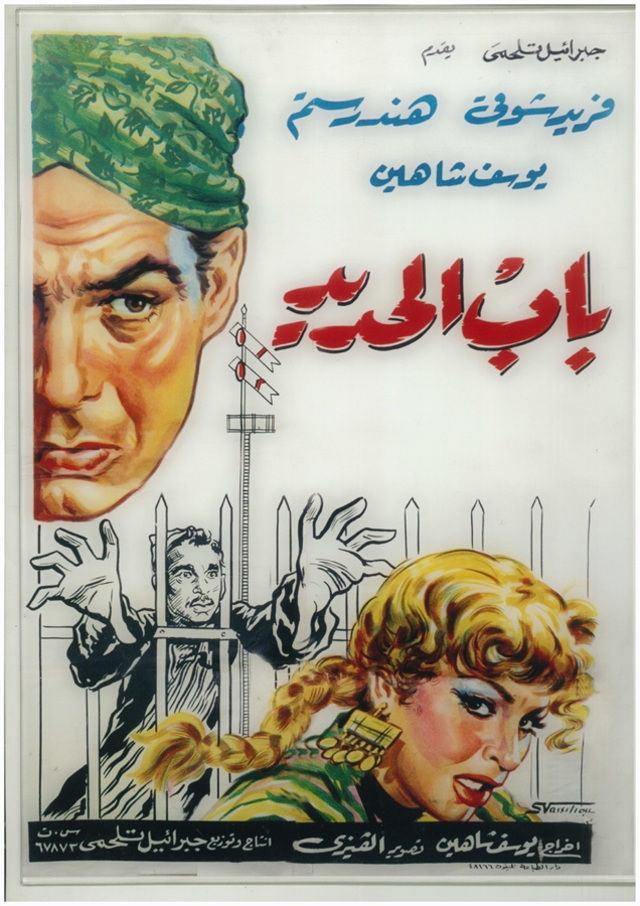
Now considered a beacon of the nation’s cinema, Cairo Station got a hugely negative reaction in Egypt when it came out in 1958. Audiences raised on a diet of stylised melodrama just weren’t ready for something so raw.
Mostly in the Italian neorealist tradition, it ducks back into melodrama towards the end of its very brief running time (77 minutes), when the logic of what’s been building comes to an abrupt climax. After just over an hour of director Youssef Chahine soberly building narrative and atmosphere, in the last stretch suddenly everything switches – knives are brandished, blood is shed, a straitjacket appears and a man is carried off frothing into the lunatic asylum.
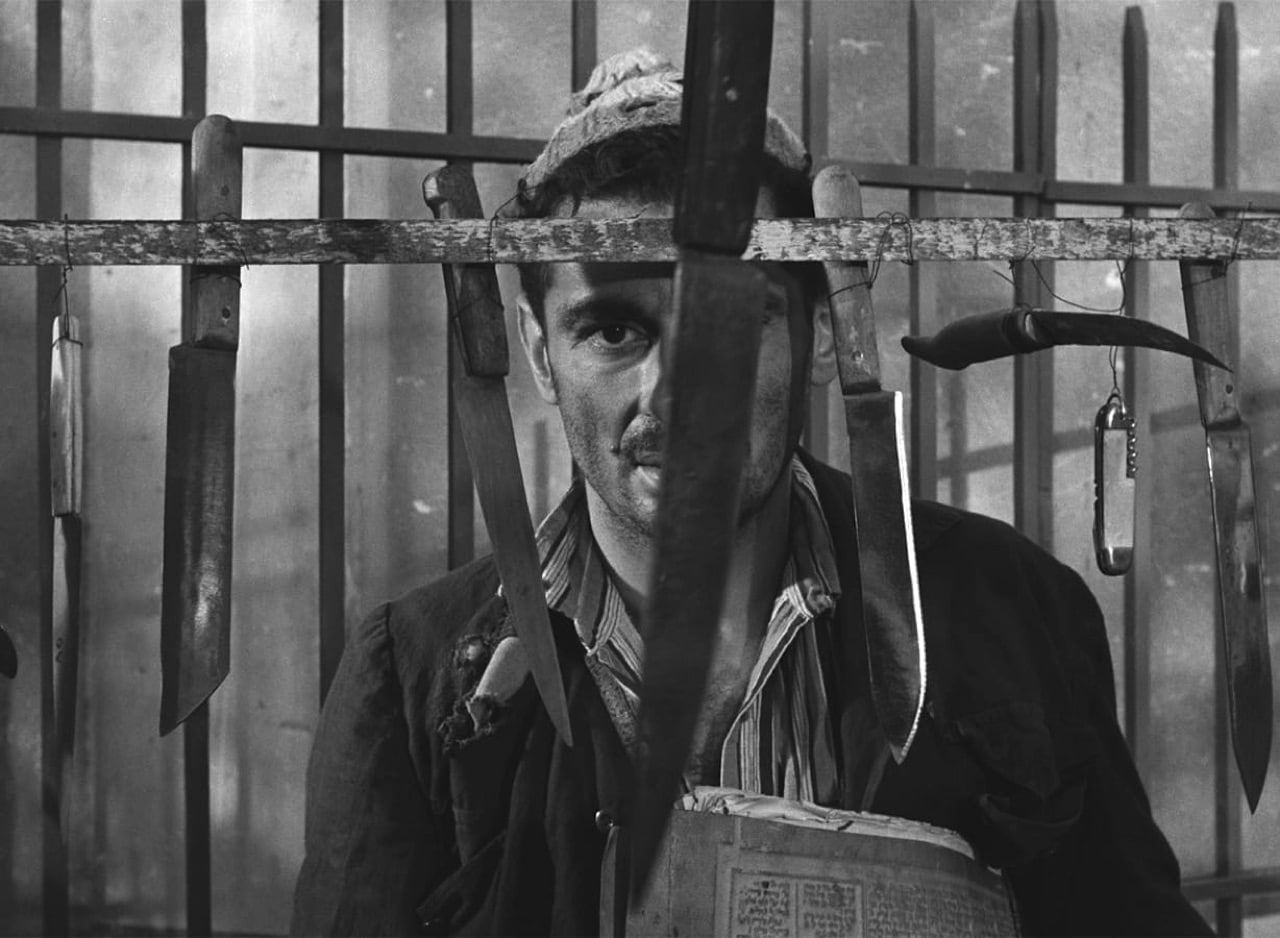
The story is told through the eyes of Madbouli (Hassan el Baroudi), the all-seeing newspaper seller in Cairo railway station who gives a broken-down beggar called Kenawi (also written Qinawi, depending on who’s done the subtitling, and played by Chahine himself) a job selling papers. With pictures of half-dressed women plastered all over the little lean-to he calls home, Kenawi’s interest in life is obvious. One up from destitute, and walking with a limp, Kenawi may have a functioning libido but his life is one of look but don’t touch.
He lusts after women relentlessly, makes soppy eyes at any pretty young thing at the station waiting to meet her boyfriend, but has a focused passion for Hanuma (Hind Rostom), a vivacious woman who makes a living hawking cold drinks to travellers. Always a step ahead of the authorities, who take a dim view of unlicensed pedlars, Hanuma is a street person like Kenawi but in every other sense is out of his league. In any case she’s engaged to Abu Serih (Farid Shawqi), a porter at the station.
Adding depth and texture, two other subplots – a serial killer of women on the loose and the efforts of Abu Serih to unionise his fellow porters.
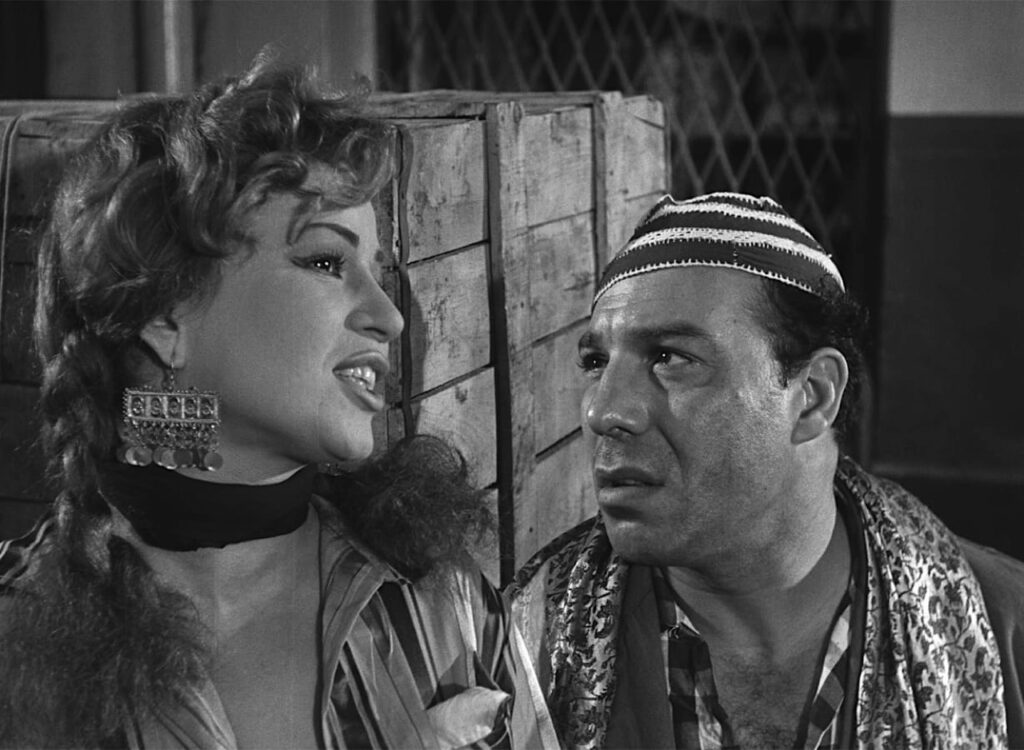
Chahine the director takes his cues from the likes of Da Sica and the neorealists, serving up daily life while pretending not to be overly concerned with style. Yet this is a film of carefully framed images full of characterful faces – men with elaborate moustaches and lavishly upholstered women – all luminously shot with a tender eye by Italian-born director of photography Alevise Orfanelli.
Chahine uses music like the neorealists did too – sudden surges of sweeping, dramatic strings, which arrive as if someone had accidentally let an orchestra onto the film set. His way of presenting women is neorealist too, and is not unlike the way Giuseppe De Santis did it in 1949’s Bitter Rice (Riso Amaro), as sexually swishy and always pushing against societal constraints.
Throughout, as embodiments of what Kenawi wants and what he can have, there are oppositions everywhere – traditional society versus rock and roll, Pepsi Cola versus water, hierarchy versus unionisation, real women versus women cut from magazines.
Cairo Station is the story of an incel, in effect, and of what can happen when sexual (and by extension political) aspirations are thwarted. As with movies about school shootings there are two separate deals going on here – first we’re shown a character and told how he got that way, then we follow him as one thing is piled on top of another until he cracks. Chahine presents the timid, scuttling and sly Kenawi as someone it’s hard to like, even in the early stages of the film when we’re meant to feel sorry for him.
Age has added a layer of fascination to a story that was atmospheric and expertly told to begin with. The Criterion version I watched was a 4K restoration and is excellent. Cairo Station still packs a punch and is a great introduction to the work of Youssef Chahine.
Cairo Station – Watch it/buy it at Amazon
I am an Amazon affiliate
© Steve Morrissey 2026