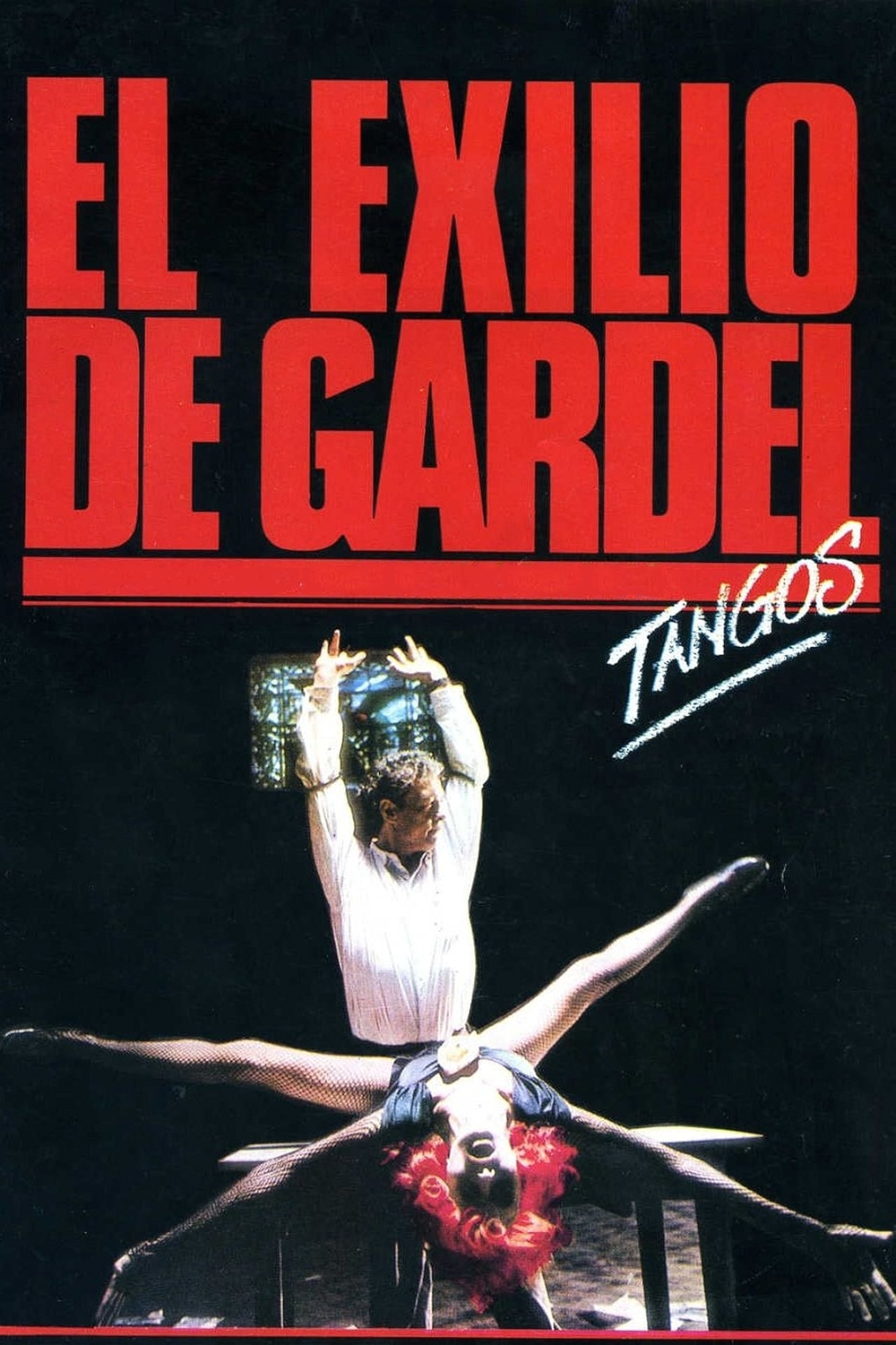
You don’t have to know who Carlos Gardel is for El Exilio de Gardel: Tangos (aka Tangos, the Exile of Gardel) to work its magic. Nor do you need to know much about the political situation in Argentina in the 1980s to be affected by the film. You can just watch it for its fabulous tango dancing – to the music of Astor Piazzolla – and come away feeling like you’ve been served up something sumptuous and meditative.
There is a sadness to tango music and it suits what’s going on here, an experimental melding of backstage musical with political agitprop, centred on a group of Argentinian exiles – intellectuals, dancers, musicians, academics – putting on a show in Paris in memory of Gardel, the King of Tango, who died at the height of his career in a plane crash and so became immortalised.
It kicks off with a couple dancing across a bridge over the Seine in the early hours of the morning. Then it pulls back to take in this group trying to put the show together, which will be a novel mix of tango with tragedy – tango-dy (which works in no language) – with the title The Exile of Gardel. This is all very self-referential, but director Fernando Solanas goes one step further towards the end of the film, dropping in a scene where “members of the public” are questioned about the tango-dy routine (the film in front of our eyes, in other words) and voice their objections. The main one being: isn’t this all a bit weird?
Most of it actually isn’t. In straightforward backstage-musical fashion, as the musicians and dancers rehearse we hear their hopes and fears and learn about their back stories as they try to build a life in France while trying to maintain contact with the folks back home. Most want to go back. The question key dancer Mariana asks of old friend Ana when she arrives from Buenos Aires is: what’s it like back home and do you think I could get away with returning?

Now and again there are fully staged musical numbers. These are keen to avoid tango cliché and do it by embracing a bit of Bob Fosse style – emotionally aloof, repetitive, mechanical – with moves from ballet thrown in alongside bursts of athleticism, like a dancer suddenly being thrown into the air. The dancing is of a piece with Piazzolla’s “new tango” style, which uses jazz inflections and dissonance to shake things up, all the while staying recognisably within the bounds of original tango.
Now and then Solanas throws something really left field into the mix, like the magical realism moments where ghosts from the past materialise, including Gardel himself (played by Gregorio Manzur) singing one of his songs accompanied by two men on guitars.
Marie Laforêt, Claude Melki, Miguel Ángel Solá, Philippe Leotard, Marina Vlady, Georges Wilson, Lautaro Murúa and Ana María Picchio form the core of the group, not all of them in the first flush of youth, which suits the world-weariness of tango, which offers (like flamenco) something positive for the older performer. Guile and technique where flash and flexibility used to be.
This film was proposed as Argentina’s entry for best the foreign language Oscar when it came out in 1985 but didn’t make it to the shortlist. It would be tempting to see the junta’s hand at work in its failure to make the cut but in fact democracy had returned to the country by that point and it was another film, La Historia Oficial (The Official Story), about the junta’s crimes, that walked away with the Best Foreign Language Film that year.
It’s an interesting hybrid and a strange sort of tribute to Gardel, who died in 1935. Who knows what he might have made of it?
Tangos, the Exile of Gardel – Watch it/buy it at Amazon
I am an Amazon affiliate
© Steve Morrissey 2026