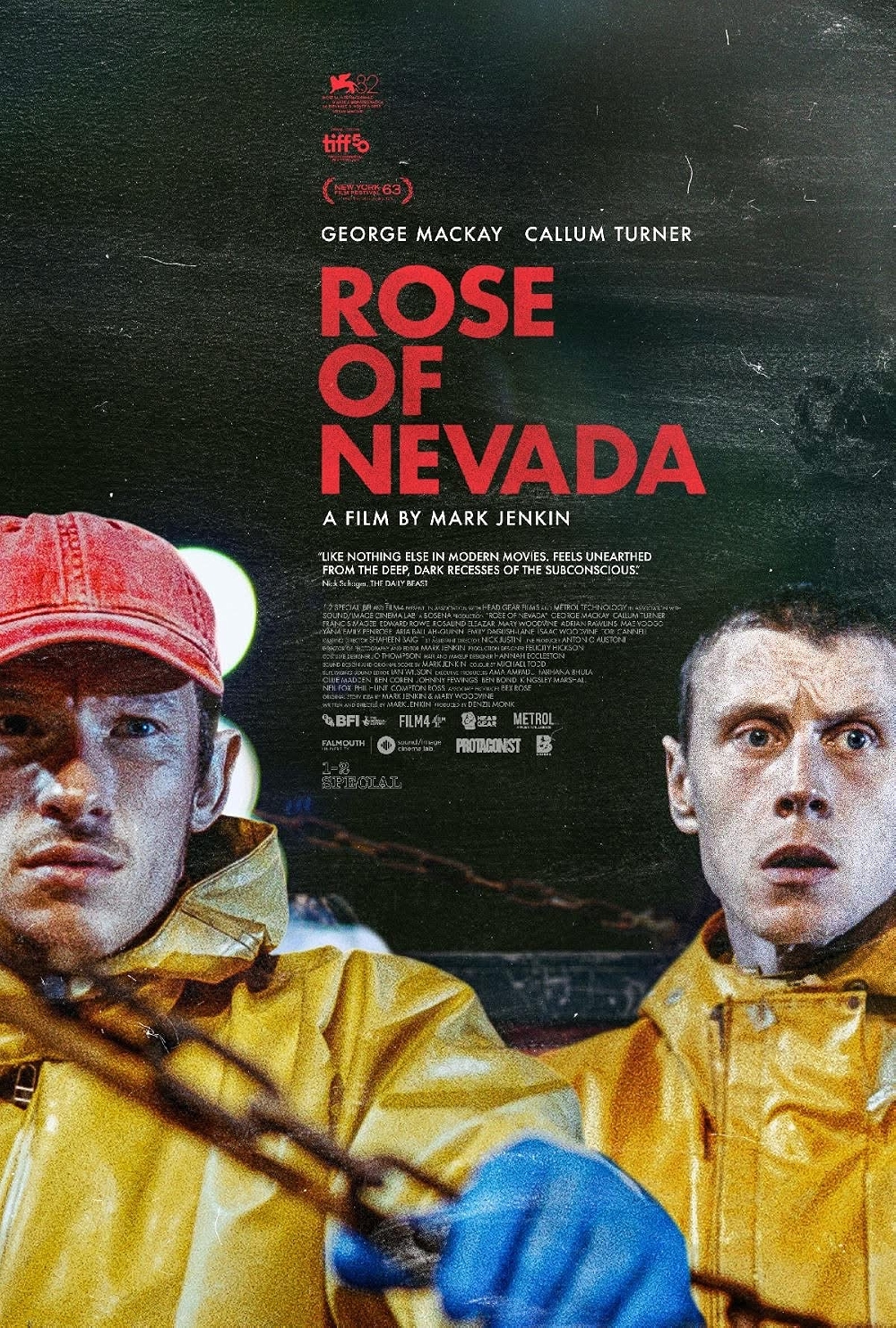
If it’s artisan film-making you’re after, authenticity guaranteed, then Mark Jenkin is your man. Rose of Nevada is his second film since he slapped critical acclaim about with Bait, his Cornwall-set black-and-white tale of a left-behind town and the awful DFL (Down From London) weekenders who regularly turn up looking for, yes, authenticity.
Since then Jenkin has come back with Enys Men, spooky folk horror of sorts. And now this, a tale set in a Cornish fishing town whose better days seem to be returning, at least as an echo, in a time-travelling turn of events.
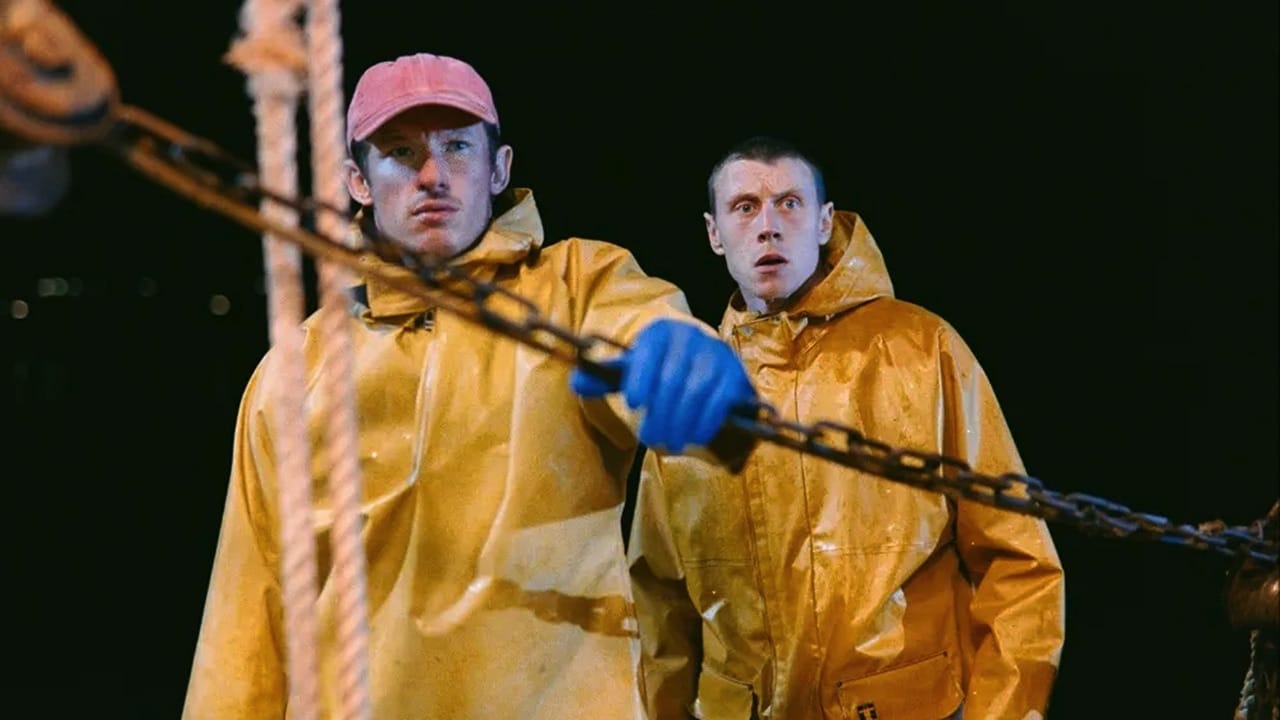
Since Bait, as Jenkin’s profile has risen, he’s started employing more expensive stars and – he’d probably deny this – spending more money in post production. George MacKay and Callum Turner are his two leads this time out, the former as a local who goes out on a fishing boat – the Rose of Nevada – that’s mysteriously reappeared after 30 years of being lost at sea. The latter as the drifter who appears out of nowhere and signs up as a deck hand. He could do with earning some folding money. Who’d go out to trawl for fish on a ghost ship? Desperate men.
Francis Magee completes the trio, playing the skipper of the boat, an old salt almost in Robert Newton gimpy-eye aaargh territory. Magee worked on the boats 30 years ago before turning to acting. He’s well cast, but then so are MacKay and Turner, for different reasons.
The overall tone is the BBC’s Ghost Story for Christmas – spooky rather than scary – and Jenkin shoots it all on an old hand-cranked Bolex camera, largely according to the principles of his Silent Landscape Dancing Grain 13 manifesto of 2012. This is a Cornish version of the Dogme 95 manifesto – flatpack IKEA film-making rejecting Hollywood norms like lights and a film score – but Jenkin is less rigid. The last rule of the manifesto insists that the rules must be broken.
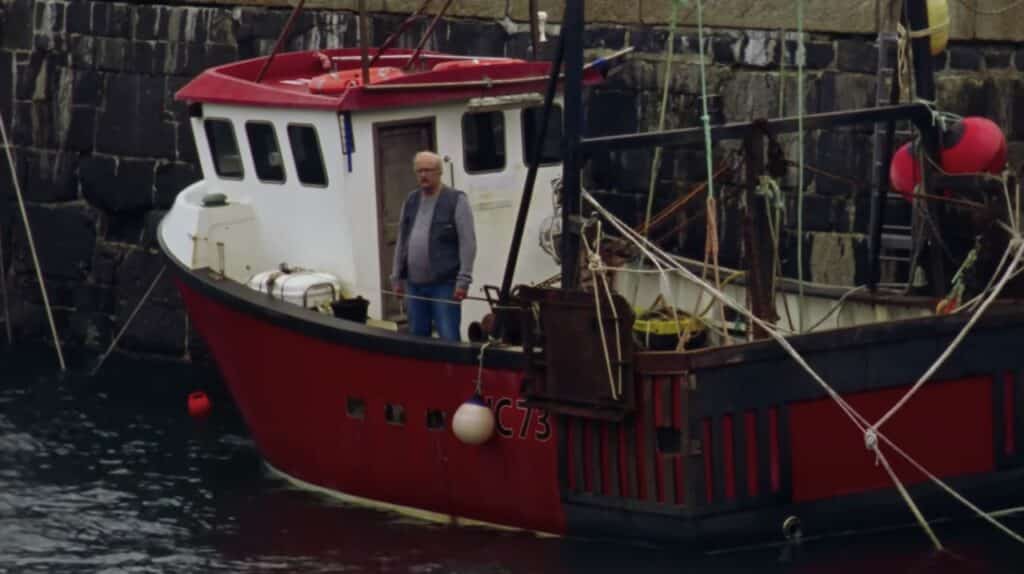
The Bolex can shoot a maximum of 30 seconds per take before the film runs out. If a take turns out to be shorter than that, Jenkin fills up the roll with “atmos” shots, which he then drops in during the edit – a rope, an attractive bulkhead, nets – the colours super-saturated because Jenkin under-exposes and then over-develops the film.
Breaking his own rule, there is a score this time out (by Jenkin), but it’s a strange one, as if John Carpenter 1980s synths were straining to recreate the bawl of a foghorn or the slap of a diesel engine at idle.
The Bolex is a 16mm camera, but Rose of Nevada‘s looks are more colourful than Enys Men‘s, and the dialogue is more noticeably in sync than the post-synced sound of Bait. In fact, if you didn’t know, you probably wouldn’t guess that the film had been shot silent.
Yes, but what’s the story? I will not say, except that men pitting themselves against the roiling seas comes into it, and the hard graft of hauling in fish before gutting them and packing them in ice is engaging enough on its own, before things shift more into dream/nightmare logic as the time-travel element of the story comes to the fore. Throughout, a keen focus on the structures – faces and places – that make us who we are, or who we think we are.
Folk horror not so much. But it did feel as if The Prisoner – Patrick McGoohan’s very 1960s TV series about a spy who cannot escape from a mysterious village – is somewhere in there, particularly in the figure of Nick (MacKay), who wants out of his predicament, whereas Liam (Turner) is a happy sort of captive.
The last of the Cornish Trilogy, as Jenkin calls them, all of which could sit in a film festival alongside the work of Ben Rivers, dedicated to lo-fi films made on vintage equipment using obsolete techniques. (Try Two Years at Sea, if you don’t know Rivers). But you don’t need to know anything about how it’s made. The medium is the message, to an extent, but only to an extent. Maybe Jenkin’s technique is beginning to become a weight to carry – a gimmick.
Rose of Nevada – Watch it/buy it at Amazon
I am an Amazon affiliate
© Steve Morrissey 2026