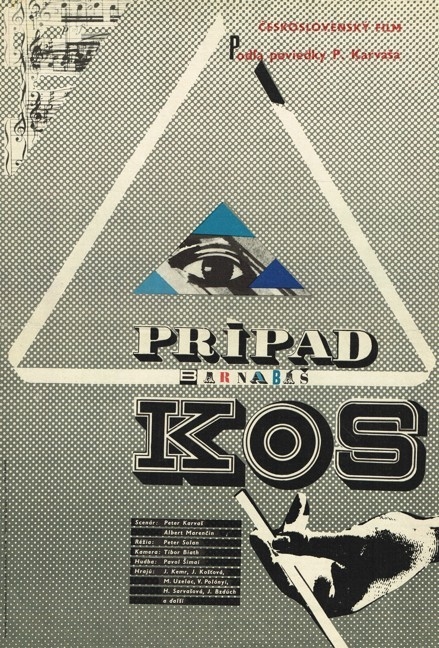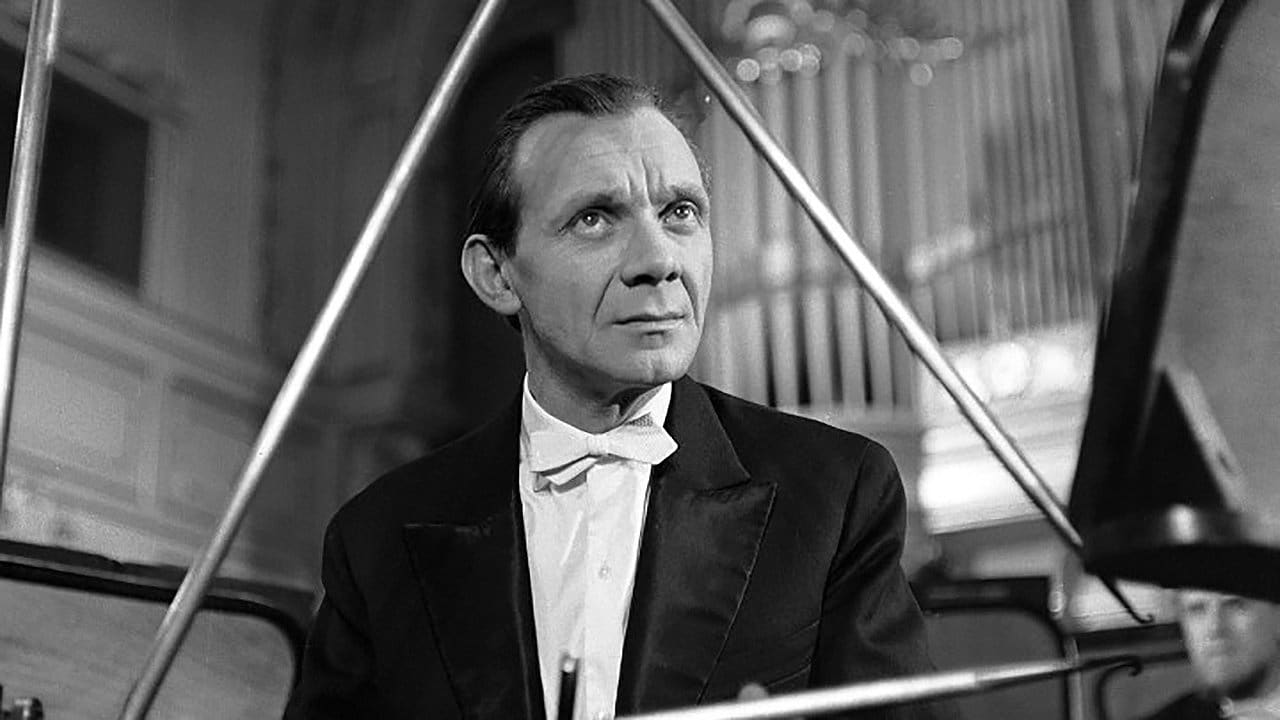
Prime Czech New Wave, The Barnabáš Kos Case (Prípad Barnabáš Kos) is a satire about a system that cannot recognise it’s gone wrong and cannot autocorrect because there are no mechanisms – a free press, for instance – to point out failure. Instead of fixing things, in its paranoia it doubles down on its decision. This, the detailing of the unhealthy doubling down, is one of the key reasons why director Peter Solan’s film deserves to be seen.
Flying beneath the political radar, its story is superficially about a lowly triangle player who is quite by accident made into the musical director of the orchestra he plays in. At first the pathologically meek Barnabáš Kos (Josef Kemr) tries to rectify what’s obviously an error, only to find that Kafkaesque layers of bureaucracy are blocking his way. But gradually he eases into his new role, becoming at first attractively confident before being consumed by his lust for power.
Reorganising the orchestra so that the triangle player and all the percussion now sit at the front, he eventually commissions a concerto for solo triangle and orchestra and starts touring the foundries of the land looking for a manufacturer who will supply him with the perfect musical instrument. Meanwhile, Kos’s fellow musicians, who don’t really consider him to be a musician at all, roll their eyes and grumble while he wreaks a kind of philistine destruction which they are powerless to stop.
Kemr’s performance is a lovely, subtle one with all the various, changing versions of Kos’s character presented as variations on different facets of the weak character introduced at the beginning. The film itself is far less ambiguous, with Solan and co not making much of an effort to hide the fact that it’s the communist bureaucracy and its apparatchiks that it has in its sights. That the film got released at all is remarkable, and had it not been made in the Slovakian half of Czechoslovakia (where things were a touch less rigid) in the run-up to the Prague Spring, it probably never would have seen the light of day.
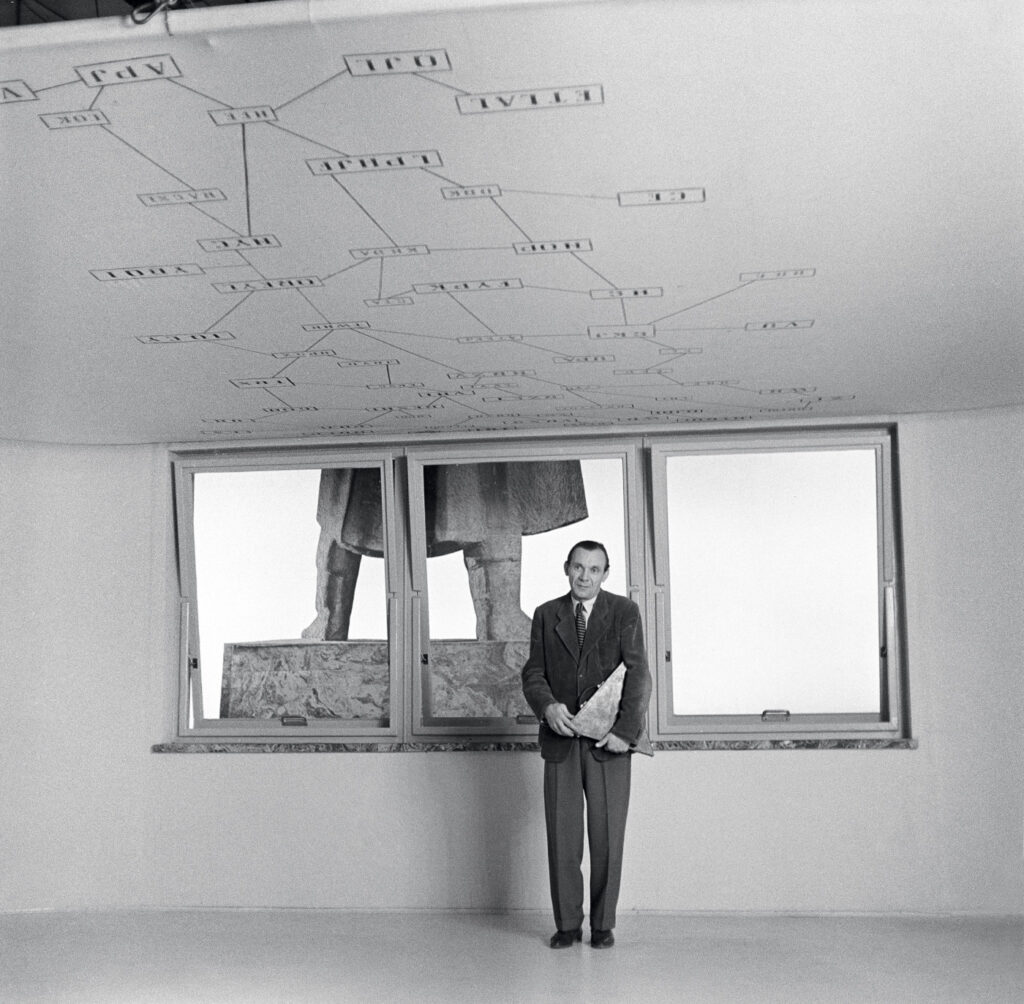
It is also prime Czech New Wave on account of its looks – stark, geometric, a touch of the Hungarian painter/photographer Maholy-Nagy in its compositions, perhaps Citizen Kane too. Cinematographer Tibor Biath gives Solan beautifully austere images in an almost clinical black and white, the architecture of the brave new Communist world adding a finishing touch to a totalising artistic vision. It’s a sort of brutalist chic.
Now, decades on from when it was most important, it still retains power, as a satire on any regime that’s become isolated from its critics. But its great trick is to work entirely in the way the regime would have wanted: as a critique of individualist bourgeois art.
Alongside Kemr is Jarmila Kostova as Kos’s potential love interest and the only person who can really get to him, though even she has to be careful. Jan Bzduch is good value as the composer tearing out his hair in his efforts to write a symphonic work for triangle, and Milivoj Uzelac (a conductor in real life) as the orchestra’s exasperated conductor represents hierarchy and continuity – there is much playing of Dvořák… until Kos is given his head.
Though it’s usually billed as a comedy, it’s not properly funny like The Firemen’s Ball, or as pointed as Closely Watched Trains, though it ticks so many of the Czech New Wave boxes that not including it on any best-of list would be a crime.
If you’re looking for a hard copy, I can recommend the Blu-ray from Second Run, champions of so many semi-forgotten gems from the old Eastern Bloc. It’s an HD transfer of the Slovak Film Institute’s 2K restoration, looks fantastic and comes packaged in the usual elegant Second Run way, complete with informative notes and extras including Solan’s celebrated 1974 short Nemecká.
The Barnabáš Kos Case – Watch it/buy it at Amazon
I am an Amazon affiliate
© Steve Morrissey 2025