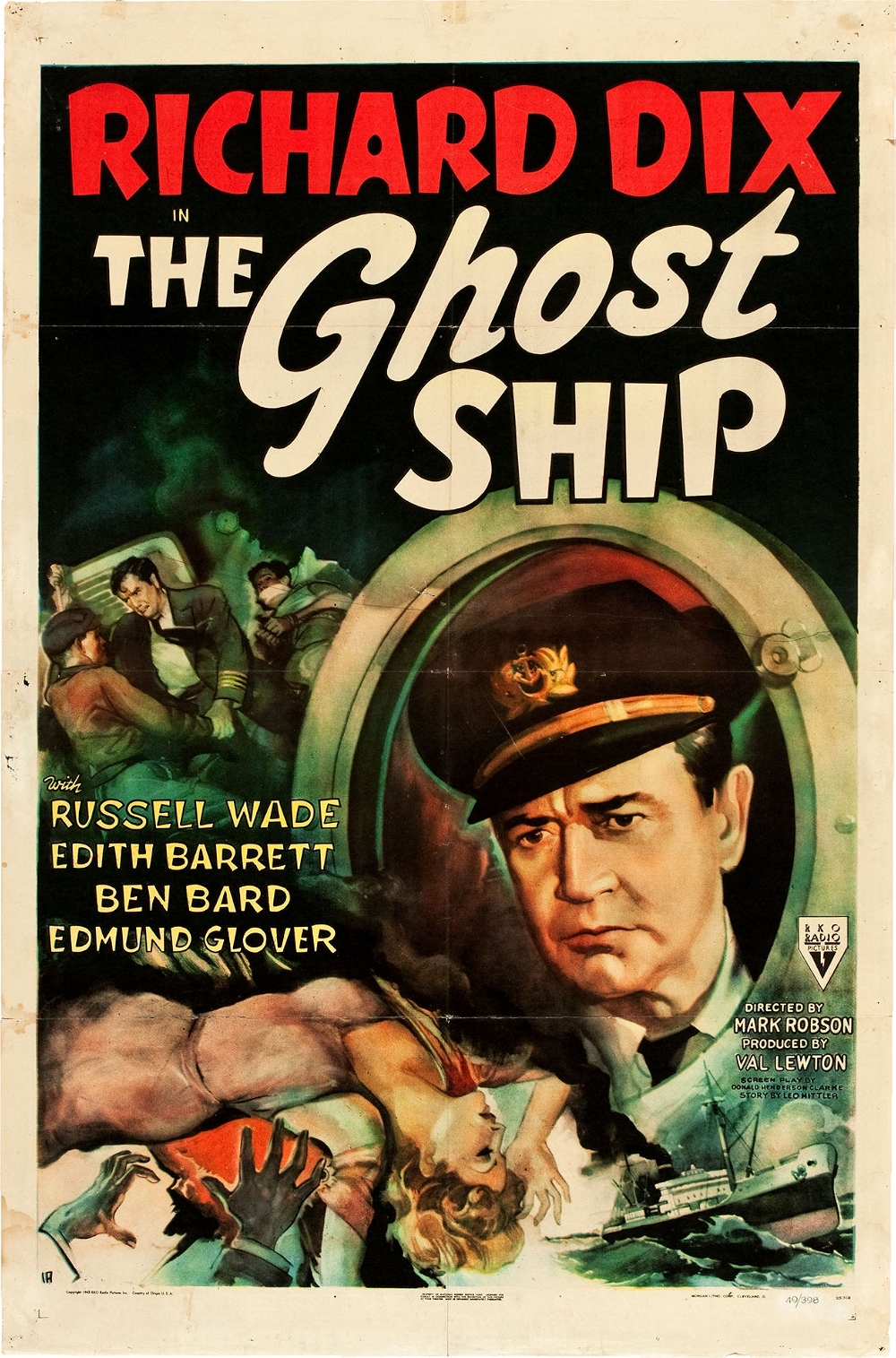
The Ghost Ship isn’t a Jacques Tourneur film but it feels like one. Perhaps that’s because Tourneur’s editor, Mark Robson, is directing. And as well as misty gothic looks and a sense of foreboding, Robson has also borrowed from Tourneur his sense of psychological overload. The Ghost Ship isn’t a horror movie, or a supernatural tale, though it looks like one and even the title nudges us that way, much like Tourneur’s Cat People did.
Instead it’s the story of a bright and capable third officer on board a ship who becomes increasingly alarmed at the behaviour of his captain, Will Stone, eventually blowing the whistle after becoming convinced that the captain’s cavalier negligence has caused the death of a crew member.
It’s a Val Lewton production and one of a string of fast, cheap and atmospheric movies Lewton produced for RKO in the 1940s. Lewton gave Robson his first directing gig with The Seventh Victim, liked what he saw and so gave him this, his second movie of 1943.
Robson does not let the boss down. In a brisk one hour and nine minutes, he shows he can pack a serpentine story into a tight space, introduce us to fascinating characters and wind us this way and that – life on ship, life on shore, a sea shanty sung by famous calypsonian Sir Lancelot, a disciplinary hearing, some romantic back story for the captain (amazingly), fights, incarceration, all leading up to a brilliantly tense finale.
And he knows how to lay on the portentous atmosphere, Tourneur-style – the blind man in the opening scene who appears to be foretelling the future, the mute sailor on board whose wizened, pock-marked face seems to be an omen of doom.
It’s a coded gay drama, some people say. I would say not, though the figure of Captain Stone easily lends itself to that sort of reading – the man who likes the company of his fellow sailor, with a woman he’s kept dangling on shore for 15 years, attempting to win over new recruit Tom Merriam to his way of thinking. The importance of discipline. The romance of being at sea. Manliness being next to godliness. All the manosphere stuff.
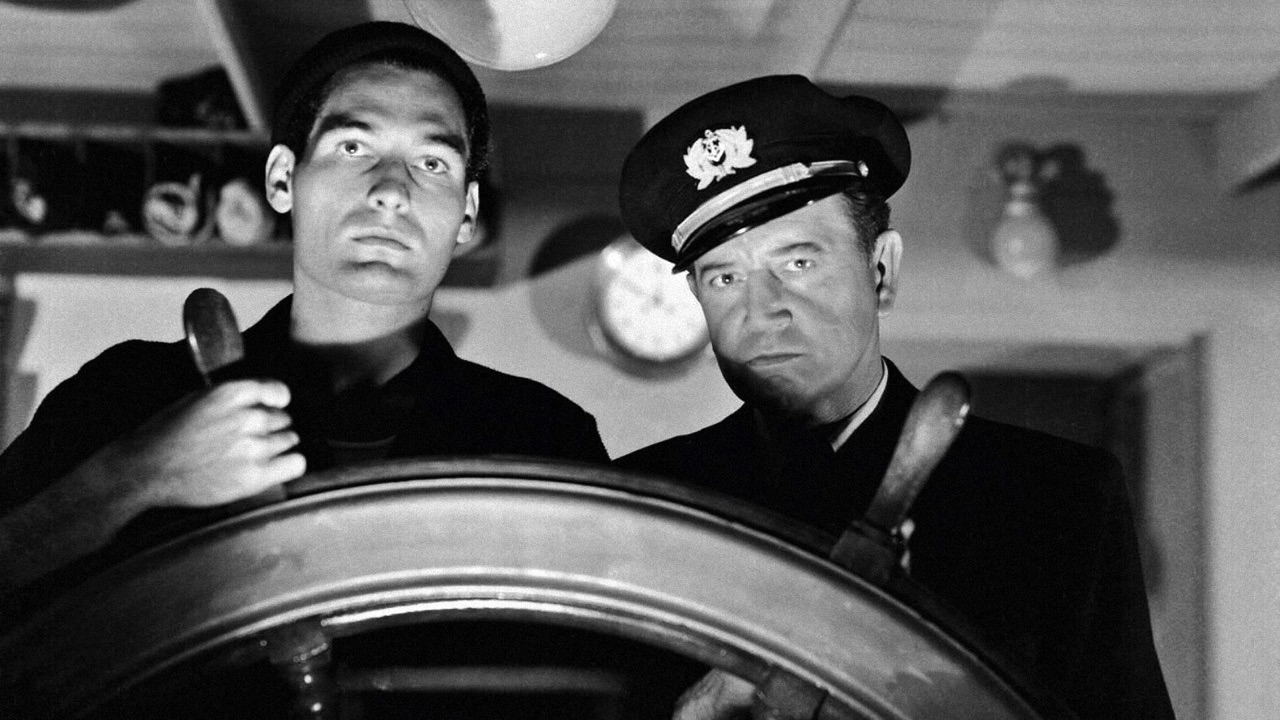
Sometimes a cigar is just a cigar, as Freud almost certainly never said. So why not take The Ghost Ship at face value and see it as a portrait of a man driven mad by power? That’s how Richard Dix plays Captain Stone (by name and nature), in a graduated performance that starts off in placid psychological waters and ends up in the raging typhoon of swivel-eyed psychosis.
Russell Wade, by contrast, plays Tom Merriam as the capable and dependable Hollywood B-movie hero, complete with purposeful movements derived from theatre acting. Why move towards someone when you can lunge?
Run Silent, Run Deep later told the same story, give or take, though it was set on a submarine rather than a freighter and had Clark Gable and Burt Lancaster doing A-list versions of the B-list stuff going on here.
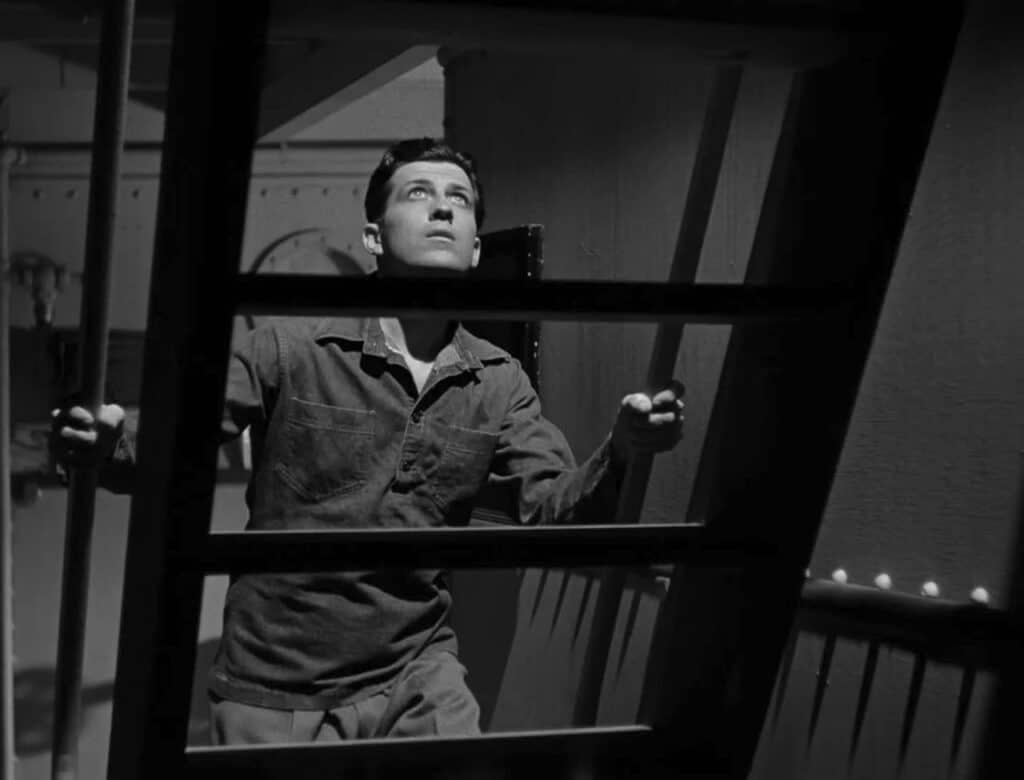
But it didn’t have Nicholas Musuraca on board as cinematographer, who here lays on the stark directional lighting and murky shadows. Film noir on a ship, with the setting all the excuse Musuraca and Robson need to break out the smoke machines. Who knew there were that many available in Hollywood?
Robson is now best remembered as a director of light entertainments, Von Ryan’s Express and Earthquake probably most notably, but he’s very good at building tension from the simplest elements. There’s a scene where Tom is trying to get a night’s sleep, convinced that the captain is going to kill him in the night. But he cannot get his cabin door to lock, or even close properly. Simple stuff but incredibly effectively done.
It’s a dense and tense movie well worth 69 minutes of anyone’s time. If you like a bit of trivia, then the actor playing the guy who dies because of the captain’s negligence would turn up nearly 50 years later in Reservoir Dogs. Is there a connection? None whatsoever. Though who needs trivia when a film moves as fast as this one?
The Ghost Ship – Watch it/buy it at Amazon
I am an Amazon affiliate
© Steve Morrissey 2025