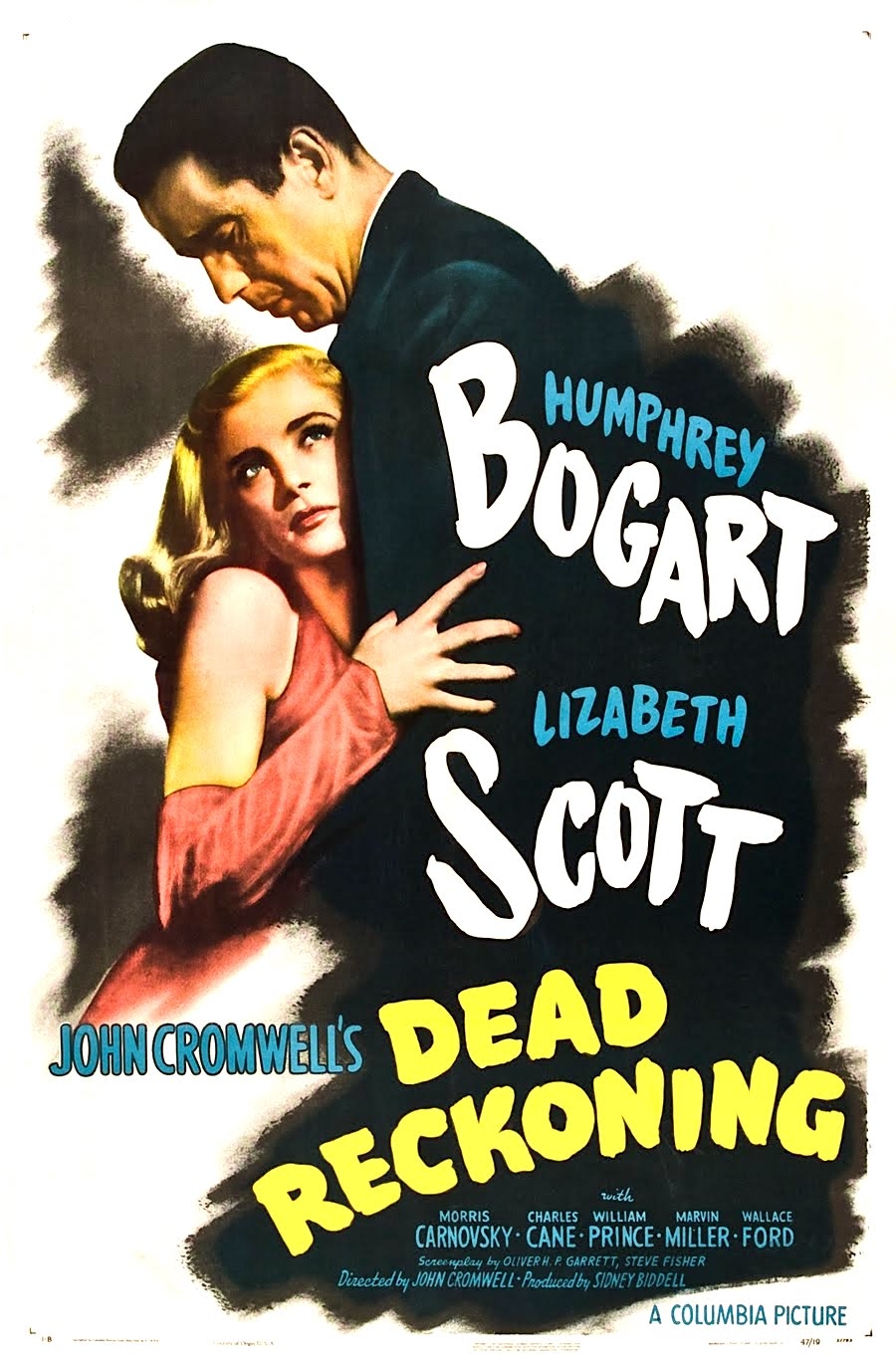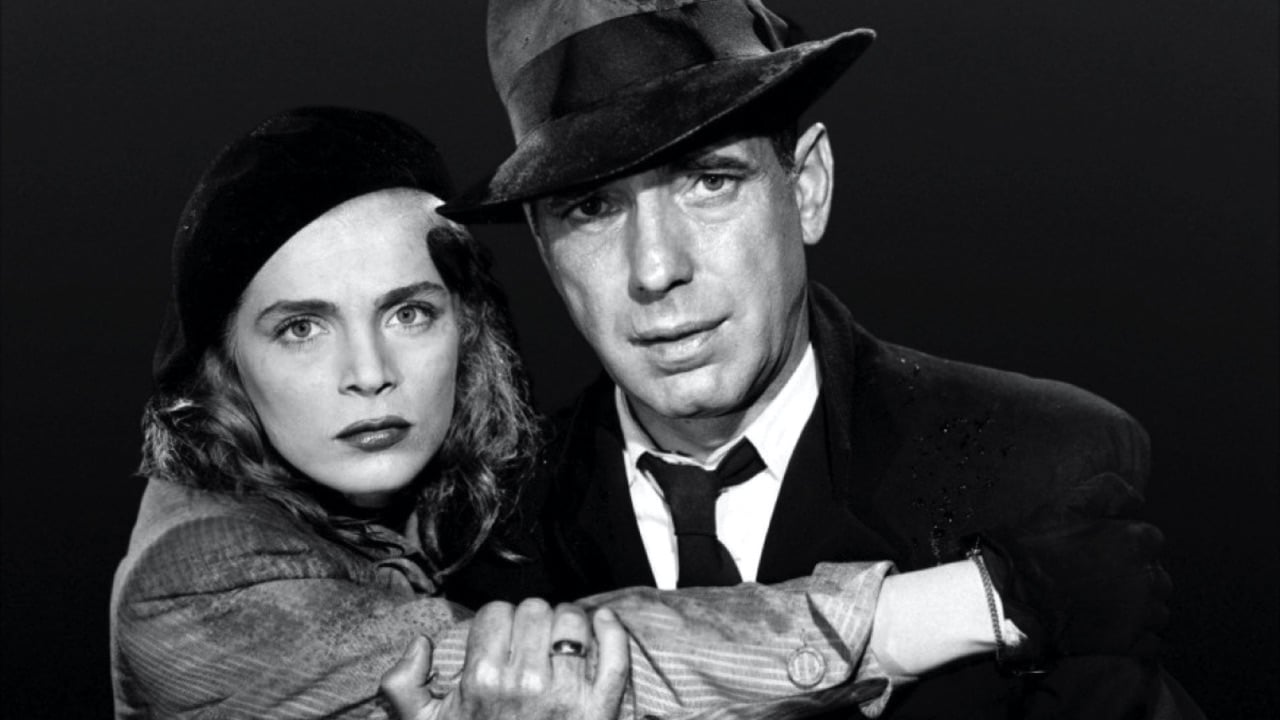
Dead Reckoning cashes in on the Humphrey Bogart persona big time – a drawl and a rough and ready way with women but beneath it all a courtly gent with a thirst for truth. It was made in 1946 when peacetime mopping-up was the order of the day. War is over. Men are returning to where they came from. Things are going back to normal.
Or that’s what’s meant to be happening, at any rate. As we meet Bogart’s Rip Murdock, he’s covered in blood, scared and on the run. If this is a reset then something has gone wrong. With plenty of voiceover from Bogart, and the useful shimmer of an extended flashback, Rip confesses all to a priest and we discover exactly what’s happened.
It seems Murdock was on his way to Washington DC with his close friend Johnny Drake (William Prince) to receive a medal for valour. En route Johnny has done a bunk for some reason. Rip decides to find out why and turns detective. And that’s his story, looking for his pal and instead running into danger – nightclub singer Coral Chandler (Lizabeth Scott) and gambling mobster Martinelli (Morris Carnovsky) and his goons.
There’s a touch of The Maltese Falcon in the plotting – it’s often not clear what’s going on. Falcon filled the gaps with strong characters. Dead Reckoning doesn’t really have them, though the leads are feisty enough.
Scott was apparently cast when Rita Hayworth couldn’t fill the role but the clear idea is Lauren Bacall – Scott gives us enough synthesised Bacall that we know where she’s coming from, but for the most part she is her own woman. Nasty and husky.
Director John Cromwell introduces his femme fatale with a long, lingering shot, the camera running upwards from her feet and taking in the shape of her breast as it heads for her face. “Maybe she was all right,” says Rip of Coral. “And maybe Christmas comes in July.” Fans of sub-Raymond Chandler wiseassery will find plenty to enjoy in this film.
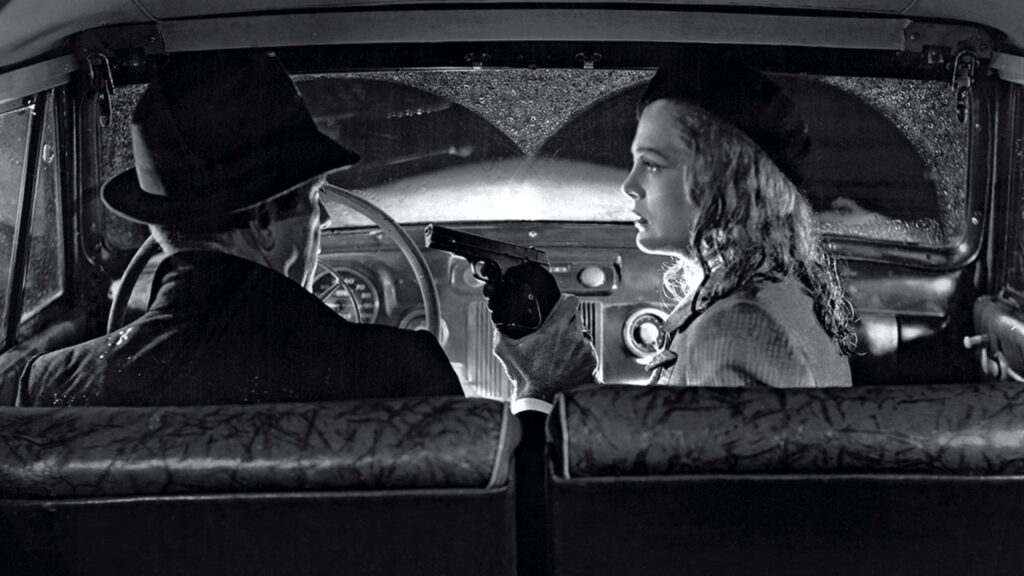
Rip insists on giving Coral the nickname Mike. It’s interesting, this renaming, just one of several instances of this movie’s adrift sexuality. What, for example, is the exact relationship between Rip and Drake? Their masculine bantering seems overly demonstrative, performative even. And every time the true nature of the Rip/Drake bond is approached, it’s as if the film hesitates.
As for Bogart’s odd speech about the usefulness of women, beyond looking pretty – he fantasises about shrinking them to pocket size and only pulling them out and restoring them to full size once the men have done their man stuff – it’s downright weird. Woman as dildo?
Drink, cards, sexy dames, violence, it’s an insistently masculine world and it would be a much more enveloping one if Bogart’s voiceover didn’t keep dragging us out of the story – “You see, Father,” he says on regular occasions, and suddenly we remember that this is all confession.
Drake, it will turn out, is wanted for a crime and that’s why he’s done a runner. The fact that it’s the same crime he was about to be given a medal for – the taking of life – is left there as an unspoken irony.
All in all this is a scrappy movie that feels like it went into production without being really worked through. Five years on from The Maltese Falcon, four years on from Casablanca and four months on from The Big Sleep, the producers clearly wanted more of the same from Mr B.
Mr B obliged. As a vehicle for delivering Bogie vibes, Bogie content, Dead Reckoning is pretty good, and Scott also earns her corn. And that’s the way to watch it, unless you really want to do extensive excavation on mobile male psychology in the 1940s – dead reckoning is a method for finding your bearings, after all. If you’re watching the 4K restoration, which was done in 2022, it’s a good-looking film too.
Dead Reckoning is not one of Bogart’s best, but at this point in his career he couldn’t put a foot wrong.
Dead Reckoning – Watch it/buy it at Amazon
I am an Amazon affiliate
© Steve Morrissey 2026