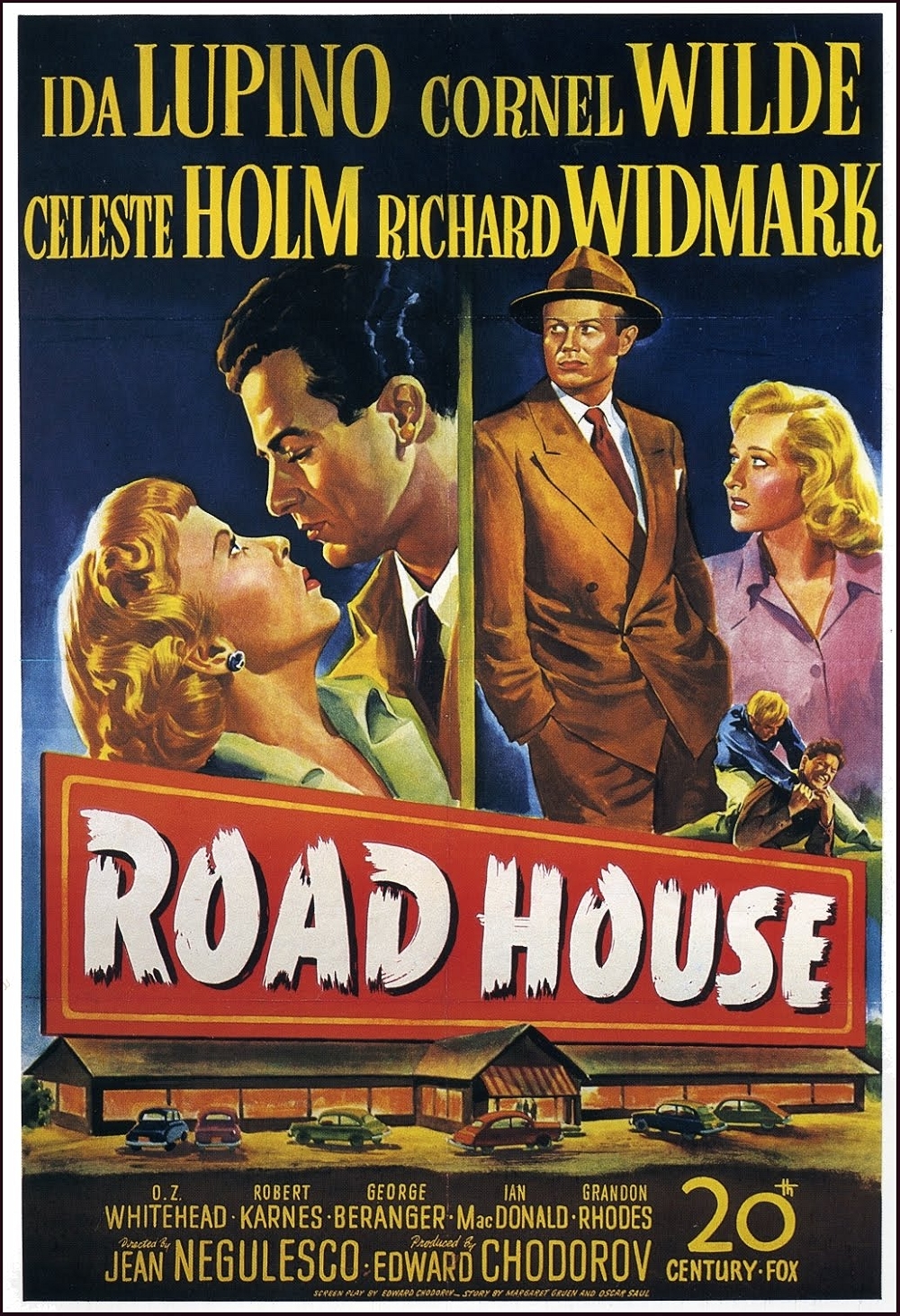
Road House is a bad movie full of good things – yes, that is the sort of line often trotted out by the terminally indecisive or foolishly fixated when they don’t want to just come right out and condemn something. But in this case it’s true. Why it’s bad first: it’s a film suggesting it’s about one certain person when it’s about another. The several good things: the acting by Ida Lupino and Richard Widmark plus the crackling dialogue. And the cinematography is pretty tasty too.
And, before going any further, there is no connection to the Patrick Swayze movie of four decades later, though both stories take place at a road house, where, in the 1948 movie, Ida Lupino’s Lily Stevens arrives to take up a singing gig and sparks off a full stag between owner Jefferson T “Jefty” Robbins (Widmark) and manager Pete Morgan (Cornell Wilde).
It seems that manager Pete and owner Jefty have a cosy arrangement. Pete does the hiring of the entertainment talent, then Jefty peels off the ones he wants to have sex with, after which Pete dumps them for him – a little pay-off at the station before Jefty’s latest conquest is bundled onto a train.
This arrangement suits both men. Or has done up till now. Jefty gets sex; Pete gets left alone to run the place his way. This time, however, it’s different. For one Lily is no pushover. She drinks scotch straight, has a smart comeback for any remark and knows how to handle men. She’s been around the block a bit. For another, the punters like her and she’s worth hanging onto. She is no singer – “She does more without a voice than anyone I’ve ever heard,” says fellow employee Susie (Celeste Holm) – but she can sell a song.
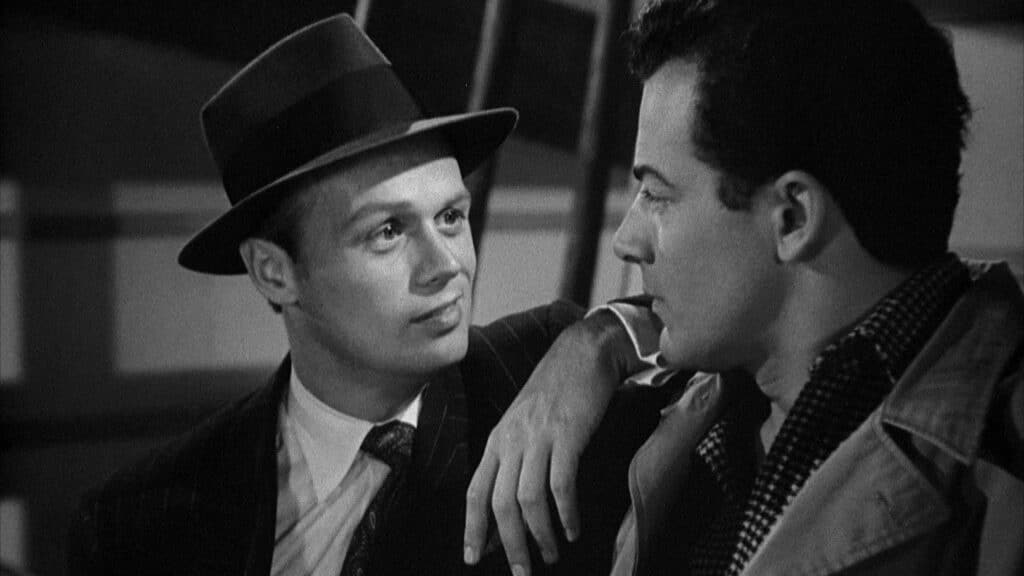
The three key actors play to their strengths – Wilde the decent, handsome lump, Widmark the entitled psycho used to having things his own way, Lupino the smart operator. But the movie will insist that this is all about Pete – who falls in love with Lily and tries to get her to leave the road house before she gets hurt (unlikely). When in fact it’s the story of Jefty, not in the movie much for its first half but decisive in part two when he announces he’s going to marry Lily (without asking her), then railroads both Pete and Lily into doing his bidding, using the law to turn them effectively into his slaves. The capitalist businessman as feudal lord!
That whole legal business is preposterous and the film’s massive plot hole. Pete does not seem to be represented in court, for instance. But it pales into insignificance against another of the film’s problems, which is the power of Widmark’s performance. He unbalances the whole thing. He’d only made his screen debut the year before so maybe director Jean Negulesco didn’t quite know what he was getting. Either way, Widmark’s intensity lays waste to everything, though his performance is so good it’s worth destroying a film for.
As for Lupino, she hadn’t started directing quite yet, that would come the following year. But she puts in another of her intelligent, idiosyncratic Lupino performances. She’s not the sexiest, the funniest, and that comment about her voice is bang on the money, but she is compelling to watch and her way with a cigarette suggests oceans of hurt in Lily in whatever previous life she had.
In spite of Widmark’s efforts, she is the film’s defining character, carefully written, played with psychological adroitness by Lupino – watch Lily fend men off by making them think they’ve decided to leave her alone. She is in many respects a 1930s heroine beached in a 1940s movie. Which is also this movie’s tonal arc – sexy screwball energy eventually yielding to a kind of glum, fatalistic noirishness. A really fascinating fail.
Road House – Watch it/buy it at Amazon
I am an Amazon affiliate
© Steve Morrissey 2026