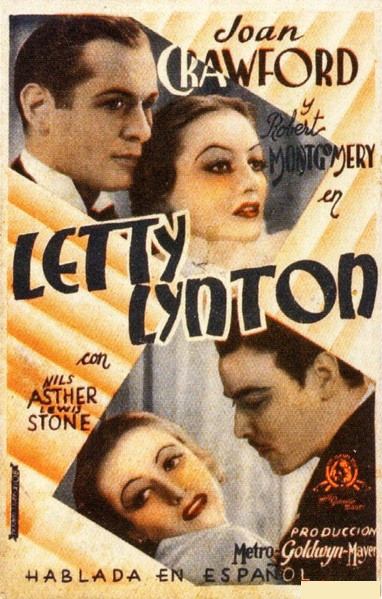
Letty Lynton tells the story of Madeleine Smith, who wanted to move on from a lover who didn’t want to move on from her. And so she killed him. The same story was also told in David Lean’s Madeleine in 1950 (good too) and in Dishonored Lady, starring Hedy Lamarr in 1947 (not seen it).
Here it’s Joan Crawford who plays the deadly female, a rich flibbertigibbet first encountered in Montevideo dancing the night away with hot Latin lover Emile Renaul (Nils Asther). It’s obvious from the film’s opening moments that Letty has had enough of Emile, who’s a bit clingy for her liking. And so, instructing her maid Miranda (Louise Closser Hale) to pack their bags pronto, the two of them jump on board a ship and leave Uruguay bound for New York.
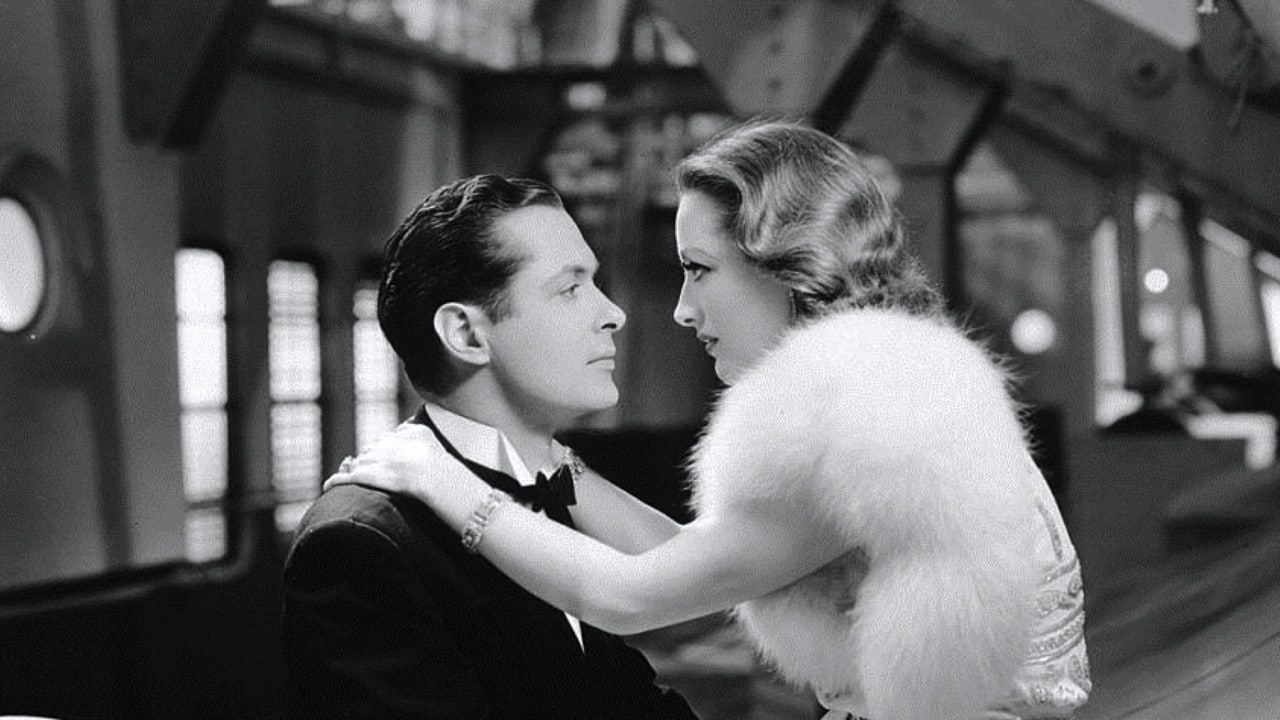
There, in a beautiful ten seconds or so of compressed storytelling, Letty meets Jerry Darrow (Robert Montgomery), and the two of them embark on a romance that is clearly heading towards the altar. What Letty doesn’t know, at first at least, is that Emile has followed her back to her home country and will soon start making trouble – he has love letters and is unafraid to use them to win her back or blacken her reputation. Why Emile thinks this is a winning strategy is a bit of a mystery.
The film itself became a bit of a scandal after it was accused of plagiarising the 1930 Broadway play Dishonored Lady. This led to it being withdrawn by the studio. The only versions available were poor, cotton-woolly copies (they’re on YouTube). But when Dishonored Lady’s copyright expired in 2025, the way was clear to the film being re-issued. Which is what has happened. The restored version I watched is night and day better than the foggy fuzz I tried to watch last year, and gave up on.
Crawford, already in 1932, is beginning to be a bit mannered – the arms thing where clasped hands are pumped down together, the sudden spins to face her scene partner. But this is a well written film that gives space both for Crawford and side characters to breathe. Louise Closser Hale is much more than just a bit-part maid and puts on a good, sometimes funny, show as Letty’s maid, conscience and sounding board. There’s a tellingly unpleasant turn by May Robson as Letty’s horrible mother – human emotion is “much too treacherous” she tells her daughter, tipping us towards this film’s take on our social superiors and the source of Letty’s lack of scruples.
As for Asther and Montgomery – if it was wrestling they’d be the heel and the face, the bad and good guys of the ring. Both perform their duties. This show is not really about them but about Letty, whose tortured, conflicted but ultimately murderous character allows Crawford to range through all the emotions, hot to cold, joy to fury.
Clarence Brown, one of the stalwart silent directors, starts things out as if this were also something from the silent era, and then, camera zipping about with remarkable fluidity, gives us a data-dump of dialogue reassuring us us that this is indeed a talkie. He was one of Crawford’s and Greta Garbo’s favourite directors. You can see why – his female leads look good.
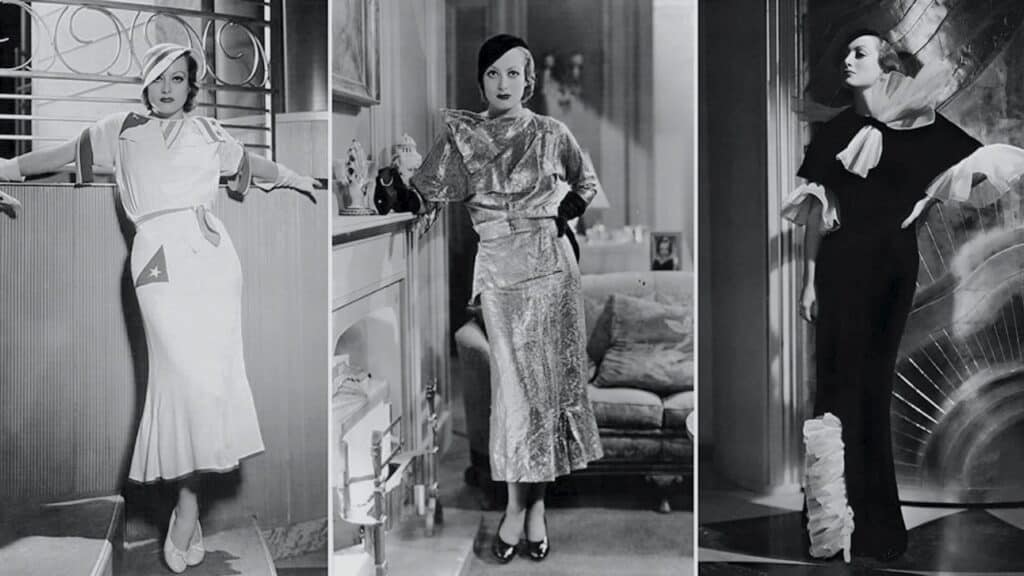
The “gowns”, as they’re billed, help too. Crawford is impeccably dressed throughout, by the legendary Adrian, and one dress in particular – the white one with ruched shoulders, aka the Letty Lynton Dress – caused a sensation. This, pre-TV, was the movie era.
In Lean’s version, Madeleine, the possessor of the toxic letters was a penniless chancer out to make a buck. Here, Emile’s motives are less clear cut. In Madeleine, justice is eventually done. Here, in a brilliantly written scene set in the District Attorney’s office, the DA (Lewis Stone – excellent) first takes Letty apart before something remarkable happens. Hold on for that unexpected and strangely satisfying ending, when the prospect is held up of a murderer going free, even though everyone knows she did it. Letty Lynton and Madeleine, a great double bill.
Letty Lynton – Watch it/buy it at Amazon
I am an Amazon affiliate
© Steve Morrissey 2026