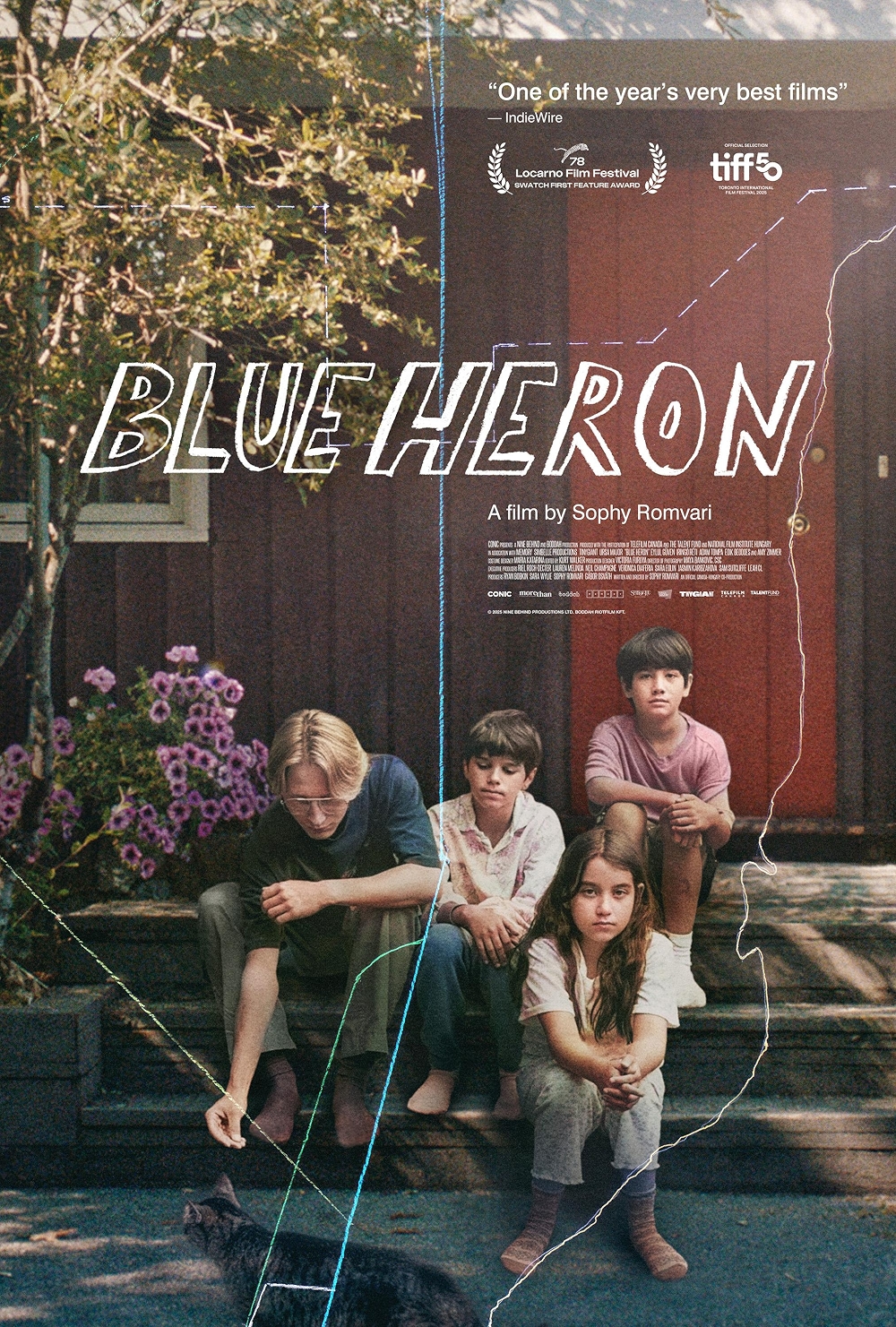
Blue Heron is largely the story of its maker, Sophy Romvari, or of her young life, as seen from a couple of decades on. How much of it is true? There’s a disclaimer up front about memory and its unreliability, so possibly not all of it. And in any case Romvari takes a couple of conceptual leaps towards the end of her debut feature that lift it into a different realm altogether – two different realms, in fact.
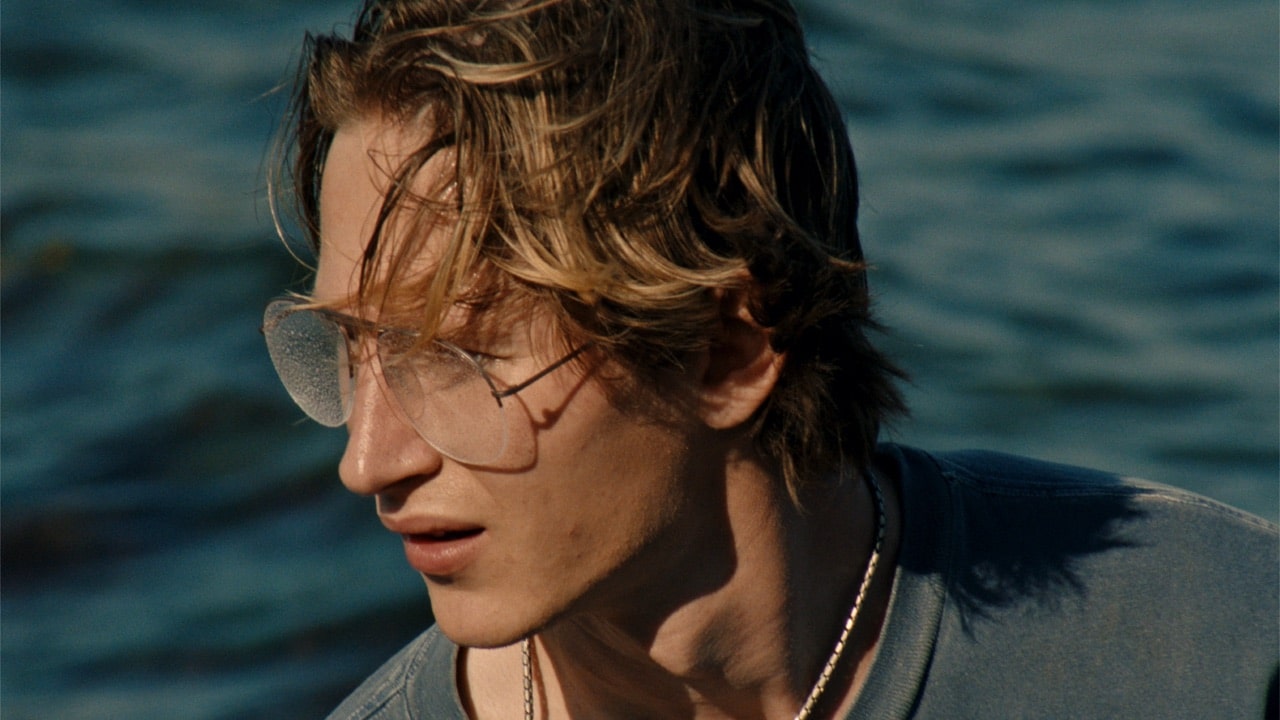
But for the most part this is the story of a family of six from Hungary who arrive in 1990s Canada and set about assimilating – they try to speak only in English at home, the kids start playing with other local kids. Meanwhile, Dad (Ádám Tompa) works on his computer as an artist, mum (Iringó Réti) gets on with it. Vancouver Island looks wild enough to be fun, civilised enough to make everyday life practical. All is good, all except for Jeremy (Edik Beddoes), oldest of the clutch of kids, who’s given to much brooding, long silences and weird disruptive behaviours.
Whether Jeremy is protesting against the relocation, or is just being an antsy teenager, or there’s something more unruly going on is not said, not for a while at least. Romvari’s report from her own back story is relayed by an avatar of her younger self, Sasha (Eylul Guven), who looks on wide-eyed as Jeremy’s behaviour becomes more troubling – at one point he’s brought home in handcuffs by the police after being caught shoplifting.
This is not so much Jeremy’s story as the story of the family reacting to Jeremy as his transgressions start to mount up and he slides from the feisty to the aberrant and beyond, with his parents and siblings looking on with no real idea what to do.
Why Blue Heron works so well is because it is in many respects a straightforwardly sweet and fairly standard portrait of family life in 1990s Canada, done in long takes catching the minutiae of everyday existence. Jeremy’s behaviour stands in stark contrast to all that – look elsewhere if you buy into RD Laing’s “anti-psychiatry” thesis that the genesis of many a psychosis is in the family itself.
But also because Romvari takes two leaps, first into the future, when Sasha is all grown up and is now a film-maker shooting a documentary about her early life with a mentally ill brother. As part of her project she gets some social workers around a table, who appear to be real social workers reading what appear to be Jonthan’s (Romvari’s brother’s real name) case notes and making comments about how he would be treated with today. Then she shunts things one more time, into a more fictional realm. Without ruining the movie by saying what antics Romvari gets up to, let’s just say there’s a touch of Céline Sciamma’s Petite Maman about it all.
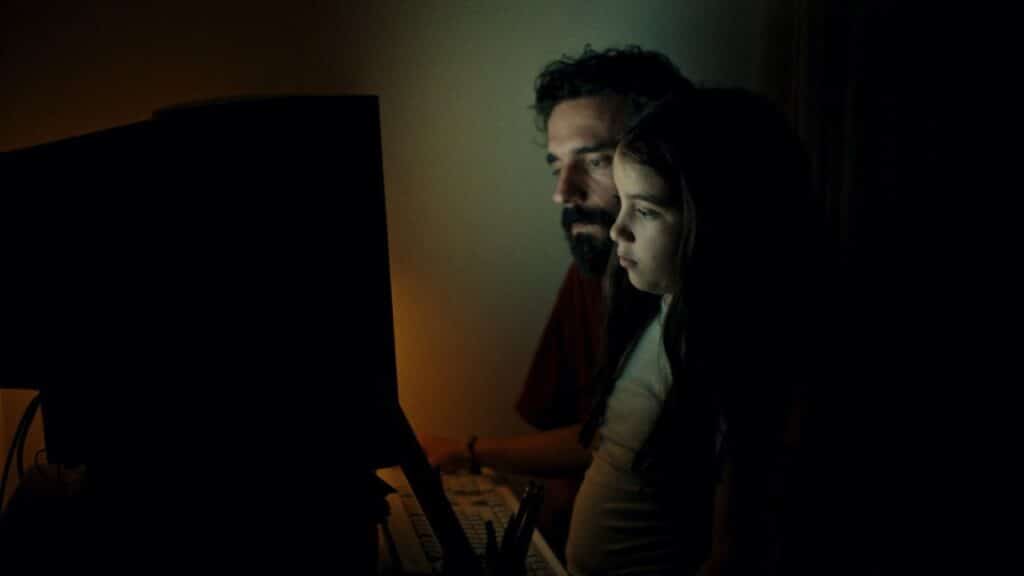
One of the most poignant shots is of Mum and Dad in the here and now, still utterly at a loss as to how this happened to their nice family. Romvari does not explain everything, as films so often try to do, but there are hints suggesting contributory elements that might have nudged Jeremy along the path towards a diagnosis.
A diagnosis of mental illness stigmatises the person who receives it, and perhaps even suggests a glide path for the disease’s progression. The illness effects those caught in its slipstream, not least in the way strange behaviour is normalised inside a family. Jeremy’s illness arrives like an alien in the family’s midst. It changes everything and its ramifications echo down the decades.
To emphasise this, Romvari goes out with Some Things Last a Long Time, a song by bipolar lo-fi musician Daniel Johnston. A touching finish to a film that’s both touching and very matter of fact.
Blue Heron – Watch it/buy it at Amazon
I am an Amazon affiliate
© Steve Morrissey 2026