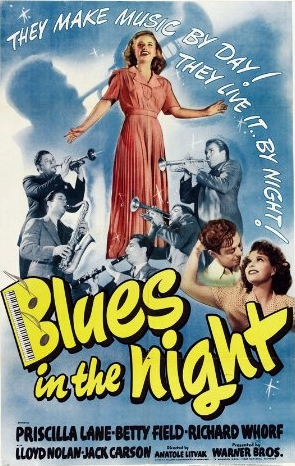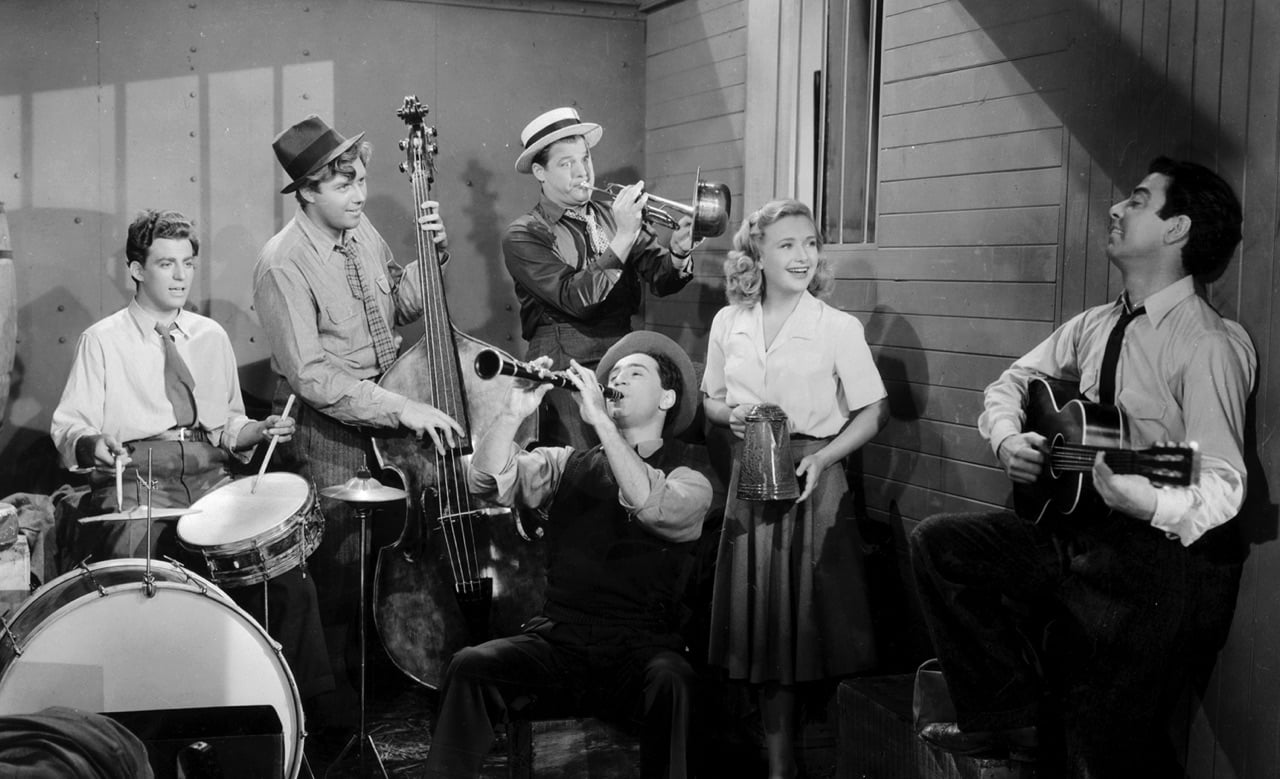
A jazzy, noirish take on the “getting the band together” drama, Blues in the Night benefits from crisp images and snappy dialogue. On the downside, everyone in it is about ten years too old for their role, there is quite a lot of “hep cat daddio” slang to digest and the racial politics are a mess. But if you can take the rough with the smooth, it’s bright and well paced, with a good plot, interesting acting and even a few good tunes – look on it as a semi-musical, maybe.
It’s also the film that convinced Elia Kazan to pack in acting and take up directing. He says he was convinced he could do better than Anatole Litvak does here, which is quite a boast. Look at Kazan’s acting, though, and it’s much more likely he decided to change lanes because he was just too self-conscious a performer.
He plays one of a gaggle of guys who have had enough of their regular gig playing crappy lounge music in a crappy club. After getting arrested for brawling with a customer who wants them to play yet more pap, they all wind up in police detention, where they are inspired to get real after hearing a black detainee in a neighbouring cell singing a lonesome Blues in the Night.
This is the foundational moment for pianist Jigger (Richard Whorf), bassist Pete (Peter Whitney) and clarinetist Nickie (Kazan), who soon augment their band with trumpeter Leo (Jack Carson) and his wife, singer Character (Priscilla Lane). Together this tight, new unit take to riding the rails like hobos, criss-crossing the country to spread the gospel according to Jazz.
Music-obsession is the idea, to the point that when a drifter pulls a gun on them, this band of brothers take it in their stride – nothing matters except the groove and the vibe. Del (Lloyd Nolan), the hobo with the gun, is charmed by the band’s dedication to the muse and takes his new friends (yes, really) to a New Jersey roadhouse. If the first chapter was watching the band get together, chapter two is watching it fall apart at The Jungle, as musical and personal differences – and women – drive wedges between the band members.
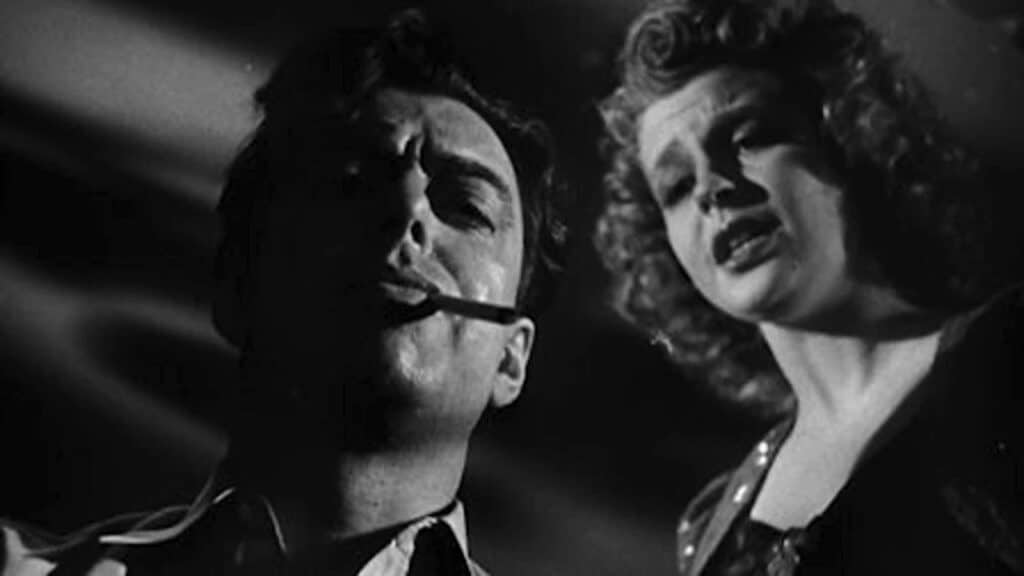
This is a determinedly good natured, vanilla affair full of breezy, gee-willickers banter between the guys. Until, that is, Del’s ex, Kay (Betty Field), arrives on the scene. The Jungle’s star vocalist, Kay is a gambler, sex bomb and hothead, a femme fatale sowing emotional and profession discord because that was what she was born to do. Field is by a stretch the best thing in this film, a dervish of dialogue unafraid to drag her character through the gutter.
Litvak, meanwhile, gets busy, and thanks to the lighting of DP Ernest Haller (Mildred Pierce and What Ever Happened to Baby Jane?), has a solidly sharp background over which he can play about with noirish looks and montage sequences that up the pace.
As a film it’s far more interested in the decline rather than the rise, which has consequences for structure and rhythm – the upswing is done far too quickly, again the montages – so that when the rot sets in and tragedy pays a visit it doesn’t come across as particularly calamitous, though it is meant to be.
George Gershwin isn’t involved musically, it’s mostly Harold Arlen and Johnny Mercer. But it’s his sort of educated college jazz that the guys aspire to play, with a subplot about the very bookish Jigger writing his magnum opus – Rhapsody in Shades of Blue you might call it – taking up a chunk of the narrartive.
As for the objection that it’s white guys playing the black man’s music, that is partially offset by a brief appearance by an electrically hot Jimmie Lunceford and His Orchestra. Sops, really, but well worth having.
Blues in the Night – Watch it/buy it at Amazon
I am an Amazon affiliate
© Steve Morrissey 2025