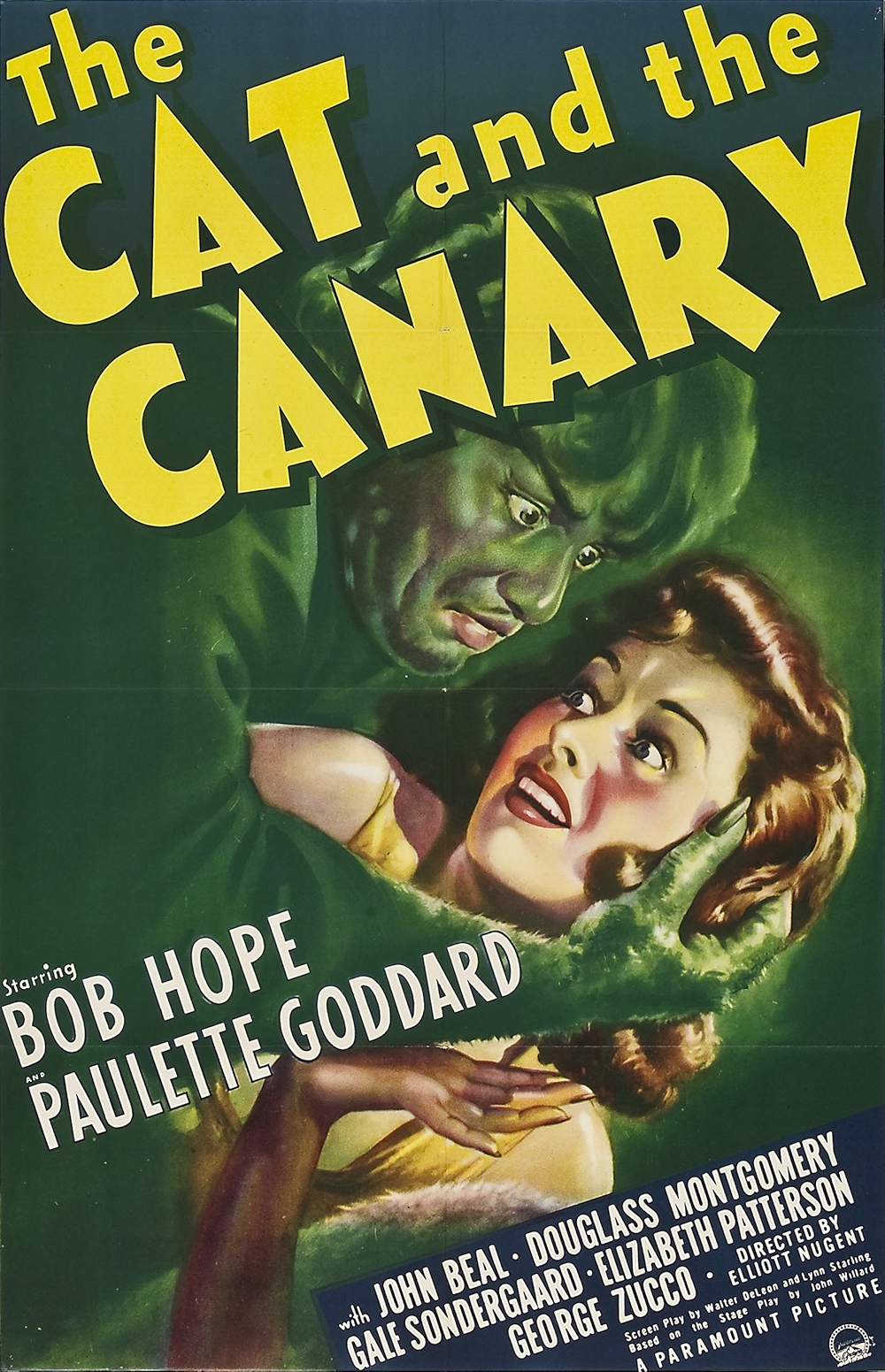
Is there anything as unfashionable right now as a Bob Hope movie? The Cat and the Canary is as good a place to start as any if you want to start understanding the huge appeal Hope once had. Bear in mind that this movie was made in 1939, before he teamed up with Bing Crosby in the Road movies, which propelled the familiar Hope character – quipping and cowardly – to even greater heights.
It’s a remake of a 1927 silent movie of the same name by Paul Leni, one of the great directors, largely forgotten these days because he died young, aged 44, a year after he arrived in Hollywood just as the sound era was arriving. It’s clear that Elliott Nugent, director of this faithful remake, thought Leni was good too – he lifts whole sequences from the earlier film and the standout shots are all Leni, just wired for sound and stripped of their wonky Expressionist angles.
Stylistics to one side, the big difference between the two movies is the addition of Bob Hope’s character, the yellowbelly Wally, but otherwise the characters are familiar from Leni’s film, and so is the plot – relatives gather at an old dark house for the reading of a dead uncle’s will.
Again, the will reading is at midnight, and again the house is presided over by a gothic housekeeper, played this time around with great presence by Gale Sondergaard, one of the go-to character actors of the era when sinister was required. And again there will be secret passages, oil paintings with moving eyes, jump scares and death in Agatha Christie fashion before the night is out.
Hope is joined by Paulette Goddard, as Joyce, the only really normal one of the bunch. She inherits the lot, it’s no spoiler to say. Fighting over her are two males at full stag, cocksure Charlie (Douglass Montgomery) and peevish Fred (John Beal). The rest of the party is made up of a pair of dotty aunts – avaricious Susan (Elizabeth Patterson) and timid Cicily (Nydia Westman) – and a lurching lawyer, Crosby (George Zucco), while out in the grounds of this mansion built in the middle of an alligator-infested swamp, Hendricks (John Wray), a guard from the local asylum, is searching for an escaped lunatic.

Hope is playing a star of radio, which is what he was best known as in real life too. He’d only made the jump to movie stardom the year before, having turned up in supporting roles in other comedians’ movies before then, as well as a series of shorts. The Hope character is fully formed, though: his sense of pace, his fast mouth, his comic timing, his breaking of the fourth wall and his hoofer’s suppleness are all there. If it’s not quite up there with the follow-up, The Ghost Breakers, it sets the tone for it – joky and very gothic, Hope’s wisecracking undercutting the tension and acting as a commentary on the gothic genre itself. Hope even wheels out a political gag, about the Republican party. In The Ghost Breakers he’d crack one about the Democratic party, so even stevens.
It’s not as good as Leni’s original, which might be silent but is astonishingly good, and it’s not as funny as The Ghost Breakers, which simply has better gags, and the Goddard/Hope pairing also seemed to be on firmer ground. But she makes a good damsel in distress (in figure-hugging night clothes, for most of the time) and it is a good film, particularly in terms of the playing of the entire company, who move together in a slick and well oiled way, like a repertory company who have been acting together for years.
The Cat and the Canary – Watch it/buy it at Amazon
I am an Amazon affiliate
© Steve Morrissey 2025