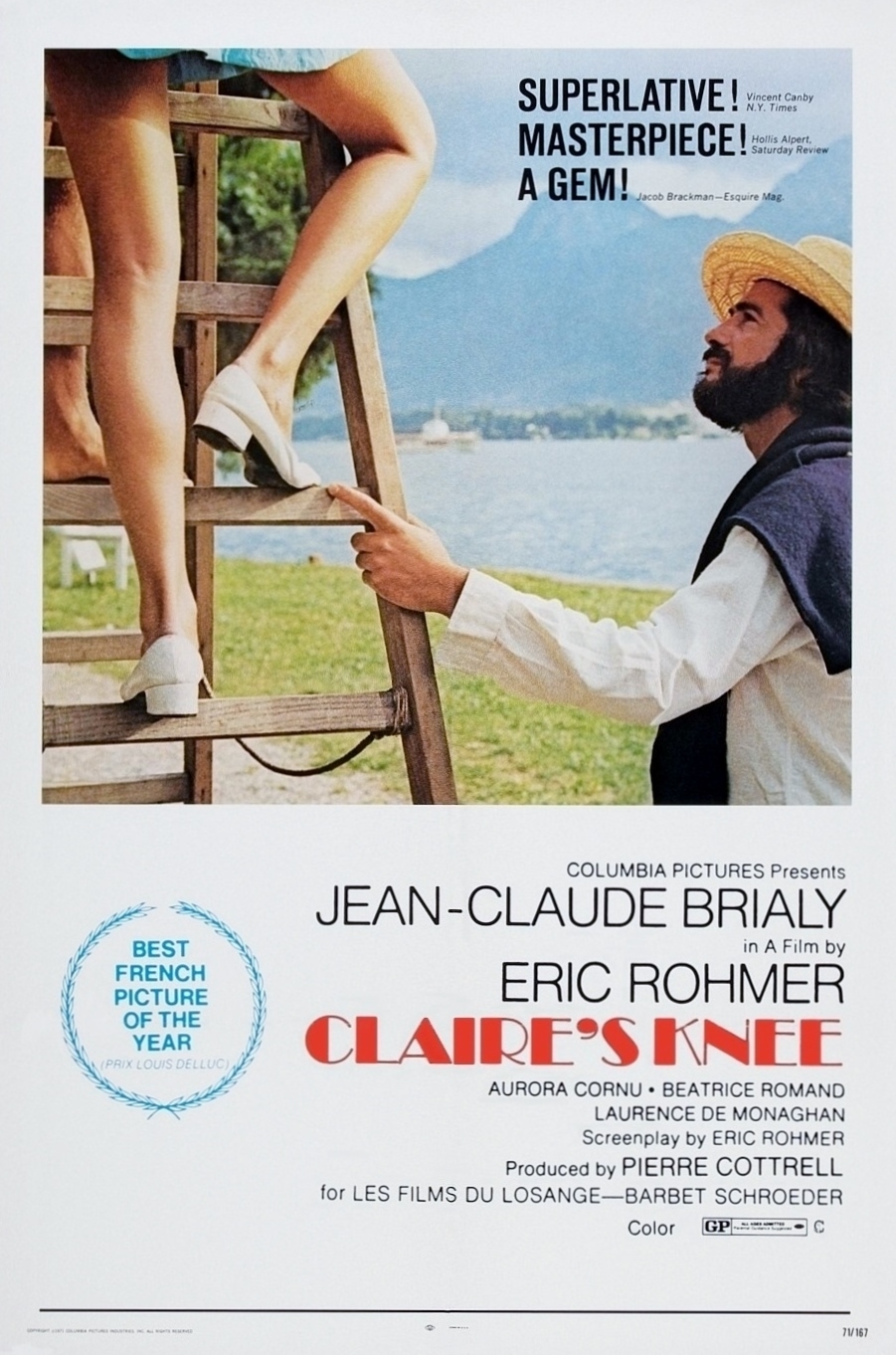
In many ways the perfect French movie, French-movie cliché even, 1970’s Claire’s Knee (Le genou de Claire) is one of Éric Rohmer’s most celebrated works and is a good place to start if you want to dig into his back catalogue. One of the key voices of the French New Wave, Rohmer regularly banged out films from the mid 1950s until, in 2007, old age forced him to step back. Unlike other old dogs of the New Wave (Godard springs to mind), right to the end Rohmer’s newest offerings were still consistently putting bums on seats.
It’s the perfect and cliched – archetypal, if you prefer – French film because it has the elements we expect. The French middle-class lifestyle as the pinnacle of human achievement. A boho-chic stylishness. A cryptic male at the centre of it. Women who are devastatingly though not always conventionally beautiful. Settings that are gorgeous and yet understated. A lot of talking. Talking. Talking.
The story goes as follows. While summering by a mountain lake, a man on the cusp of marriage (and middle age) is enticed, Dangerous Liaisons style, into a relationship with a teenage girl, Laura, by Aurora, a writer who wants to mine his experiences for a novel. Or so she says. Aurora’s real intentions are opaque, as are those of Jérôme, who might be going along with her suggestion because he’s already interested in Laura, who is sexy in that naive, long-legged tight-breasted way of coquettes in French movies. We learn later that Laura may be 16, but she looks about 13, and the sense that Rohmer is conjuring Lolita is always hovering in the background.
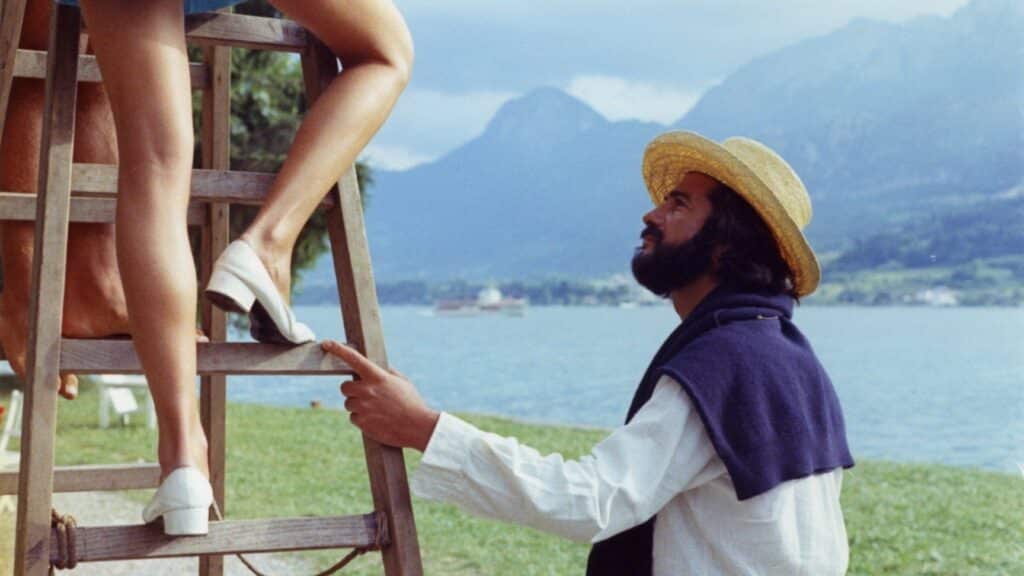
Jérôme remains fixated on Laura. Until, the day slightly older sister Claire arrives on the scene and instantly replaces Laura in decadent Jérôme’s fantasies. Or more specifically her knee does, which Jérôme spots in close-up one day while she’s up a ladder picking cherries (symbolism?) with her boyfriend, Gilles.
Jérôme’s envy of Gilles’s brash assurance, hard body and youth is clearly one of his motivations for pursuing Claire, or her knee. It is just one motivation, though. And this is the knot Rohmer worries away at through the whole film. Much as Gabriel García Márquez does in Love in a Time of Cholera, Rohmer interrogates the wellspring of desire. Can it be something as muddleheaded as envying another man’s youth? Or is it simply the joy of the chase? The promise of sex? Getting lost in the heady dance of flirtation? Pride? Self-love. Physical obsession? Transgression?
While Jérôme blahs on about himself, first to bright-spark Laura, who completely outclasses him, and later to Claire, who is largely inured to the blandishments of older men, Rohmer presents Jérôme as being at the mercy of one motivation after another. Whatever is really driving him, Jérôme looks faintly foolish in every guise. He doesn’t seem at all self-aware. To 21st-century eyes he looks like a creep, which would have been less visible in 1970, but is clearly one of Rohmer’s intentions.
Claire’s Knee is the first of Rohmer’s Six Moral Tales. Each one reworks Murnau’s 1927 silent movie Sunrise: A Song of Two Humans – man fascinated with one woman falls for another – in a different way. But there’s a lot of Hitchcock in here too. When they were critics, Rohmer and Claude Chabrol had written the book that first presented the British director as being more than a creator of mere entertainments. Rohmer here takes on one aspect of Hitchcock that’s less discussed – his look, especially of those late classics like North by Northwest and Vertigo – and takes it for a spin around the lake and into the mountains around Lac d’Annecy in France’s Haute-Savoie.
What is the “real” film here? Is it a reworking of Murnau’s Sunrise, and the whole Jérôme/Laura/Claire triangle? Or is that just an armature off which Rohmer hangs something much more ineffable – the way things look? Néstor Almendros is the DP and his images are relentlessly sublime.
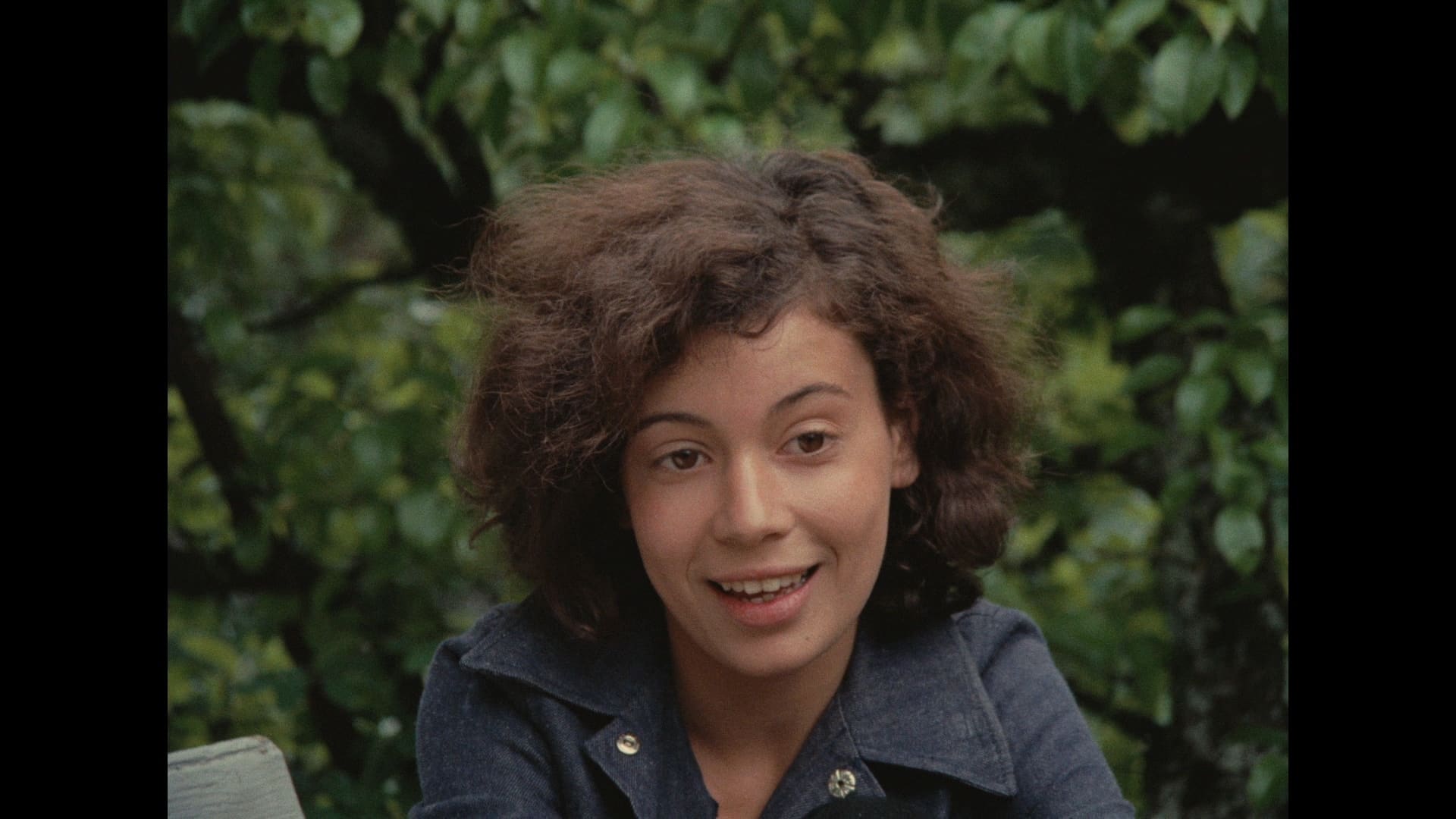
I’ve not mentioned the actors. Jean-Claude Brialy as Jérôme, Aurora Cornu as Aurora the meddling novelist (and something of an on-screen narrator throughout), Béatrice Romand as Laura, Laurence de Monaghan as Claire. Look out also for a very young Fabrice Luchini as Laura’s boyfriend Vincent. They’re all perfect, and look the part – suntanned and loose – right down to Cornu’s occasional nervous glances right at the lens, but Rohmer uses them as Hitchcock uses actors, as placeholders and as mannequins. Great though they are – Romand in particular, in her first film – this isn’t an actor’s film.
Claire’s Knee – Watch it/buy it at Amazon
Claire’s Knee as part of Rohmer’s Six Moral Tales box – at Amazon
I am an Amazon affiliate
© Steve Morrissey 2025