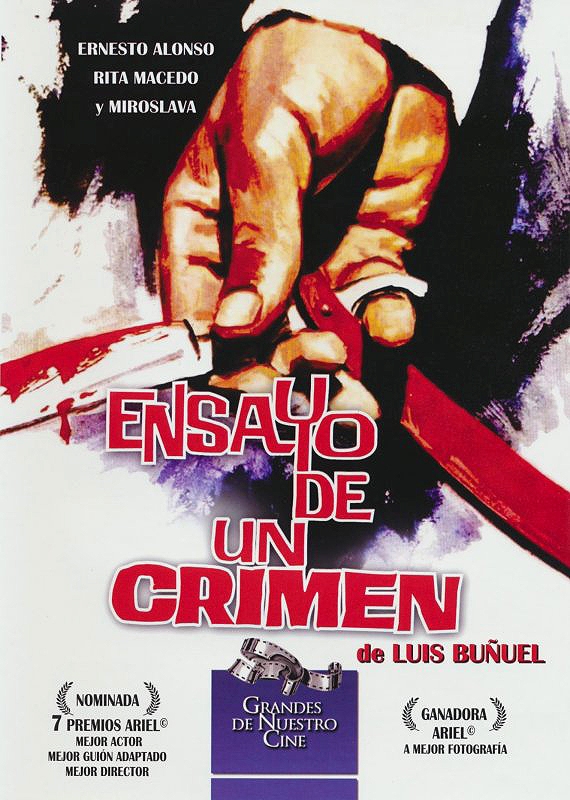
In typical fashion, Luis Buñuel turns the crime drama on its head in The Criminal Life of Archibaldo de la Cruz (originally Ensayo de un crimen), a story about a killer who isn’t a killer admitting to crimes he didn’t commit because he’s convinced he somehow perpetrated them.
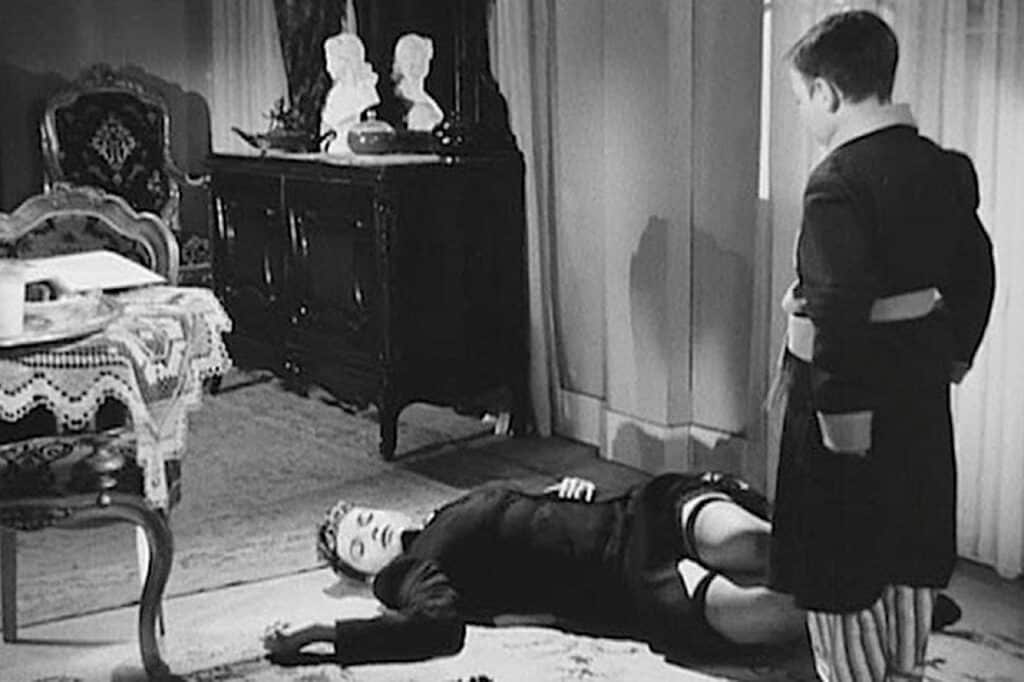
Being a Buñuel film there’s also a reckoning with the bourgeoisie, and how they tend to get things assbackwards. Here, the wellspring of Archibaldo’s misery is becoming hardwired to confuse sex and death at an early age when, as a spoilt little rich boy, he sees his governess killed by a stray bullet fired by revolutionaries running amok outside the palatial family home.
It’s as the nanny hits the floor that the fateful glimpse of the top of her stockings happens. Sex and death now hopelessly intertwined, Archibaldo (now played by Ernesto Alonso) grows up convinced he somehow caused the nanny’s death by winding up a music box. It’s when he finds the selfsame music box as an adult that that his “crime spree” kicks off, all told to an examining judge in flashback.
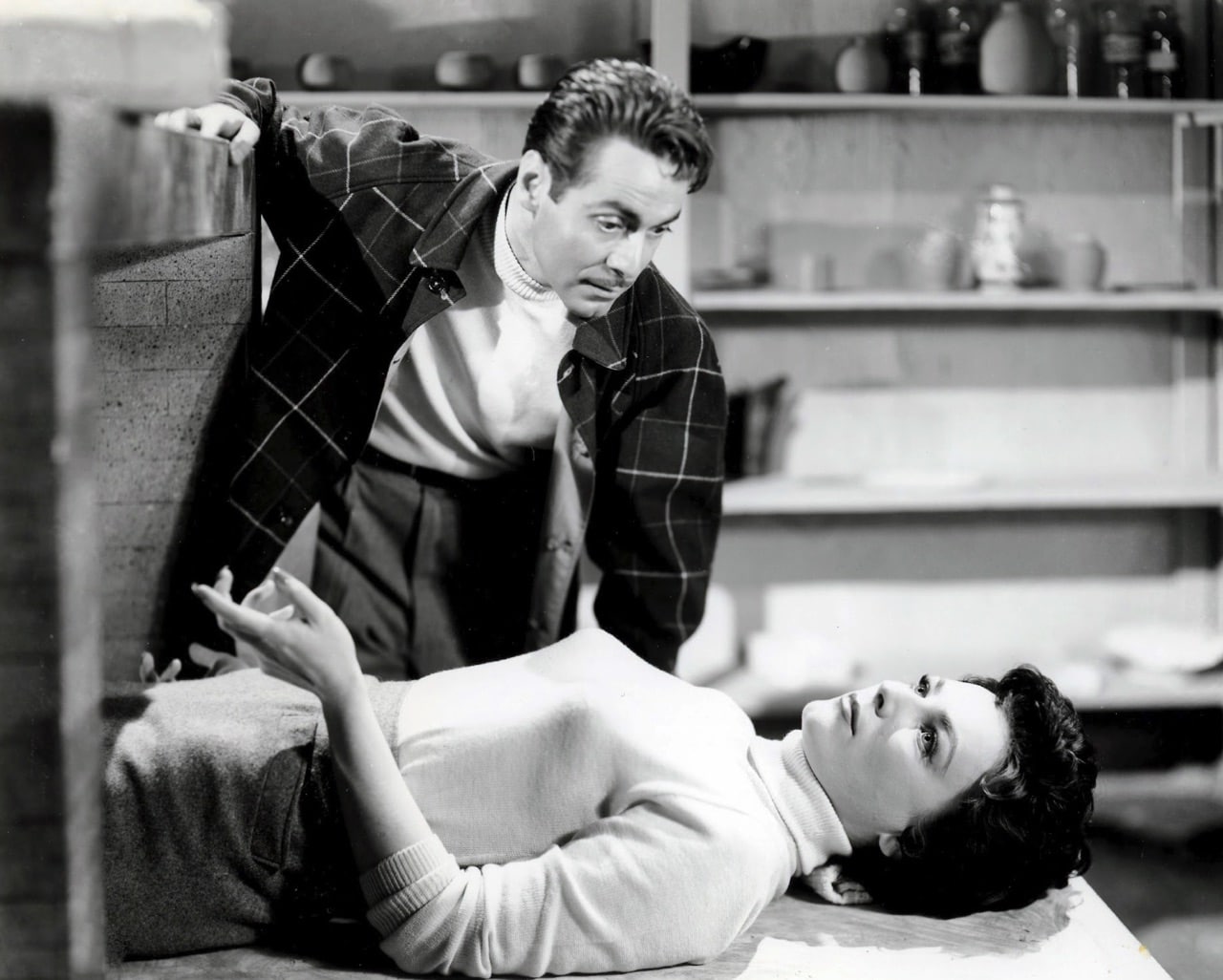
Thumbnail plot outlines for this film generally tell us that Archibaldo is mentally disturbed or that he’s pathologically intent on killing women but that fate gets there before him. Yes, but also no. It’s true that when he meets a woman – and he meets plenty – Archibaldo’s thoughts turn murderous. But it’s sex that’s driving him. One by one the potential victims drift by: the unbearably up-herself floozy Patricia (Rita Macedo, superb), beautiful artist’s model and tour guide Lavinia (Miroslava) and the chaste Carlota (Ariadna Welter ).
Because film people often don’t watch much TV, The Criminal Life of Archibaldo de la Cruz is often described as a crime comedy, when in fact it’s obviously a pastiche of Mexican soap opera, tenderly lampooning its style, its exaggerated storylines and its tendency for characters to switch personality, depending on what the plot requires.
The tone is mock-melodramatic throughout, starting with the title music and continuing right on through to the last moment. Fate operates ironically, mockingly, cosmically, a fairground jangle of melodrama following characters who may be innocent but that doesn’t mean they haven’t fallen from grace. Buñuel, born a Catholic, was obsessed with the Fall.
What do we make of the fact that our hero drinks milk? Or that he wears a cape? Or that in his spare time he likes to throw pots on a wheel and has a kiln in his workshop? What are we meant to make of so many Buñuel details, which seem to have been taken from a how-to manual of surrealism?
The potter’s kiln features in the film’s best and most surreal scene, when Archibaldo gets as close as he’s ever going to get to killing a woman, symbolically killing Lavinia by melting down a lifelike wax replica of her.
Primary drives hopelessly confused is a Buñuel trope – see shitting and eating swapped about in The Phantom of Liberty – but thanks to the soap-opera dynamic, nothing is too serious, things move along at speed, and stew of the gothic and the surreal has the effect of painting all the characters in this short film as ironic pastiches. Everyone wants what they cannot have. But is anyone in this story really for real?
Go for the 4K restoration if you are minded to check out this mad sweep of a movie. It looks pretty damn fine, though the sound on the version I watched somehow came across as both tinny and muddy. Maybe that was Buñuel’s original intention. You shouldn’t put anything past him.
The Criminal Life of Archibaldo de la Cruz – Watch it/buy it at Amazon
I am an Amazon affiliate
© Steve Morrissey 2026