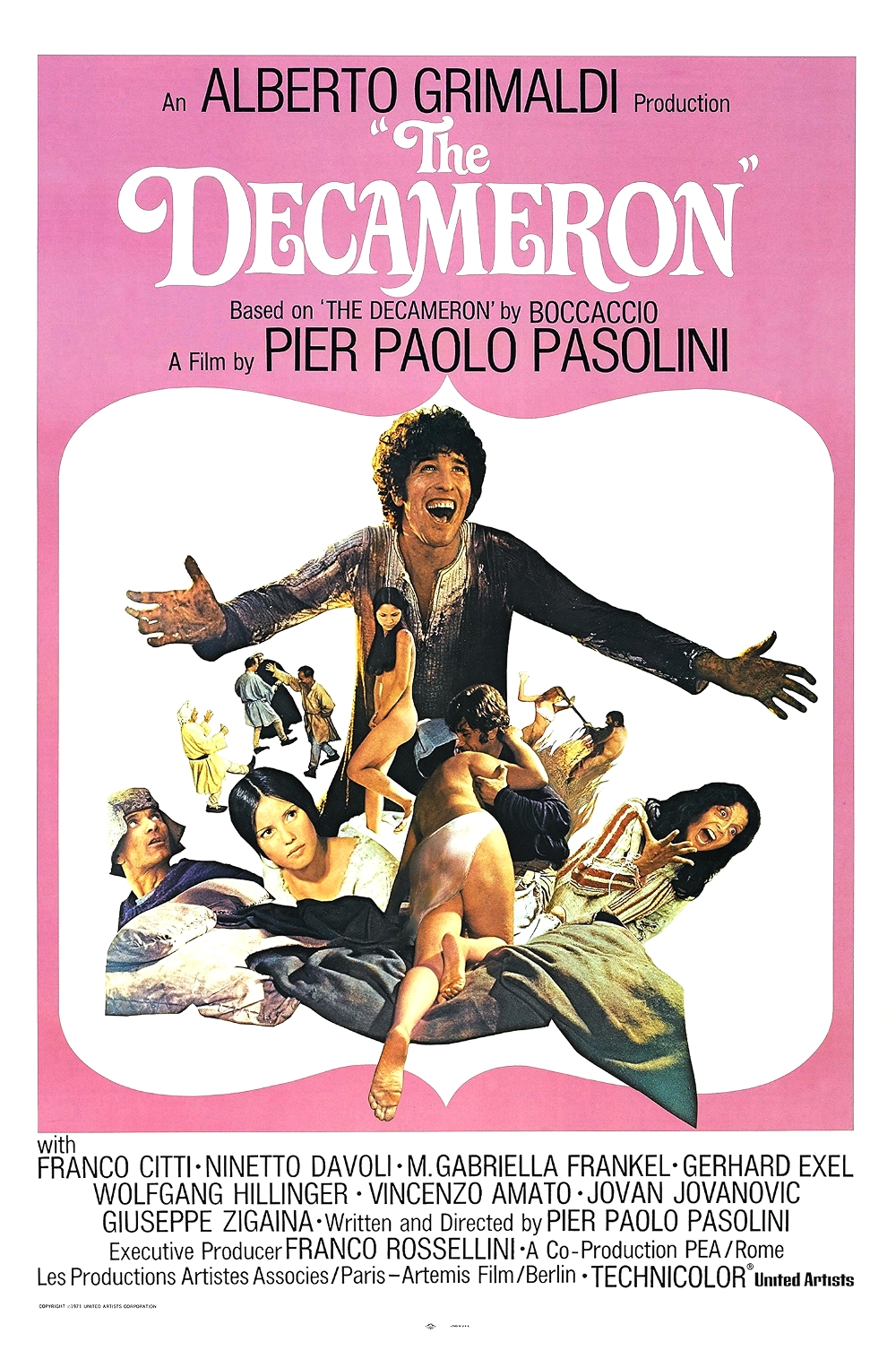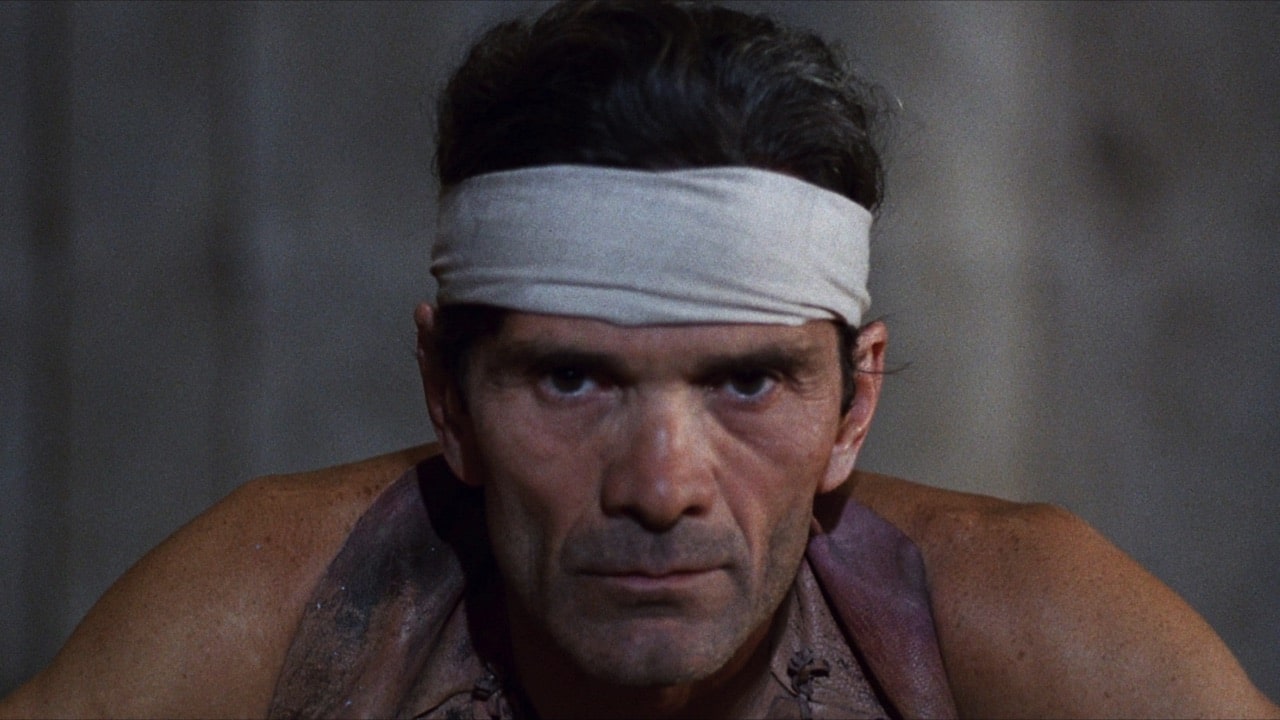
“The dirtiest great book in the Western canon,” is how the New Yorker once described Boccaccio’s The Decameron. Which made it a perfect fit for Pier Paolo Pasolini when he set out on his Trilogy of Life, three films based on old texts. The Decameron came first, in 1970, followed by The Canterbury Tales (1974) and Arabian Nights (1974). All three were popular, especially with sex-starved schoolboys suddenly interested in subtitled arthouse.
Whether they are arthouse at all is a question for another day – in some quarters subtitling is enough on its own to consign a movie to the outer reaches. Which is ridiculous in the case of the Trilogy of Life, because there’s nothing challenging or surprising in any of them, unless the odd bit of nudity shocks you. All three films are portmanteau affairs, and The Decameron is typical, telling nine separate stories selected from Boccaccio’s original 100. Pasolini’s selection skews towards a critique of human gullibility, especially with regard to religion and superstition, when he’s not just being downright crude or rude.
A man falls into a cesspit full of shit. A terrible rogue pulls off a deathbed swindle and winds up canonised as a saint. A horny young man tries to boff a pretty virgin only to find out it’s his sister. In another tale a woman is serviced from behind by her lusty lover while her husband cleans a massive ornamental from the inside – “higher… lower… harder”, she cries out in ecstasy as her lover pounds away. Which the husband takes as directions on where to clean next. Oh my sides.
It is the familiar subject matter of bawdy jokes down the centuries. Nuns. Older husbands with younger wives. Fools and their money/virtue/dignity being easily parted. What saves it from dismissal is that subtext – clerics do not come out of it well but the general populace comes out of it even worse. What a bunch of fools people repeatedly are in this film, eagerly endorsing any blowhard who points his mouth their way. So – 21st century relevance.
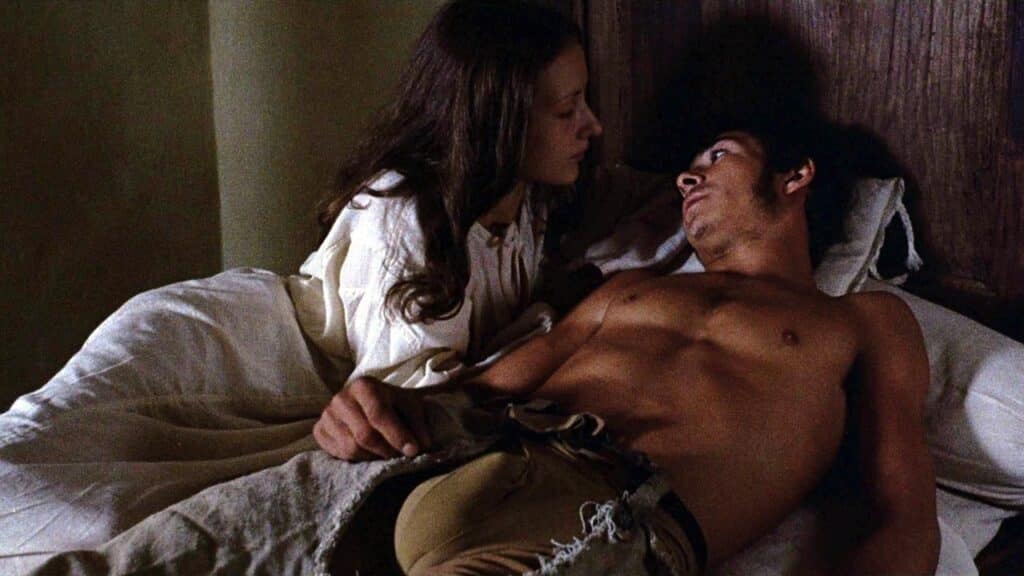
If Pasolini is anything it’s a master of the look. His films are generally exquisitely dressed and full of people with faces from the Middle Ages. No bleached smiles here, the snaggle-toothed and the warty make up the extras in Pasolini’s crowd scenes, even if the leads in all his little sketches are clean-limbed young men and comely women. The set dressing is fascinating in its insistence on authenticity. Wooden bowls, knives clearly made of beaten iron, ancient wooden musical instruments, massive loaves of rustic bread, along with the director’s preference for shooting in ancient locations. The film is an an object lesson in how to do this sort of thing, as Pasolini’s films tend to be, serious (like most of them) or not.
Monty Python’s Life of Brian owes the cinematography of Tonino Delli Colli (of Once Upon a Time in the West fame) a debt, and Pasolini’s crowd scenes were also obviously pored over before the Python guys got to work. What they didn’t borrow was Pasolini’s tendency to just crash from one story into the next, with little if any linking material. Pasolini expected his audience to keep up. Either that or he just wasn’t that interested in putting a polish on the finished product. “Why complete a work when it is so much better just to dream it,” a fresco painter (played by Pasolini himself) says to camera right at the end. Wink, wink.
The film was a massive hit in Italy, giving The Godfather a good run for its money at the box office in 1971, and did pretty good business worldwide, where any excuse for a flash of flesh was always welcome. It stands up in terms of its message and its craft, even though no one today would watch it just for the cheap thrill. Would they?
The Decameron (as part of Criterion’s Trilogy of Life box set) – Watch it/buy it at Amazon
I am an Amazon affiliate
© Steve Morrissey 2025