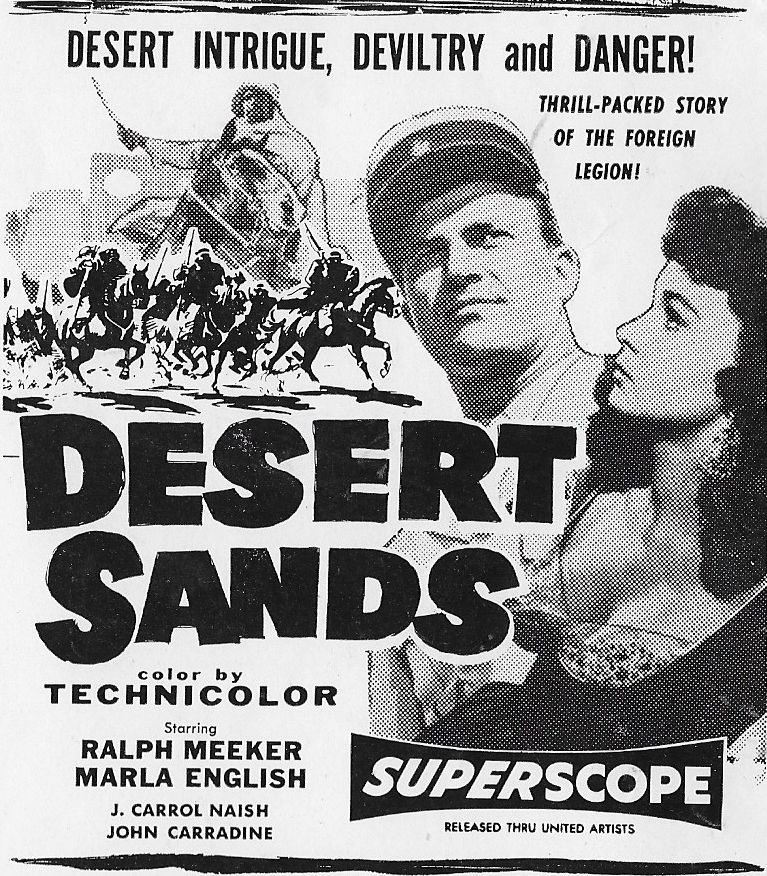
Desert Sands tells a few stories but the nuanced drama about camaraderie among French Foreign Legionnaires and the salty romance between a white man and a dusky Arab princess are subordinate to a Zulu-like clash of civilisations – the beastlike many against the civilised few.
Paul Newman was lined up for the lead role but asked for too much money and so Ralph Meeker took the part, as the newly appointed captain of a remote fort waiting for his men to be relieved by a new platoon. Instead, they get attacked by a band of wild rebel Arabs and are soon overwhelmed. At which point the legionnaires switch from guns to guile in an attempt to save the day.
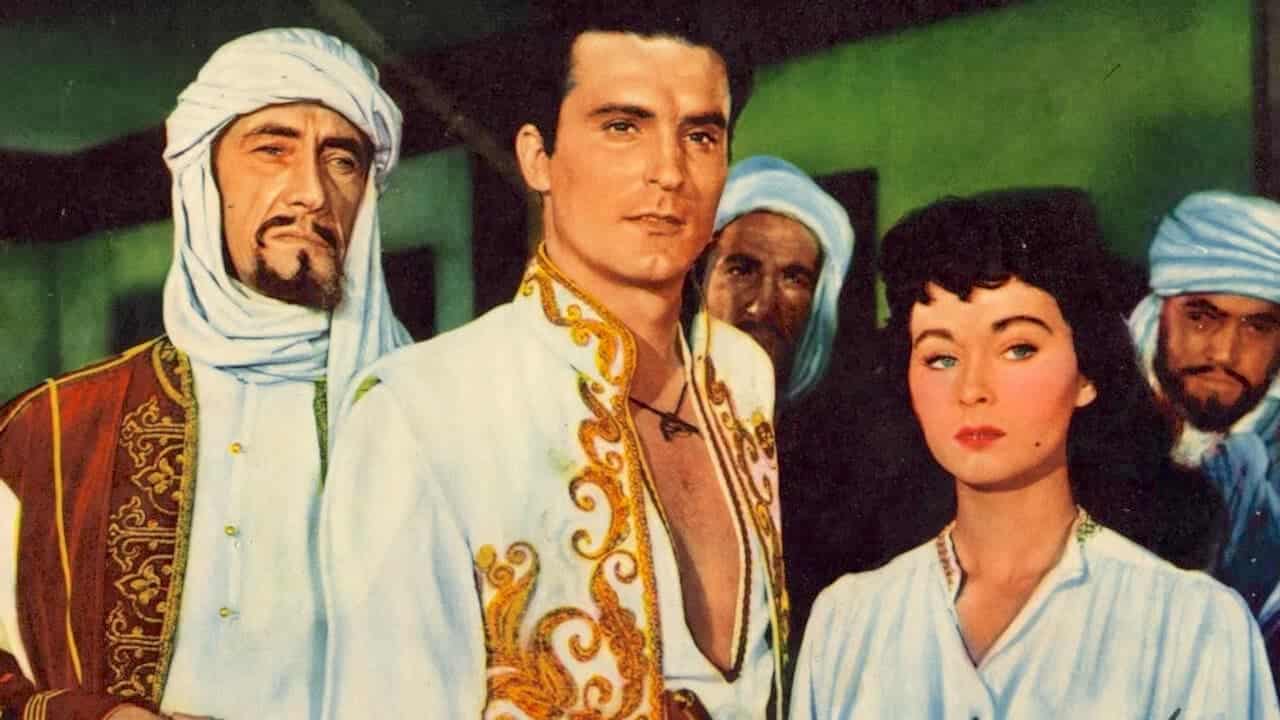
Leader of the rebels is El Zanal (it rhymes with “banal” not “anal”), and accompanying him is his sister, Princess Zara, for reasons dictated by the studio’s requirement for romance rather than cunning Arab martial strategy. On her first introduction to Captain Malcolm, Zara – eyes flashing, mouth rigid – sets about him with a whip. It must be love.
It’s the Zara/Malcolm relationship that will determine the fate of the legionnaires. Zara will either cleave to her brother’s ambition to build out a new “pan-Islam” region – the Caliphate in all but name. Or she’ll side with Captain Malcolm, even though she believes it was legionnaires who killed her parents when she was young.
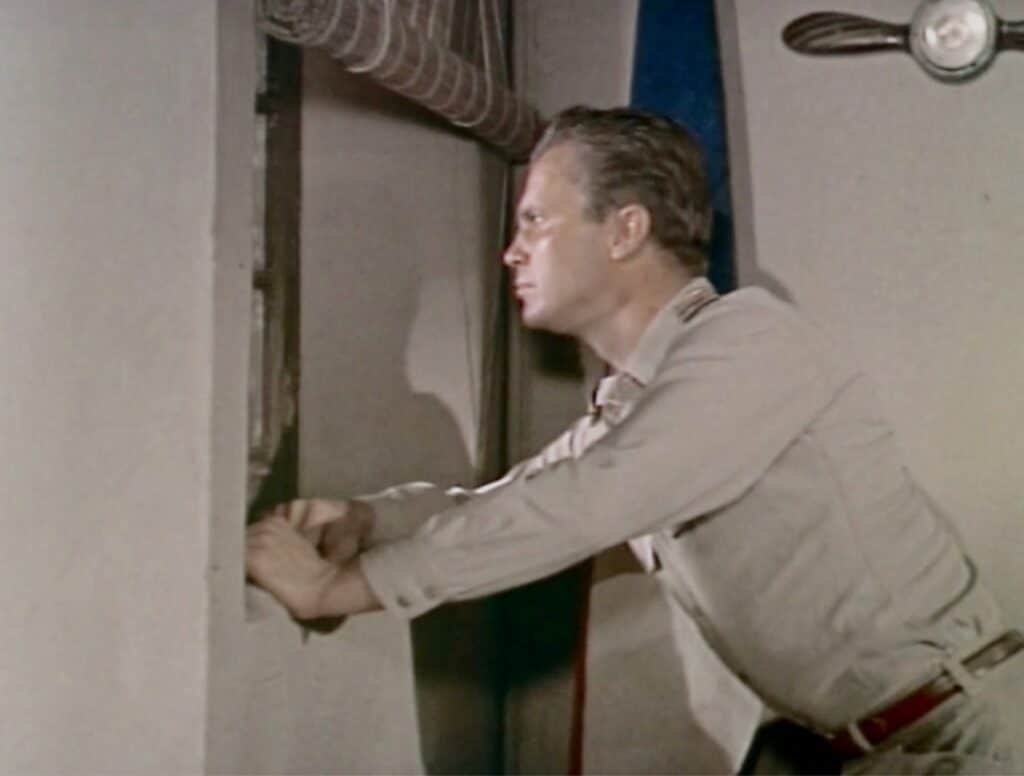
If Hollywood is a dream factory, Desert Sands reminds us that it is also just a regular factory, turning out finished works on a production line. The director here is Lesley Selander, and the word “journeyman” does not capture the heroic level of this industrious director’s workrate. In a career of about 40 years his name was on 127 features, 151 episodes of various TV shows and one TV movie.
Selander is no auteur but he does know what he’s doing. His battle scenes are well done and he manages to suggest a rising sense of desperation among the embattled legionnaires. He’s shooting in Technicolor too, which was not easy to work with.
Mid-century Hollywood had a soft spot for tales about white men in exotic climes proving themselves to be superior to the dark-skinned locals. Its best films of this sort – say 1939’s Gunga Din – come with a critique of that basic position front-loaded, but that’s not really what’s on offer here. For starters all the Arabs in Desert Sands are played by white people – Keith Larsen as El Zanal, John Carradine as right hand man Jala, Marla English as the impetuous Zara and Lita Milan as her wise handmaiden Alita (a suggestion of the harem in their scenes together).
The legionnaires are a more interesting bunch – Meeker not yet stocky and still in the leading man phase of his career, J Carrol Naish as his older, tough sergeant keeping the men in line with a word or a bark, Ron Randell as the permanently drunk and endlessly facetious Private Havers, whose mettle will be tested by the arrival of the Arabs, and John Smith as the hotheaded white-sliced American kid who thinks with his fists but is OK underneath.
Not a moment of it feels genuine. It has the authenticity of a nativity play. However, films like Desert Sand fascinate cultural historians because they inadvertently say a lot about their era – reading the margins and all that – with their attitudes towards race and gender relations.
Reinforcing the dominant paradigm, you could say, if you wanted to load cultural importance onto a film already collapsing beneath the weight of internal contradiction, badly written dialogue and lots of wooden acting.
Desert Sands – Watch it/buy it at Amazon
I am an Amazon affiliate
© Steve Morrissey 2025