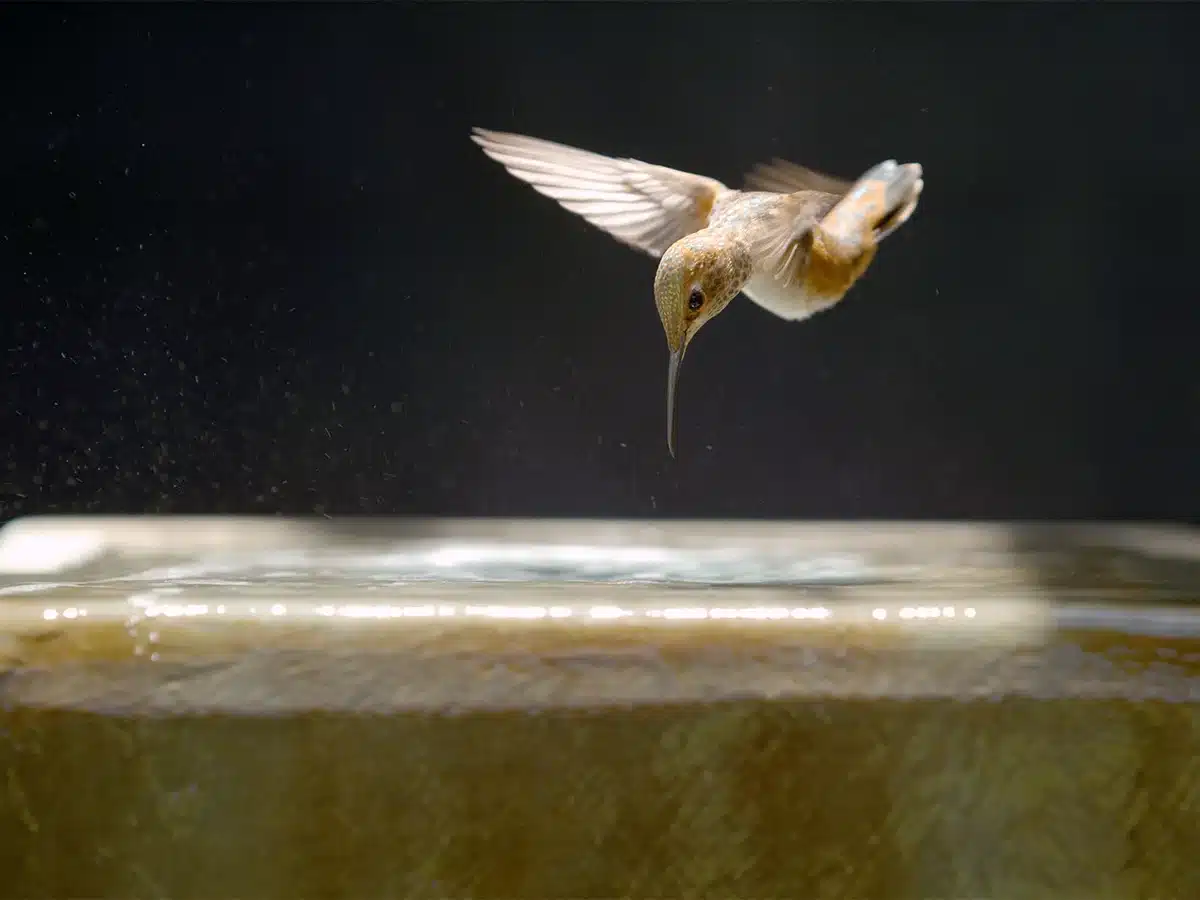
Every Little Thing is a documentary about a hummingbird sanctuary. A funny sort of documentary if you’re interested in the birds themselves and want to know how much they weigh, or how long they live, what they feed on or how big their eggs are – tiny, presumably, since the birds are only as big as your thumb.
Based on the book Fastest Thing on Wings, by its subject, Terry Masear, it’s an emotional rather than informational portrait of the woman who runs this animal hospital, seemingly on her own.
Masear is the woman to call in California – where hummingbirds flourish – if you’ve found an injured or orphaned bird and don’t know what to do with it. She’ll take it in, assess whether it’s going to make it or not and then do her best to help it survive, while also managing the expectations of the person who brought it in.
She does this by phone updates to the person who brought the bird in, keeping them abreast of the bird’s progress. Sometimes a concerned finder will come in and visit (though everyone gets a gracious reception, you sense this is a waste of Masear’s time). “Co-parenting” is what she calls this outreach, which she’s been doing for 18 years.
Are the birds a replacement for children, which she doesn’t have? Terry has heard all the jibes – that she’s a kind of cat lady. She describes herself as “childless… but I guess I have hummingbirds,” and chuckles a little, as if at an old joke. A bit of an oddball at school, she wanted to be a bohemian artist of some sort when young, went to college, didn’t quite fit in there either, got into “the usual addictions and outlets”, including LSD, which she says opened her mind.
But it was only after moving from Wisconsin to Los Angeles that she started to blossom. She met Frank, an “incredibly brilliant… rebel… and… renaissance man,” with whom she shared her life until Frank, older than Terry, died.

The birds are the backdrop to Terry’s story, one of survival, resilience and re-invention, of growing into yourself as you get older. It helps that Terry has money. Frank’s? We do not learn. But she has a bright and big house with enough space to nurse the birds from intensive care – feeding with a pipette – into rehab (learning how to perch) before they graduate to the big airy cages outside, from where the birds are released back into the wild.
Hummingbirds can fly vertically – that is one of the very few things we learn about them – and there is some gorgeous up-close wildlife cinematography by Ann Johnson Prum, who has worked on PBS’s Nature show. She catches the zzub-zzubbing of wings, which can rotate like an advanced fighter jet’s and her slo-mo footage reveals how remarkably still a hummingbird can keep its head in relation to the rest of its body, necessary if that long beak is going to get down to the nectar at the base of a trumpet-shaped flower.
“The natural world is a combat zone… there is no hope if you’re not aggressive… It’s their instinct to eliminate the competition at all cost,” says Masear at one point. All that acid and the California location might lead you to expect a hippie worldview. Not a bit of it. Terry is tough, has a faintly eugenics-based philosophy and is clear-eyed about the nature of these beautiful animals. “If hummingbirds don’t like their immediate company, they kill them,” she says at one point.
It’s her pithy utterances that make Terry fascinating. She’s eccentric and doesn’t care. And she remains as fascinating and watchable as her aerial-athlete charges right to the end, though Sally Aitken’s film can’t entirely justify the 93-minute running time. Maybe a few more facts about the birds?
Every Little Thing – Watch it/buy it at Amazon
I am an Amazon affiliate
© Steve Morrissey 2025