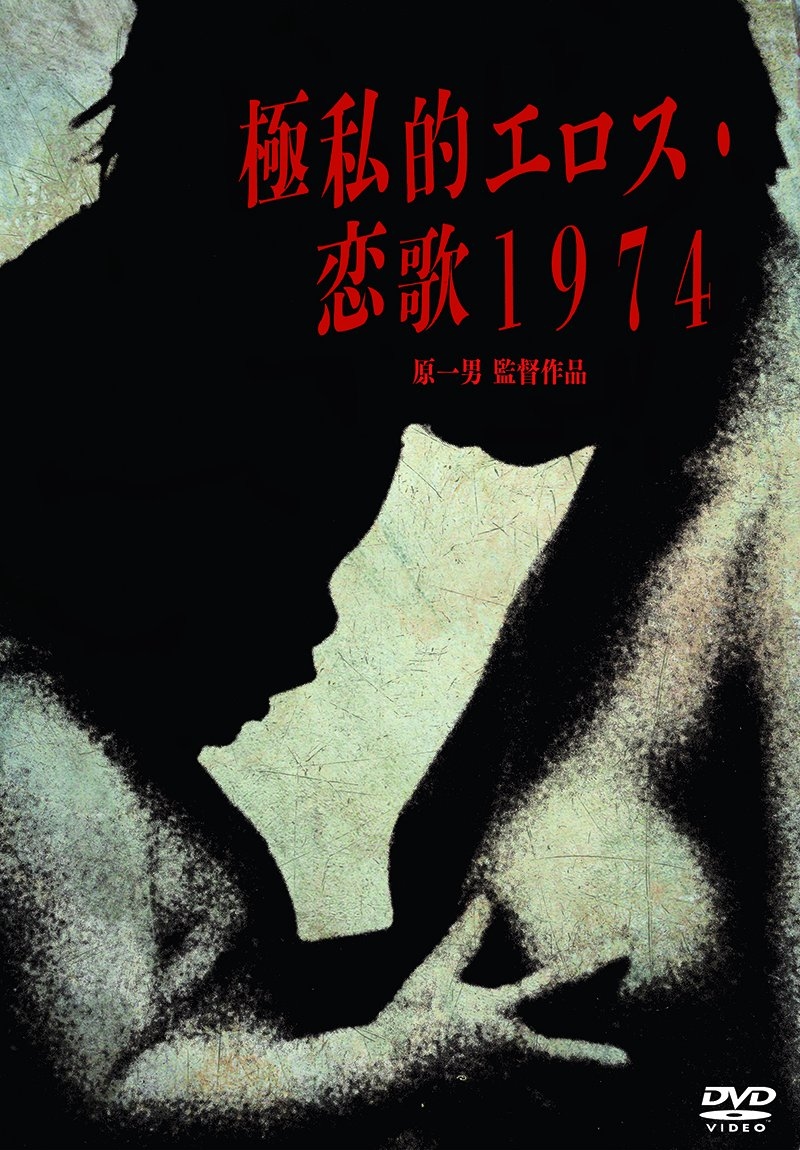
These days, we’re used to a documentarian being an integral part of their own documentary. But Extreme Private Eros: Love Song 1974 got there decades before the likes of Nick Broomfield or Michael Moore. Here, Kazuo Hara turns his camera on himself and his relationships and charts everything he sees. As an idea of what to expect, look at each of the words in the title – it is extreme, very private etc etc… and it all takes place in 1974.
Very shaky, very handheld, very confrontational and quite possibly not all of it entirely unstaged, the film is essentially a chronicle of film-maker Hara’s relationship with a bar girl called Miyuki Takeda. As things get going, Hara is issuing a bulletin on the state of their relationship: they’ve split up after having had a child together. She has now moved away to Okinawa and is living with another woman, Sachiko. Hara’s camera eventually follows them and soon seems to have taken up residence with the couple as it tracks the relationship between Miyuki and Sachiko before it too falls apart, over Tommy, a guy Sachiko is having a fling with.
Things become more complicated when Miyuki shacks up with a black soldier. She might be in love with Paul, Miyuki tells Hara, or Hara’s camera, at any rate. Hara inserts an intertitle: “Her relationship with Paul lasted for three weeks”.
It is all very intimate. Miyuki naked with her baby, which is playing with her nipples. Miyuki having an orgasm. Eventually, Hara cuts ahead a couple of years, to the film’s key scene, a long sequence on a static camera of Miyuki going into labour with her second child. This is remarkable, no matter how often you’ve seen childbirth on screen before – Miyuki with newspapers and towels underneath her, Hara’s assistant clearly in shot holding a microphone, Miyuki and Hara’s crying toddler wondering what’s happening to his mother. In his commentary Hara admits he was so nervous that he didn’t notice that the picture was out of focus. It really is, and it might be a good thing.

It’s decades ahead of the oversharing, self-publishing Insta-life led by many people today, the difference being Kazuo Hara’s self-flagellating lack of filter, which the handheld black and white image, the sound often badly out of sync, only emphasises.
And yet the natural rhythms of everyday life come through, for good and bad. Early on, with relationship ups and downs to the fore, the tone is strident. Around the birth it is much more tender. Then Miyuki phones her mother to tell her she’s had a baby and that it’s “mixed” (race, she means). From what Miyuki says, her mother has told her to kill the baby, on account of its non-Japanese ancestry. Light and shade, isn’t that what every documentarian is after?
Eventually, sailing out into calmer waters, Miyuki finds another role in life, helping women who work in hospitality like her give birth. Though in case we have any doubts, Hara ends his film with his ex-partner dancing topless on stage to funk music.
A counterblast to the slickness of mainstream moviemaking, Hara’s film is wilfully DIY in its ethos and finds the bar girls he seems to mix with a feminism-forward lot, even though they seem to depend on men for their livelihoods. They’re quite plain-spoken – “You need a good fuck,” one of them tells another. They fall out. They badmouth each other. And yet they’re quite communitarian too. It is a messy portrait, not straining for authenticity and so finding it.
I don’t think Hara makes explicit in the documentary that Miyuki was his wife – or maybe I missed it – or that Sachiko was his lover, and future wife and producer, as she is to this day. This makes Extreme Private Eros: Love Song 1974 something of a family album. They’re not your usual run of snaps.
Extreme Private Eros: Love Song 1974 – Watch it/buy it at Amazon
I am an Amazon affiliate
© Steve Morrissey 2026