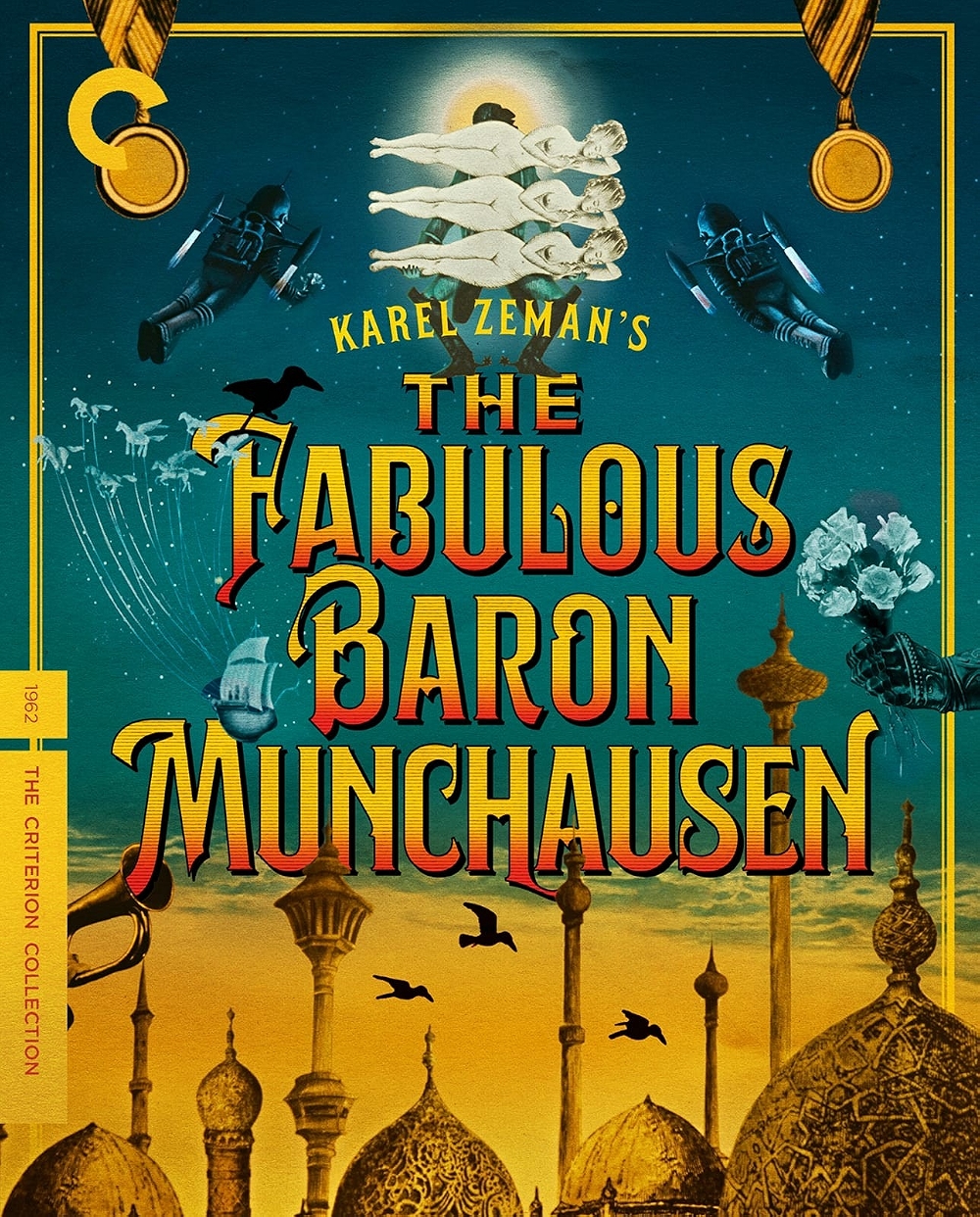
Sometimes called The Outrageous Baron Munchausen, The Fabulous Baron Munchausen (originally Baron Prásil) is the better title. Karel Zeman’s fantastic and fantastical 1962 adaptation of Rudolf Erich Raspe’s 1785 publishing phenomenon is all about a European baron who can’t stop telling tall tales. He’s Fabulous as in inclined to fabulate – or make shit up, in everyday English. Not Fabulous as in Baker Boys, which was a more ironic use of the word.
If you don’t know the work of Zeman but do know the work of Terry Gilliam, you kind of do know the work of Zeman, because Gilliam borrowed extensively from the look of the genius Czech animator, both in his early work for the Monty Python collective and when he made his version of Munchausen, which operates as a homage to Zeman as well as a film in its own right.
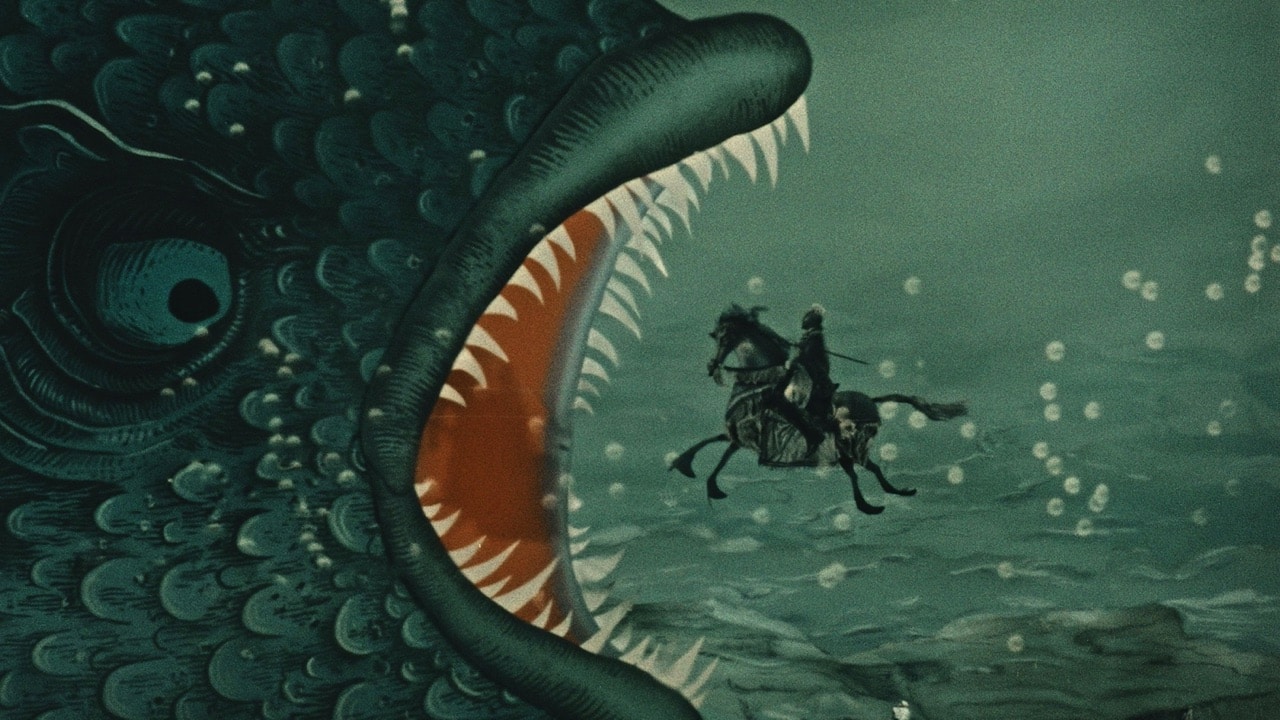
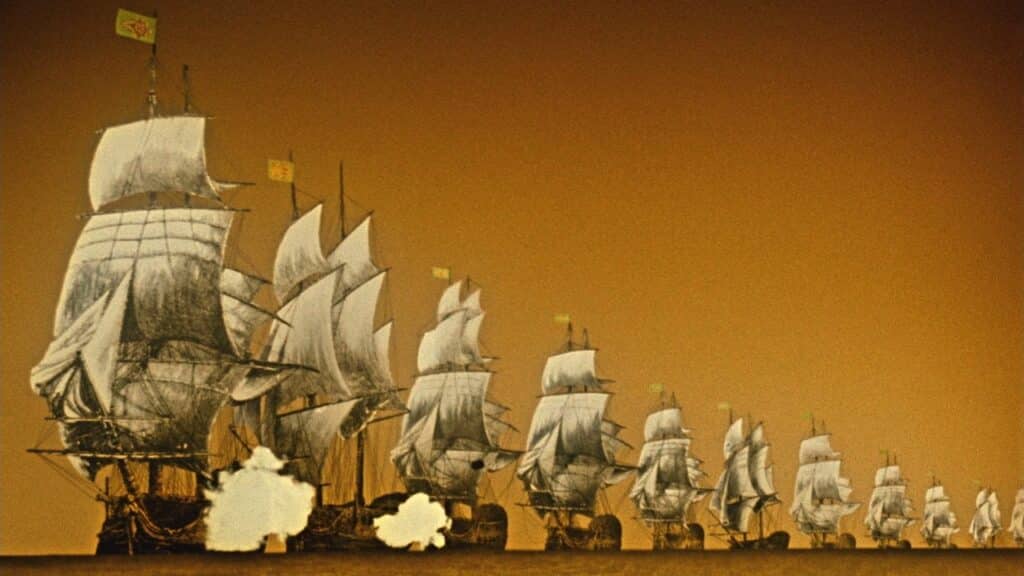
Like Gilliam’s film, this is an episodic retelling of some of the bumptious Baron’s most famous stories – the one about inventing drone reconnaissance by flying over battle astride a cannonball. Or going to the moon, where Cyrano de Bergerac already appears to be hanging out. Or the one about creating fog with pipe tobacco to help his ship slip away from the warlike Turkish navy. Giant sea monsters. A ride below the waves on a seahorse. A miniature belly dancer. A chase on horseback that lasts three days. A mermaid. On they go, the stories designed to slide from the barely plausible (depending on your meds) to the out-and-out ridiculous, done with an absolutely straight face by Miloš Kopecký’s Baron, who is perhaps not quite as engaging as John Neville when he played the same role for Gilliam. Kopecký is more the humble narrator; Neville more the active participant.
Stringing it all together, just about, is the Baron’s attempt to bed a saucy princess (Jana Brejchová), who is actually much keener on his travelling companion, Tony/Tonik (Rudolf Jelínek) than on the older Baron.
For all Gilliam’s strengths as an animator, Zeman has the edge, with bravura technique that makes it hard to tell where the live action ends and the animation begins. Using silhouettes, tints and coloured smokes further softens the boundary, until eventually I just gave up trying to work out how Zeman was doing it and surrendered myself to his dioramas (though, at a guess, he started with a black and white image and colourised from there).
Zeman was known as the Czech Méliès. This means playful experiments with form and technique and an almost obsessive interest in inventiveness. In general, formal experimentation can be a bit arid and more fun for the person doing it than the person watching it. But not here – Zeman keeps things light and fun and subsumes everything to the demands of entertainment, much like Munchausen’s stories.
It’s an entirely successful film on its own terms and on any other terms you care to rustle up. Watch it as a display of virtuoso multiplane-camera technique, for example, and it’s rewarding enough already. Or as a re-purposing of the engravings of Gustave Doré – all those dark, apocalyptic and broodingly romantic backgrounds.
If you’re going for a physical version, there’s only really Second Run and Criterion to choose from if you want quality. Both use the same (brilliant) 4K restoration, both come with the 2015 feature-length documentary Film Adventurer Karel Zeman, but the extras from that point diverge, which makes sense because the Second Run (which I am linking to) is a single disc, whereas Criterion’s offer is a three-disc box. Costs more, the Criterion.
The main feature in both comes in at seven minutes shorter than in some older versions out there. From what I can work out, this shorter version restores the film to the cut shown at the film’s premiere. This is how Zeman wanted it, in other words.
The Fabulous Baron Munchausen – Watch it/buy it at Amazon
I am an Amazon affiliate
© Steve Morrissey 2026