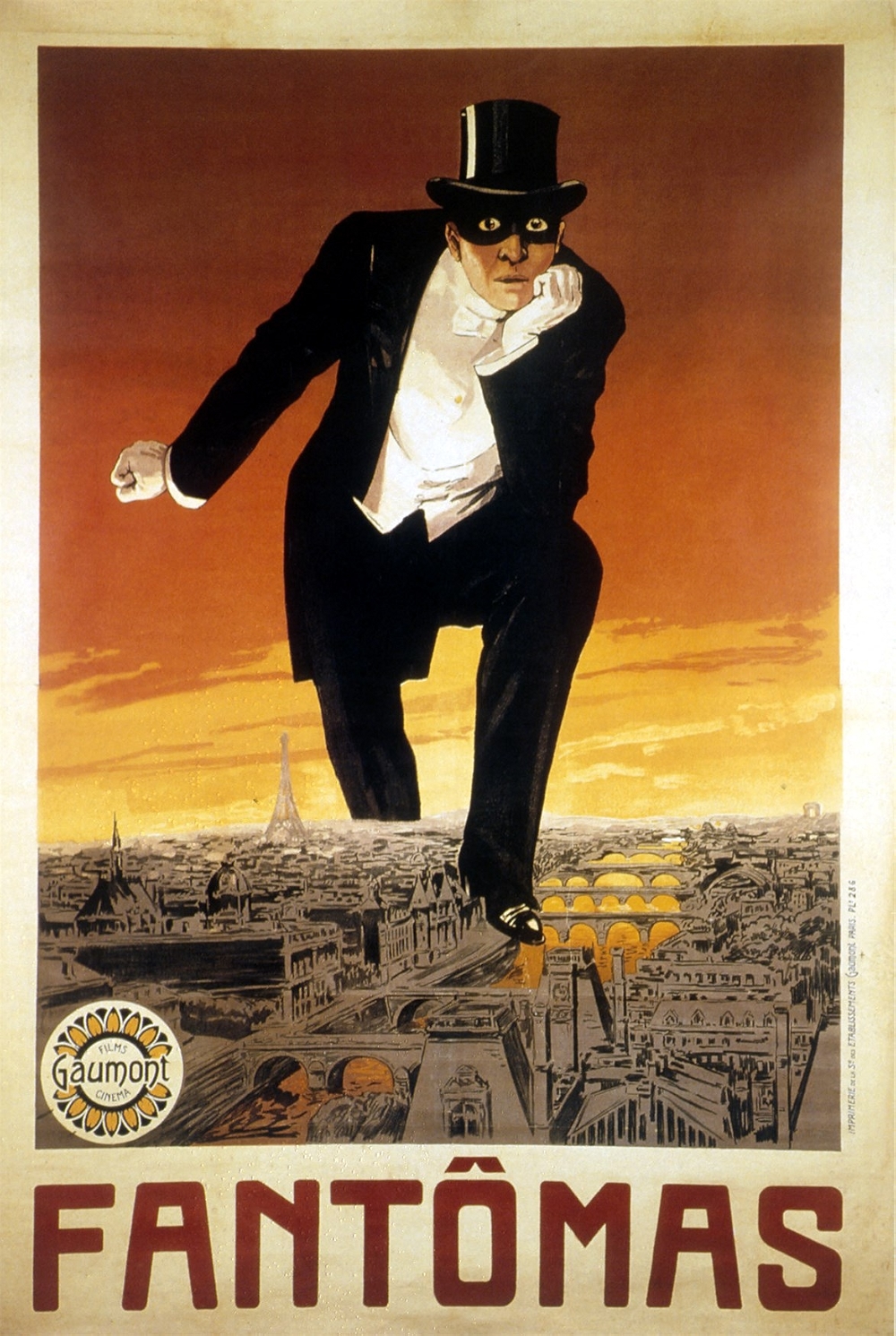
With a new Fantômas film in the works, a quick look at the first one, Fantômas: À l’ombre de la guillotine (aka Fantomas: In the Shadow of the Guillotine), which came out in 1913. Which is, let’s face it, a hell of a long time ago. Remarkably, it stands up pretty well and is a good reminder that the camp and larky Fantômas we know today (if we only know the 1960s movies) owes quite a lot to The Pink Panther.
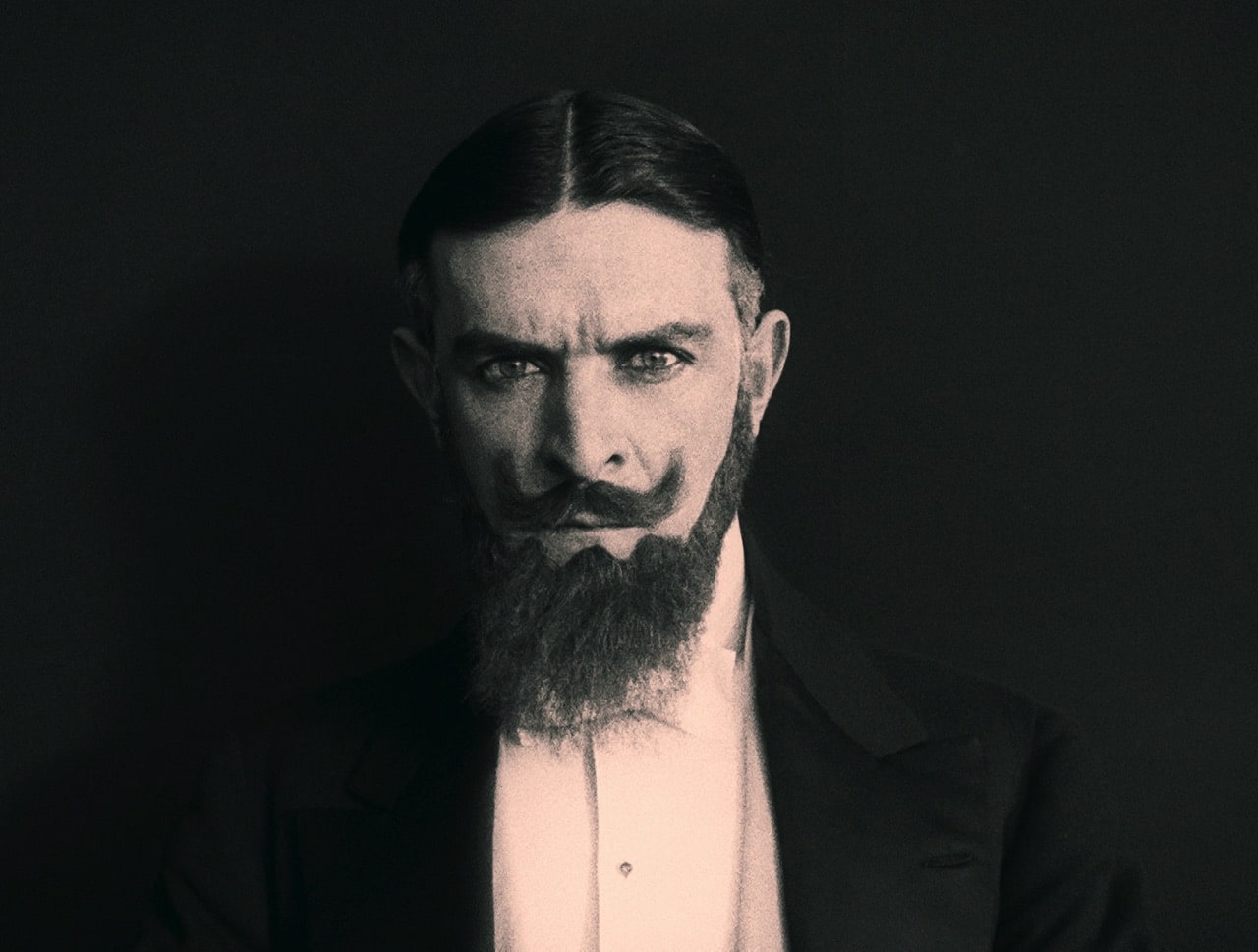
This Fantômas is more sombre. A creature of the underworld, a criminal first and foremost, he’s a master of disguise, which director Louis Feuillade conveys in the opening montage of Fantômas looking like a series of different people (slightly undermined by the fact that actor René Navarre has such strong features that he always looks like Navarre).
The preamble – an audacious jewel heist conducted in the film’s opening moments – leads on to a more sinuous case of the disappearance of Lord Beltham, who is found dead in the apartment of Gurn, Fantômas’s alter ego. Gurn has soon been arrested for the murder and so, it appears, Fantômas’s story is going to be brought to a bloody conclusion before it’s even properly got going .
But but but. Unbeknown to nearly all concerned, and certainly not to Inspector Juve (Edmund Bréon), the cop on the case, Lady Beltham (Renée Carl) is the secret mistress of Fantômas/Gurn and she and he have a plan to spring him from jail, using a bumptious actor as their bait-and-switch victim.
The scenes of Lady B wrapping the vainglorious actor Valgrand (André Volbert) around her little finger – he feels compelled to hit on her and she’s having none of it – are the best bits of the movie, genuinely funny. But it’s a good story all round, more complex than you might imagine for the era.
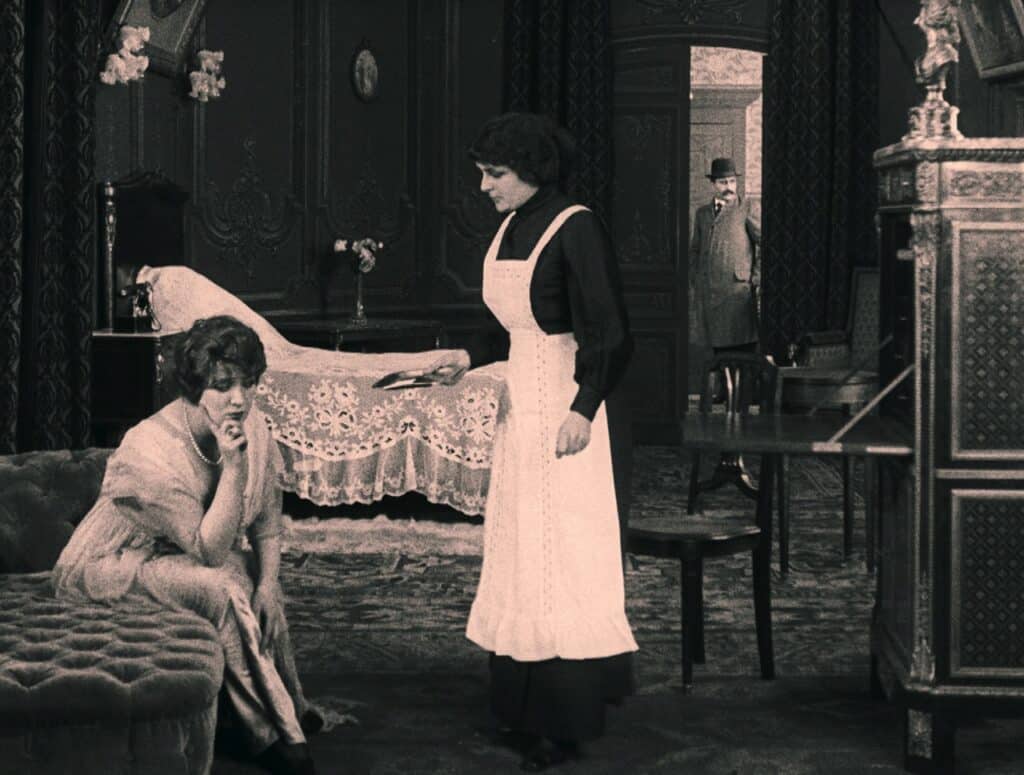
The telling of it is helped massively by the expressive features of all concerned. Bréon is particularly demonstrative as an actor, his performance at times verging on semaphore, while Carl’s regular glances to camera are designed as an invitation to lean in to the story, the equivalent of a stage actor leaning over the apron of the stage to stage-whisper conspiratorially.
For 1913 the image is astonishingly good. I watched the Kino restored version. It’s bright and clear, with blue tinting for outdoor shots. I believe there is an even better one by Eureka, but I can’t vouch for it and it may be locked to Region B (ie won’t play on US machines). Do your own research, as they say on the bulletin boards.
Fantômas first appeared in book form in 1911 and was an instant phenomenon. Because the writing was split between Marcel Allain and Pierre Souvestre, who wrote a chapter each, books appeared at a clip – roughly one a month. The film spin-offs also appeared at quite a speed, with À l’ombre de la guillotine the first of five standalone episodes churned out in 1913/14.
As said, today, if we know Fantômas at all, it tends to be from watching the 1960s films, three of which were made between 1964 and 1967, all starring Jean Marais as Fantômas and Louis de Funès as Juve. They made Juve a figure of fun, to an extent, but here he’s a driven and very earnest cop, aided at all times by newspaperman Fandor (Georges Melchior) – a useful explicatory character.
There’s undeniably an antique-appreciation approach required here. Feuillade’s camera is static but his storytelling is nimble and unambiguous and on the whole this is an easily digestible and worthwhile film. If you like it, the other four in the box set, are waiting for you.
Fantômas: The Complete Saga – Watch it/buy it at Amazon
I am an Amazon affiliate
© Steve Morrissey 2026