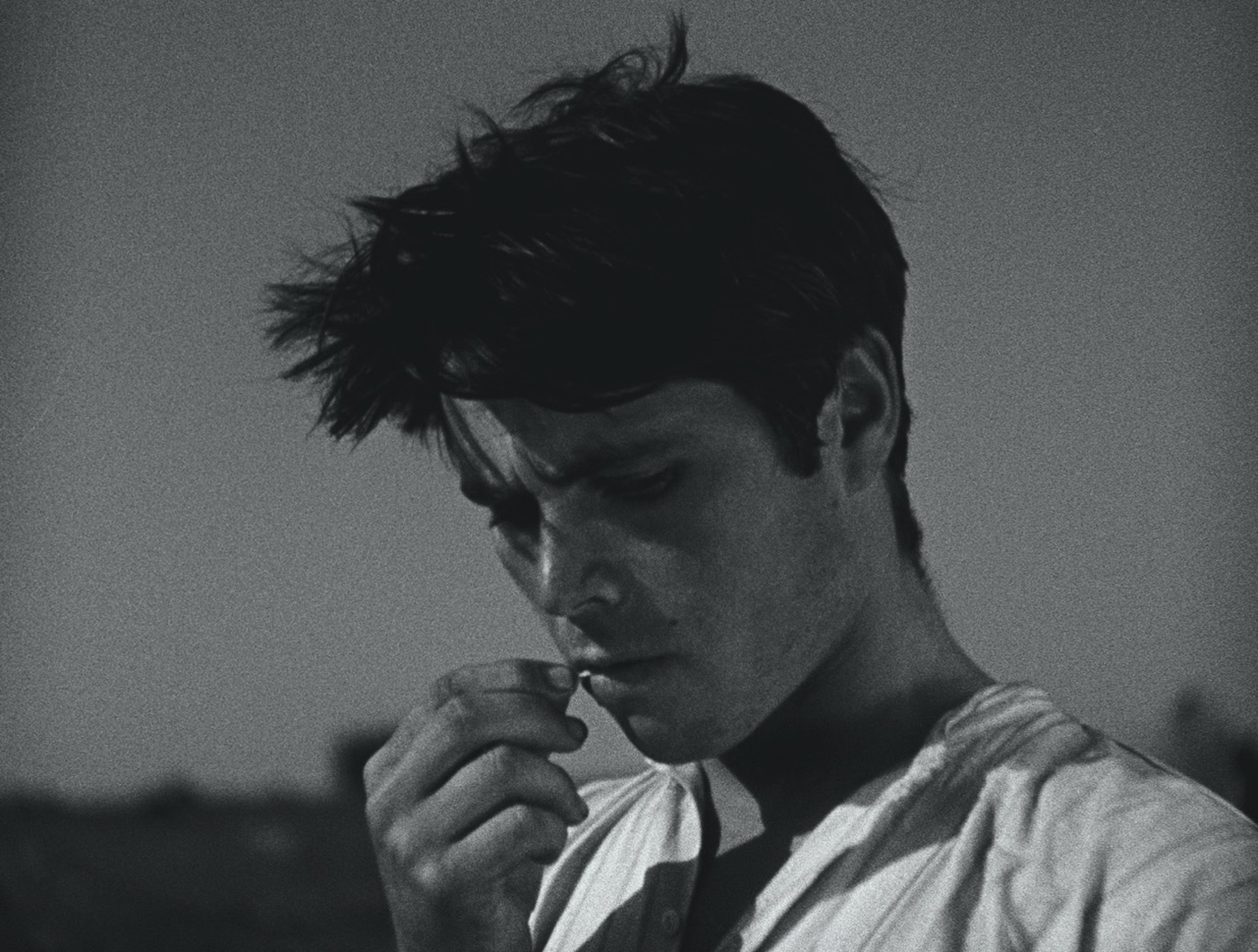
Beautifully made and beautifully restored, Jean Epstein’s 1929 drama about kelp gatherers on a remote Breton island is also quite simply a beautiful film, picturesque enough to charm even the most unwavering hater of silent movies.
Having discovered some islands off the coast of Brittany, Epstein decided to shoot a film there using local people as his actors. His two “stars” are Ambroise Rouzic and Jean-Marie Laot, the former playing Ambroise, a young kelp gatherer working on the remote island of Bannec who cuts his thumb on a piece of broken glass. Laot, meanwhile, plays Jean-Marie, Ambroise’s colleague in kelp who realises after a few days that Ambroise is properly sick and sets out on a treacherous journey to get him medical attention.
Back on their home island of Ouessant, meanwhile, the locals are beginning to realise something is up out on Bannec and try to get a rescue mission together. Ambroise and Jean-Marie’s mothers even put an age-old enmity to rest and band together to try to get the aged doctor onto a boat and out to Bannec.
Finis Terrae is the old Latin named for Finistère (familiar from the Shipping Forecast if you’re a Brit) and translates as “the end of the world” (see also Land’s End in Cornwall). Epstein goes to some lengths to make us realise how remote and inaccesible the island is with shots of the sea banging against sharp rocks, and a little cutaway to the sole source of fresh water on Bannec, a cistern harvesting whatever falls from the sky.
Epstein establishes his documentary credentials first. An introductory intertitle card gives us chapter and verse on the island, where Jean-Marie, Ambroise and the two older men are collecting seaweed from the sea with hooks on long poles. This is spread out on the beach and eventually burnt when it’s dry enough, the resulting soda being sold to French factories as a raw material.
Then he gets his drama going. The cut that causes the medical emergency occurs in the film’s opening moments though it takes quite a bit of time before Jean-Marie and his two older colleagues start taking Ambroise’s declining condition seriously. They think he’s malingering.
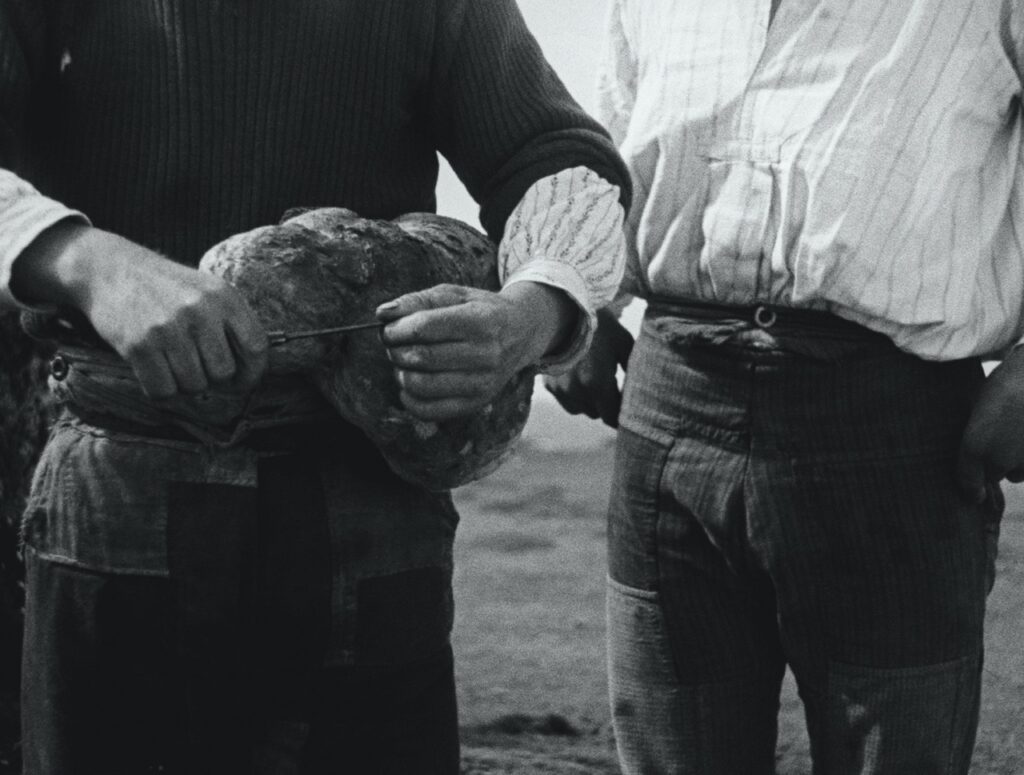
Epstein mixes contrasting styles of shooting – with and against daylight – uses editing to suggest mounting tension and includes plenty of shots of wild nature to emphasise the jeopardy.
The film looks a lot more modern today than it did 50 years ago. Partly that’s down to the cyclical nature of fashion – the young men’s hair tumbling over their foreheads finds a strong echo in the hairstyles of the 2020s. And partly that’s because Epstein’s style has been revived by the likes of Mark Jenkin (most obviously in Bait) and Robert Eggers (The Lighthouse).
The is an appropriateness to this revival because Epstein is the bridge between cinema’s earliest beginnings and the modern era. He knew the Lumiere brothers, who screened the first film, Workers Leaving the Lumière Factory, in 1895. Later on, he employed Luis Buñuel, who worked from the silent era right into the age of Star Wars.
The picture Epstein paints of life on the islands is stark – women in Breton traditional costume on their way to church, life as it must have been lived almost back to medieval times. And his message about human heroism pitted against the capricious sea is elemental and inspiring, two types of nobility going head to head.
It is a good story well told, admirably simple as a narrative but with a mastery of technique that places Epstein as one of the greats of his time.
The image in the restoration is remarkable. Sharp, not flickering, and reproducing Epstein’s careful control of tones, and his capturing of textures. Bread, rocks, the flannel of the men’s shirts and their wispy young-man’s moustaches, Epstein gets it all. It’s really a very beautiful film.
Finis Terrae – Watch it/buy it at Amazon
I am an Amazon affiliate
© Steve Morrissey 2025

