A miller down on his luck meets a man in the woods. The man is the Devil, though the miller doesn’t know it, and after a bit of smalltalk he’s soon offered the miller a deal. Give me what you have behind your mill and I’ll make you rich, offers the Devil. Behind the mill, thinks the man, that’s an apple tree. An apple tree for a crock of gold sounds fair enough to me, he reasons. Obviously never having read any fairy tales, he agrees to the bargain.
It turns out that the miller’s daughter was also behind the mill and the miller has now signed her over to the Devil himself. But the Devil doesn’t quite have it all his own way. The girl is so pure in mind and spirit that he finds it impossible to take possession of her, and so he hacks off her hands, reasoning that it’s the girl’s tears on her hands that are preventing him from having his way. Only to find that she’s now also wept on her stumps, as you might do if you’d just had your hands hacked off. Muttering under his breath the Devil withdraws to re-calculate, leaving the girl with her father, who has soon lost interest in her, what with all the gold to take care of etc.
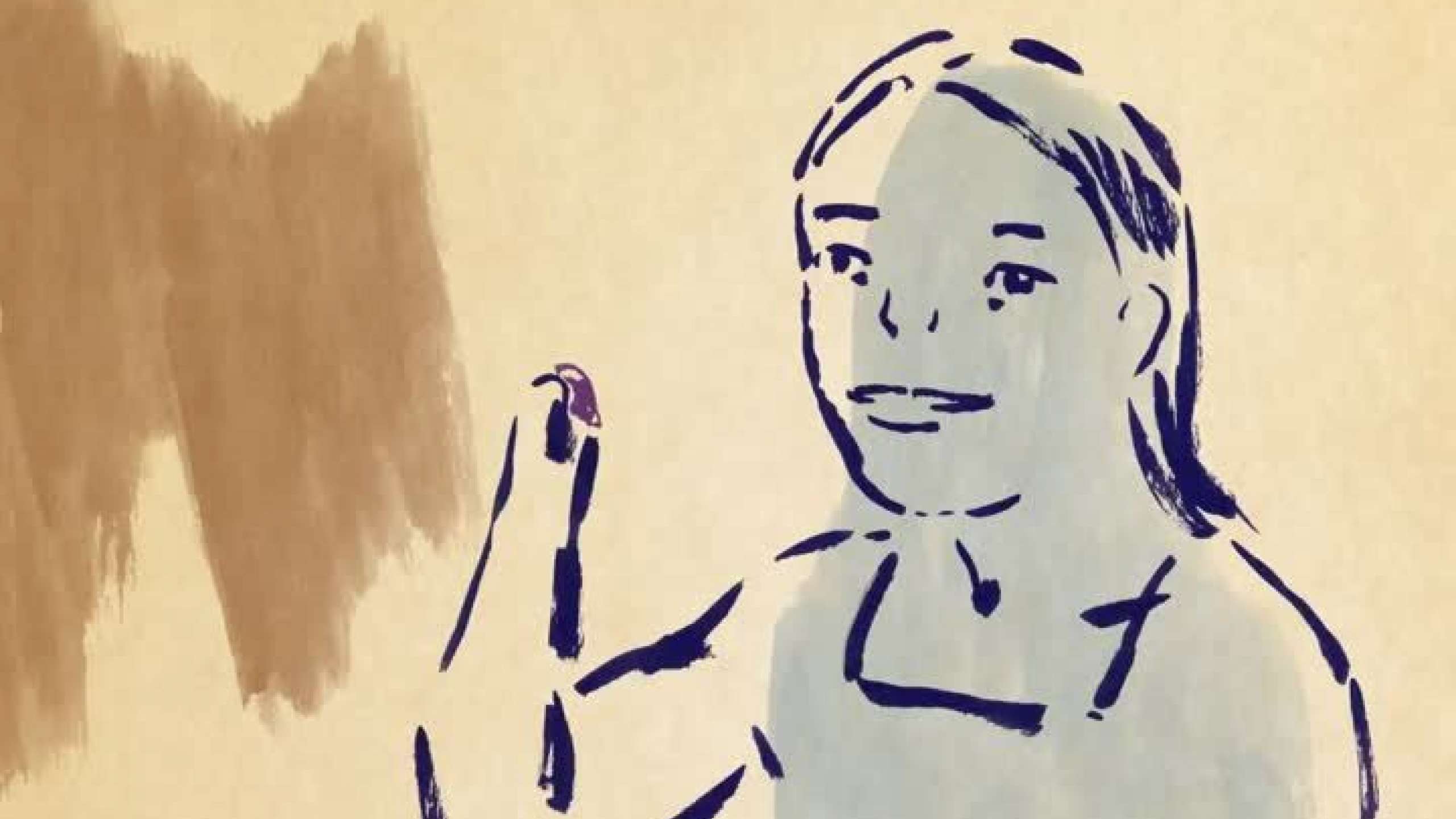
The Girl without Hands (La Jeune Fille sans Mains) is Sébastien Laudenbach’s feature debut and its standout is not its story – there are shapeshifting animals, a fairytale prince, a water spirit – or its Babes in the Woods/Snow White arc. It’s its remarkable style of animation, Laudenbach’s paintings on A5 sheets of paper all eventually composited together.
Aiming for 20 seconds of footage a day, but usually managing only 10-15, Laudenbach was driven by necessity – he’d never get finished otherwise – to adopt a style that pares his images back to the bare minimum. And I mean a bare minimum. Early on there’s a shot of a seagull, and if it wasn’t for the distinctive mew you might just think it was a couple of arcing lines on white paper.
Simple does not mean lacking in sophistication. Laudenbach achieves a remarkable variety of effects with his simple lines – early on a timelapse of the sun coming up and heating up the day is particularly good. He also leans heavily on the sound design of Julien Ngo-Trong to fill in the gaps. And he uses more substantial drawings between his simple, bare-bones scene-setters. We always know where we are and what’s going on.
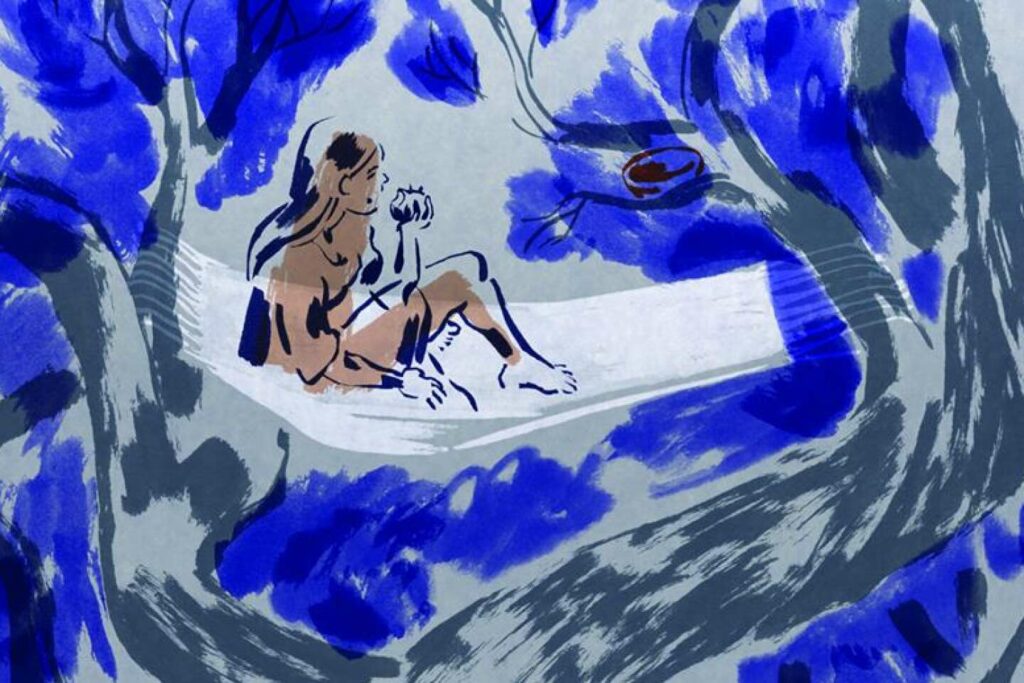
It’s adapted from one of the lesser known fairy tales by the Brothers Grimm, though Laudenbach admits he’s been pretty free and easy with the story. He’s also resisted the urge to Disney-fy things. There is death. There is nudity. There are leaking lactating breasts. Things are not nicey nice. Jacob and Walter Grimm would probably approve; Uncle Walt less so.
Personally, I hanker for the days when no-name talent did the voicework on animation but there is a name here, in the shape of Anaïs Demoustier. Her playing of the Girl is fabulously good, and adds nuance and girlishness to a character annealed by various brushes with adversity. The Girls becomes quite the Girl Power icon.
The score by guitarist Olivier Mellano really pulls its weight too, adding gentle, echoey Durutti Column-style atmospherics that match the spare but evocative visuals.
Bit long, is the only real criticism, with inconsequentiality creeping in as the Girl enters one-thing-after-another territory as she roams (and tames) the wilderness while a fairytale Prince attempts to do what fairytale Princes generally do. But that’s a quibble. It’s a remarkable achievement.
The Girl without Hands aka La Fille sans Mains – Watch it/buy it at Amazon
I am an Amazon affiliate
© Steve Morrissey 2024