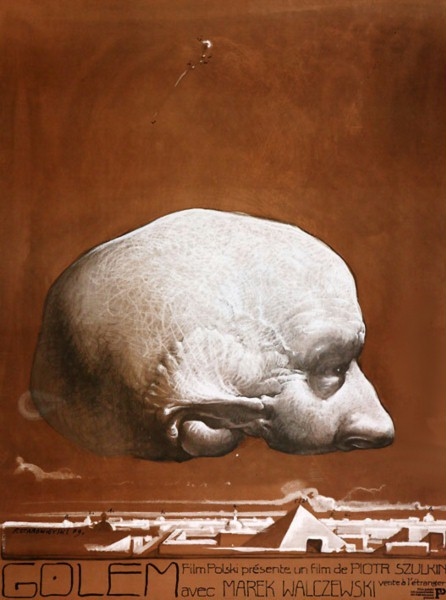
Golem is the first of Polish director Piotr Szulkin’s Apocalypse Tetralogy – as it’s sometimes called – and is also often credited as being one of the inspirations for Blade Runner. Before Ridley Scott fans start rubbing their hands together with glee, Szulkin is far less interested in entertainment than Scott. His film is bleaker, more paranoid and more obviously Kafkaesque than Blade Runner. Think Rainer Fassbinder’s Berlin Alexanderplatz meets Terry Gilliam’s Brazil rubbed all over with an oily rag heavy with swarf.
It’s political too, in a coded sort of way and though set ostensibly in a destroyed society decades after an apocalyptic nuclear event, it’s clear that Szulkin has Communist Poland in his sights – surveillance is total, truth is conjectural – though that also makes it a remarkably prescient film.
The plot follows a man called Pernat (Marek Walczewski), who is probably a replicant, part of an ongoing experiment by the state’s scientists to improve human beings. Pernat is the prototype and has been released out into the world, or possibly just escaped there by accident, a shadow of his former self (if he had a former self).
Once out and about in the grubby, half-derelict city, Pernat has a string of encounters with other people. These fall into two categories, broadly speaking. With women Pernat is distinctly uneasy, covertly needy, in what’s probably a sexual way. With anyone of authority – whether it’s a guy in a cloakroom, a building supervisor, a policeman, even a one-armed lift operator – he comes off second best, neutered. Kafka’s The Trial looms very large.
Between these skirmishes – whether it’s the building supervisor’s pretty daughter (Krystyna Janda) or a dentist (Jan Pietrzak) who turns out, terrifyingly, to be more interested in Pernat’s eyes – crackly “found” footage reveals interviews with the doctors who made Pernat, or cloned him. They explain what Pernat is and what’s actually going on out there in the strange world Pernat inhabits. Though nothing can really explain why all the windows in his building might start opening and closing simultaneously, or a prostitute on a staircase is haggling about the price for sex with a blind man, or a man is suddenly entering Pernat’s attic apartment through the window to “inspect the stove”.
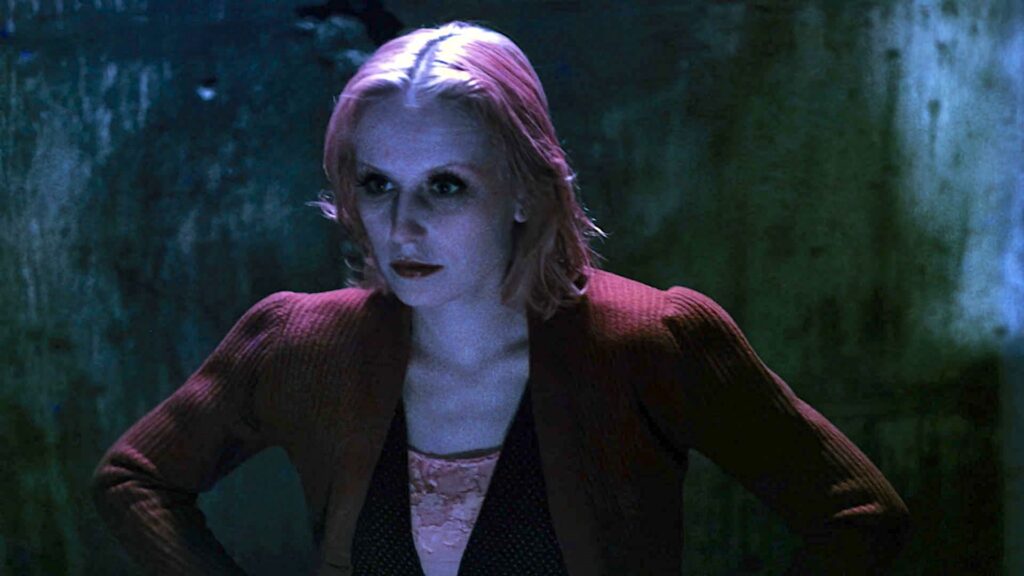
The looks are punk-angular and nightmarish and Szulkin and his DP Zygmunt Samosiuk shoot it all in a ghastly orange, with deep pools of shadow in every room and corridor. Some characters never emerge from the gloom. Entire conversations take place with people whose faces are never seen.
It’s highly stylised. Expressionistic, says its Wikipedia page. Fair enough, though expressionism of a particularly paranoid sort. Highly theatrical too. Like Berlin Alexanderplatz much of it consists of conversations in rooms, or in corridors, or against walls. The dronelike score, by Zygmunt Konieczny and Józef Skrzek, adds to the generally dystopian air. Don’t expect laughs.
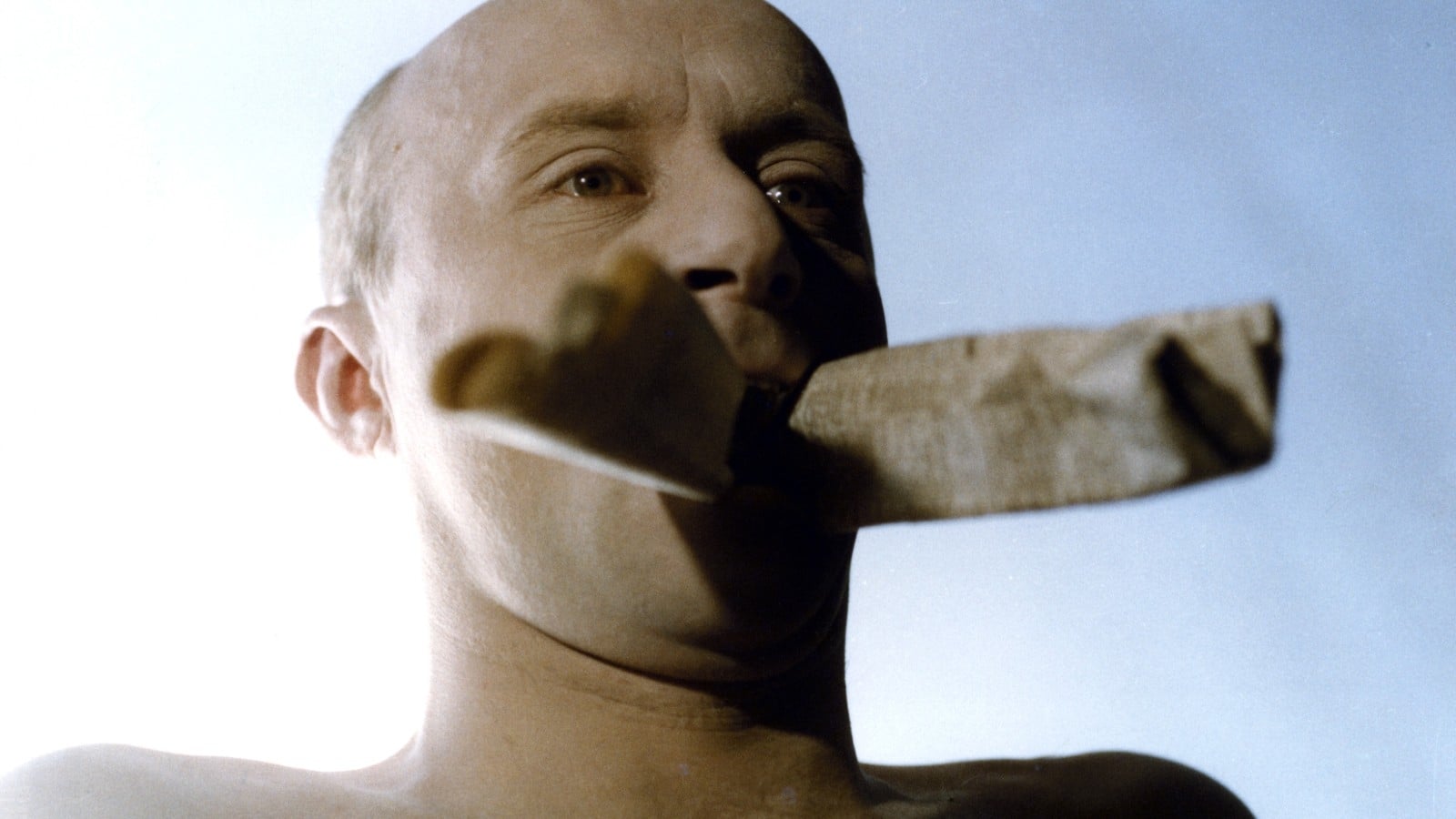
What of the Golem, the giant figure made of clay who is brought to life with an incantation written on paper? Not very much at all. The film claims to be loosely based on the book The Golem by Gustav Meyrink and on “a legend”. It’s a Jewish legend, in fact, though no mention is made of that, though there is an allusion to it in the film’s opening scenes, when Pernat is brought to life lying surrounded by white rats, and to stop him making a noise the doctors stuff his mouth with newspaper.
This is a post-truth world, an unpleasant place where nothing is certain and everyone might be lying. Pernat might not even be Pernat. It’s not an easy film, think Tarkovsky perhaps, but it has something about it, the way it sets out to deliver its vision and follows right through. No compromise, no surrender.
Golem (as part of the Apocalype Tetralogy) – Watch it/buy it at Amazon
I am an Amazon affiliate
© Steve Morrissey 2025