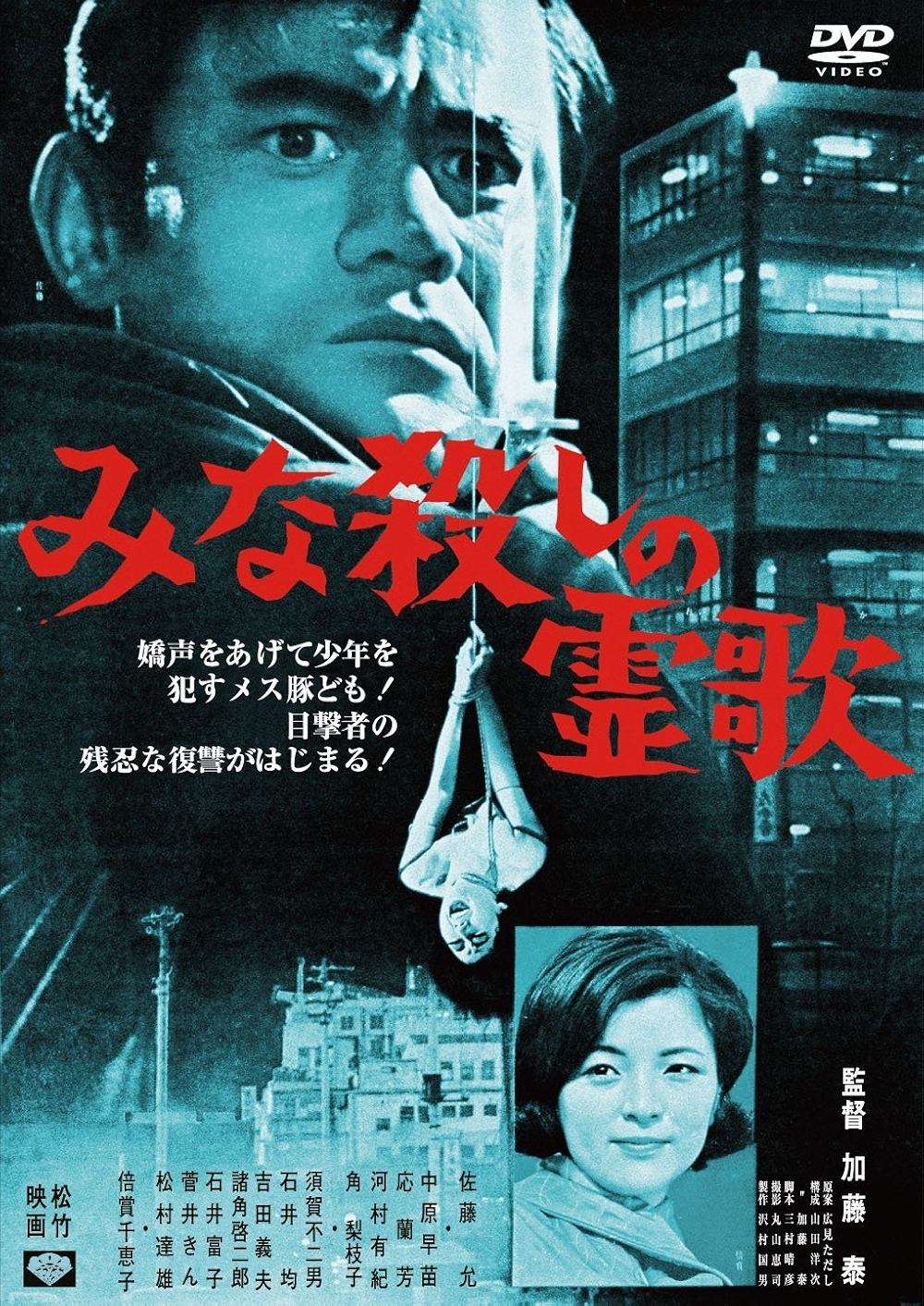
First things first. I, the Executioner, the 1968 one I mean, has nothing to do with the 2024 film. They share a snappy title and both trade in violence but it doesn’t go much further than that. The new movie is a police-focused South Korean action sequel (to Veteran) full of martial-arts sequences. The 1968 iteration is a Japanese revenge thriller, the story of a pitiless incarnation of natural justice – “divine punishment” he calls himself – raping and slaughtering his way towards cosmic retribution.
I have not seen the newer film but doubt it can match the original for style. Because the 1968 movie is surely one of the most grippingly stylish films ever, a modernist symphony of black-and-white cinematography held together with unusual compositions, bold close-ups and stark neo-noir lighting. A bit arthouse, in other words. A lot arthouse, really.
The opening scenes set the stage for the rest of the film. In brutal close-up we are introduced to a woman who is being beaten, raped and then killed in a series of paranoid, impressionistically edited jump cuts, no words spoken and the only noises heard the woman’s gasps, screams and whimpers plus the killer’s grunts as he exerts himself.
Before she dies, a moment of respite. The killer forces his victim to write a list of names, which she does hoping it’s going to stave off what’s about to come. The four women on that list will become the killer’s next victims. The structure of the film is established.
Meanwhile, over at police headquarters, top man on the case Inspector Kasahara (Tatsuo Matsumura) has a bad case of piles and can barely sit down. When he briefs his team his hand wanders protectively towards the inflamed area. Piles as a metaphor, a synecdoche even, is uncommon in any field of artistic endeavour but there we are – the all-too-human cop who’s going to find himself ranged against a bringer of justice with a rage and implacable sense of purpose that seem out of this world.
In truth the cop isn’t in it much. Tai Katō’s film instead follows the black-clad killer, Tadashi Kawashima (Makoto Satō), as he picks off one of his victims after another, in pretty much the same way in each case. Approach the target, gain her confidence with some flirty chat, then strike, raping and belittling before administering the coup de grace.
Clint Eastwood was already playing a version of this figure in Leone’s spaghetti westerns, one offering natural justice meted out not for personal reasons but on behalf of the cosmos, a character lifted to an extent from Kurosawa’s 1961 movie Yojimbo (itself based on Dashiell Hammett’s book Red Harvest).
And as with Eastwood and Leone’s films, Katō is interested in the vengeful bringer of justice not the perps, the four subsequent victims painted in just enough detail so we recognise that they are different but that’s about as far as it goes.
We don’t learn a heap of stuff about the killer either, though towards the end it’s revealed why he’s on this killing jag – revenge for the death of a 16-year-old laundry boy – though the boy wasn’t a relative and Kawashima didn’t know him.
Satō worked under Kurosawa and Kurosawa’s suspicion of the modern (ie western) world also pervades his film. The executioner’s victims are all modern women – they like dancing, beat music, drinking and most of all they like sex. In later scenes we see how out of hand, how monstrous, they can get.
In truth the four killings do merge into one another a touch, and here Katō’s sense of style might get the better of him. All the women are dressed interchangeably with similar hair styles and mannerisms, all are killed in almost identical ways, the camera doing angular things, the edit suite making things indistinct but grisly.
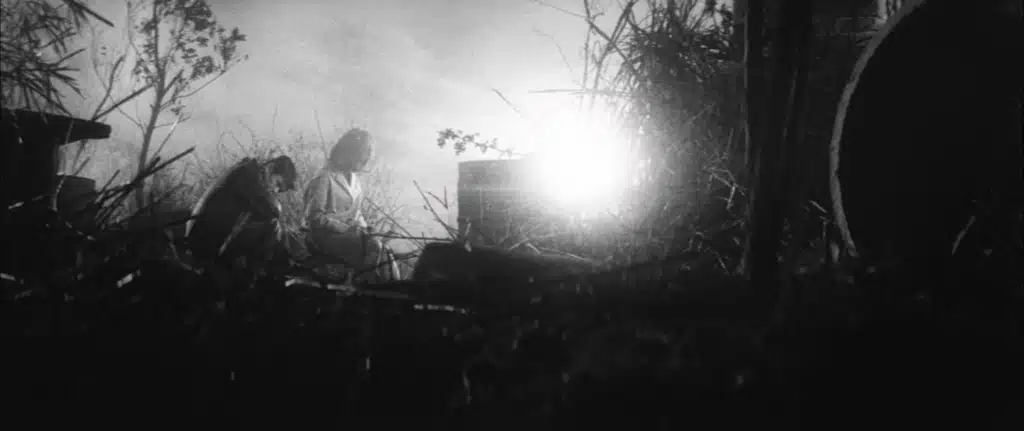
It’s worth watching as an exercise in cinematic framing if nothing else, but after a while Katō’s unusual compositions start to look logical, natural even. In most films the important thing in a frame is usually right there where we can see it. Here, it might be right at the bottom on the left, with Katō leaving the rest of the frame essentially empty or full of inconsequential detail. The characters, meanwhile, are often static inside these compositions, like figures from Noh theatre.
The style in a sense is the film’s purpose but it also helps mask the film’s grim brutality, which is also cloaked by Hajime Kaburagi’s score full of harmonised scat-jazz noodling of the sort the Swingles made famous (I don’t think it’s them here), by the artful, existential lighting of DP Keiji Maruyama and the remarkable whipcrack editing of Shizu Ōsawa. Together with Satō they cook up quite a visual and sonic feast.
I, the Executioner – Watch it/buy it at Amazon
I am an Amazon affiliate
© Steve Morrissey 2024