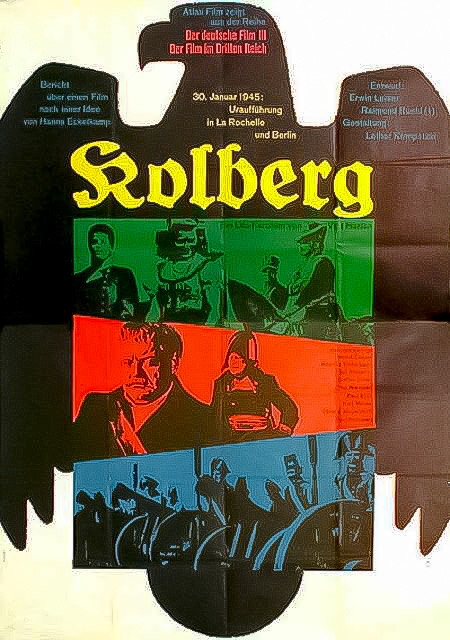
An important historical document, if nothing else, Kolberg is the last film the Nazis made. Partly written by Joseph Goebbels – or at least rewritten by him – it was also recut on the orders of the Reich’s propaganda minister. There were just too many battles, he thought, not without good reason, considering the Russians were knocking at Berlin’s door at this point. By the day of its supposed premiere, the Russians had overrun the German capital. It never really got shown.
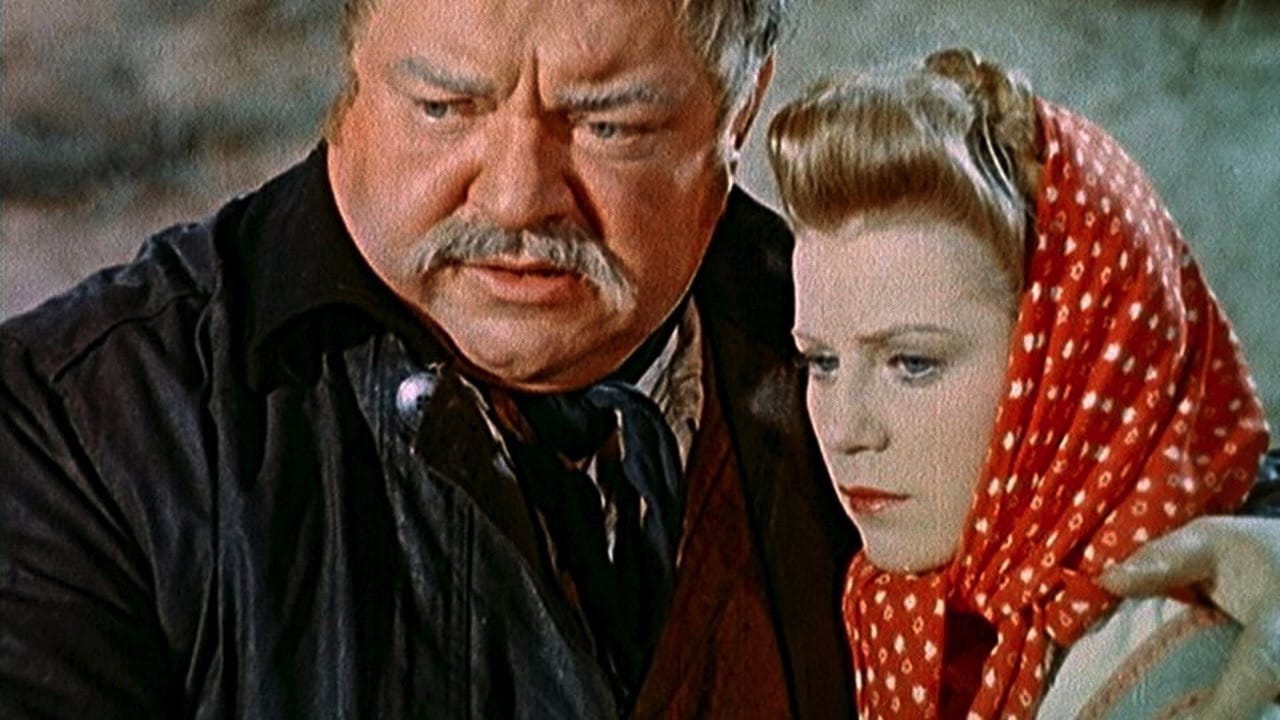
The action is set in the absurdly idealised folkloric village of Kolberg, where, in the early years of the 19th century, the villagers await an attack by Napoleon’s invading troops. Among them representative types – Maria (Kristina Söderbaum), the sweet blonde weaver who will be sent on a dangerous mission to the court of King Frederick William III. Bürgermeister Nettelbeck (Heinrich George), the heroic representative of the people, stiffening resolve against the French even as the likes of General Loucadou (Paul Wegener) prepare to bend the knee. At court, heroic Count Gneisenau (Horst Caspar), a soldier to his fingertips, encourages Prussia’s king to open himself to the life-giving force of the Volk. When that doesn’t achieve the desired results, Gneisenau rushes to the besieged Kolberg to deliver the speech – in rhythms and cadences obviously borrowed from Adolf Hitler – that will unite the people and help defeat the French.
It’s a mess of a film, incoherent thematically, factually and dramatically. With many battle sequences excised at Goebbels’s request, the space has been filled up with scenes of people standing around and shouting. What there is left of the action – buildings ablaze, armies on the move – is impressive but the ethos behind it is all over the place. Are the people the repository of a country’s Blut und Boden essence? Or is it the likes of Nettelbeck, their lowly representative? Or the more entitled and noble Gneisenau, who refers to himself as the Führer at one point? Or is it royalty, in the shape of King Frederick William and his Queen, Louise (Irene von Meyendorff), who in a touching scene with Maria is presented as a Virgin Mary figure? Or all of the above?
Regardless, what actually comes through, in spite of the film’s original motivating idea and the many rewrites, is a sense of a country that is not just besieged but finished. In one scene set at Christmas, the Kolbergers toast each other in death-or-dishonour fashion, all clearly awaiting imminent extinction, while someone in the room plays a doomy Moonlight Sonata on the piano.
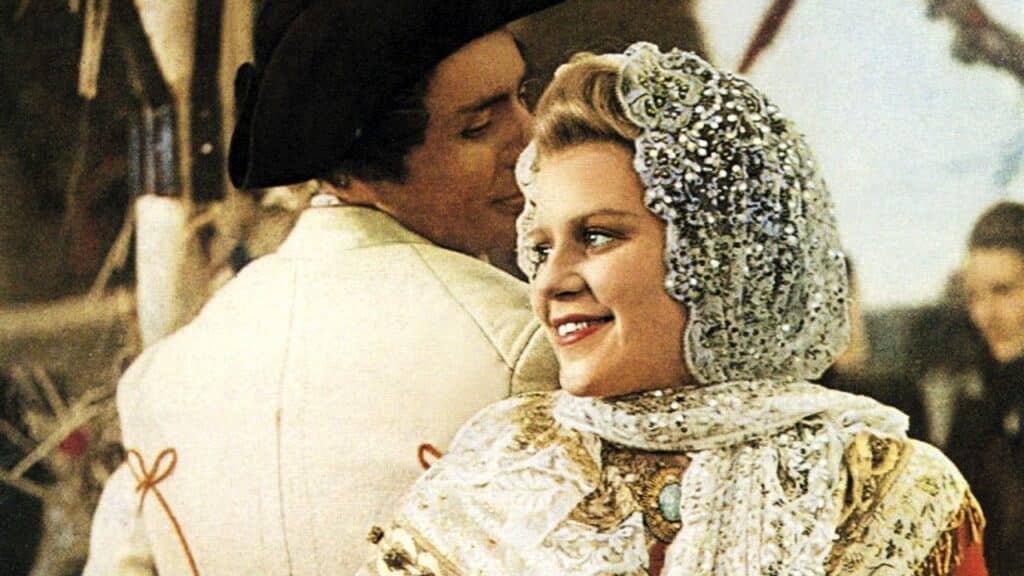
The director is Veit Harlan, he of the notoriously anti-Semitic Jud Süß, but it’s hard to really apportion blame when a film has been as messed about with as this one. Good performances – by the fat, florid and magnificent Heinrich George as the town mayor, Kristina Söderbaum as the touching Maria and Gustav Diessl as a handsome wounded lieutenant she takes a shine to – drag the film away from the realm of propaganda. Horst Caspar’s Gneisenau is a fascinating portrayal – to what extent was he deliberately presenting the Count as a terrifying full-bore Nazi?
Shot in Agfacolor, the German film stock that gives everything a sackcloth aspect, the film has been restored and looks pretty good. A touch soft here and there, the highlights blown out a bit now and again but the colours are solid. It’s all very watchable.
Clearly a recruiting sergeant of a movie, completed at a time when even the authorities were acknowledging that some honesty about the dire progress of the war was necessary, between the cracks Kolberg paints a picture of a regime on the way out, in a film originally planned to celebrate the triumph of the German spirit. Funny how things turn out.
Kolberg – Watch it/buy it at Amazon
I am an Amazon affiliate
© Steve Morrissey 2026