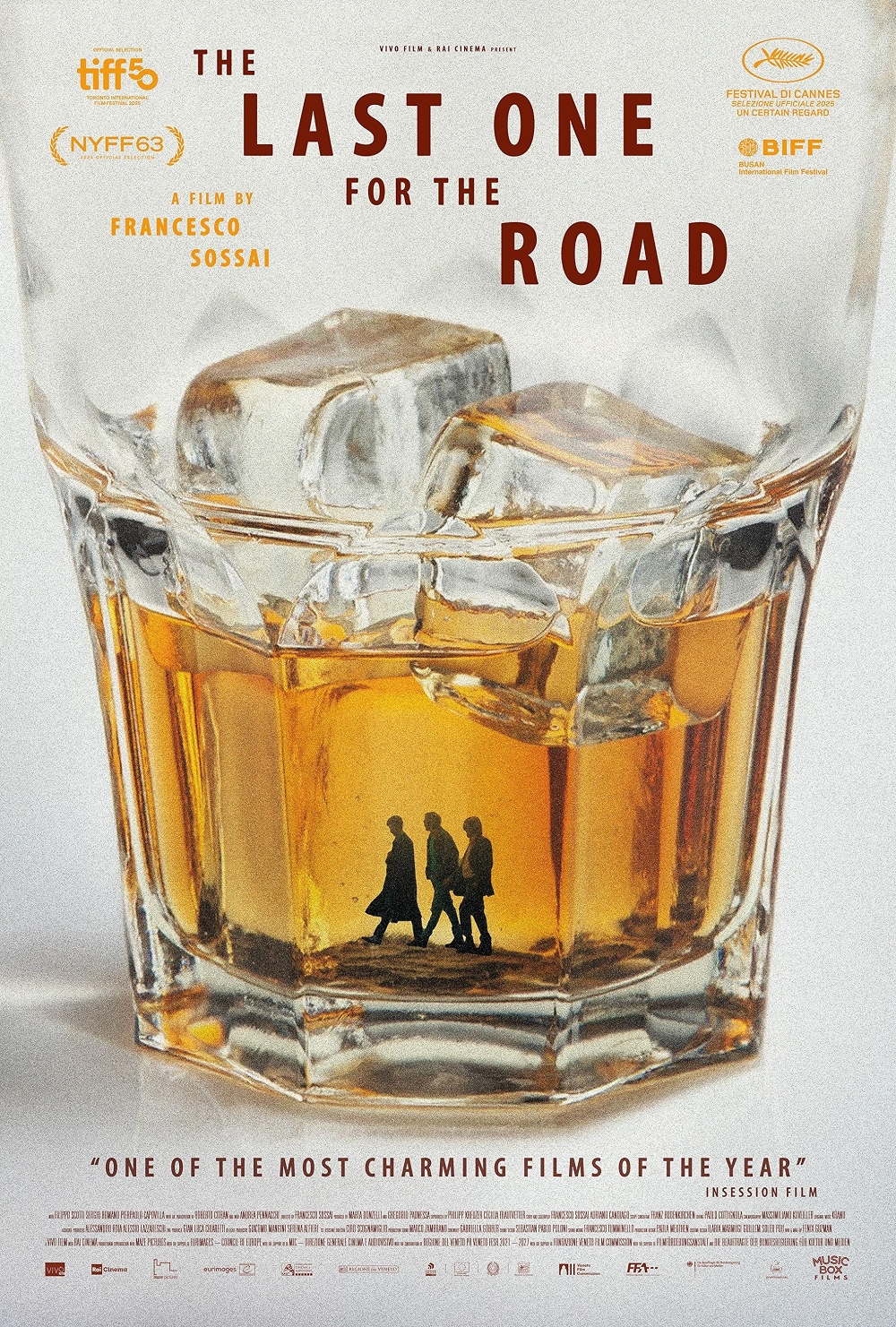
The Good, the Bad and the Ugly, Don Quixote, Lost in Translation, Waiting for Godot, The Last One for the Road (aka Le città di pianura) contains elements of all, without obviously borrowing from them. A “state of Europe/Italy” comedy of sorts, it follows two drunken has-beens – smalltime criminals who are waiting for their boss Genio to show up and in the meantime are drinking themselves to a standstill.
It’s funny, amused, cock-eyed, nostalgic, a little bit 1990s, a touch Tarantino, and rests entirely on the performances of Sergio Romano and Pierpaolo Capovilla as Carlobiancho and Doriano.
Strange, old-fashioned names for a pair of fiftysomething archetypes who we meet utterly drunk and asleep in their car, which is at a junction in the road with the engine running. We assume they’ve passed out after a big night. The rest of the film follows them in similar vein, banging about in one place or another, scamming here, telling tall tales there, seizing a chance when it presents itself but mostly drinking themselves into a stupor or drinking themselves out of a hangover.
They are toxic males of a sort Jack Nicholson once played, guys who somehow get away with it all because they make no apology for who they are. Look up director Francesco Sossai on the IMDb and you’ll see that he was “crowd third assistant director” on Mission: Impossible – Final Reckoning Part One, “floor third assistant director” on Queer (Daniel Craig as William Burroughs). And then this, a remarkable, dense, exquisitely played, perfectly pitched road movie following the misadventures of a pair of clowns using guile, cheek, luck and cunning to get by.
It’s when these two old soaks, whose lives would probably be ones of regret if they ever sobered up enough to take stock, fall in with young non-drinker – not even black coffee – Giulio (Filippo Scotti) that the film takes off, his youth and soft skin the perfect foil to their tricks and gnarliness.

Do they teach him something about life? Does he remind them of how pure and innocent they used to be, and of something they’ve lost? Yes, but mostly no. Sossai is avoiding the easy cliché, and instead makes vague philosophical points about the meaninglessness of “stuff” – the “marginal utility” of things as Carlobiancho (or is it Doriano?) at one point explains to Giulio – while also luxuriating in what might be called a positive nationalism. Carlobiancho and Doriano (and Giulio too, though he doesn’t’ know it yet) love Italy not because Italy is the best country in the world but because it’s the country they know. At one point a German Italophile tells the guys he’s come to Italy to see it “before the Italians destroy it.” Though, as Sossai points out in scenes set in one roadside bar after another, it’s Americanisation that’s actually the major force changing the country.
Eventually, wandering, performative philosophising and drinking yields vaguely to what might be called the spaghetti western aspect of the movie – a search for lost treasure that’s so slight as a plot that it is more threat than promise. And eventually Giulio himself starts to offer up gobbets of bar-room wisdom, telling Carlobiancho and Doriano at one point, for instance, that the brutalist building they are looking at is a “machine for processing grief”. They don’t laugh at him, or argue, rather they chew on the idea as a concept, one of thousands, millions, that guys who spend their time in bars will process in a lifetime of performing their sacred rite.
This is a delightful movie, charming and amusing and has become something of a word-of-mouth hit. Deservedly so – it’s a bit of a classic.
The Last One for the Road – Watch it/buy it at Amazon
I am an Amazon affiliate
© Steve Morrissey 2026