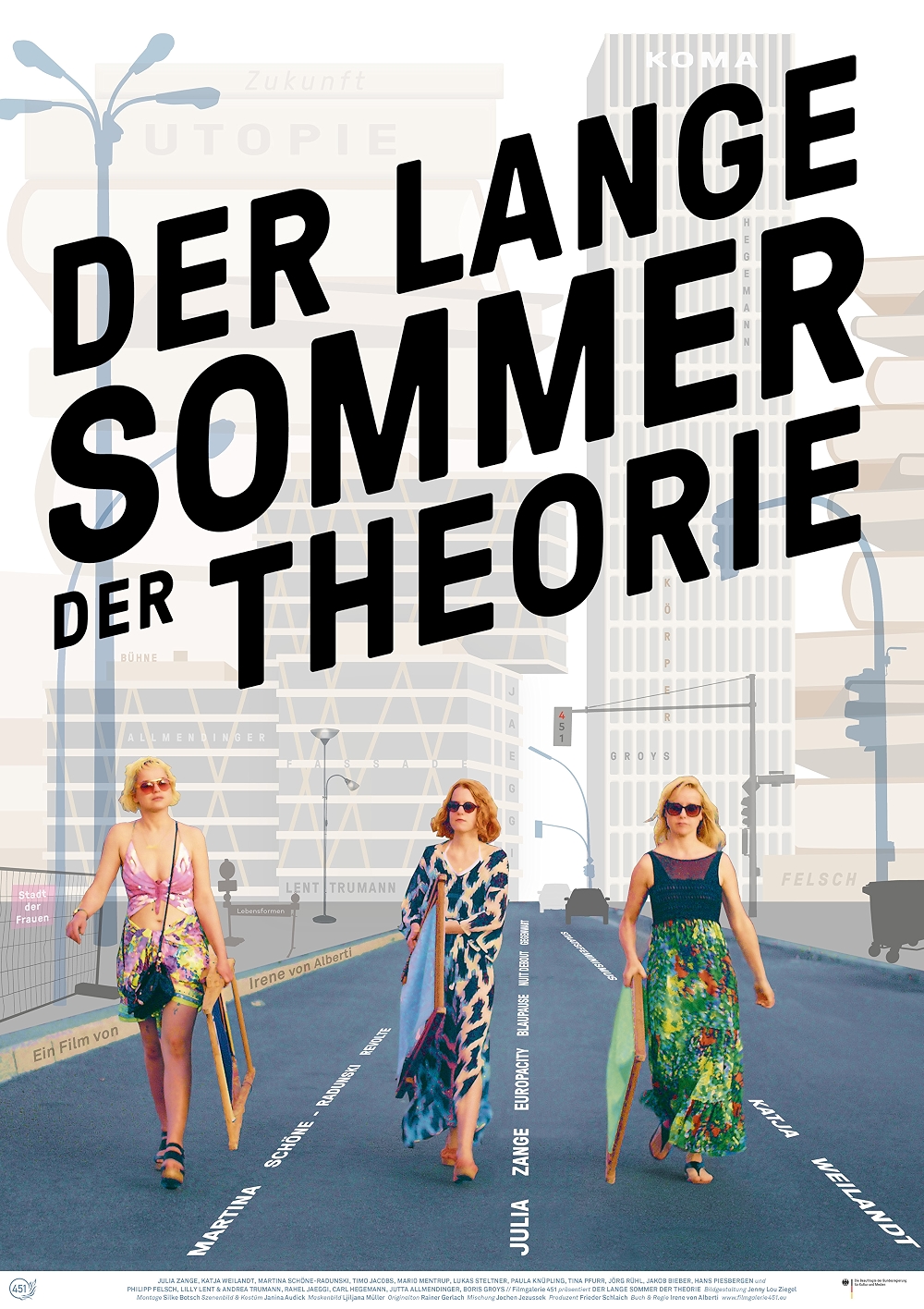
The “theory” in the title The Long Summer of Theory (Der lange Sommer der Theorie) refers to critical theory, a grab-bag term that lumped together the likes of Michel Foucault, Jacques Derrida, Jacques Lacan, Louis Althusser, an achingly fashionable cohort of philosophers and theorists whose thoughts and theories were referenced in universities and in the wider field of (especially) the arts until one day, someone concluded, their “summer” had ended.
That someone was Philip von Felsch, whose book, The Summer of Theory, is the starting point for film-maker Irene von Alberti’s relentlessly fascinating examination of the political scene among young people – women mostly – who reckon themselves to be progressive, politically engaged and all the rest of it, who debate grand issues at home and apportion to themselves “rights” that most of the rest of us would think of as privileges.
I’m getting ahead of myself. Let’s meet the players. Nola, Katja and Martina. A very likeable trio who live together in Berlin in the sort of dilapidated squat that has a picture of Black Panther Angela Davis on the wall and which seems to hark back to Alberti’s boomer youth more than the Berlin of 2017, when this film was made.
The women, the women. Nola (Julia Zange), like Alberti, is also making a film, which is titled The Long Journey from Collective Consciousness to Self-Optimised Individual. Punchy. It’s a lament for the death of left-wing thought as groovy and obvious and it consists of red-haired Lola, dressed in a blue trouser suit emblazoned with newspaper headlines, interviewing various thinkers – among them philosopher Rahel Jaeggi, film-maker Carl Hegemann, sociologist Jutta Allmendinger and art theorist Boris Groys. In various ways she puts the same question to all of them: now that the structure of the “long summer” has collapsed, how do we proceed from here?
Back at the ranch, Nola chews over the “winter” of theory and its ramifications with fellow activists Katja (Katja Weilandt), an actor we meet rehearsing a speech as Eva Braun on her wedding night. And Martina (Martina Schöne-Radunski), a musician and artist who introduces her cohabitees to the concept of the Bechdel Test, which if nothing else marks this film out as very 2017.

In a more domestic and less airily conceptual way, the women in their Berlin apartment – which is soon to be bulldozed to make way for redevelopment and the Europacity – work through the same concepts as the theorists in Nola’s interviews, imagining themselves in different social situations (as housewives looking after kids, as society women in pre-War Berlin, as office drones doing boring jobs) and wondering if things really are as progressive as they seem. Do they hanker for a man to open the door for them, and all that comes with that? Maybe.
What now, they wonder. But otherwise their pre-occupations, topics of conversation, thought processes and conclusions seem very boomerist.
Alberti seems to know this and stalks through the territory with some wit and scepticism. At one point Katja visits a rally of the far right. There is chanting, slogans, anti-immigrant rhetoric, and then suddenly that interlude is over. Nothing has been learned. No one has been talked to. Katja, having momentarily left it, re-enters her bubble.
Nola describes her film, The Long Journey etc etc, as a “stocktaking” and so is The Long Summer of Theory. It is not entirely clear where Alberti stands politically on the Summer and the Winter that followed it, whether she’s castigating the Left for having abandoned economic socialism (redistribution of wealth, in short) in favour of the rights-driven focus of 21st-century progressives. And her attitude towards Nola, Martina and Katja is also not clear – are these young women progressives at all, or just overgrown students playing with concepts that will soon become unfashionable, in much the same way as the theorists of the Long Summer now have?
The performances by Zange, Weilandt and Schöne-Radunski give no clue – they are bright and lively, very charming and deliberately superficial. For all their talk about themselves, we don’t know that much about Nola, Martina and Katja. Maybe they don’t know much about themselves either. Without a roadmap – religion, nation, politics, possibly even critical theory – to show us the way, does anybody know who or what they are, or where they’re going?
The Long Summer of Theory – Watch it/buy it at Amazon
I am an Amazon affiliate
© Steve Morrissey 2024